Lot Chose the Green Plain and Ended Up in a Cave
Abraham's cattle went out muzzled so they could not eat another man's grass. Lot's went out bare-mouthed, and the argument split the family in two.
Table of Contents
 Click for full size
Has Theft Been Permitted Now
Abraham's cattle went out to pasture with muzzles on. Lot's went out bare-mouthed and ate whatever field they were standing in.
Abraham's herdsmen put it to Lot's herdsmen plainly. "Has theft been permitted now?"
Lot's men had an answer ready. God had told Abraham that this land would go to his seed. Abraham was a sterile mule who would die childless, and when he died his nephew would take everything, so the grass was not another man's grass. It was theirs early.
Heaven answered that out loud. To his seed, God said, is what I told him, and I meant after the seven nations are cleared off it. The Canaanites and the Perizzites were living in the land at that hour, and their right to it still held.
Abraham did not repeat any of it. He said, "Let there be no quarrel between me and you, or between my herdsmen and yours. We are brothers. The whole land is in front of you. If you go north I will go south. If you go south I will go north."
The Plain That Looked Like the Garden
Lot lifted his eyes and looked toward the place where men did what they wanted with each other, and what he saw was water. The whole plain of the Jordan ran green all the way down to Zoar, trees worth planting, fruit like Egypt's, the garden of the Lord laid out flat and waiting for somebody's herds.
He took it. The two men separated on the spot, and Lot walked his flocks east and pitched his tent facing Sodom.
The men of Sodom were rotten with money. They fouled each other's bodies, they went naked in the open, they spilled innocent blood, they served other gods, and they had made a law that any stranger who came in was to be used and thrown away.
The Salt She Borrowed From the Neighbor
Two angels left Abraham's tent at noon and were still walking at dusk, going slowly on purpose, hoping the sentence would be lifted before they arrived. At nightfall it was sealed, and they came in at the gate.
Lot had been made chief judge of Sodom that same day. He saw two travelers and did what he had learned in Abraham's house, and because feeding a stranger in Sodom carried the death penalty, he brought them home by back streets in the dark. His wife told him he was going to get himself killed. He split the house in two so that whatever came would come to his half and not hers.
Then she went next door to borrow salt.
The neighbor asked why she had not drawn her salt in daylight like everyone else. "We had enough," she said, "until the guests came."
By full dark the whole city was at the door, every man of it, old and young. Lot stood in his own doorway and tried the only argument he had. "My brothers, the generation of the flood was wiped off the earth for doing what you have come here to do."
"Get back," they told him. "If Abraham himself stood where you are standing we would not care. Are you going to throw out a law your predecessors enforced?"
Michael's Hand and Gabriel's Little Finger
The angels pulled Lot inside and told him what they were and what they had come to do, and sent him out to his sons-in-law. He woke them and told them the city was finished.
They laughed at him. "You fool. The violins and the cymbals and the flutes are still going in the streets and you tell us Sodom is coming down tonight?"
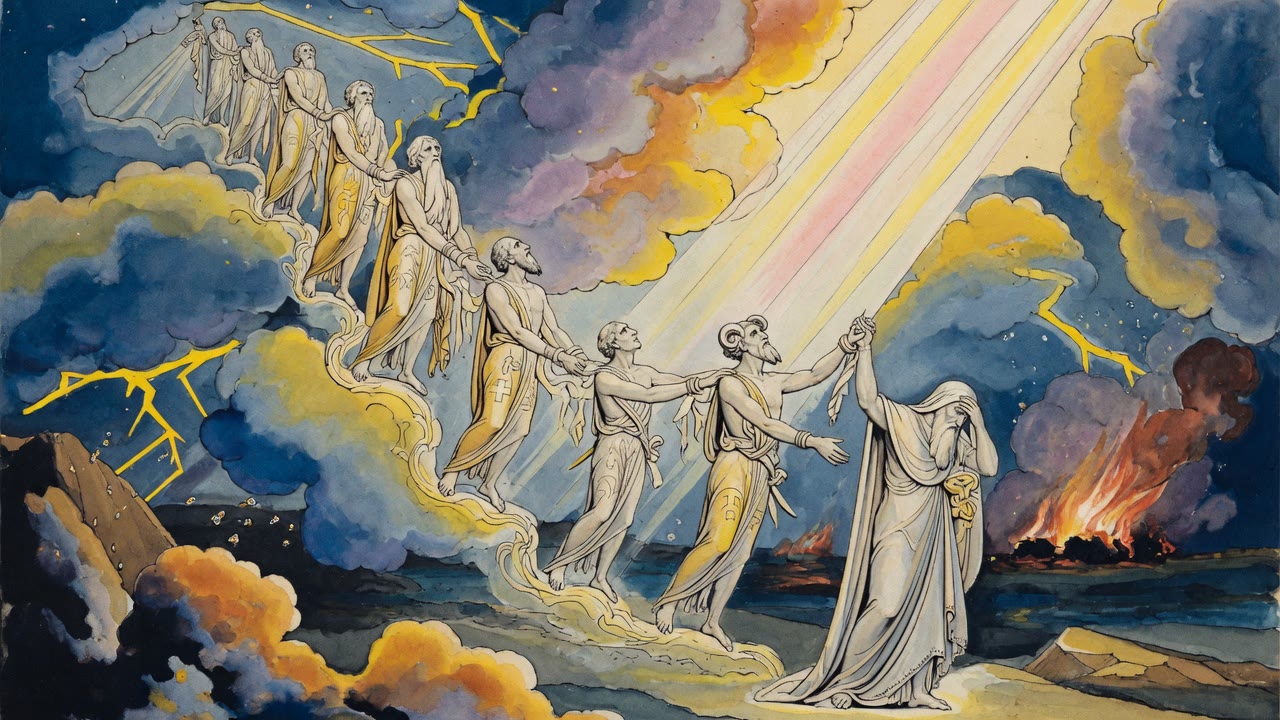
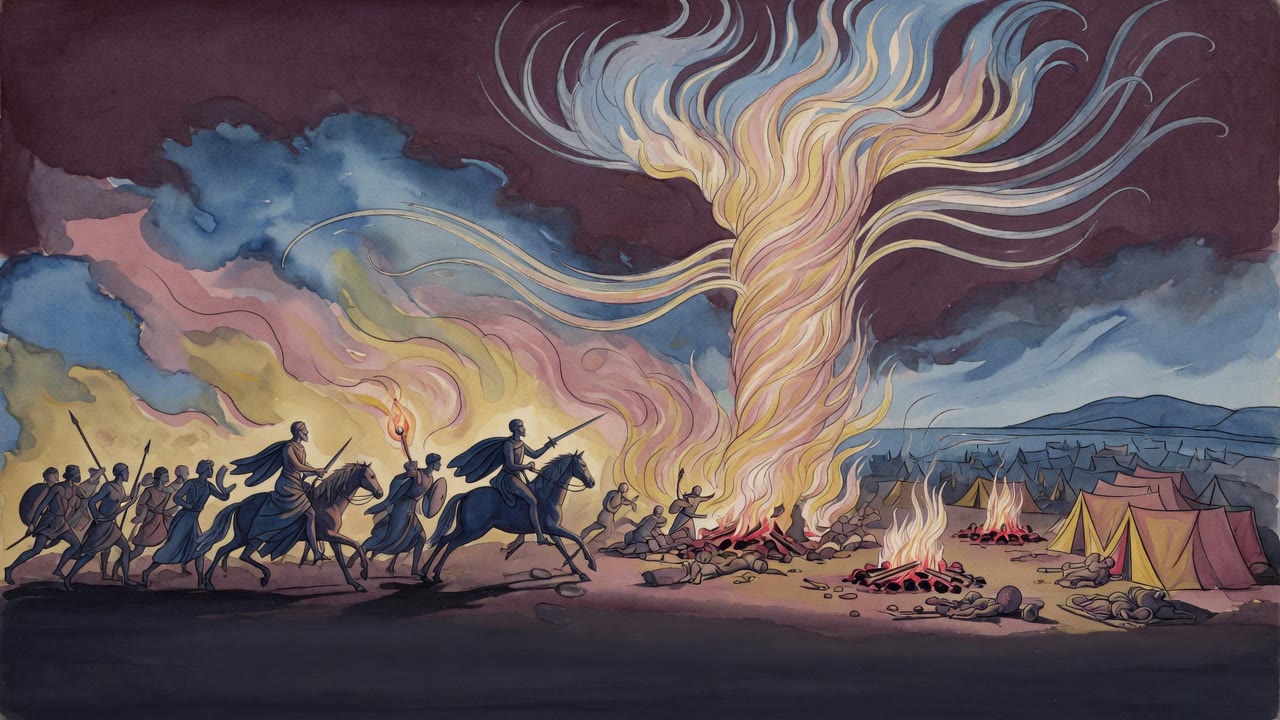
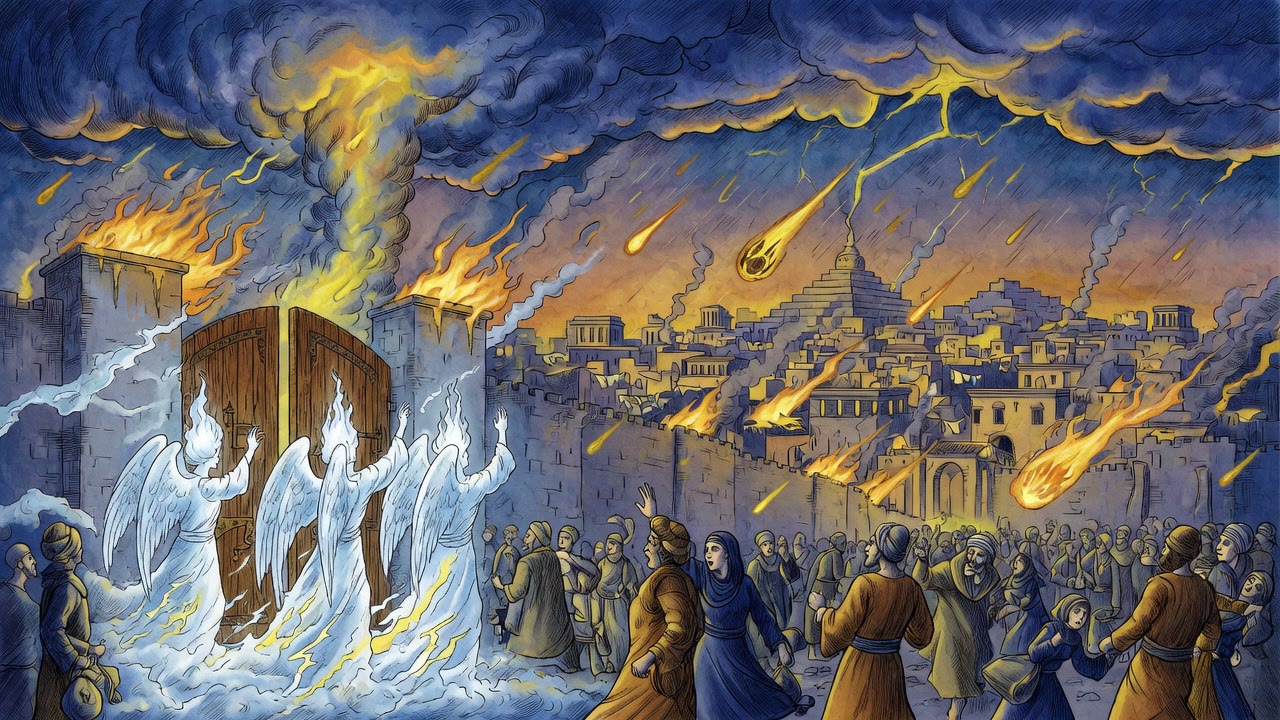
Michael took Lot by the hand, and his wife, and his daughters. Gabriel put out one finger, touched the rock the cities were built on, and turned it over. The rain that had been falling on Sodom and Gomorrah changed in the air and came down as burning sulfur.
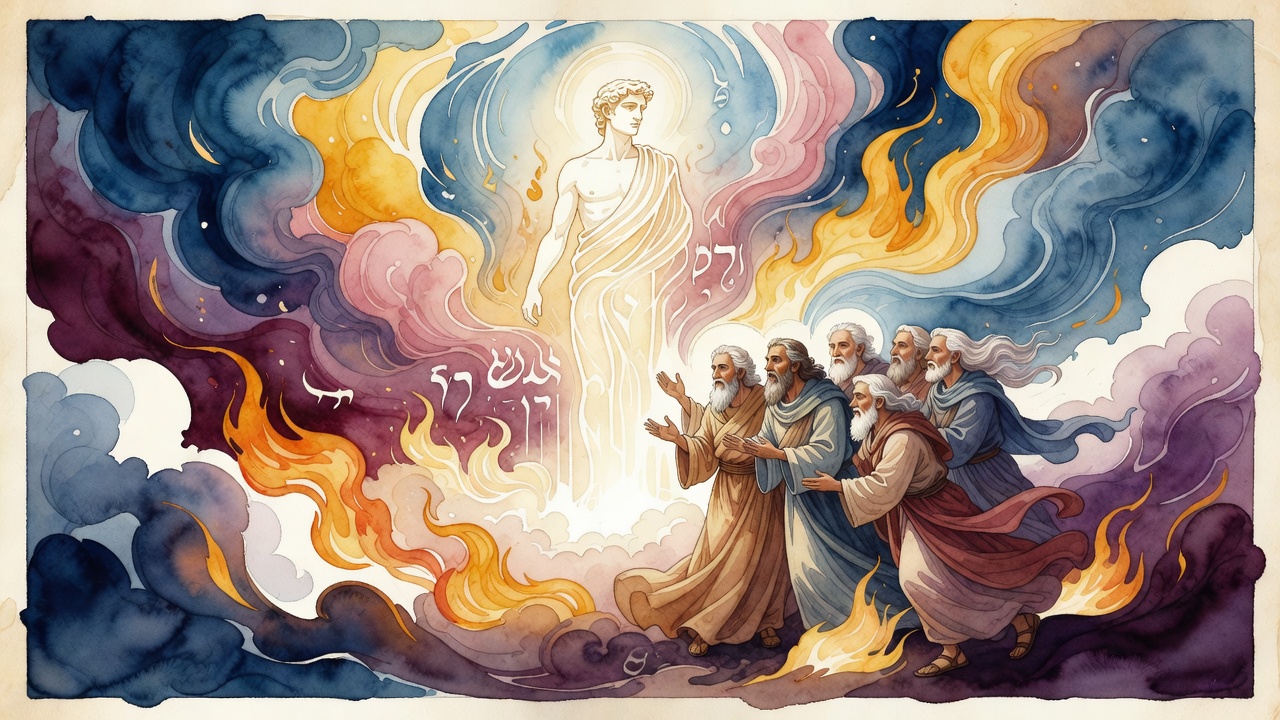
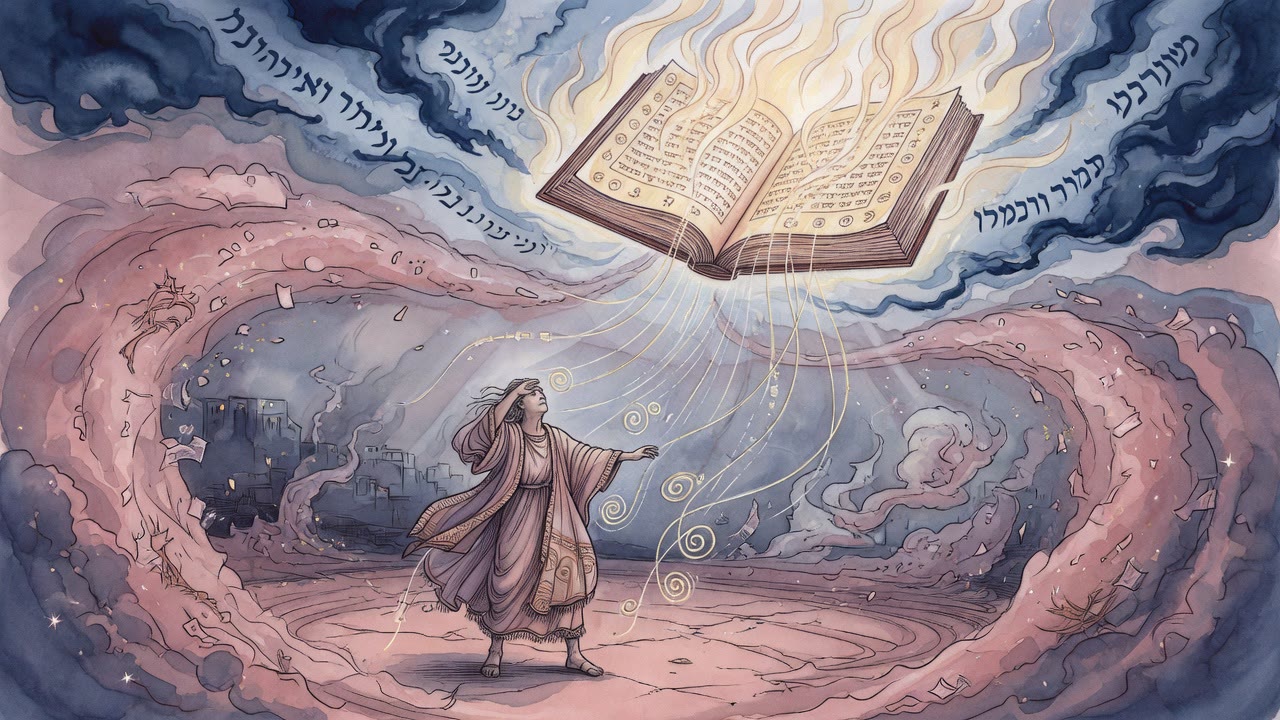
Run, the angel said, and do not look back, because the Shechinah (שכינה), the presence that had come down to do this, was behind them on the plain.
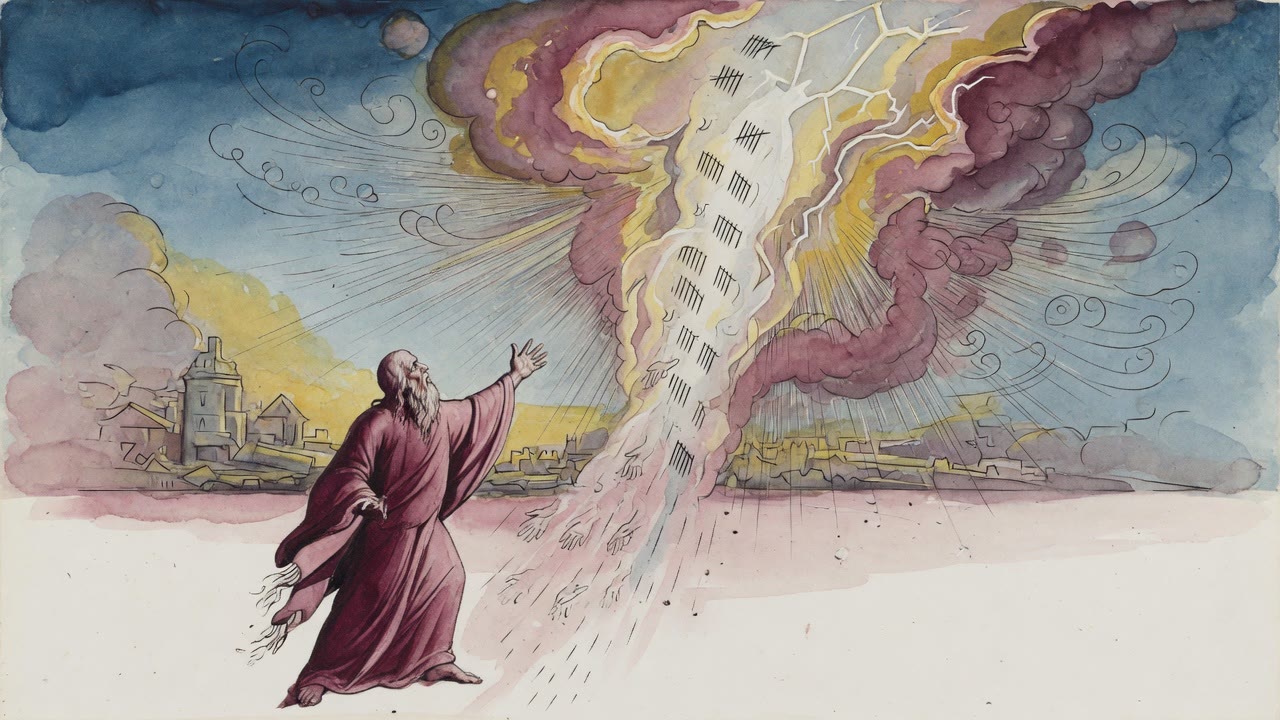
Lot's wife had two married daughters back in that city. She turned around to see whether they were following, and she saw what was behind her, and she stopped where she stood as a pillar of salt. The pillar is still there. Cattle lick at it all day until by evening it has almost gone, and in the morning it is standing full size again.
The cities went down at daybreak on the sixteenth of Nisan, at the one hour when the sun and the moon are both in the sky, so that the sun worshippers of Sodom could not say the sun would have saved them and the moon worshippers could not say the moon would have.
The Wine That Was Waiting in the Cave
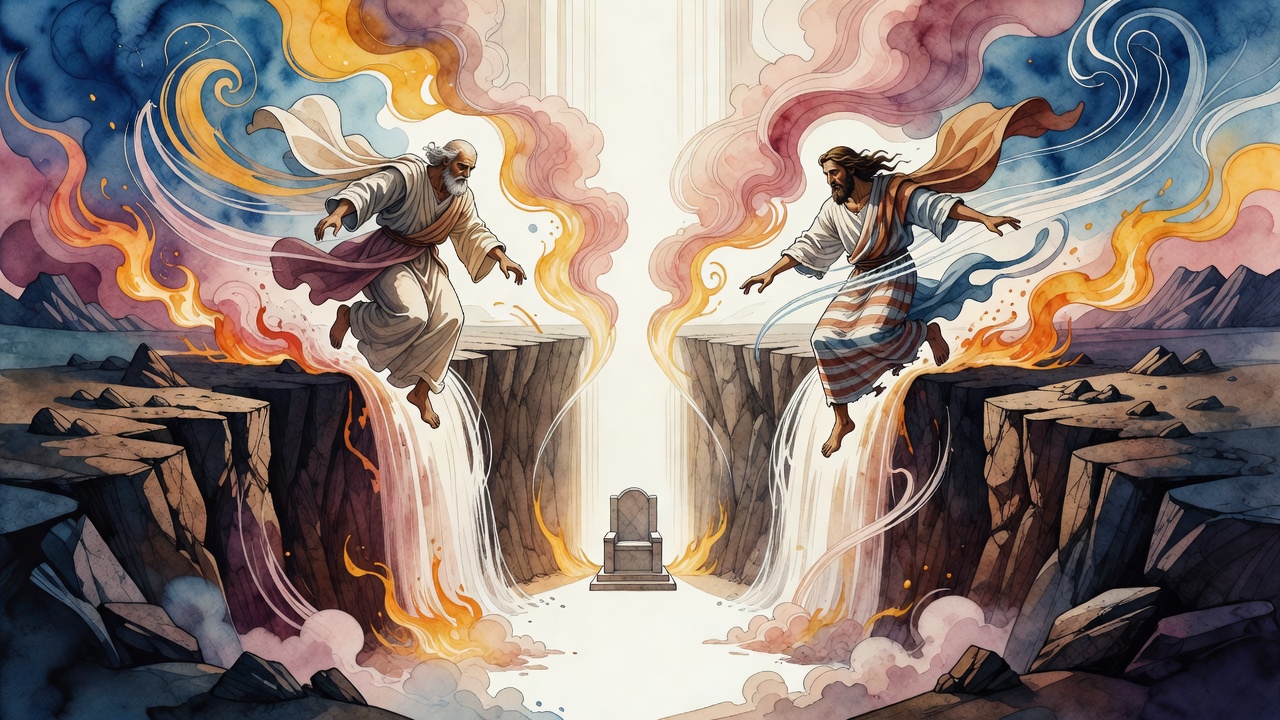
The angel told Lot to go back to Abraham. Lot refused, and he was honest about why. "As long as I lived away from him, God measured me against my neighbors and I came out a righteous man. If I go back to Abraham, God will put us side by side."
So he went up out of Zoar, afraid to stay in Zoar, and moved into a cave in the hills with his two daughters. His wife was standing in the valley behind them, white and dissolving and rebuilding herself every night.
There was wine in the cave. Nobody had carried it up there. It had been put in readiness for that hour, the way the mountains are promised to drip wine at the end of days, and on two nights the daughters gave it to their father and lay with him, and out of that came Moab and Ammon. Ruth came out of Moab. David came out of Ruth.
Generations later David was hiding from Saul in a cave of his own, with men hunting the ridge above him, and what he prayed there was addressed to the same accounting. Master of the universe, before I ever entered a cave you were doing kindnesses for other men on my account. Now that I am inside one, do not destroy.
← All myths