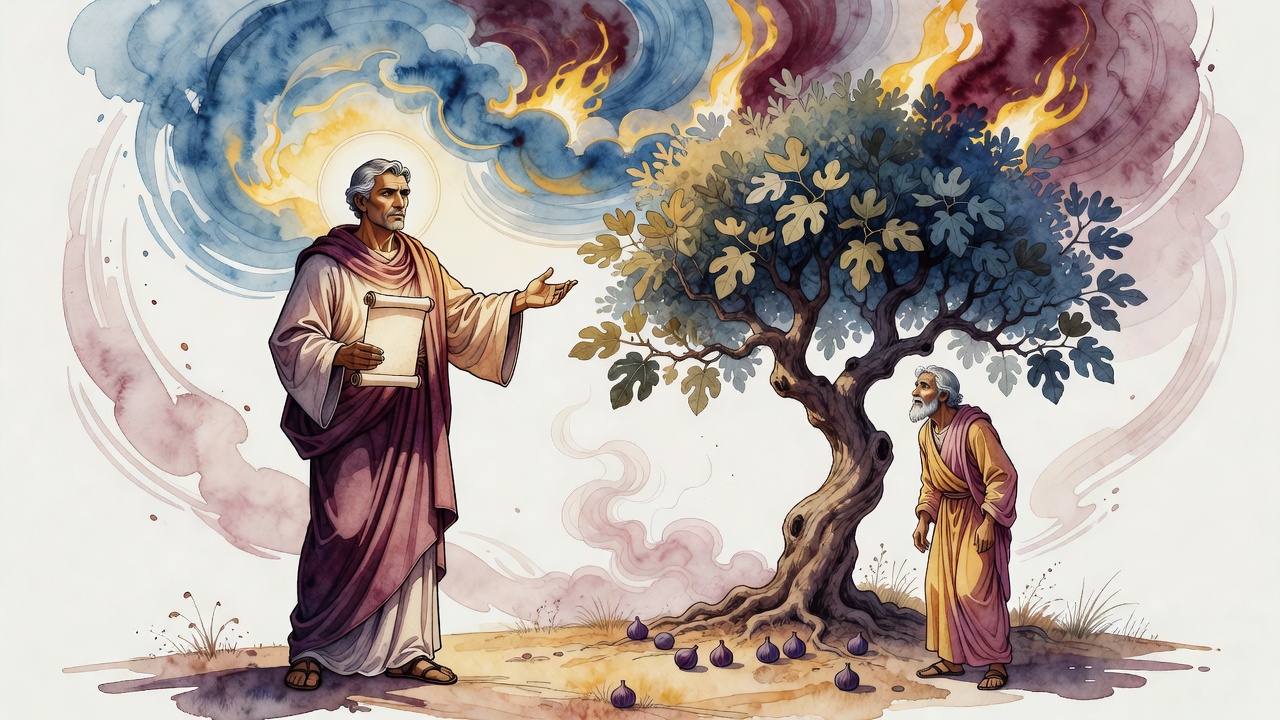
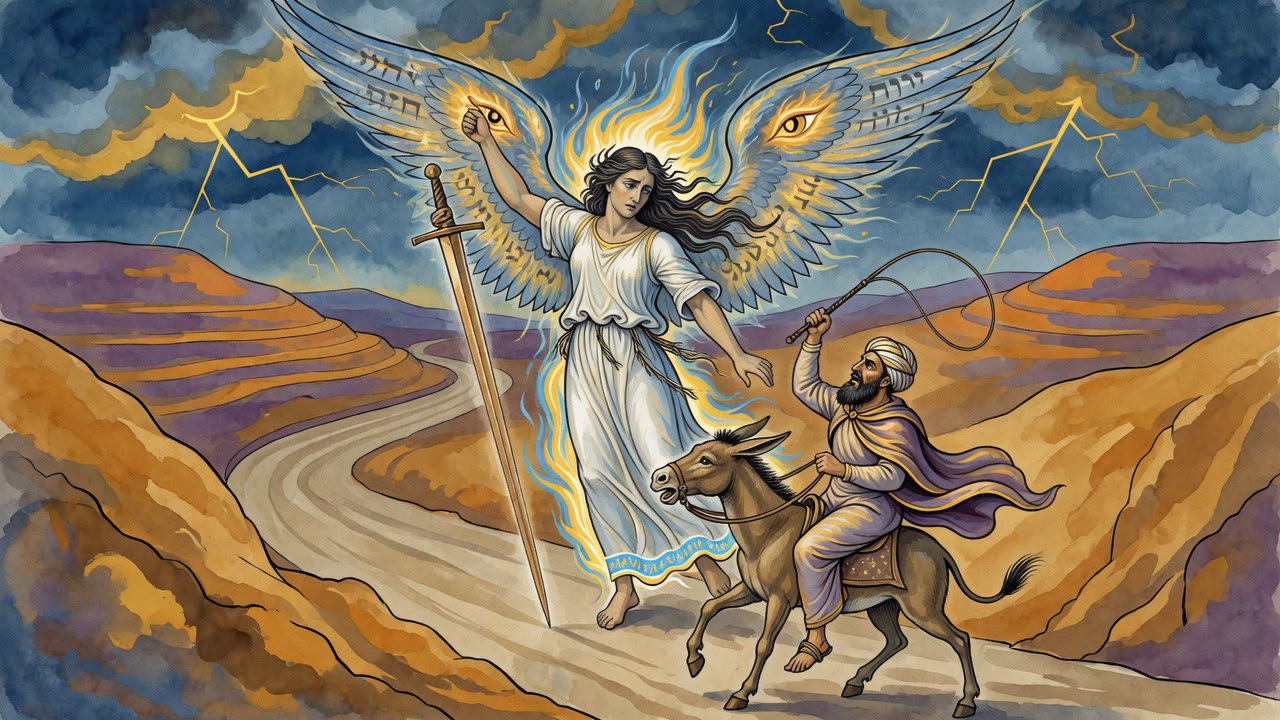
Balaam Wished for the Death of the Righteous and Died by the Sword
Balaam stood on Moab heights and wished aloud for the death of the righteous. He understood exactly what that meant. Then he died by the sword in Midian.
Table of Contents
 Click for full size
A Genuine Wish in a Forced Blessing
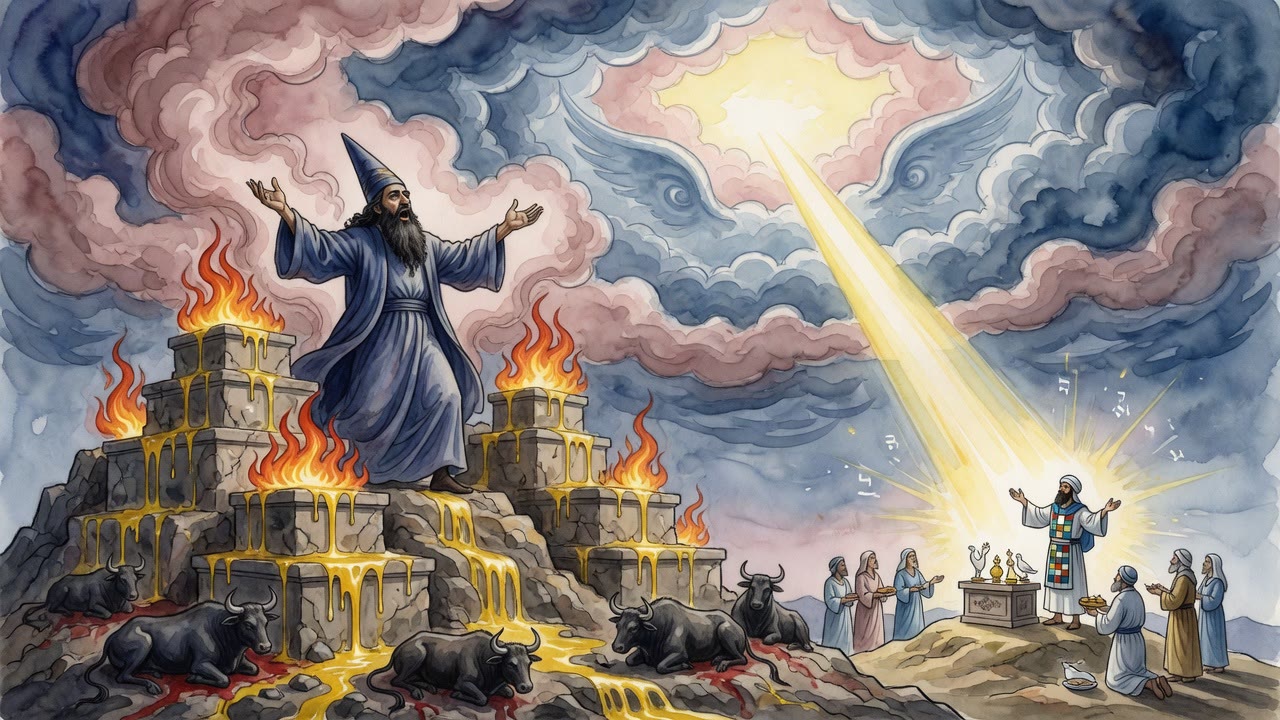
He was standing on the heights of Bamoth-Baal with the camp of Israel spread out below him, and the words came out of his mouth without his choosing them: let me die the death of the righteous, and let my last end be like his. He was supposed to be delivering a curse. The spirit of God had moved through him again and turned the curse into a blessing for the third time, and somewhere inside the blessing, at its emotional center, was this: a genuine wish from a man who understood exactly what he was wishing for.
The Talmud Bavli, in tractate Sanhedrin, compiled in 6th-century Babylon, counts Balaam among the rare non-Jewish figures who achieved genuine prophetic status. That designation was not given lightly. The sages of the Talmud were not generous with it. But Balaam's prophecies, the star prophecy of Numbers 24:17, which the tradition reads as pointing to the Messianic age, the description of David's conquests, the sweep of the end of days, were too accurate and too deep to have come from anywhere but genuine prophetic vision. Whatever Balaam was, he was not faking the prophecy. He saw things. He understood things.
What the Death of the Righteous Actually Means
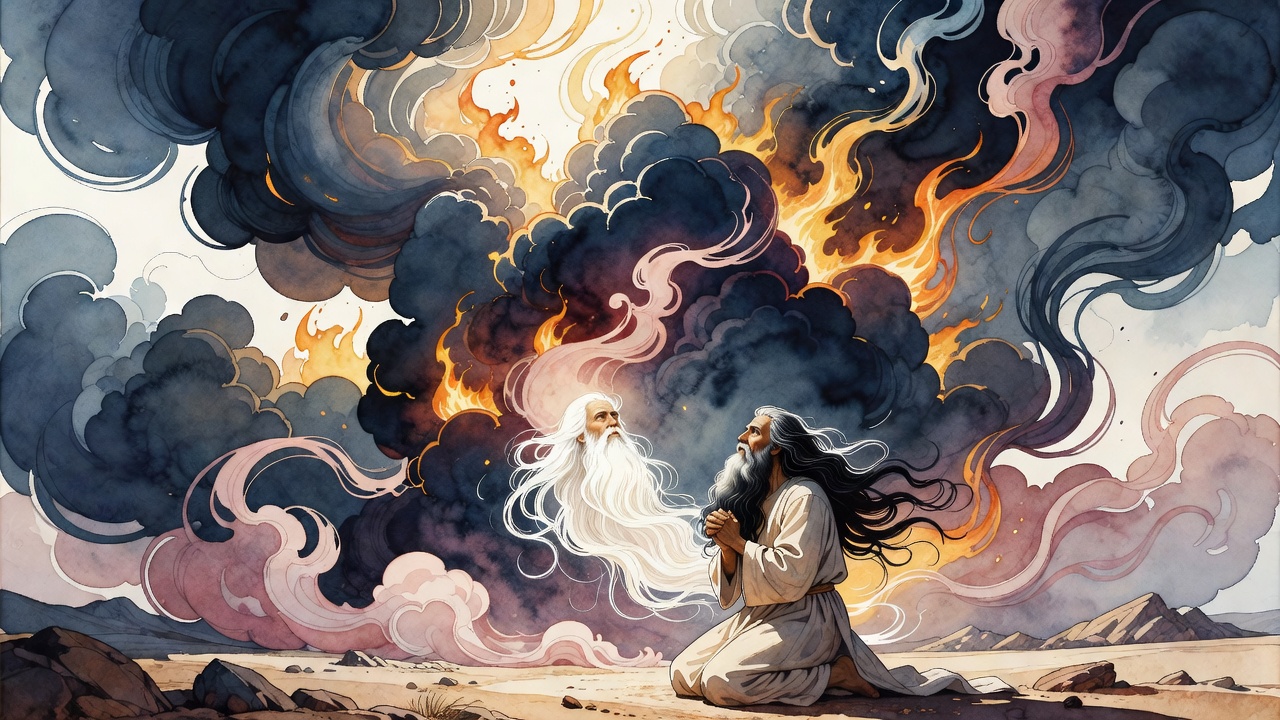
What he understood about the phrase he had just spoken was precise. In Jewish tradition, the death of the righteous is a technical term. It is not simply dying while being a good person. It is a specific mode of passing: lucid, unafraid, the soul drawn up by a divine kiss as Moses and Aaron are said to have died, surrounded by loved ones, with a share in the World to Come secured. Jacob had asked for this. Standing in Egypt looking at the face of Joseph alive after twenty-two years of believing him dead, Jacob said in Genesis 46:30, according to the Targum Pseudo-Jonathan's Aramaic translation: if at this time I die, I am comforted, for with the death that the righteous die shall I die. Jacob understood the term. He wanted what it named.
Balaam understood it too. He stood on the heights and watched Israel and saw in them what he could not manufacture in himself: people who had a connection to God built from inside, from genuine devotion, from the accumulated covenant faithfulness of generations. The death that awaited such people, death in full relationship with the divine, death as passage rather than end, death that opened onto the World to Come, was the death Balaam wanted. He said so out loud, in a prophecy delivered from a high place in Moab, with Balak standing beside him in furious silence.
The Gap Between Wishing and Becoming
The tradition is unsparing about what happened next. Balaam wished for the death of the righteous. He did not pursue the life of the righteous. He went back to Balak. He advised the seduction operation at Shittim. He counseled the Moabite and Midianite women to set up tents at the border and lead Israelite men into the worship of Peor. He was present at the battle of Midian, still at his original project, still advising the enemies of the people whose death he had said he wanted to share. He died by the sword. Not in peace, not surrounded by loved ones, not with the soul drawn up gently. He died as a man who had understood what the righteous death meant and had chosen, through the direction of his life, to remain ineligible for it.
The aggadic tradition in Legends of the Jews, Ginzberg's compilation of 1909-1938, presses this point. It is one thing not to know about the World to Come. It is another thing to have stood on a hilltop in Moab and articulated the exact nature of the goal and then spent the remaining years of your life running in the opposite direction. Balaam had prophesied better than anyone else outside Israel about the Messianic age and the fate of the nations. He had seen it all. He had wished for the best of what it offered. And the gap between the wish and the life disqualified him from everything he had wished for.
What the Sword Closed Off
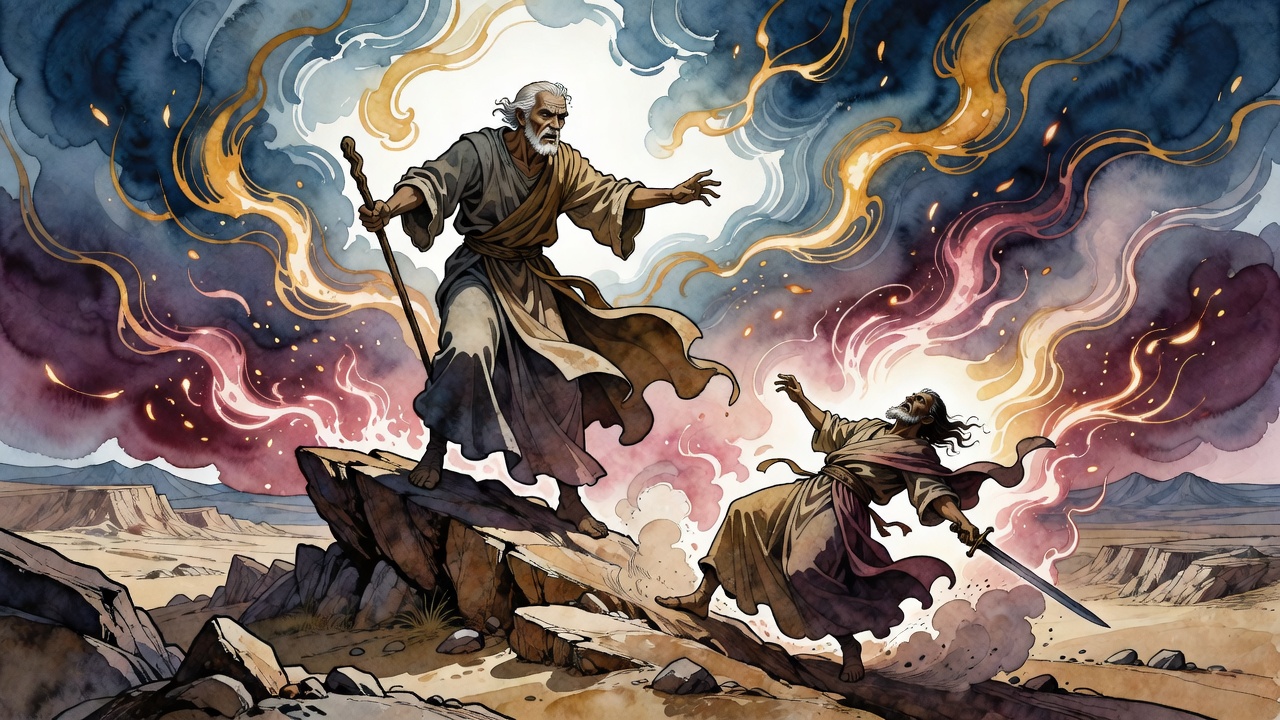
When Phinehas caught him at Midian, after the sorcery that had lifted him into the air was neutralized by the gold plate of the high priestly crown, Balaam fell and was killed. The tradition in the Talmud records the detail with appropriate weight: he died young for a man of his gifts. The prophecies he had been forced to speak from the heights of Moab remained on the record. The star out of Jacob, the scepter that would rise out of Israel, the crushing of Moab's borders under David's armies, these prophecies were true, are still true, remain anchored in the text of Numbers where they were spoken. The man who spoke them is gone, dead in a war he had helped to start, by a sword he had not foreseen coming, in a country he had no business still being in.
He said it. He meant it. He did not live it. The tradition holds this as the sharpest kind of loss: not ignorance, but clear sight followed by turning away.
← All myths