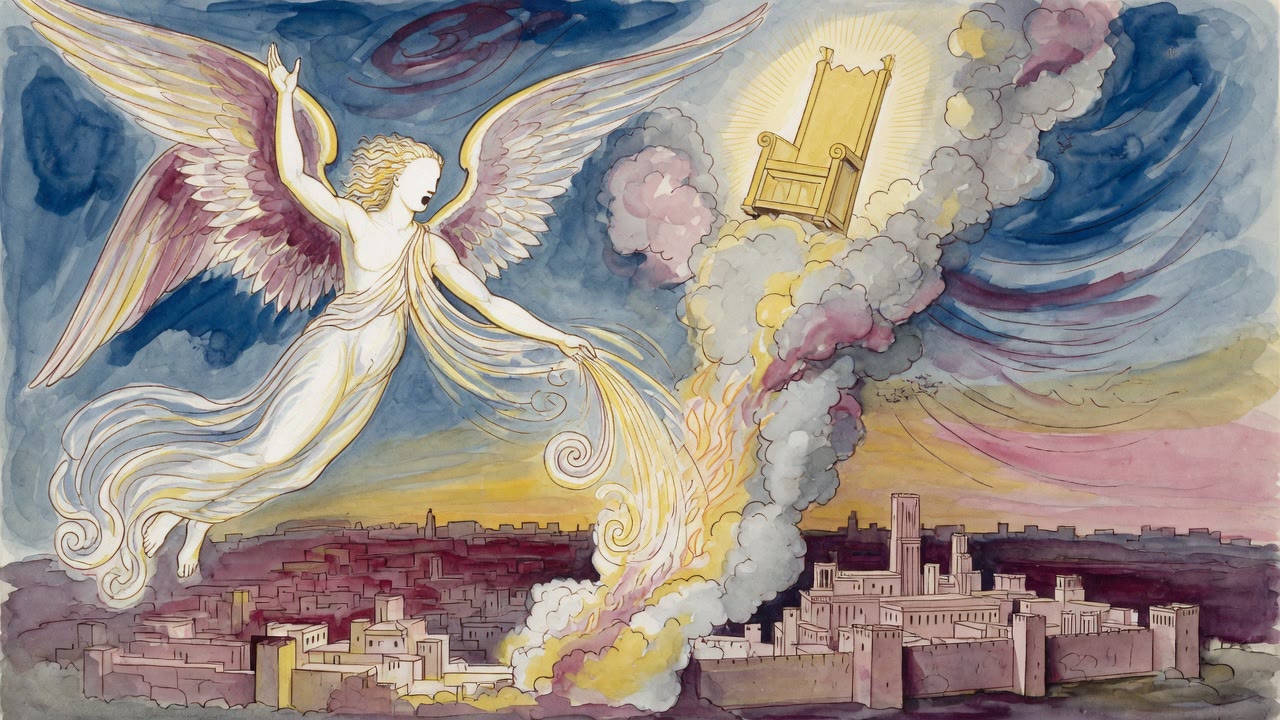
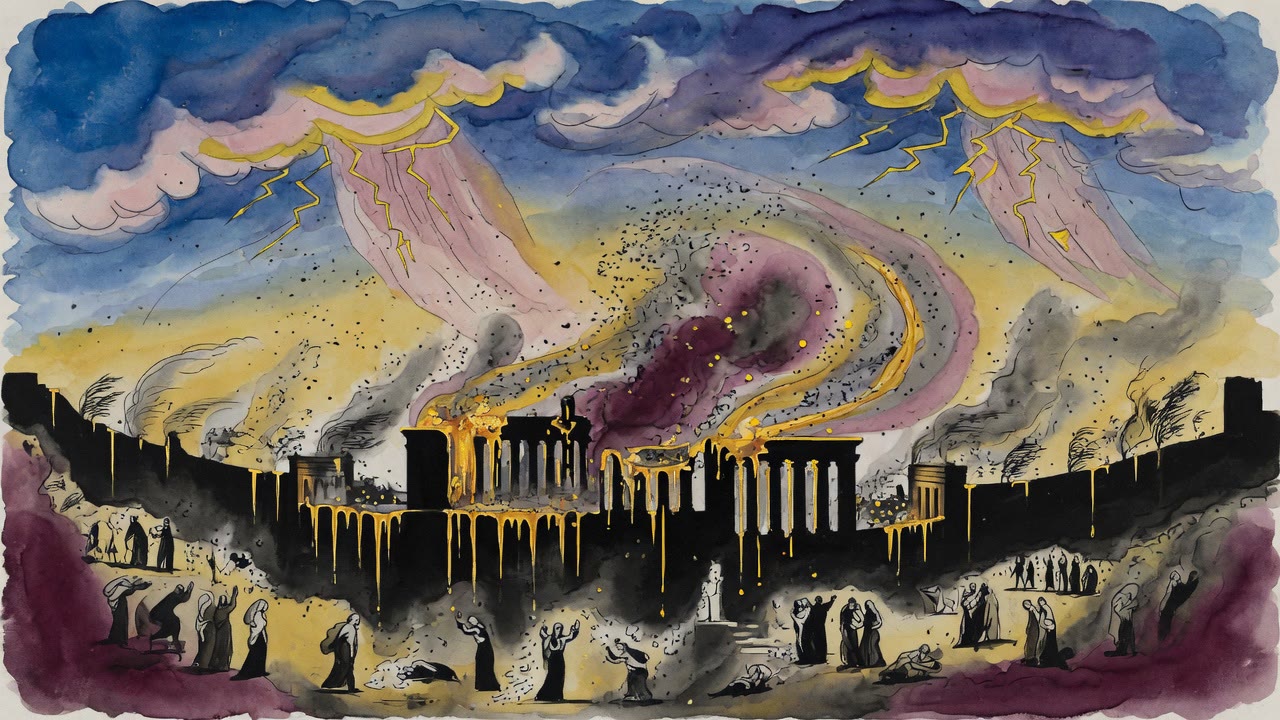
Jeremiah Summons the Patriarchs to See the Ruins
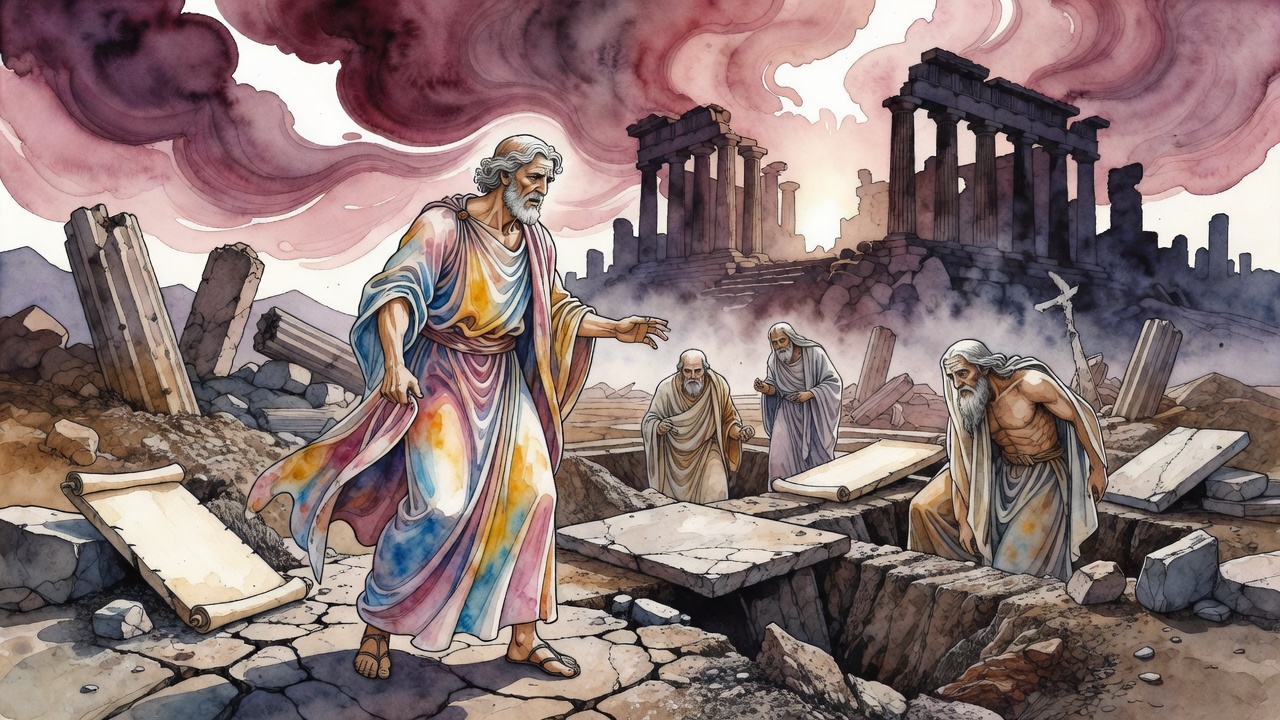
After the Temple fell, God sent Jeremiah to wake the Patriarchs from their graves. Jeremiah lied to them. He feared they would blame him for what had happened.
Table of Contents
 Click for full size
The Errand to the Dead
Jeremiah was afraid to tell Abraham the truth.
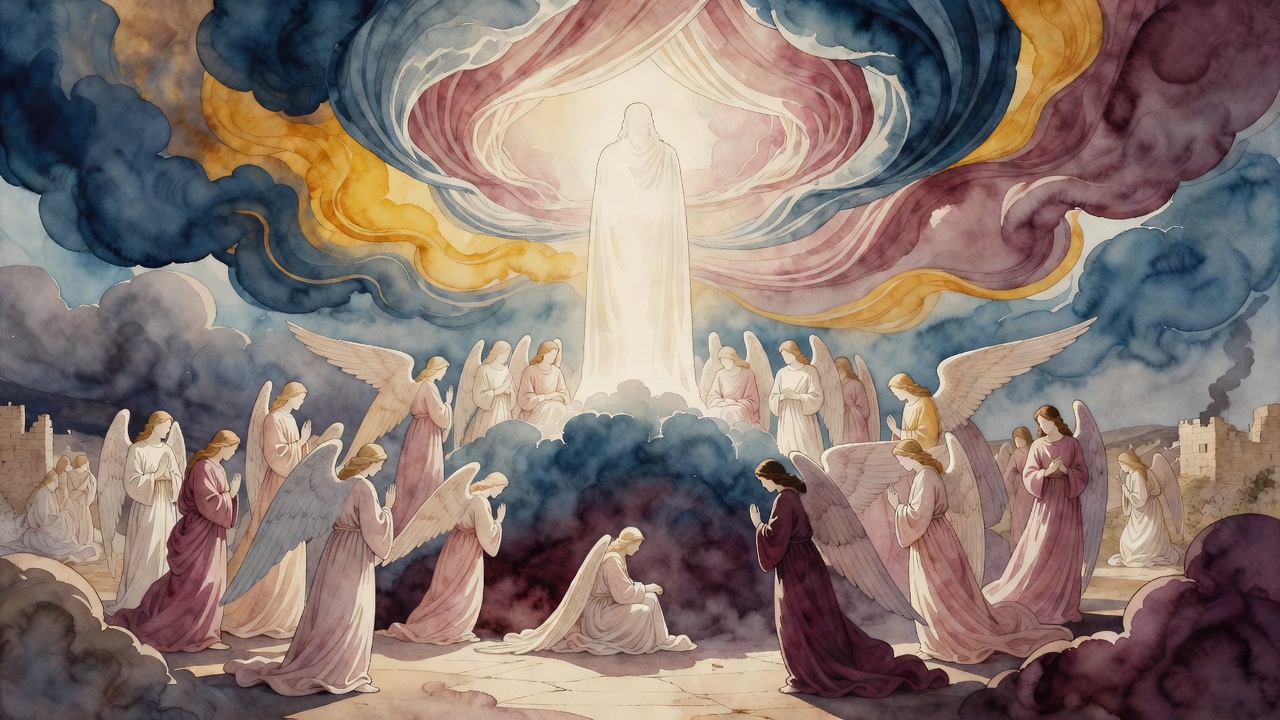
After the First Temple fell, after Nebuchadnezzar's armies had burned the sanctuary and driven the people into exile, God gave the prophet an assignment unlike any other: travel to the cave of Machpelah at Hebron, the double burial cave where the Patriarchs lay, and wake them. Bring them before God. They were summoned.
Jeremiah went. He stood at the entrance to the cave and called them out, one by one. And when they came and asked him why God had summoned them, he told them he did not know.
He was lying.
Why Jeremiah Lied to the Fathers of Israel
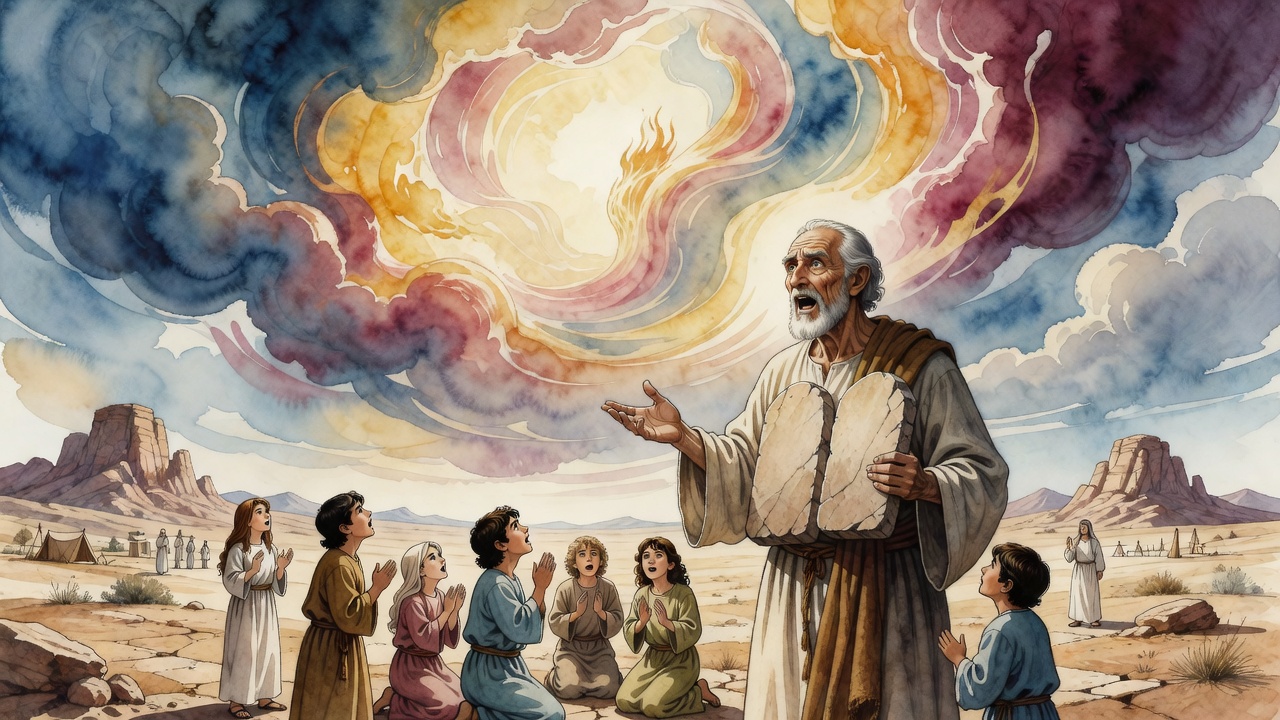
When he traveled to the Jordan River and called out to Moses, the son of Amram, arise, thou art cited to appear before God, Moses asked in alarm: what has happened? And Jeremiah said again: I know not.
The tradition offers the reason plainly. Jeremiah feared the Patriarchs would blame him. The Temple had fallen on his watch. During his prophetic tenure, the kingdom had collapsed, the people had gone into exile, the house that Solomon had built to stand forever had been burned to the ground. He had warned them. He had been imprisoned for warning them. He had been thrown into a lime pit. He had delivered every message God had given him with complete faithfulness. None of that changed the fact that he was the prophet of the generation that lost everything, and he did not know how to stand before the men who had been promised the land and say: it is gone and your descendants are in chains walking to Babylon.
So he said he did not know.
What Abraham Said Before God
The Patriarchs arrived before God carrying their grief and their questions, and the confrontation that followed was not what Jeremiah had feared. Abraham wept. Not with blame, not with accusation. With something that the tradition records as an overwhelming anguish on behalf of his children that he could not contain. He appealed to God, invoking every covenant, every promise, every sacrifice from the binding of Isaac forward, asking how this could have happened to the people who had been promised so much.
Isaac pointed to his own bound limbs, to the altar on Moriah, to everything he had surrendered when he lay down on the wood and accepted the knife above him. Jacob wept for the twelve tribes he had fathered, for the generations he had seen in vision who were now walking in chains.
And then Rachel spoke.
Rachel's Argument and the Answer
Rachel spoke last, and her argument was different from the Patriarchs'. She did not invoke her merit or her suffering or the covenant. She invoked a fact. She told God that she had allowed Leah, her sister and rival, to marry Jacob in her place, that she had given Leah the passwords and the signs, had hidden under the bridal bed and spoken the responses so that Leah would not be shamed. If Rachel, made of flesh, had surrendered her husband to her rival and felt no jealousy that prevented her mercy, how much more should God surrender the Presence in the Temple to an idol that was nothing, and feel no jealousy that prevented mercy toward the children of that bed?
The tradition records that this argument moved God in a way that the Patriarchs' arguments had not. A divine voice spoke: for your sake, Rachel, I will return Israel to their place.
Jeremiah had been afraid the Patriarchs would blame him. Instead, they went before God and made arguments on his people's behalf. His fear had been reasonable, given everything. It had also been wrong.
← All myths