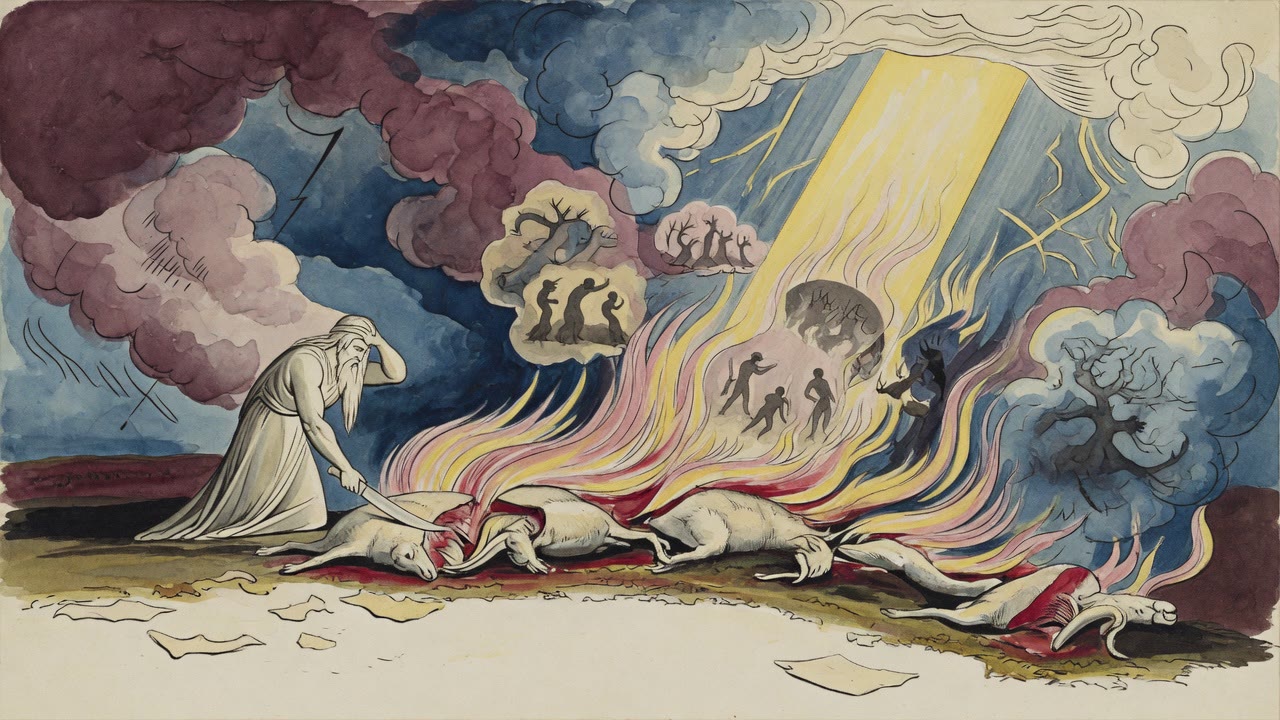
Moses Said They Were All Alive. Jeremiah Saw Children Dying of Thirst.
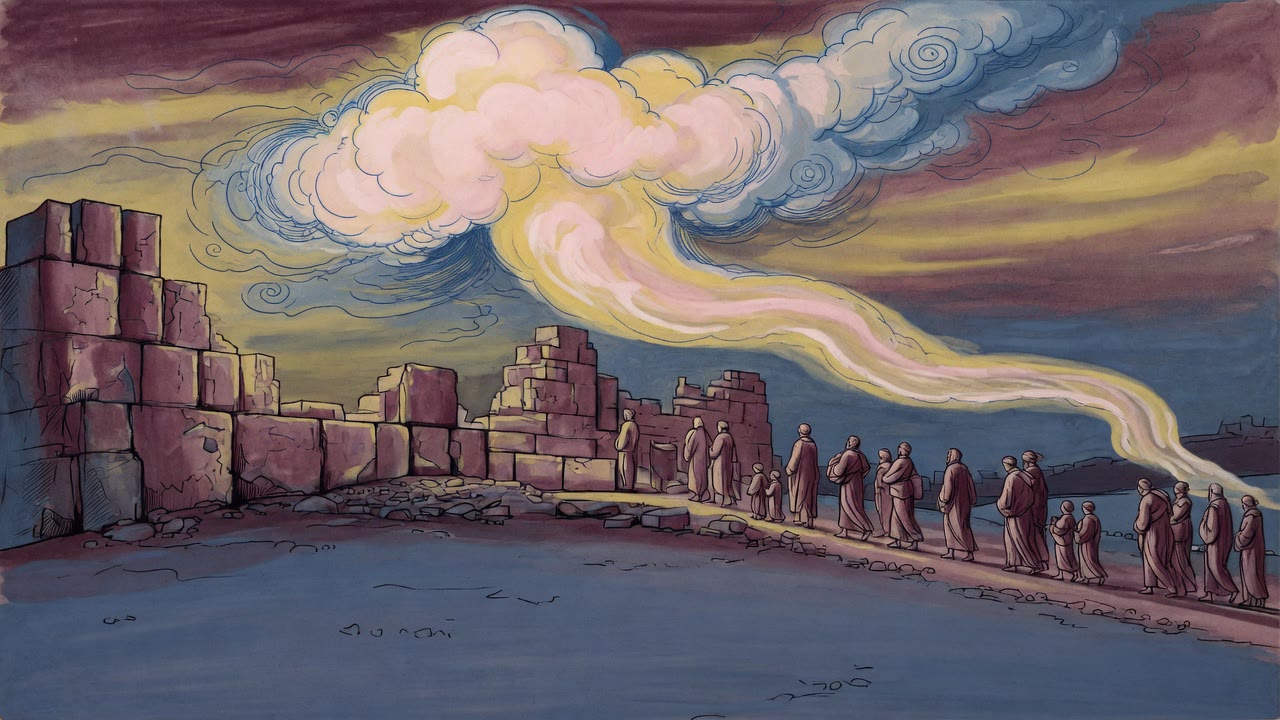
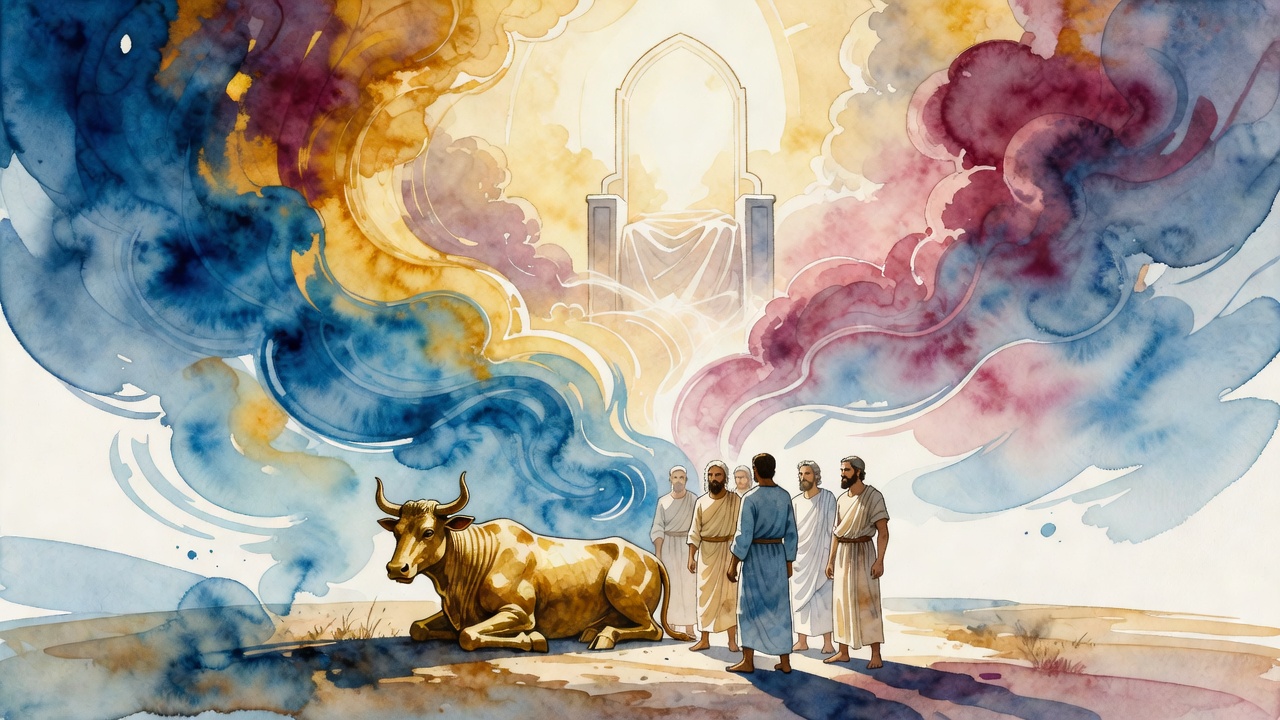
In the wilderness the cloud led Israel and sheltered them. In Lamentations God wraps himself in a cloud, and the prayers of the people cannot get through.
Table of Contents
 Click for full size
Two Departures, Two Sentences
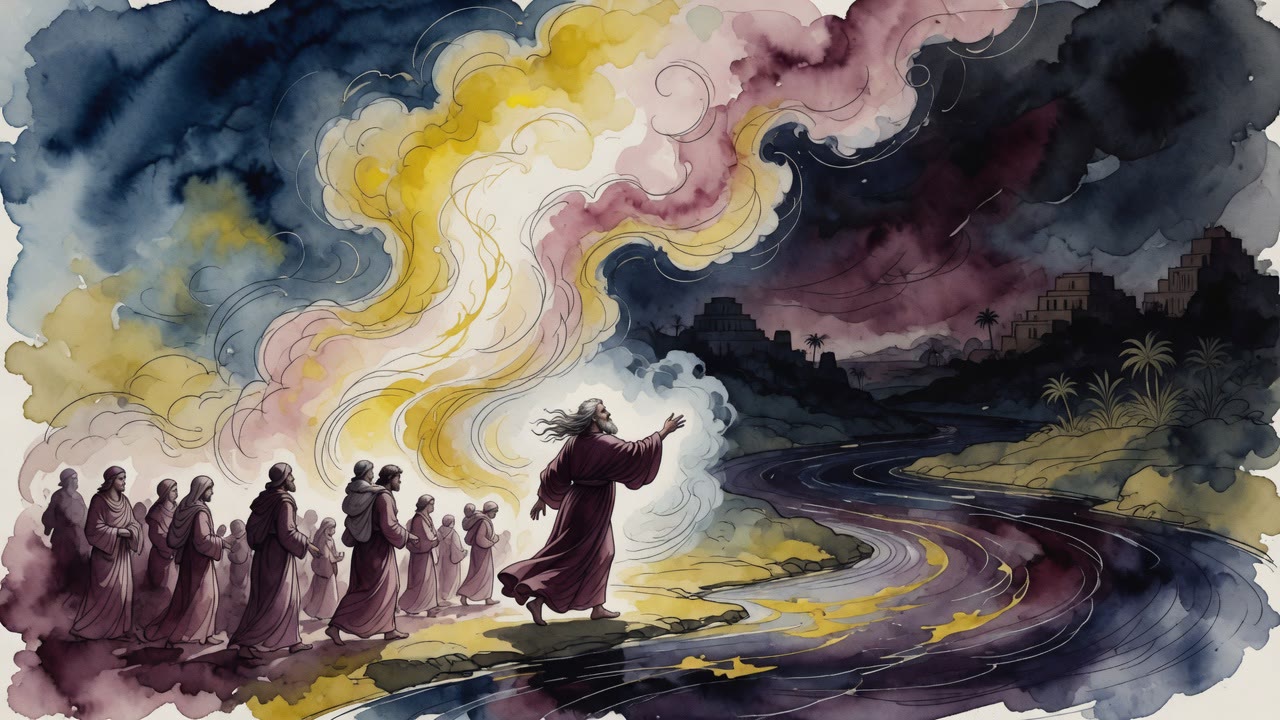
When Israel left Egypt, Moses looked out at the people gathered before him and said: You who held fast to the Lord your God are all alive today.
Every single person who had clung to God through the plagues and the sea crossing and the forty years in the wilderness was standing there. Breathing. Fed by manna. Covered by clouds. Alive.
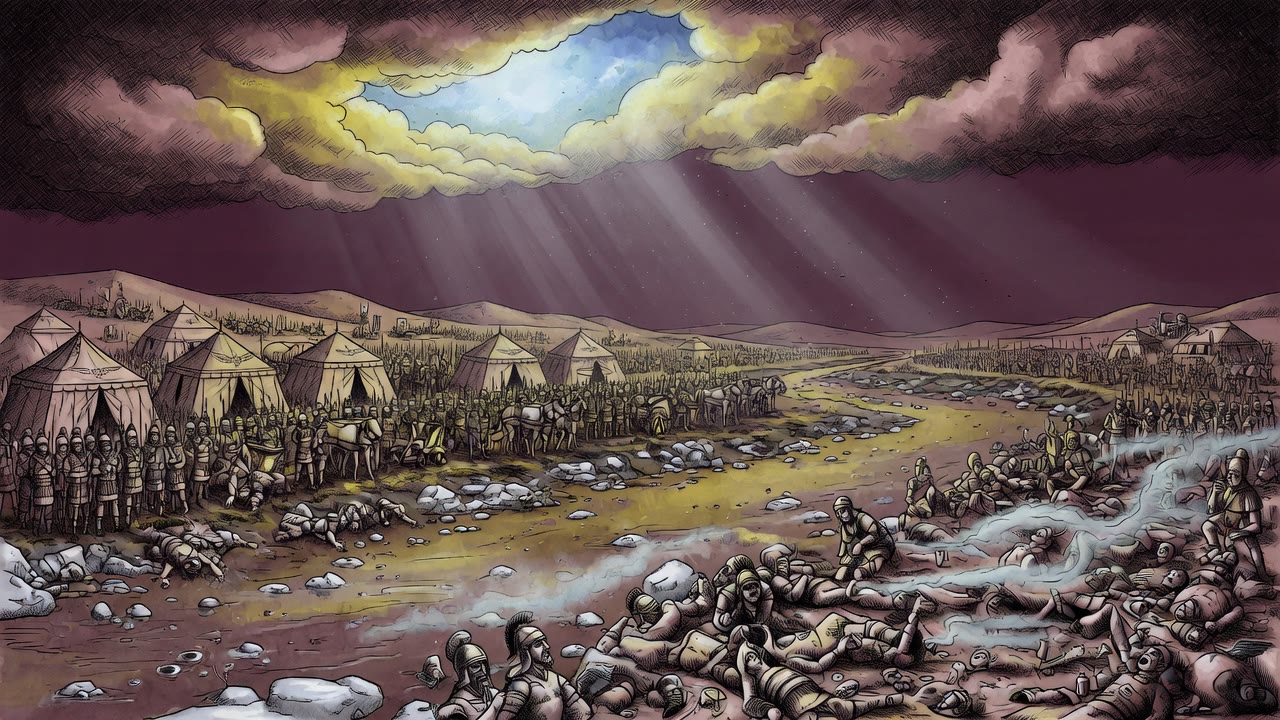
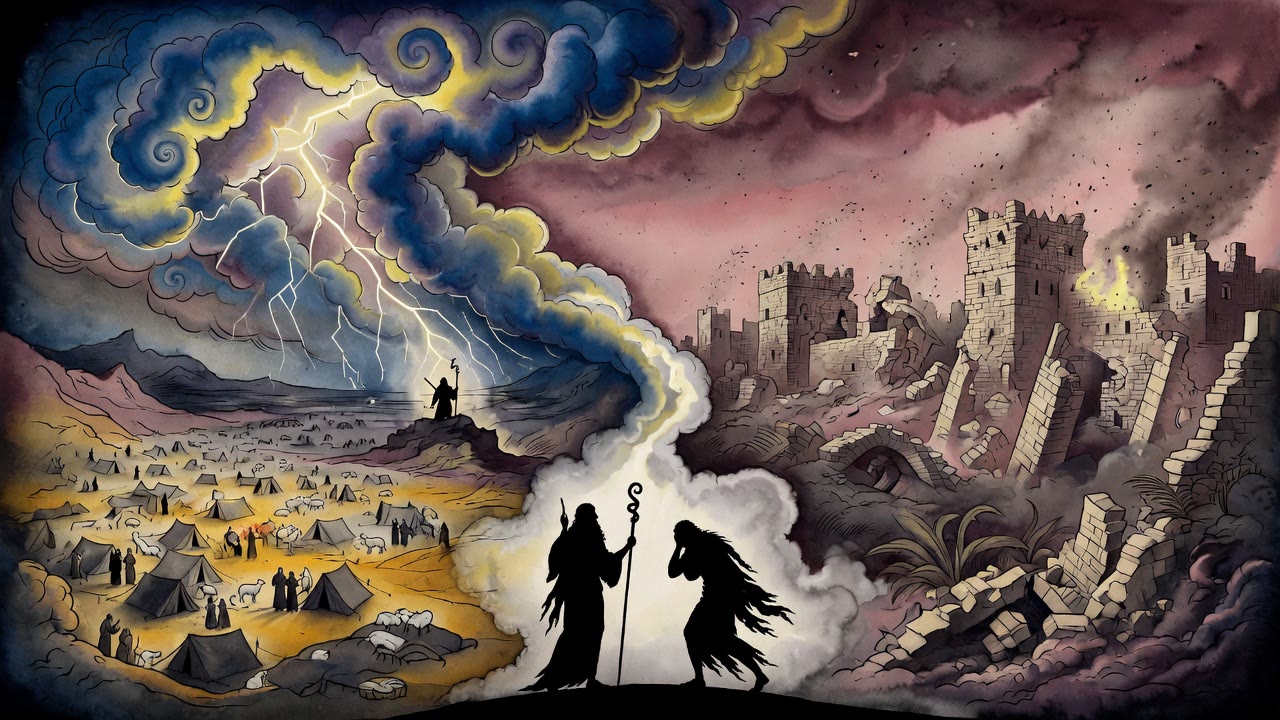
When Israel left Jerusalem, Jeremiah sat in the smoking rubble and wrote: The tongue of the suckling cleaves to its palate for thirst.
Nursing infants so dehydrated they could not cry. Their mouths dry. Their mothers empty. The Babylonian army behind them and the desert ahead.
Two Sentences, Side by Side
The Yalkut Shimoni, the medieval midrashic anthology compiled in thirteenth-century Germany by Rabbi Shimon of Frankfurt drawing on ancient rabbinic sources, sets those two sentences beside each other. That is the entire teaching. The juxtaposition is the commentary. No explanation is added because none is needed.
Moses looked at a people and saw life multiplied. Every face in the crowd was evidence of the covenant holding, of God's commitment playing out across forty years of wilderness. You who held fast, and you are all alive. The sentence is a testimony. It records what faithfulness produces.
Jeremiah looked at a people and saw what broken covenant produces in the bodies of the most vulnerable. Not abstract theological consequences. Thirst in an infant's mouth. A tongue stuck to the roof of a mouth too dry to cry. The consequence written in the bodies of children who had made no choices and done nothing to deserve what the adults around them had brought down.
What Changes Between Exodus and Exile
What changes between the Exodus and the exile is not God. The rabbis who preserved and transmitted this teaching understood that God was present in both moments. At the Exodus, the divine presence wrapped Israel in cloud and fire and bread from heaven. At the fall of Jerusalem, the Talmud in Berakhot 59a records that God wept over the Temple and said: woe is Me, that I have caused My house to be destroyed and My children exiled.
God mourning is not God absent. The presence is there in both cases. What is different is what the people did with it. Moses's generation held fast, and that holding fast was the thing Moses was testifying about when he said: you who held fast are all alive. The generation of the fall had not held fast. Not the majority of them, not the leadership, not the kings and priests and prophets who had managed the covenant institution for centuries until it was gone.
The suckling's thirst is the measure of the distance between the two departures. The distance is not measured in centuries or in theology. It is measured in water, in the absence of something a child needs to survive that the world around that child has failed to provide.
The Cloud That Screened the Prayers
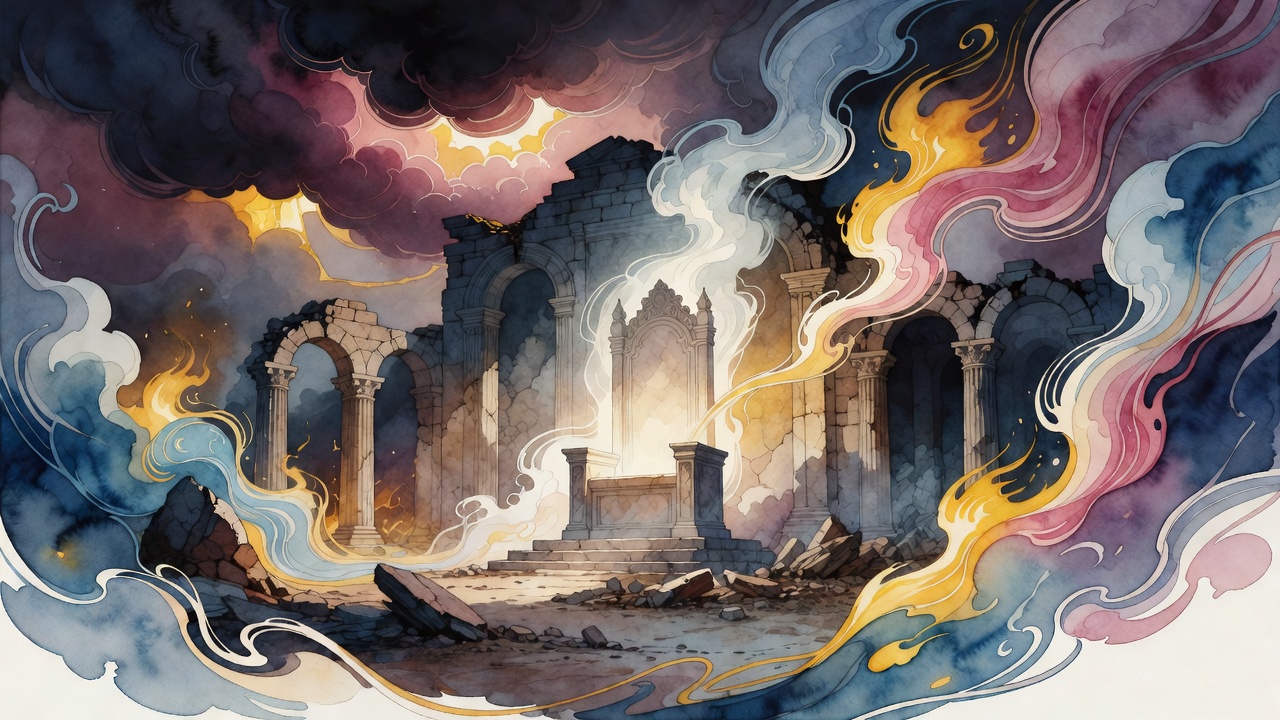
Jeremiah does not stop at the thirst. In the third chapter of Lamentations he writes: You have screened Yourself off with a cloud so that no prayer may pass through. The same word, cloud, that appears in the wilderness as shelter and guidance, appears in exile as obstruction. The cloud that once preceded Israel as a sign of God's presence now stands between the people's prayers and the place their prayers are addressed to.
This is not the same as God refusing to listen. It is Jeremiah's description of what a broken relationship feels like from the inside. The channel of communication that once felt open and responsive now feels blocked. The prayers go up and seem to stop somewhere short of where they are aimed. Not because God is gone but because the structure through which communication traveled, the covenant, the Temple, the whole institutional form of the relationship, has been dismantled.
Moses and Jeremiah stand at the two poles of the same arc. Moses at the moment when everything the covenant promised was present and visible and in full operation. Jeremiah at the moment when the mechanism of that promise had been taken apart piece by piece until all that remained was a man sitting in ruins trying to pray through a cloud.
← All myths