Ezekiel Sealed the Promise Moses Sang on the Plains of Moab
Moses sang about divine arrows drunk with blood on the edge of Canaan. Six centuries later, Ezekiel announced that the day Moses described had finally arrived.
Table of Contents
 Click for full size
The Song That Was Still Waiting
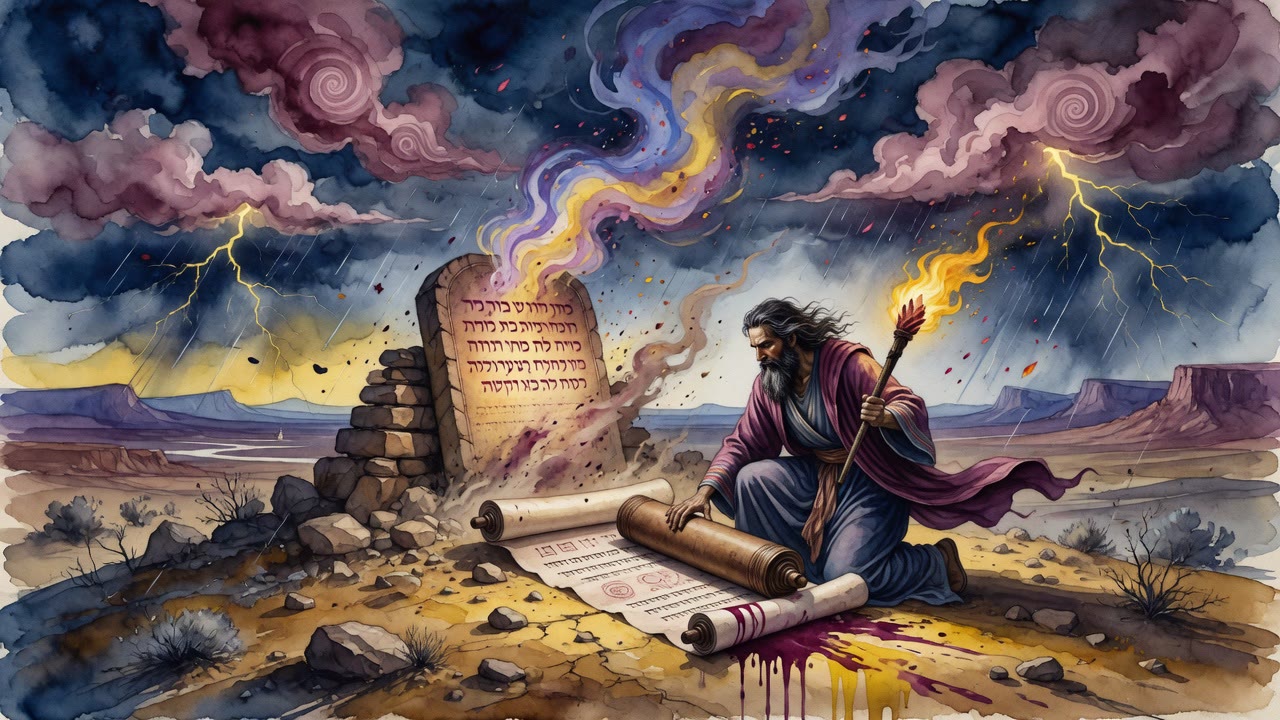
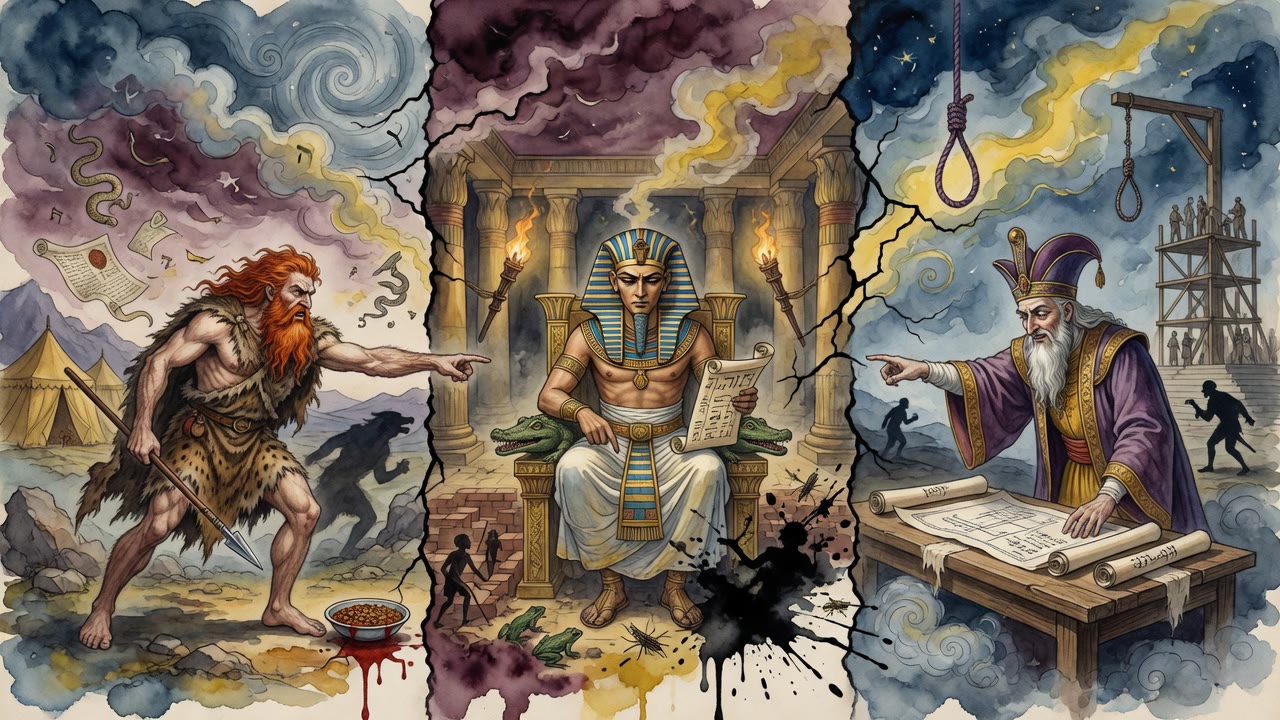
On the last day he would ever stand on Israelite soil, Moses opened his mouth and sang about blood. Not about liberation, not about the covenant, not about the land he could see from the ridge but would never enter. He sang about divine arrows drunk with blood, about swords gorging themselves on the flesh of the slain, about a day of reckoning that had not come yet but was fixed as firmly as Sinai.
The Song of Moses, Deuteronomy chapter 32, is one of the most ferocious poems in the Hebrew Bible. The wilderness generation was dead. The new generation stood before the Jordan. And Moses, instead of a gentle blessing, gave them a warning encoded in verse, its fulfillment left open and waiting like a blade sheathed but not put away.
Six centuries passed. Then Ezekiel, exiled in Babylon, opened his mouth and said: Behold, it has come. It has arrived. This is the day of which I spoke.
The Referent of a Pronoun
The Mekhilta, the tannaitic commentary on Exodus from the school of Rabbi Ishmael, edited in the Land of Israel around the early third century CE, was not content to let the word spoke go unexamined. When Ezekiel said the day of which I spoke, who was speaking? Ezekiel had never before made this announcement. The I pointed backward across six centuries to someone else's words.
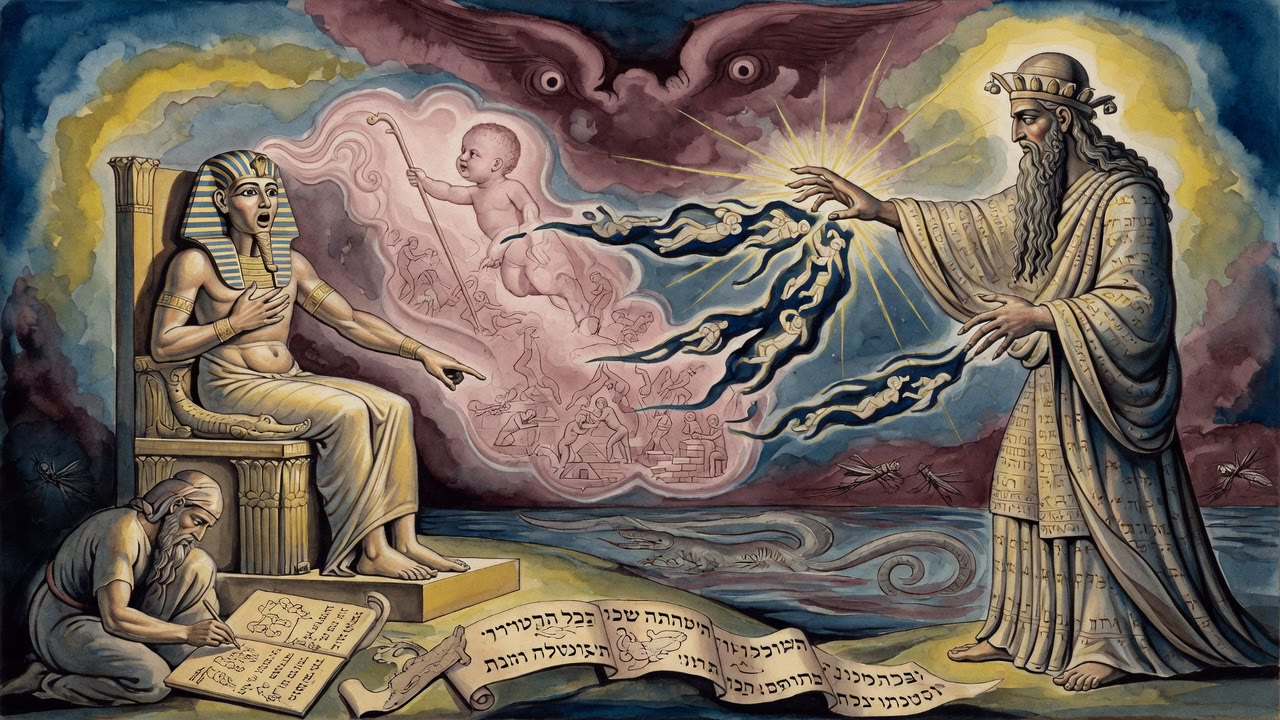
The Mekhilta traces it to Deuteronomy 32:42: I will make My arrows drunk with blood. The speaker of that line is God, speaking through Moses. Ezekiel 39:8, this is the day of which I spoke, completes the sentence Moses had opened. Moses issued the prophecy. Ezekiel announced its arrival.
This is not coincidence. It is architecture. The tradition understood prophecy not as a sequence of separate utterances from different mouths across different centuries, but as a single long sentence with God as its subject and the prophets as its punctuation.
The Angels Who Attended the Exile
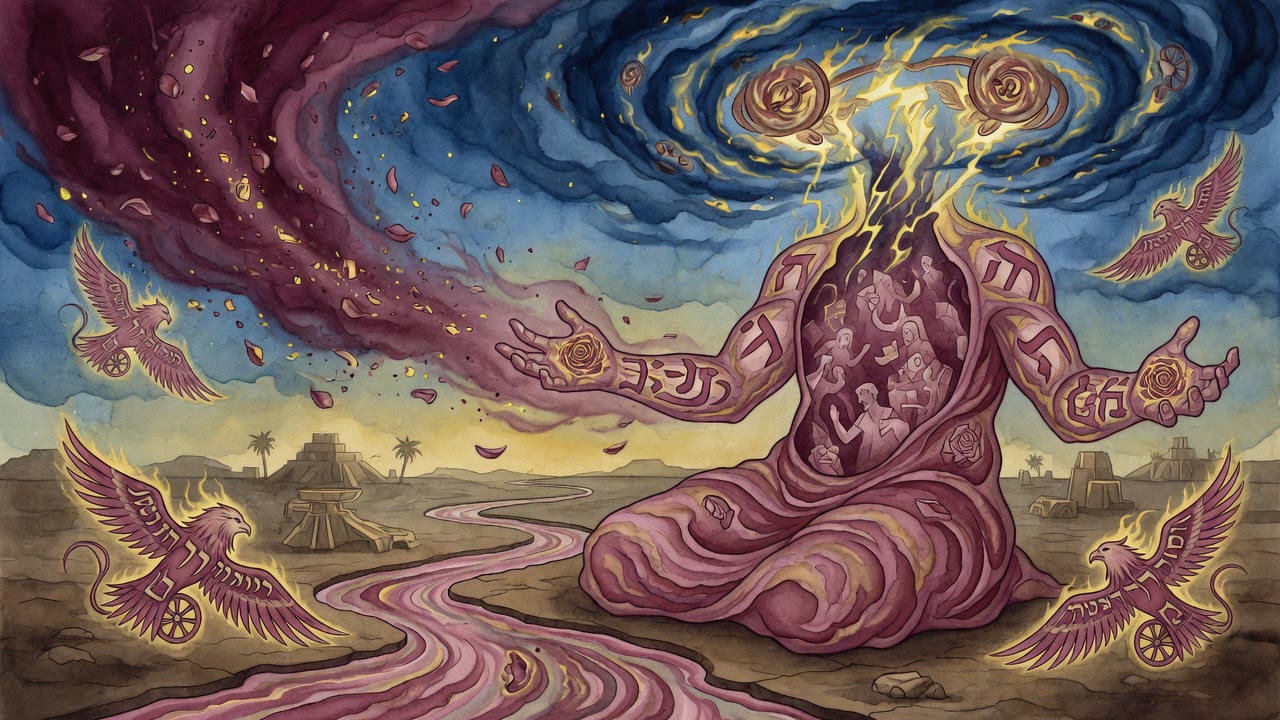
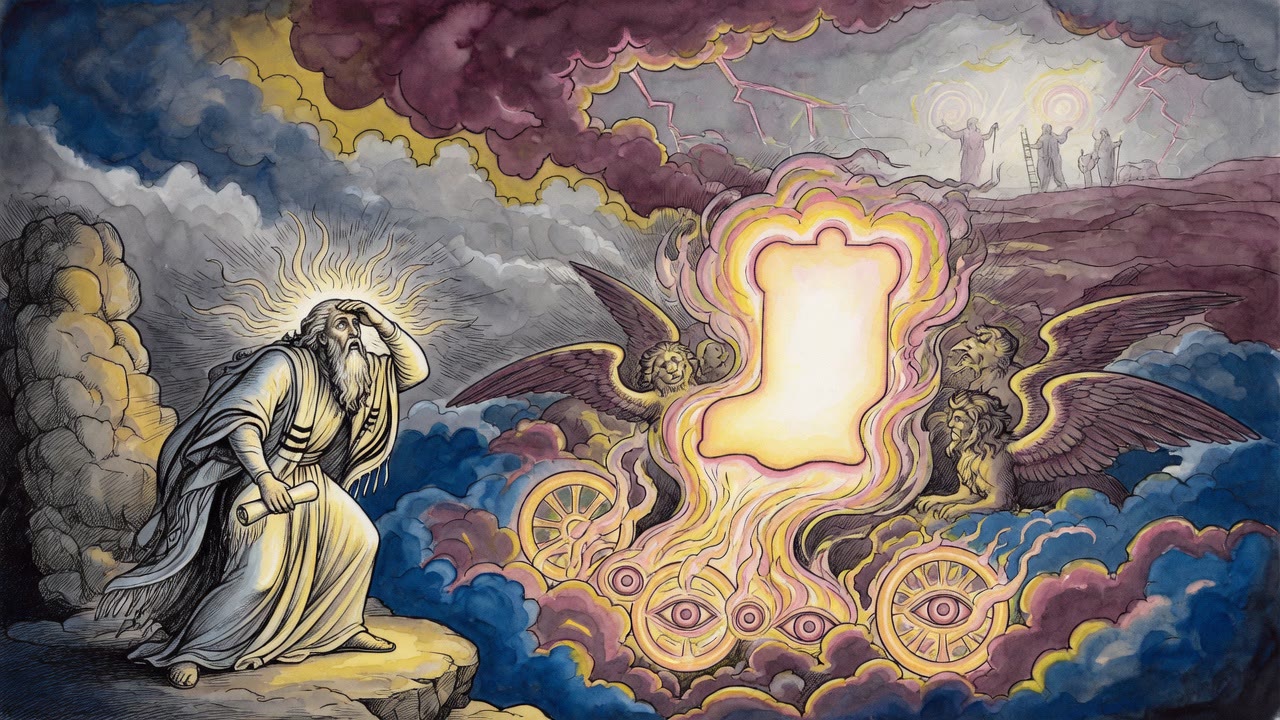
Vayikra Rabbah, the fifth-century Palestinian midrash on Leviticus, extends the connection between Moses and Ezekiel through a different register. When Ezekiel was carried into Babylon with the exile, he was not alone. The divine presence accompanied him. This is explicit in the opening vision: the heavens opened over a foreign canal, the wheels turned over foreign soil, the throne appeared where no temple stood. Exile did not break the connection between God and Israel. It relocated the throne.
The same text notes that Ezekiel received angelic assistance. The creatures of the vision were not merely spectacle. They were the mechanism by which divine speech moved through a broken world. Where Moses had the mountain and the cloud, Ezekiel had the canal and the storm. The apparatus was different. The transmission was the same.
The Transgression That Made the Vision Necessary
Ezekiel's relationship to the prophetic tradition was not without its complications. The rabbis noted that he had described the divine in terms no earlier prophet had dared use so explicitly. The chariot, the wheels, the fire, the man-shaped figure on the throne: all of this was, by later standards, extremely sensitive material.
The tradition preserved a sharp rabbinic objection to Ezekiel's candor: he had revealed in the marketplace what Moses had only whispered in secret. Moses had seen clearly and said little. Ezekiel had seen through nine clouded panes and filled pages. Some rabbis thought this was a violation of prophetic restraint, a kind of recklessness in the face of the holy.
But another strand of the tradition ran the opposite direction. Ezekiel's recklessness was Ezekiel's mercy. The exiles by the Chebar Canal had lost everything visible: the Temple, the priesthood, the daily sacrifices, the pilgrimage festivals, the altar smoke. What they had not lost, what Ezekiel was at pains to make undeniable, was the presence. It had followed them. It was there. The excessive description was not boasting. It was testimony given under conditions where testimony was the only thing keeping the community alive.
← All myths