Sarah the Prophet Saw Ishmael Bowing to an Idol
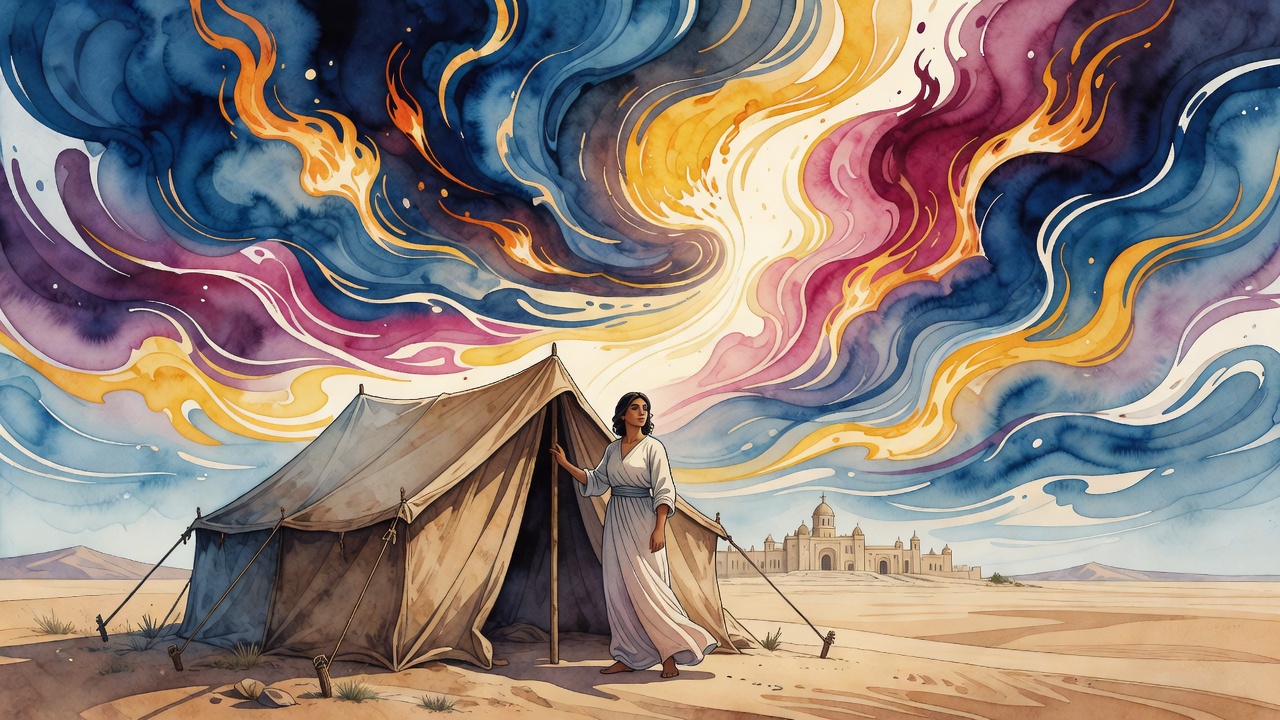
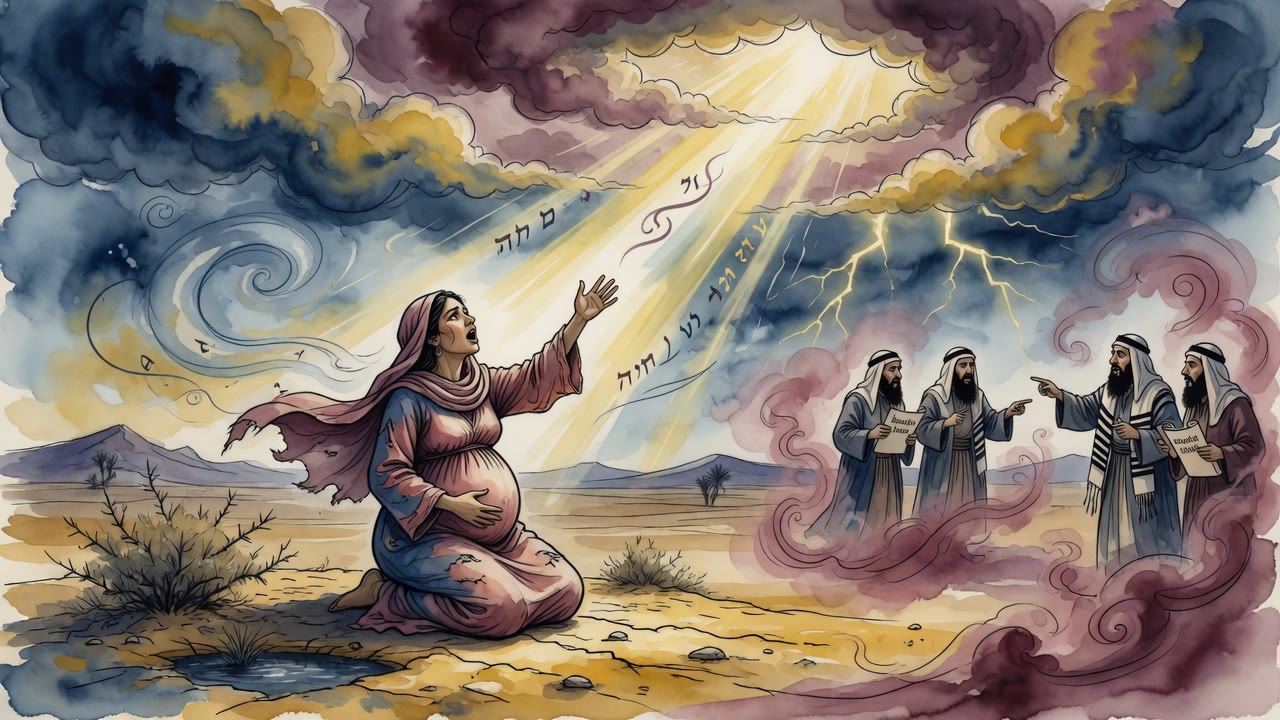
Abraham was a hundred, and the weaning tables were full. Sarah looked past the guests at the older boy and the small figure at his feet.
Table of Contents
The tables were out and the whole household was eating. Isaac had been weaned that day, and Abraham, a hundred years old and the father of a child everyone had written off, was giving the biggest feast of his life.
 Click for full size
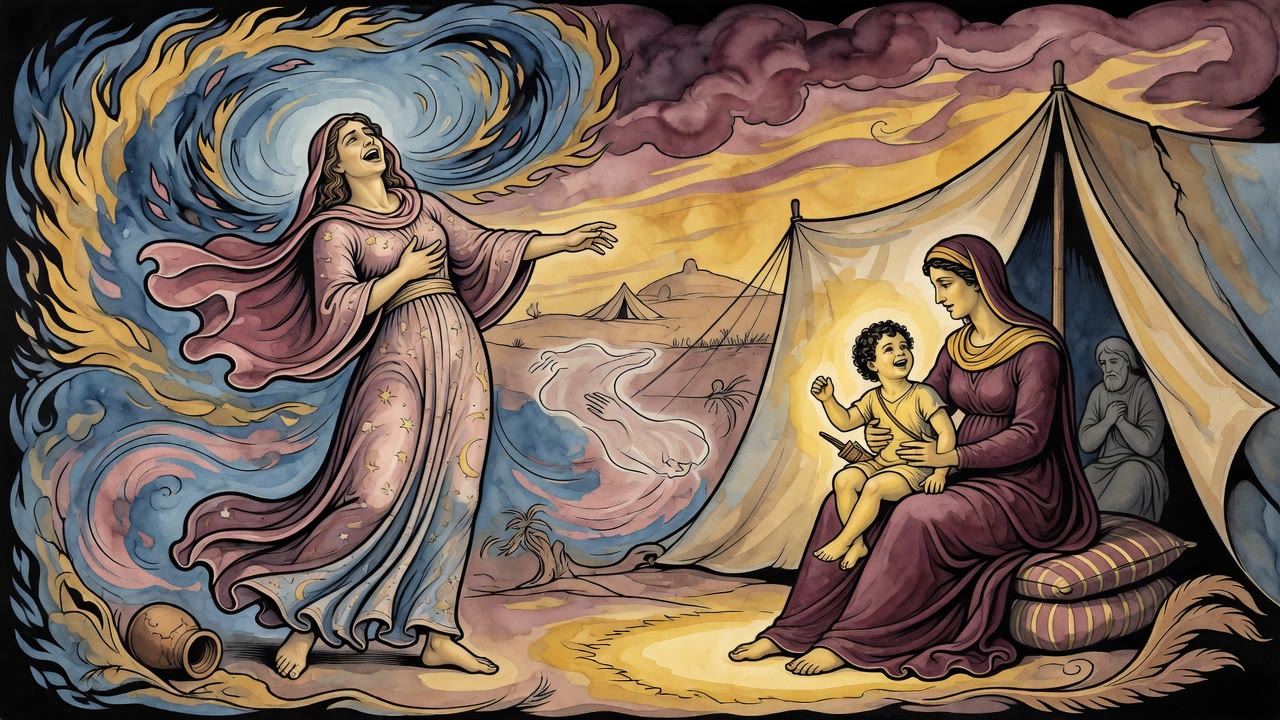
Sarah had been saying it all week to anyone who came near her. "The Lord has done wonders for me. Everyone who hears about this is going to marvel." She was still saying it when she looked past the guests and found Ishmael.
He was playing at worship. Not the worship of the house. Some other people's rite, done as a joke or done in earnest, with the bowing and the mumbling and a small figure set up to bow to.
The laughter went out of her.
Throw This Servant Out
"Throw this servant girl out," she told Abraham, "and her son with her. The son of this servant is not going to inherit alongside my son. And he is going to make war on Isaac."
It sat badly with him. Not because of the woman. Because of the boy, his own boy, the one who kept slipping toward strange worship, whom he was now being told to hand over to the desert instead of keeping close enough to correct.
He was still refusing when the answer came.
"Do not let it be evil in your eyes, not for the youth and not for your handmaid. Listen to everything Sarah tells you, because she is a prophetess, a nevi'ah (נביאה). Your line will be counted through Isaac, and the son of the handmaid will not be reckoned after you."
Then, before Abraham could take comfort in that: "But I have appointed him a people who live by the raid, because he is your son."
Sarah had not been guessing at the feast. She had been seeing. Abraham had stood in the same room, looked at the same child, and read it as a father reads a difficult son.
Bread, Water, and a Writ
He got up early, the way he always got up early for the things that cost him.
He took bread and a cruse of water and set them on Hagar's shoulder, then bound the load to her waist so that anyone who passed her on the road would know at a glance what she was: not a wife of the house, a servant sent off. He put a bill of divorce in her hand. Then he sent her away with the boy.
She walked. Somewhere past the last landmark she lost the road and went out into the wilderness that lies below Beersheba.
She Threw the Idol First
At the mouth of that wilderness their minds went back to the strange worship, and they turned toward it.
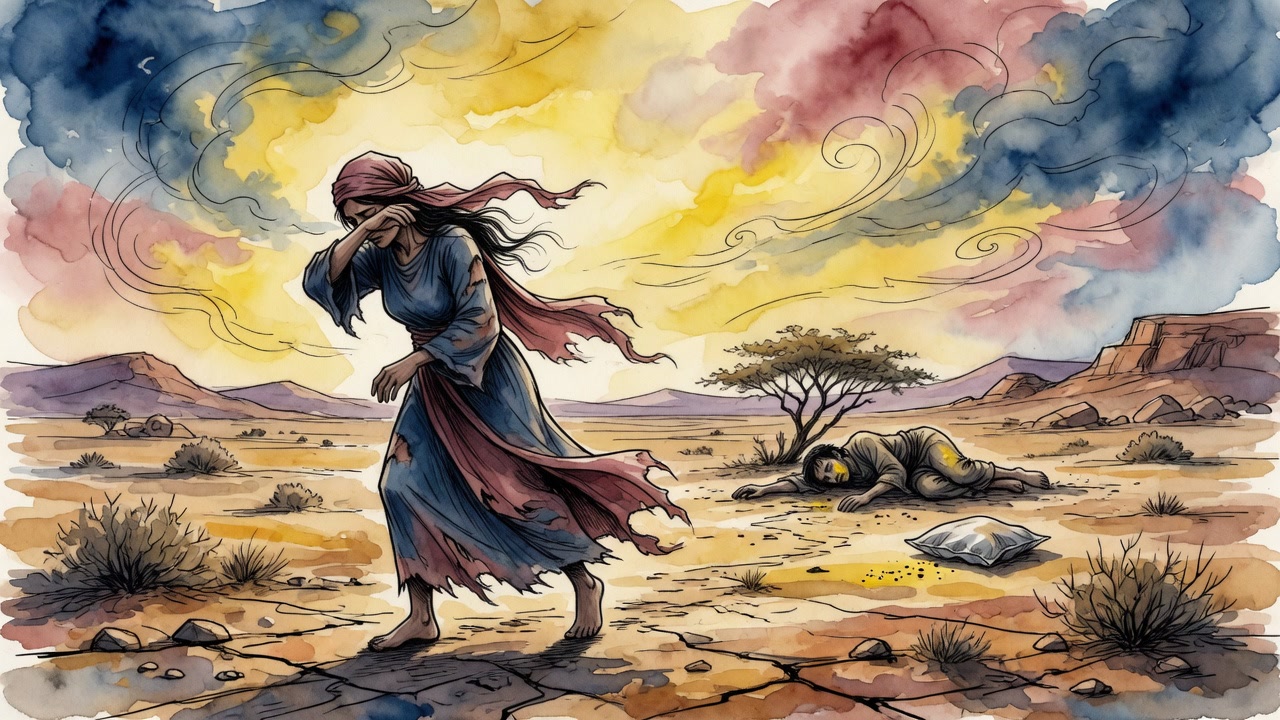
The thirst hit Ishmael like a fever. He drank and drank and drank the cruse dry, and it did nothing. His flesh shrank on him. He went down.
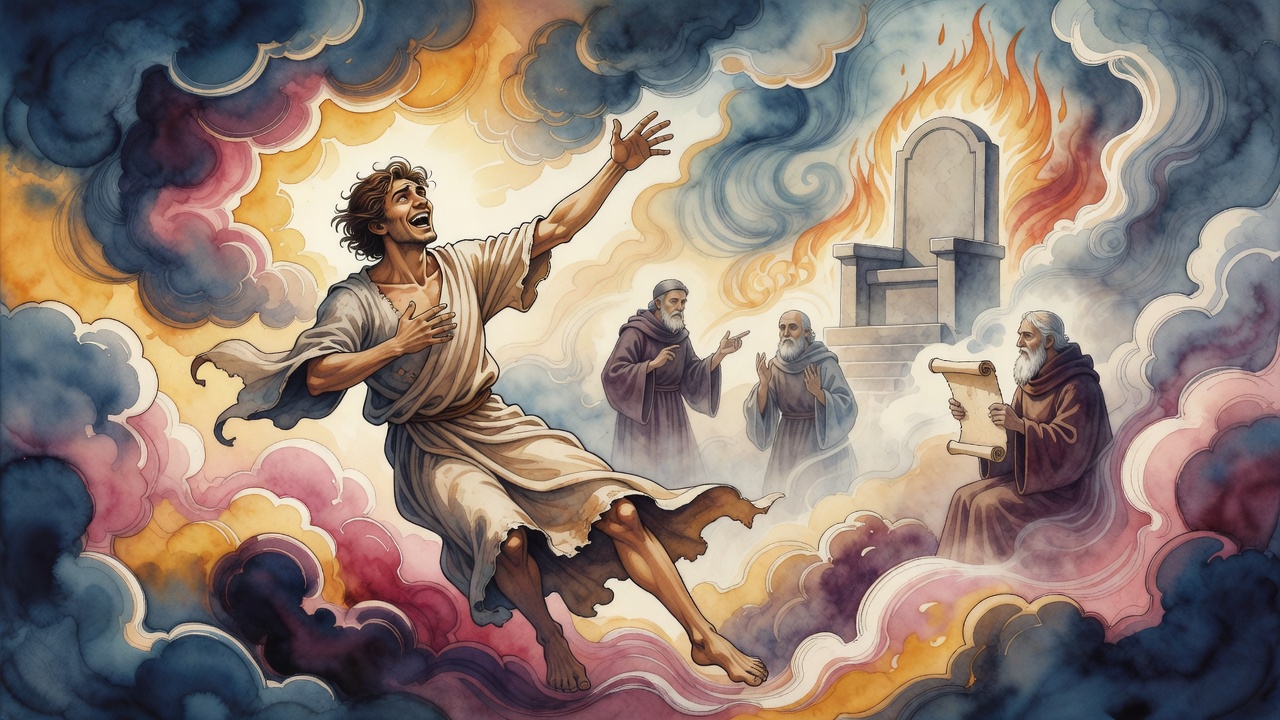
Hagar picked him up. He was a young man by then and she was not strong enough for it, and she carried him anyway until her legs quit. She called out to the Fear of his father, the God of Abraham, who had met her in a desert once before and made her promises.
Nothing answered.
She laid him down under a bush. Then she took the idol out of her pack and threw it away from her, walked off the distance an arrow flies from a bow, and sat down on the ground with her back to him.
"I cannot watch the child die."
She turned around anyway, so she was facing him, and cried where he could not hear her.
The Well Under Her Feet
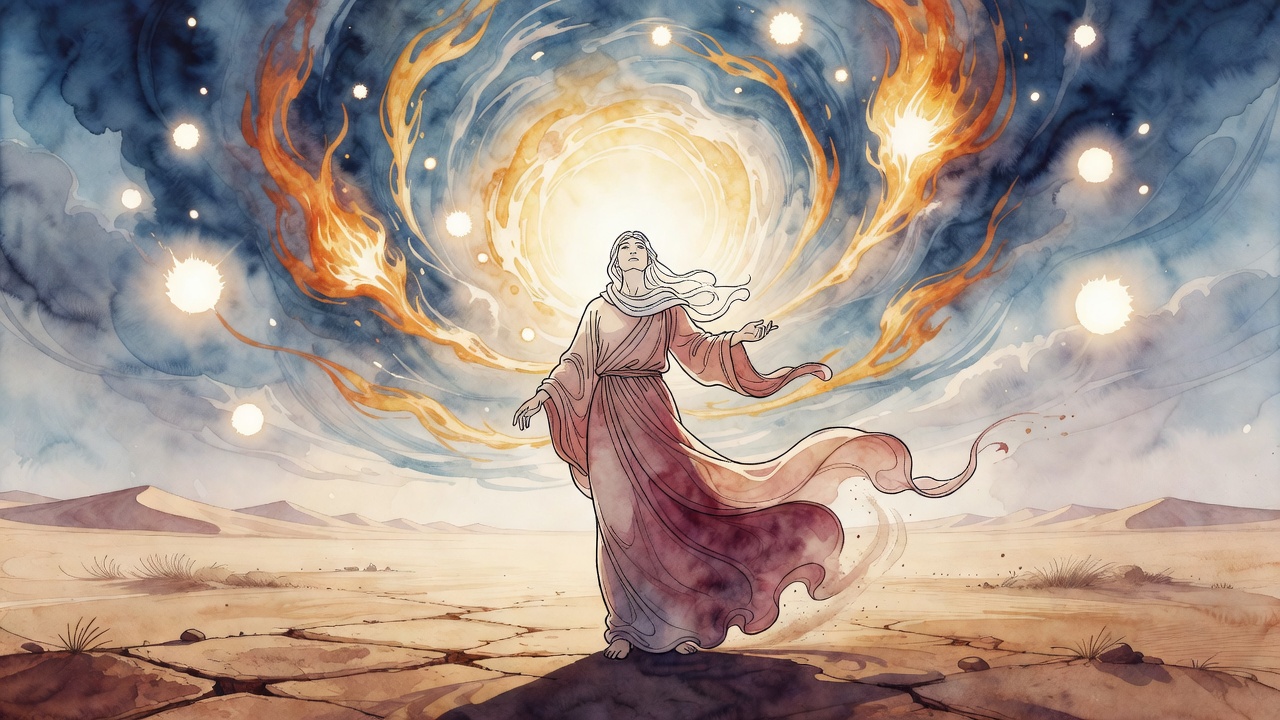
It was the boy's voice that went up, not hers. It was heard for the sake of what his father was, and the messenger came down on that account.
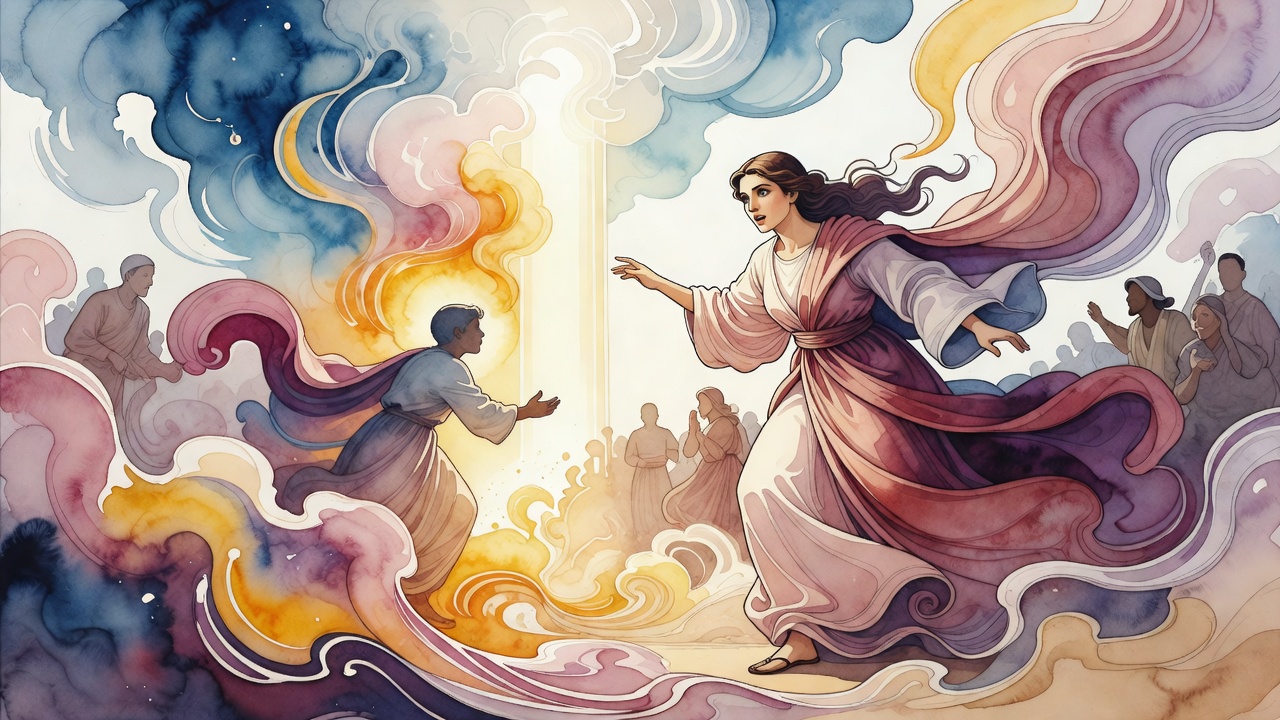
"What is it, Hagar? Do not give way. The boy's voice has been heard. He is not being judged by the evil he is going to do. He is being judged by Abraham's righteousness, and there is mercy for him where he lies. Get up. Take hold of the child. Put your strength into him. I have appointed him a great people."
Her eyes opened and there was a well in front of her.
She filled the cruse and got it to his mouth and held his head up while he drank. He lived. He grew up out there in the wilderness of Paran and became a master of the bow, and the water that saved him had been sitting under her feet the entire time she was weeping into the sand.
← All myths