God Humbles Samuel at the House of Jesse
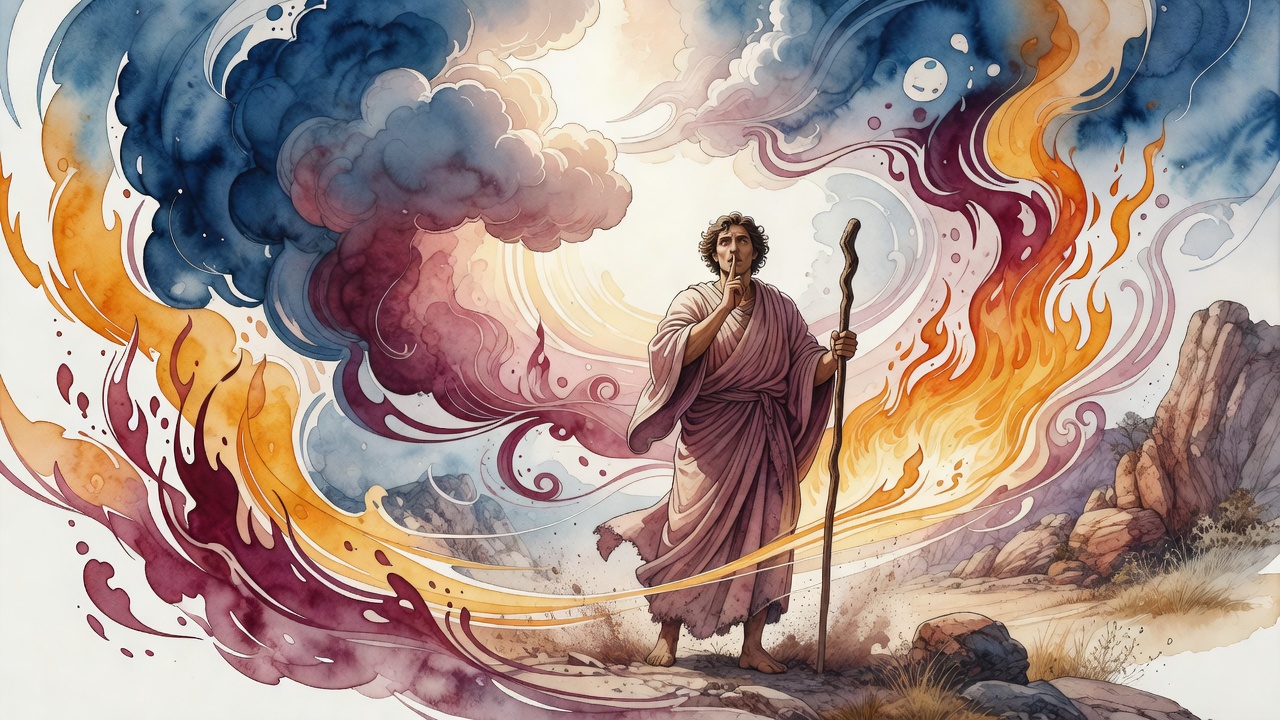
Samuel lifted the horn for Jesse's eldest. God said no. Seven sons later the oil still sat in the horn, and the shepherd had not been called.
Table of Contents
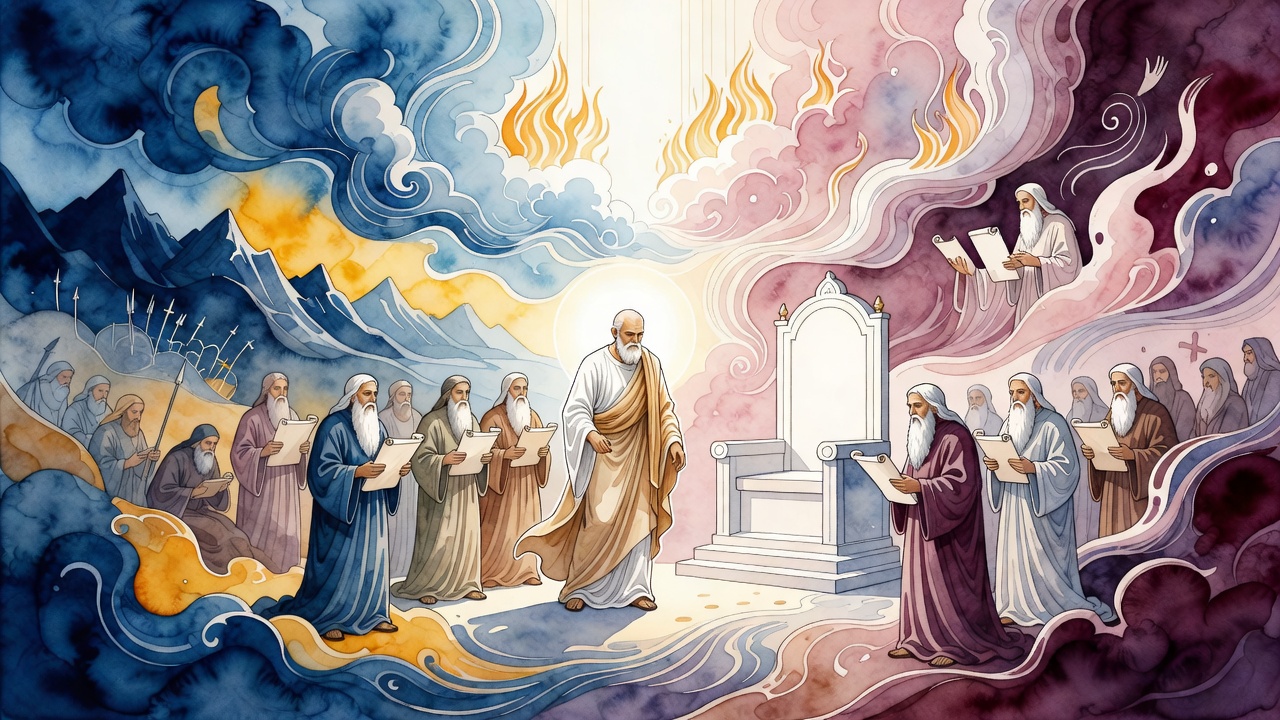
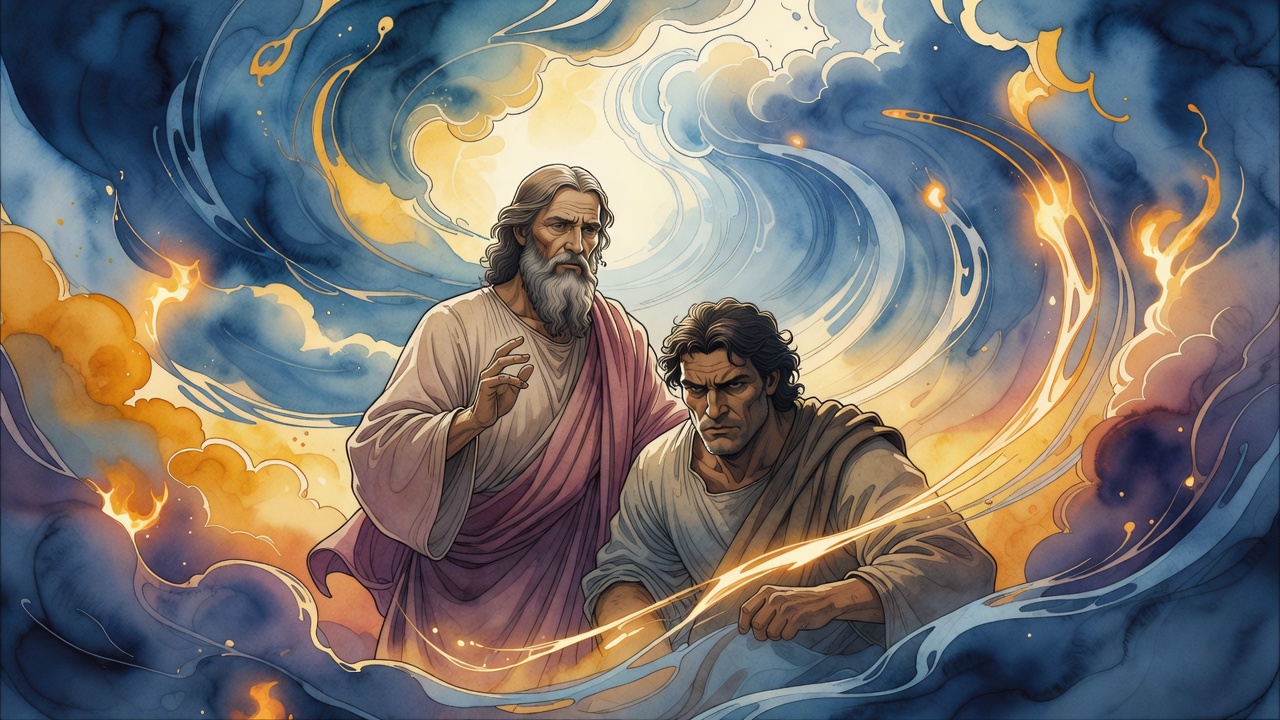
Samuel lifted the horn the moment Eliab filled the doorway. Jesse's eldest stood tall, broad through the shoulders, the kind of man a prophet could already see under a crown. Samuel had anointed Saul once. He knew the weight of oil on a head.
 Click for full size
God said, "No."
The Seer Who Could Not See
Samuel had named himself ha-ro'eh (הָרֹאֶה), the seer, when Saul first walked toward him out of the fields. He had spoken for God through the wilderness years. He had been right so long that the rightness sat in him like a second staff.
God had let that happen. Then God used it.
"Look not on his appearance, nor on the height of his stature, because I have refused him" (1 Samuel 16:7). Eliab's anger ran too hot. God had already looked at the eldest and set him down. Samuel had looked and reached for the oil. The gap between those two looks was the whole visit.
"Samuel," God said, "you see? I will show you that you do not see."
Seven Sons and Seven Nos
Jesse brought Abinadab. Samuel waited. The horn stayed still.
"Not this one."
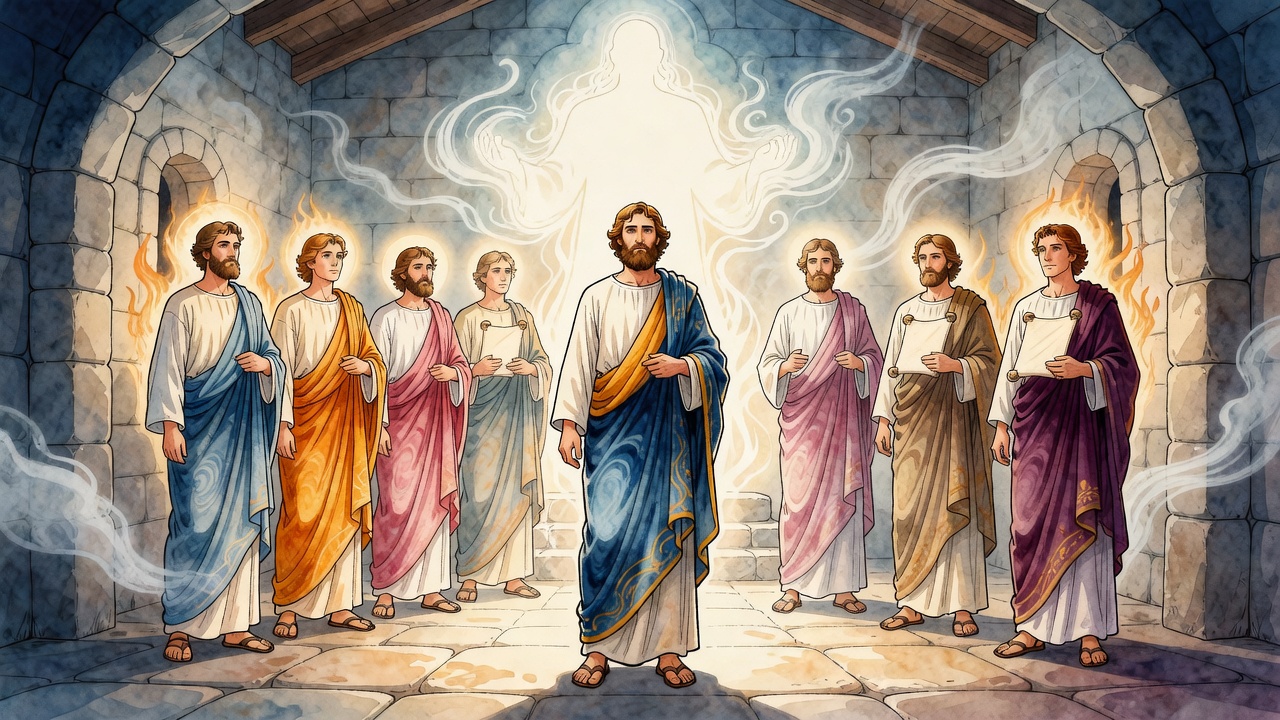
Then Shammah. Then the next, and the next, until seven sons had stood in the same light from the door. Seven times Samuel's hand started toward the horn. Seven times it stopped. The house smelled of bread and sheep. No one sat. A prophet who will not eat is a man who has not finished, and Jesse's table waited with the food untouched.
Man looks at the outside. God looks at the heart. Samuel's eyes had done honest work. They had also done all the work they were able to do without help.
The Boy Still With the Sheep
"Are these all your sons?" Samuel asked.
Jesse looked at the floor. There was one more. The youngest was out with the flock. He was not the son a father brought first to a prophet. In some tellings Jesse was not even sure how to name that boy in a room like this. David stayed with the sheep until someone was forced to send for him.
Samuel would not sit. "Send and fetch him. We will not sit down until he comes here" (1 Samuel 16:11).
The bread cooled. The brothers stood in a line that had already been refused. Bethlehem waited on a shepherd.
The Oil Left the Horn
David came in flushed from the sun, red-cheeked, smelling of grass and dust. Nothing on him announced a king. He was a boy who had been left with the animals.
God said, "Arise, anoint him, for this is he" (1 Samuel 16:12).
Samuel lifted the horn. He did not have to pour. The oil moved. It left the horn and went toward David's head as if a hand other than Samuel's had been waiting inside the vessel. The seer's job, in that instant, was to hold still and let someone else's sight finish the work.
The oil ran into the boy's hair. The brothers watched. Jesse did not speak. Eliab's daughter would later marry into the royal house, so the first look was not wasted, but the oil had not been for him. It had never been for him.
The Gate That Almost Closed
Above the house, the gatekeepers of the divine court raised a case. How does a descendant of Ruth the Moabite enter here? Moab is shut. A Moabite shall not come into the congregation.
The answer came back hard and clean. A different law applies to the women of Moab than to the men of Moab. Ruth had already been admitted. Her great-grandson would be king. The gates opened.
Samuel set the empty horn down. He had walked into Bethlehem certain he could see the next king. He left having been wrong seven times on purpose, and right only when God moved the oil without him.
← All myths