Isaiah Stood Before Kings Who Could Not Silence Him
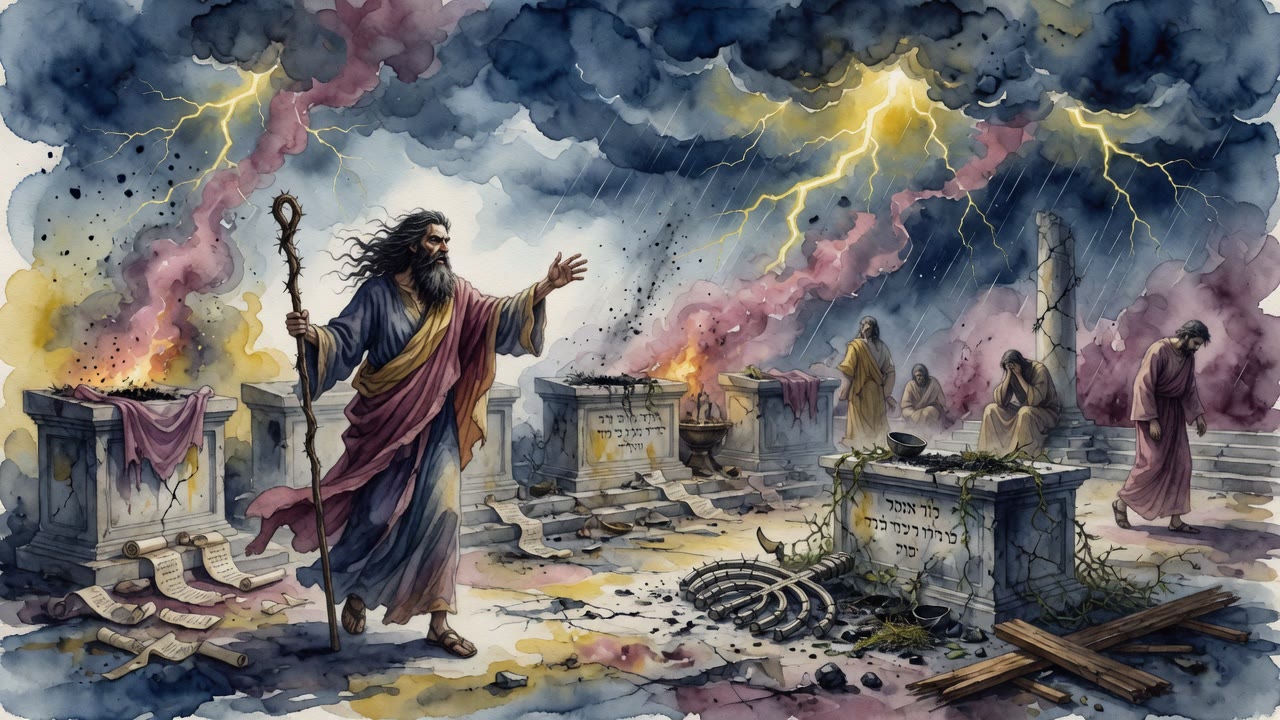
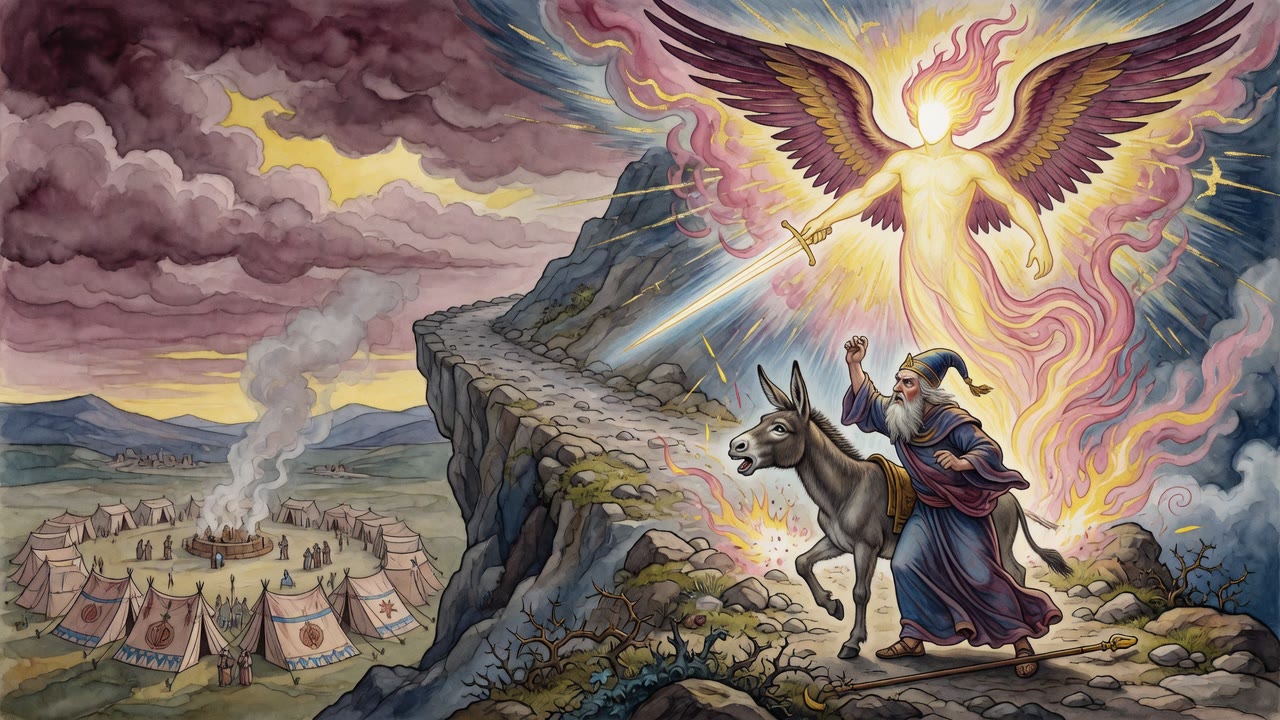
King Ahaz pulled a cloak over his face and took the long way around the court. He would rather go unseen than meet Isaiah's mouth.
Table of Contents
 Click for full size
The King Who Hid From a Mouth
King Ahaz pulled a cloak over his face and took the long way around the court. He was still king. He still had guards. He still had a throne. He would rather go unseen than meet Isaiah in the open and hear what the prophet had come to say.
Ahaz knew he was straying. He did not stop straying. He only tried to dodge the rebuke. A king disguising himself to escape a prophet is a small respect, almost comic, and it was the one good quality the old tellings grant him. He was the son of a pious father and the father of a pious son. That lineage, joined to this ducking of Isaiah's gaze, is why Ahaz did not forfeit his portion in the world to come. He did not escape punishment. In the war against Pekah of the north he lost his first-born son, a hero, and the loss hit him as king and as father at once.
A Coal From the Altar
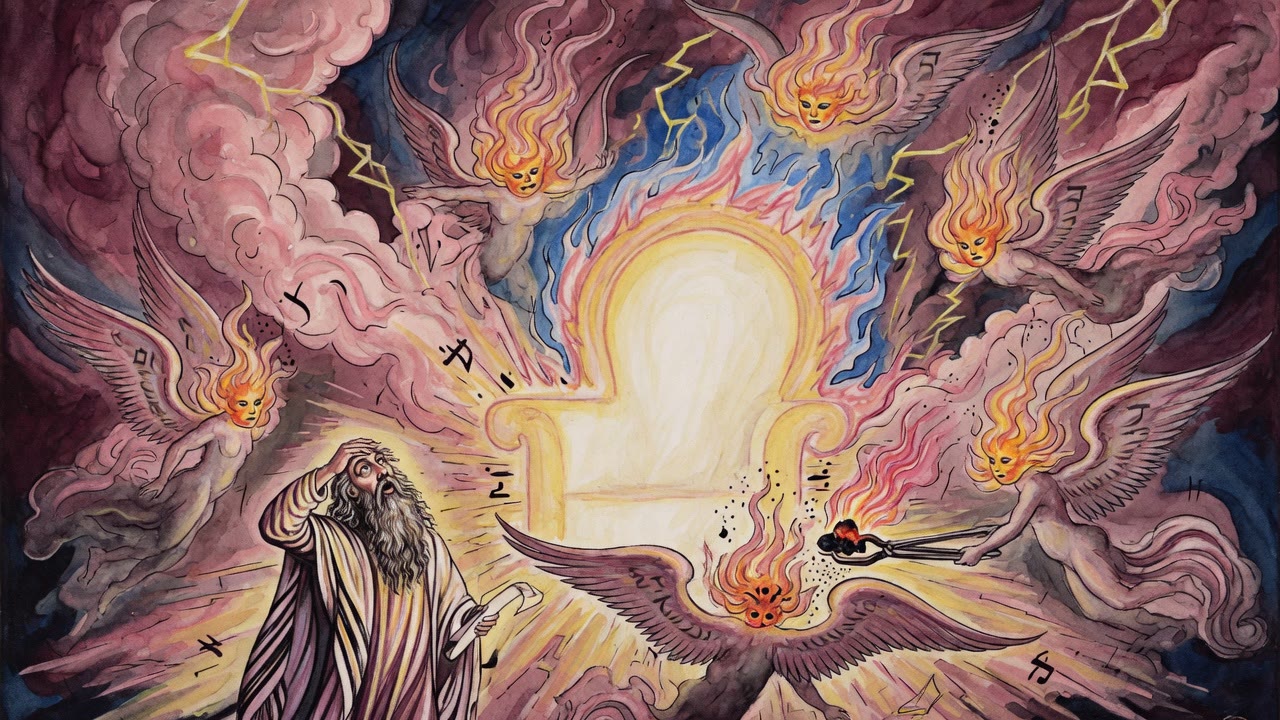
Isaiah had been marked for this work in the year King Uzziah died. He stood in the Temple and the foundations of the thresholds shook. Seraphim with six wings. The hem of the divine garment filling the house. Smoke. Holy, holy, holy.
His first word was not a prophecy. It was collapse. "Woe to me, for I am ruined. I am a man of unclean lips, and I dwell among a people of unclean lips, and my eyes have seen the King, the Lord of hosts" (Isaiah 6:5).
Then a seraph took a live coal from the altar with tongs and pressed it to his mouth. "Your guilt is removed. Your sin is purged." The question came next. Whom shall I send? Who will go for us? Isaiah said, "Here I am. Send me." He went. The mouth that had been unclean was now a tool, and it would not be put away because a king preferred a cloak.
He Comforted the Mourners of Zion
He stood before Ahaz and said, "Ask for a sign from God." Ahaz refused. He stood before Hezekiah when Assyria was at the walls and said, "Do not be afraid." He stood in the Temple and named the hypocrisy of offerings brought by hands that would not do justice. Court and priesthood both learned to hate the sound of him. He said the words anyway.
With a great spirit he saw the end. He told mourners of Zion what would be, secrets before they occurred, and he did not sweeten the near years to make the far ones easier to hear. Ruins would come. Comfort would come after the ruins. He held both in the same mouth the coal had burned.
Kings of David's house wanted a court prophet who praised on command. Isaiah was not for hire. Praise, when he gave it, went to God, not to the man on the throne. That is why Ahaz hid. That is why later kings would do worse than hide.
The Cedar That Held a Prophet
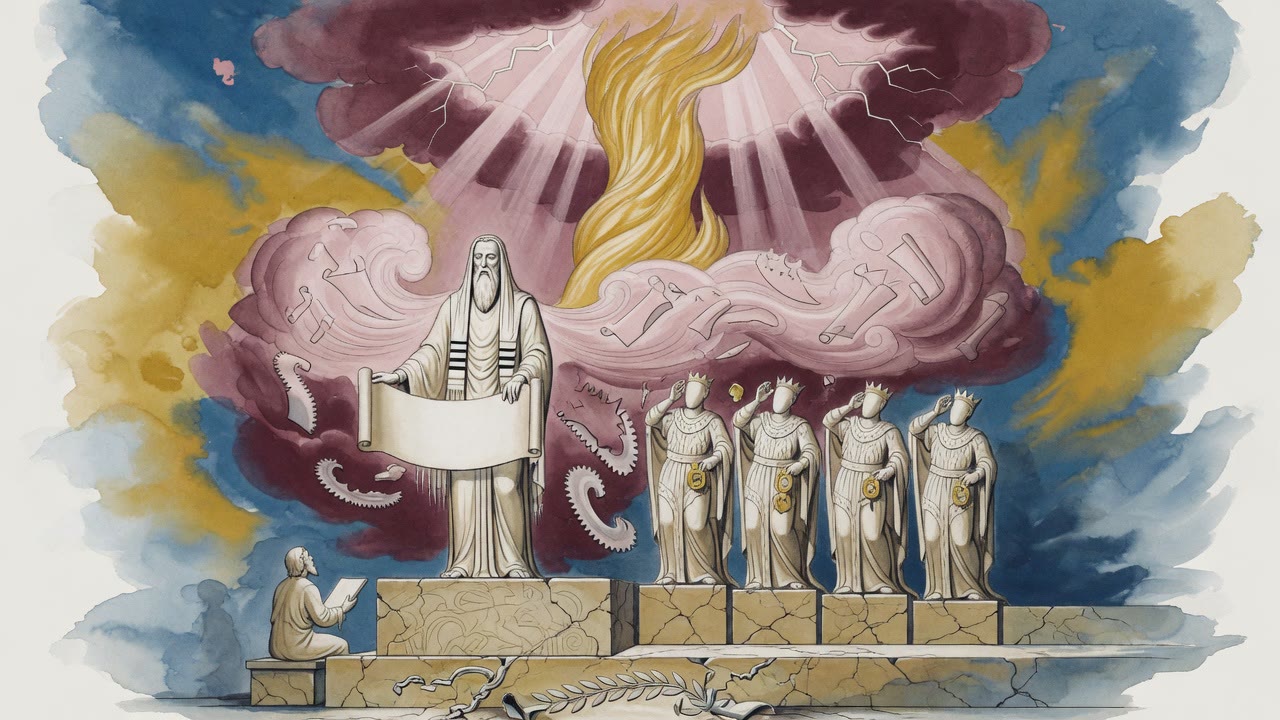
Manasseh filled Jerusalem with innocent blood and then came for the mouth that had named the blood. Isaiah fled. He hid inside a cedar tree. Manasseh found him anyway and ordered the tree sawed in two with the prophet still in it.
The saw worked through wood, then through a man. Isaiah did not recant to make the teeth stop. When the saw reached his mouth, he died. The lips a seraph had touched with coal were the last thing to go. The place where prophecy had entered him was the place the blade finished its work.
Ahaz had only hidden. Manasseh cut. The mouth lasted longer than both of them. Mourners of Zion still had the words. The end he had seen still sat on the page after the cedar was split and the court had gone quiet.
← All myths