Nineveh Held Its Infants Up and Made the Beasts Cry
Jonah walked into Nineveh still tasting fish. The king left the throne for the ash heap. Stolen beams had to come out of the houses that held them.
Table of Contents
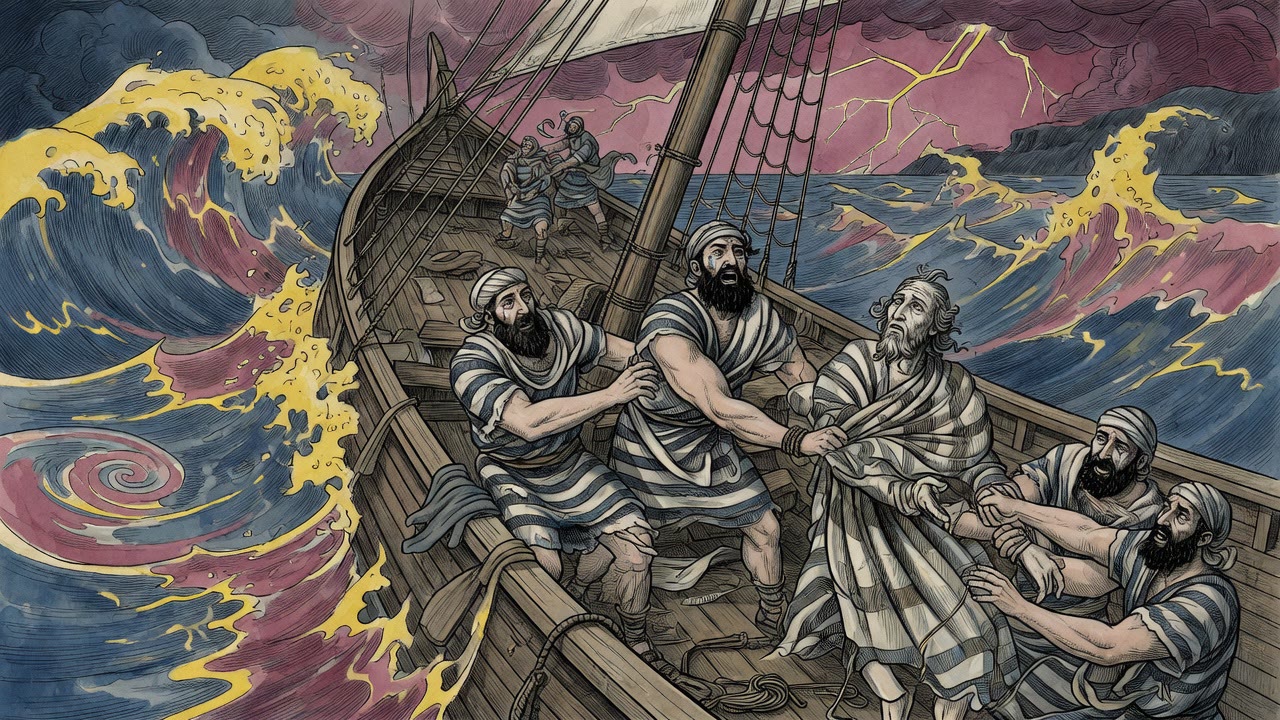
Jonah hit dry land nine hundred and sixty-five parasangs from the fish that had spat him. He still tasted the second belly. The first fish had been roomy. For three days he had not prayed. God sent a female heavy with three hundred and sixty-five thousand young to demand him, and Leviathan had to confirm the order before the host would let him go. In the crowded belly Jonah finally said, "I shall redeem my vow." Then the beach, and the road to Nineveh.
 Click for full size
He was keeping the vow. He was not glad.
One Voice Across Forty Parasangs
Nineveh covered forty square parasangs, a city on a side of three or four miles, a million and a half people inside it, the capital of Assyria already leaning toward the northern kingdom of Israel with an appetite. Jonah walked in and started preaching destruction in forty days.
His voice reached every corner. The streets did not explain the acoustics. They only filled. Men who had never heard of a Hebrew prophet stopped with sacks on their shoulders and listened. The warning did not stay in one quarter. It ran.
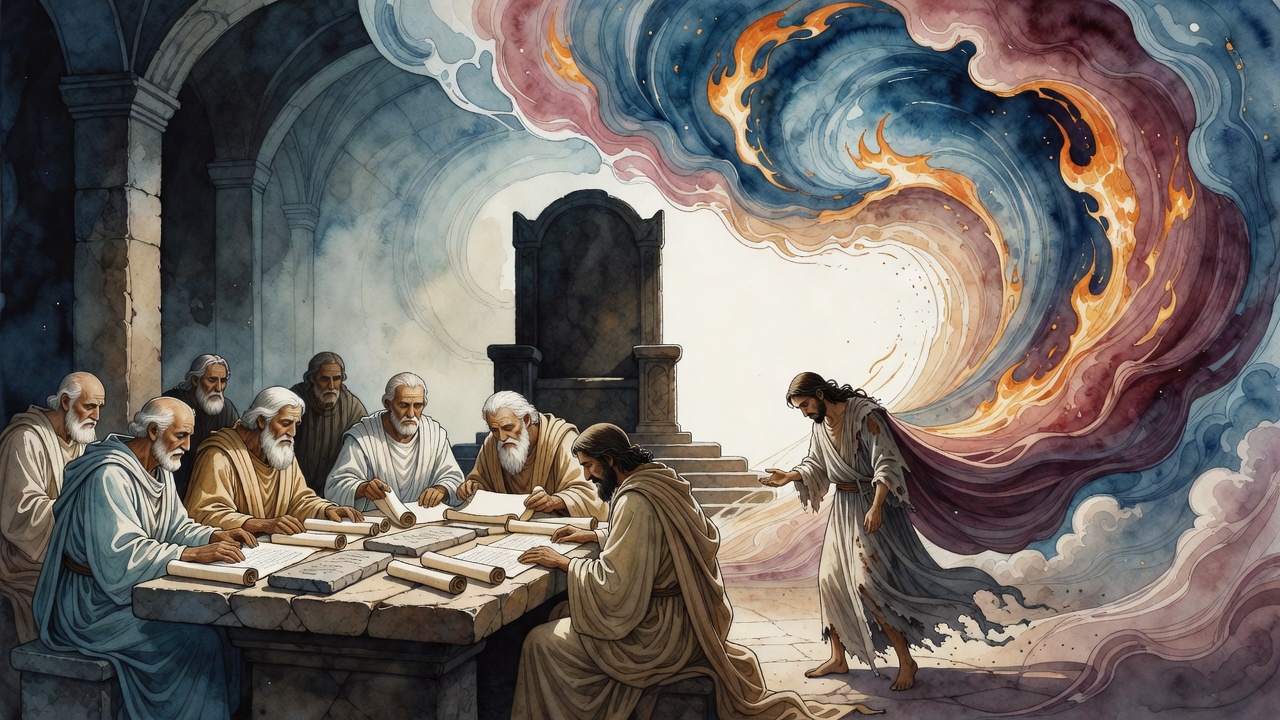
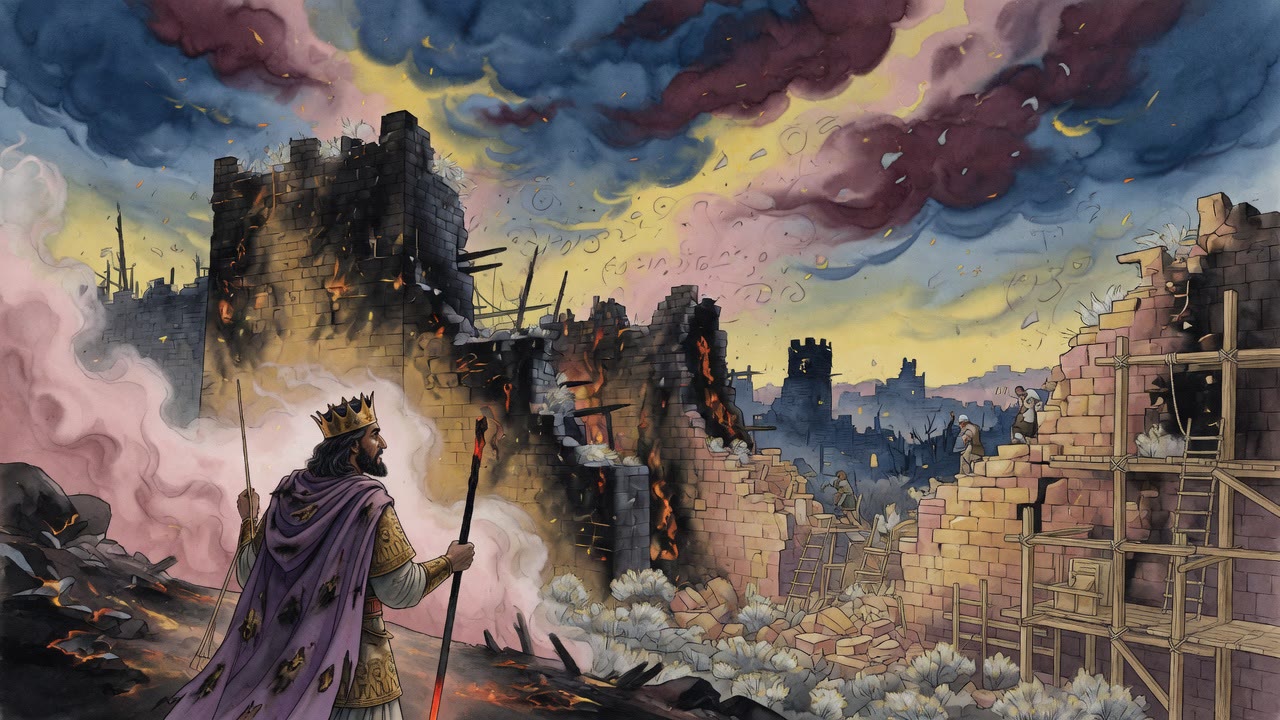
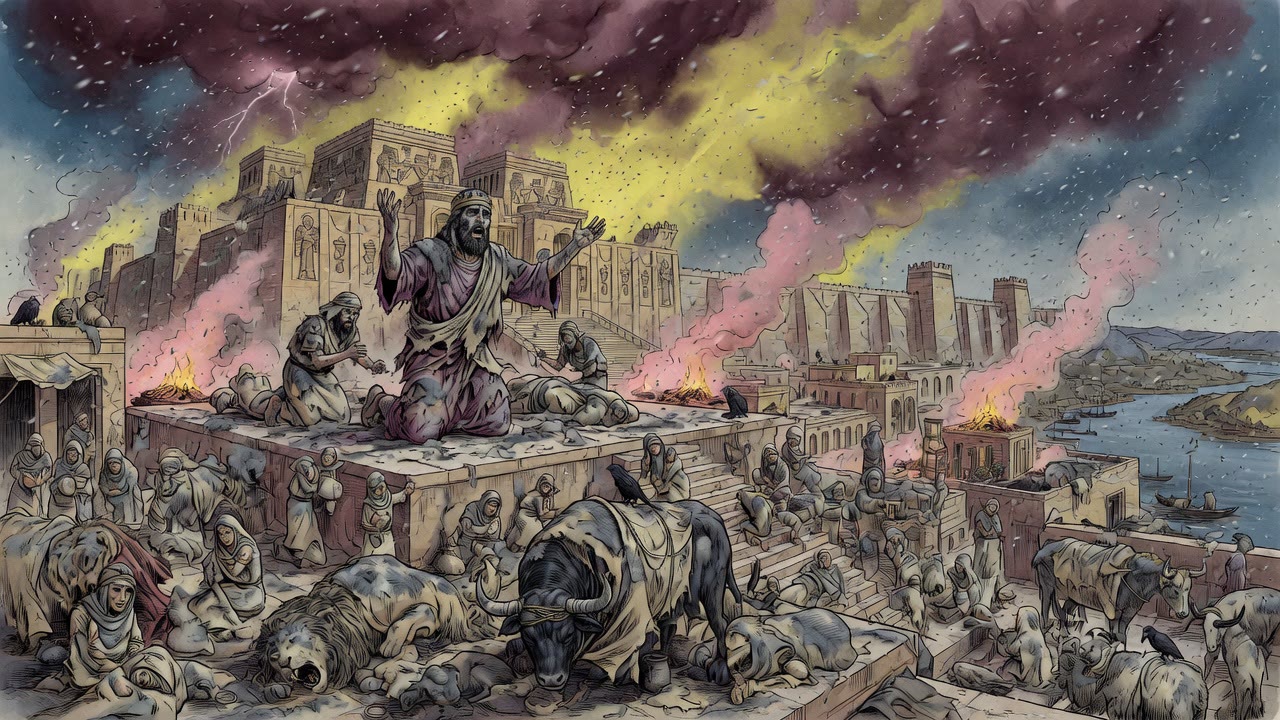
At the head of those who heard was King Osnappar. He came down from the throne. He took off the crown. He strewed ash on his head. He stripped the purple, put on sackcloth, and rolled in the dust of the highways. A king in the refuse, where the city's waste was burned. He stayed there.
The King Sat in Ash
Then he issued a decree. Fast three days. No food. No water. Every person in sackcloth. Every animal in sackcloth, flocks and herds, donkeys and horses. Heralds went through the streets with that order in their mouths.
He added a requirement Jonah had not brought from home. Children were to be taken from nursing mothers. The young of the stalled cattle were to be shut inside. The mothers put outside. Separate a nursing infant from its mother and both will cry. Separate a calf from the cow and the stable will bellow.
Do that in a city of a million and a half, and the noise is not a hymn. It is a city arguing with its throat.
Hold the Infants Up
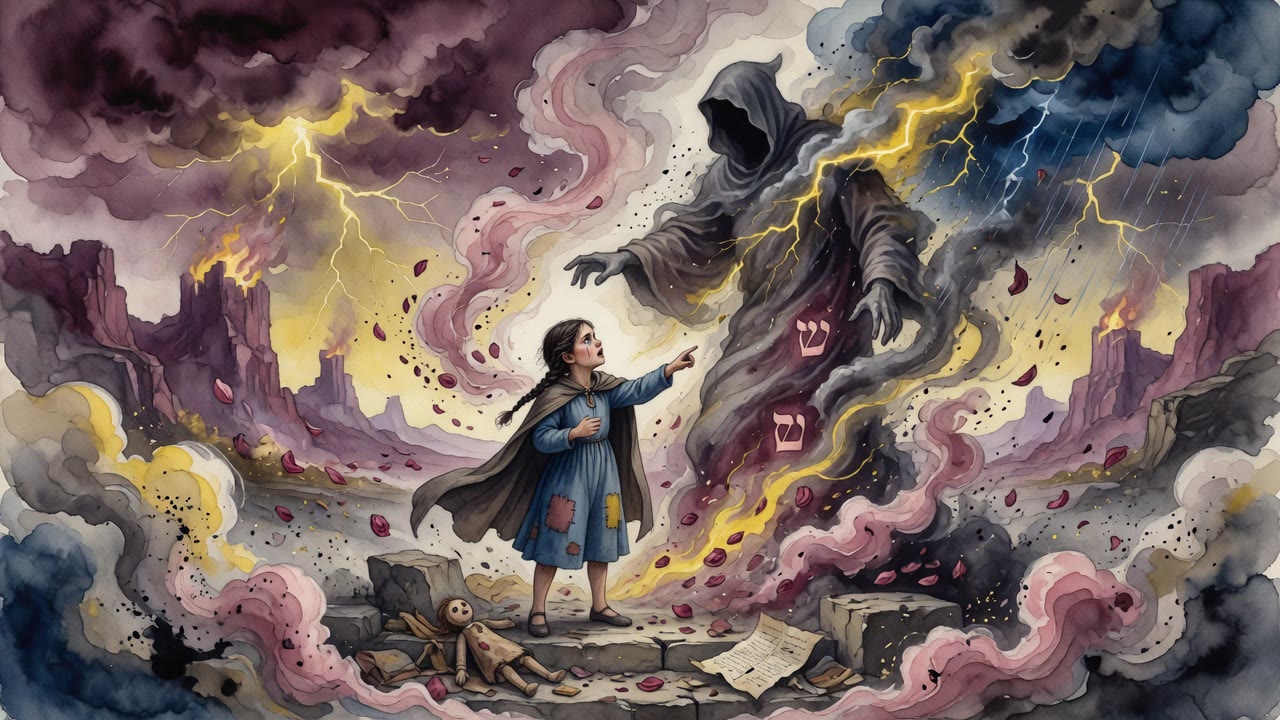
They held the infants toward heaven, tears on their faces, and cried, "For the sake of these innocents, hear our prayers." The beasts, parted from their young, roared until the Ninevites added a second sentence: "If You will not have mercy upon us, we will not have mercy upon these beasts."
It was a hostage of their own making. They had built a situation in which sorry was the only thing a body could feel. A man can wear sackcloth and lie. A city that has made its children and its cattle scream is harder to call a play.
Jonah heard it from the streets and did not trust it. He had known, before the fish, that this God relents. That was why he had run. The sound rising off Nineveh was the sound he had dreaded in Jaffa.
Tear Out the Stolen Beam
The people did not stop at noise. They named what they had taken. Stolen goods sat in their walls. If a man had stolen a beam and built it into his house, he had to tear the house down and give the beam back. Not a coin for a coin. The actual timber, to the actual owner.
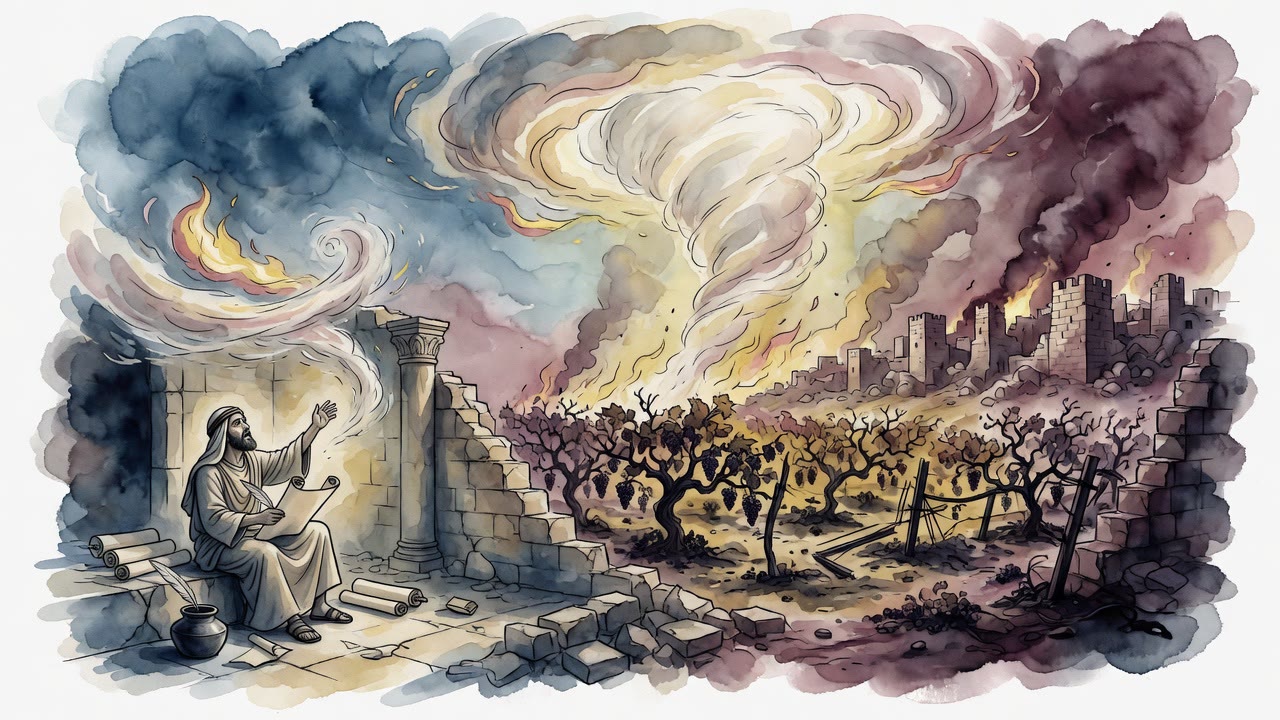
Where the owner was dead or gone, the stolen thing went to the poor. Nothing was to remain in the hand that had taken it. Houses came down in the same week the cattle cried. Dust from broken walls mixed with ash from the king's head.
Forty days ran. The city stood. Nineveh repented, and the cost was timber, milk, and sleep. The beams went home. The infants went back to the breast. The young cattle found the stall. God saw what they did, and the fire did not come.
Jonah Waited for Fire
Jonah built himself a shelter east of the city and waited. He sat in the shade of a gourd God grew over him, and he waited for the fortieth day to end in smoke. The day ended in walls. God asked him if he was angry.
He was. He said he had known this in his own country, before the storm, before the fish, before the vow. "I knew that You are a gracious God, and merciful, slow to anger, and abundant in kindness, and repent of the evil" (Jonah 4:2). He had run from that sentence. Now it had saved Nineveh in front of him.
The gourd died overnight. A worm struck it. The sun came up hard. Jonah sat in the heat and grieved a plant. God pointed at the grief. Jonah had not planted the gourd. He had not raised it. A hundred and twenty thousand people in Nineveh did not know their right hand from their left, and cattle besides, and they had just torn their own houses apart to give back stolen wood. Should God not care for that city more than Jonah cared for a gourd?
Jonah had no answer that would bring the fire back. The vow was kept. The city was standing. The prophet sat in the sun with a dead plant and a live capital, and the mercy he had tasted in a fish's belly was now the mercy he had to watch from outside the walls.
← All myths