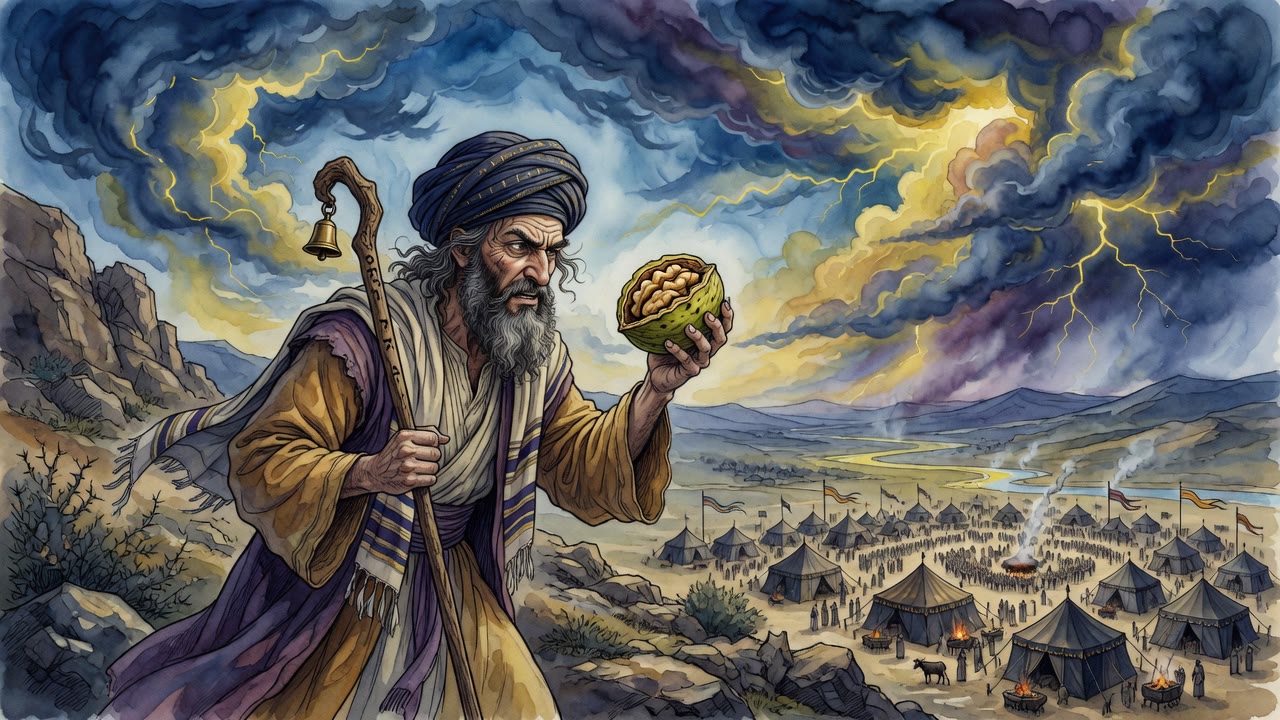
Balaam Thought God Did Not Know the Men in His House
God asked who the men with him were. The question sounded like a neighbor catching up. Balaam filed it as a gap he could use.
Table of Contents
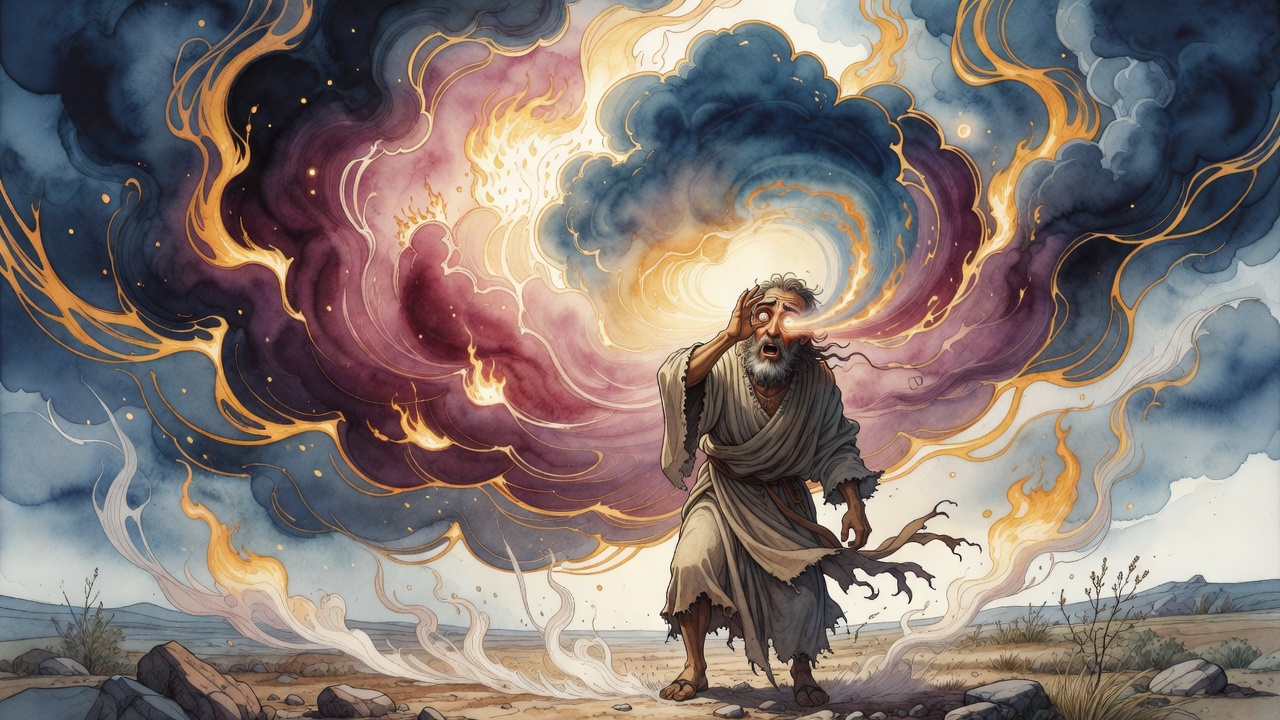
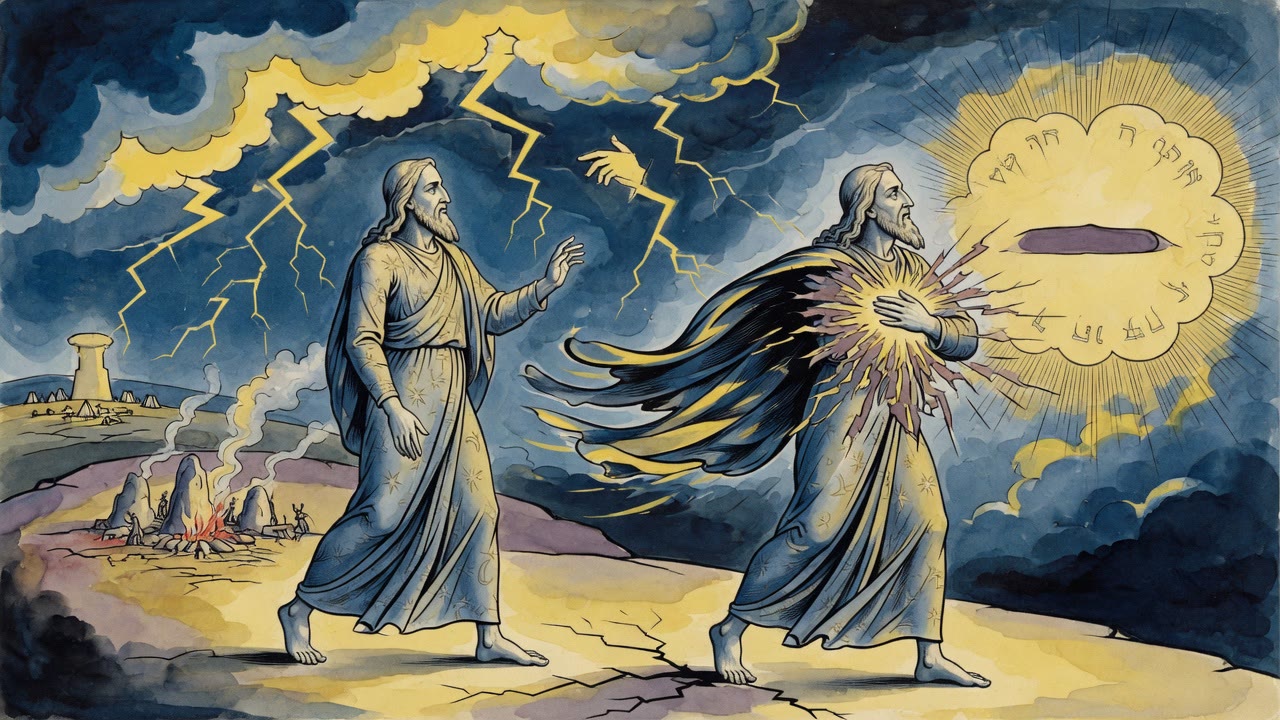
God came to Balaam at night and asked a question.
 Click for full size
"What men are these with thee?"
The Question in the Night
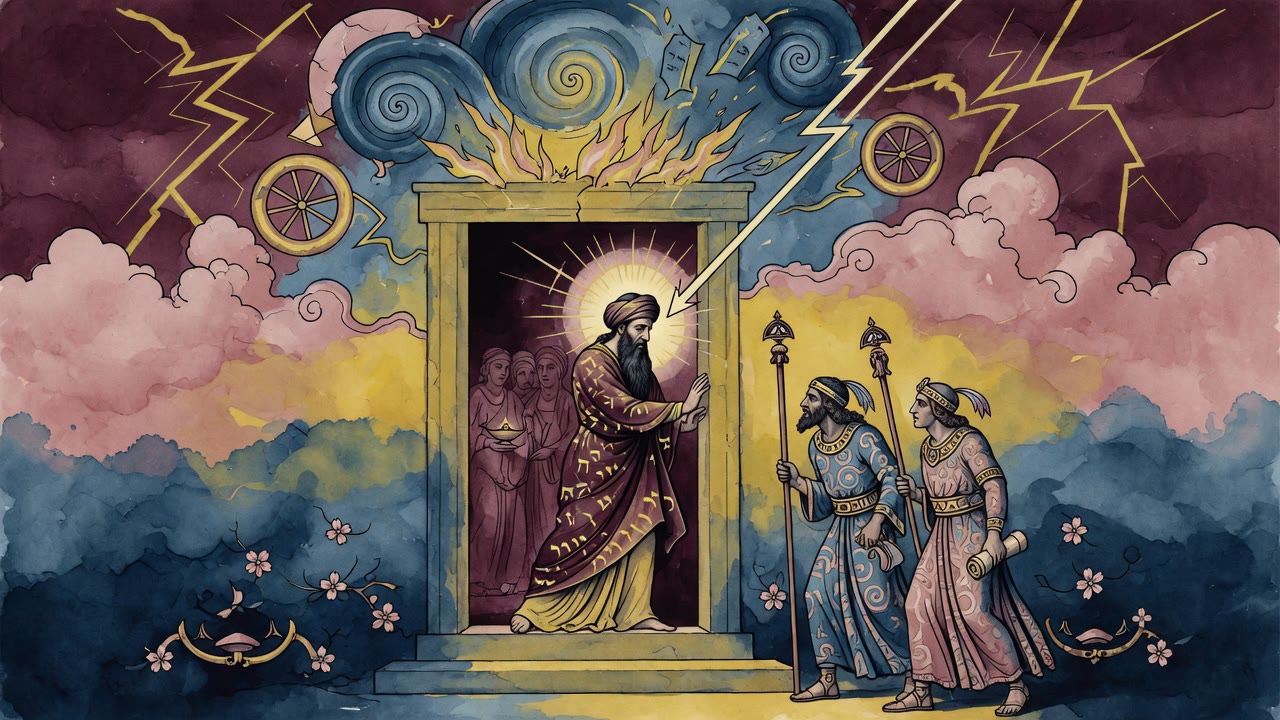
The men were still in the house. Balak's messengers. Moab's gold in their bags. The question had the sound of a neighbor who had missed the start of a conversation.
Balaam heard it that way. He thought God's knowledge had gaps.
He Built a Plan From the Gap
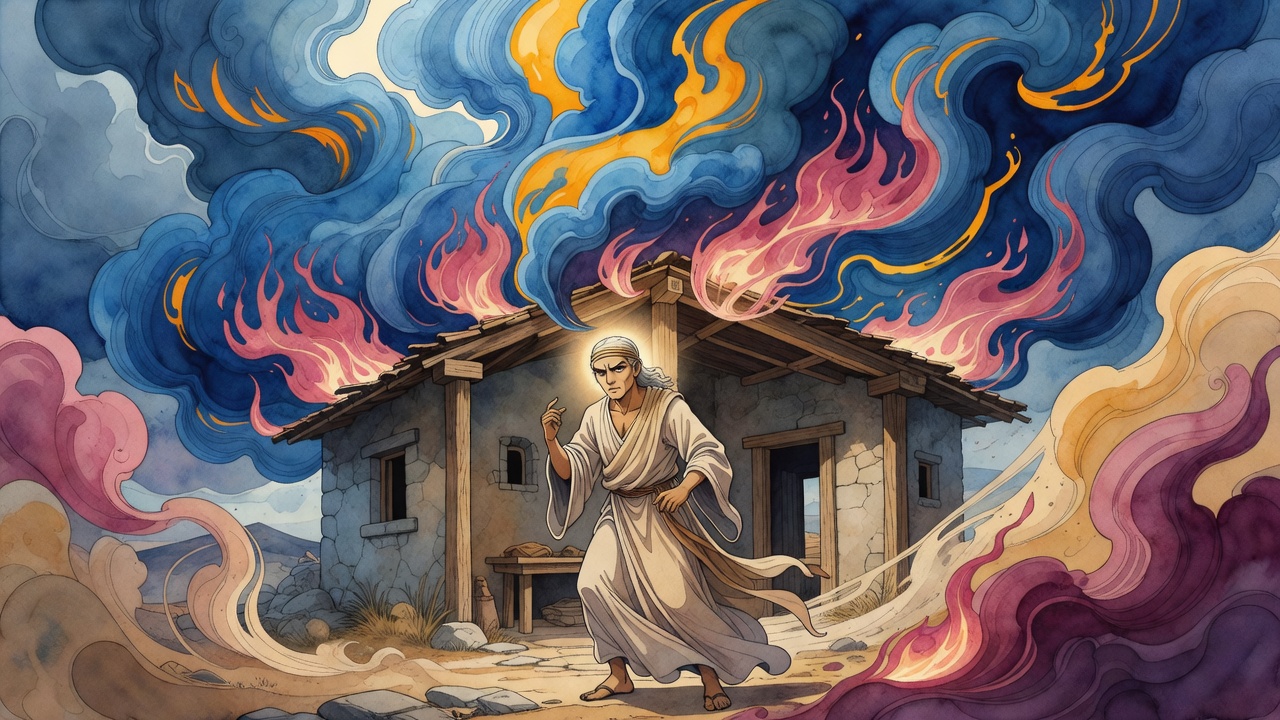
He stood in the dark and ran it through. God does not know who these men are. If God does not know who these men are, then things happen on earth outside His notice. If there are such moments, then in one of them a curse can be spoken over Israel without being seen. I can find the gap and use it.
That thought, not the seven altars later, is what closed on him. A prophet whose gift was hearing God had just decided God could not hear everything.
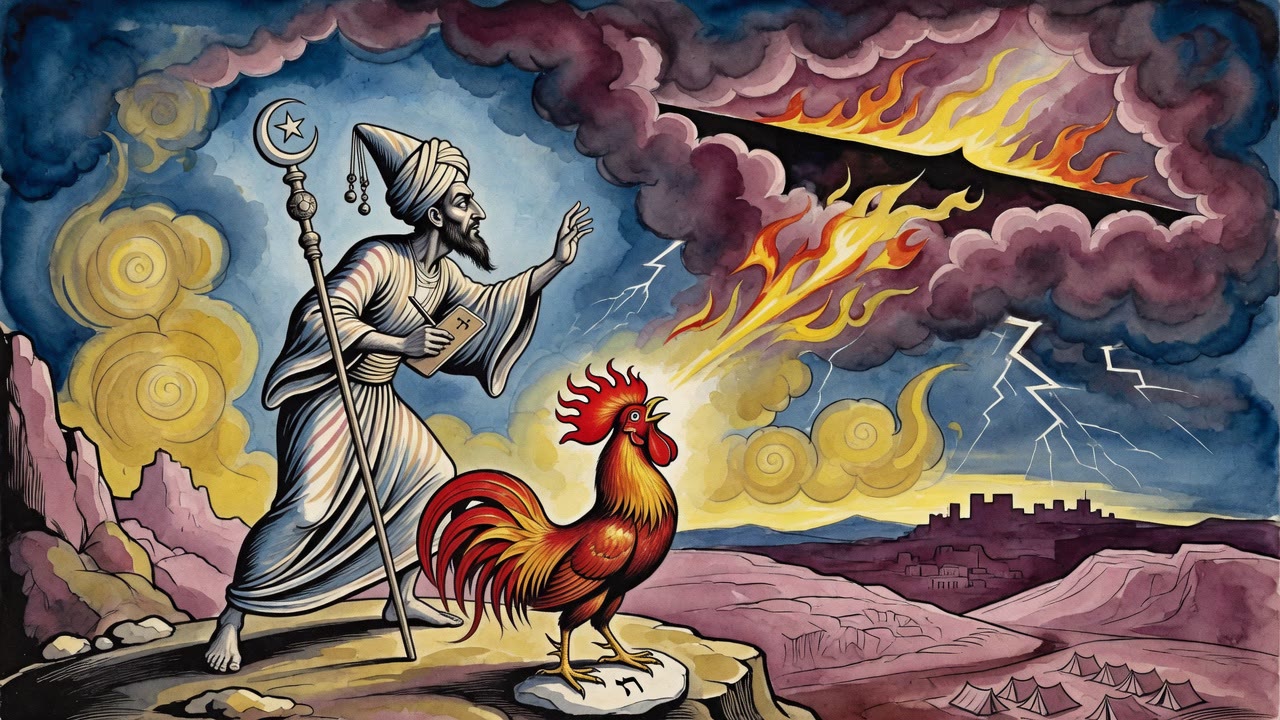
He answered the question as a man filling in a stranger. He named the messengers. He named the errand. He did not say, "You know." He performed. In the silence after the performance he kept the plan.
God Stepped Aside
The question had not been a request for information. God knew the men. God knew why they had come. God knew the calculation still warm in Balaam's mouth.
The first night He had said, "Thou shalt not go with them." Balaam did not relinquish the wish. The second time God said, "If the men be come to call thee, rise up, go with them. Only the word which I speak unto thee, that shalt thou do."
"I take no pleasure in the destruction of sinners, but if thou art bound to go to thy destruction, do so."
Balaam heard the permission as a change of mind. He told himself the "curse them not" would flip the same way. He saddled the she-ass and went. Audacity had pulled a yes out of heaven. The yes was the ditch.
Adam Reached for the Same Corner
In the garden Adam had done this first. The tree stood in the middle. The command was one sentence. He reached anyway, as if a corner of Eden were unwatched, as if a mouthful could be taken in a gap of knowledge.
God asked, "Where art thou?" (Genesis 3:9)
Adam hid. The fruit was already in him. Death entered the world on the back of that hiding. Later Israel would stand and say, "Are You not from ancient times, Lord my God, my Holy One? We will not die." God would not take death back. "You set them for judgment."
Balaam was walking the same corner. He had more evidence than Adam. He had heard God twice in one house. He read both hearings wrong.
The Path He Chose
The magicians Balak sent had already decided, by their own lore, that Balaam would accept. They were as confused as he was when the word shifted from stay to go. God lets a man go upon the way he chooses to go. Balaam chose.
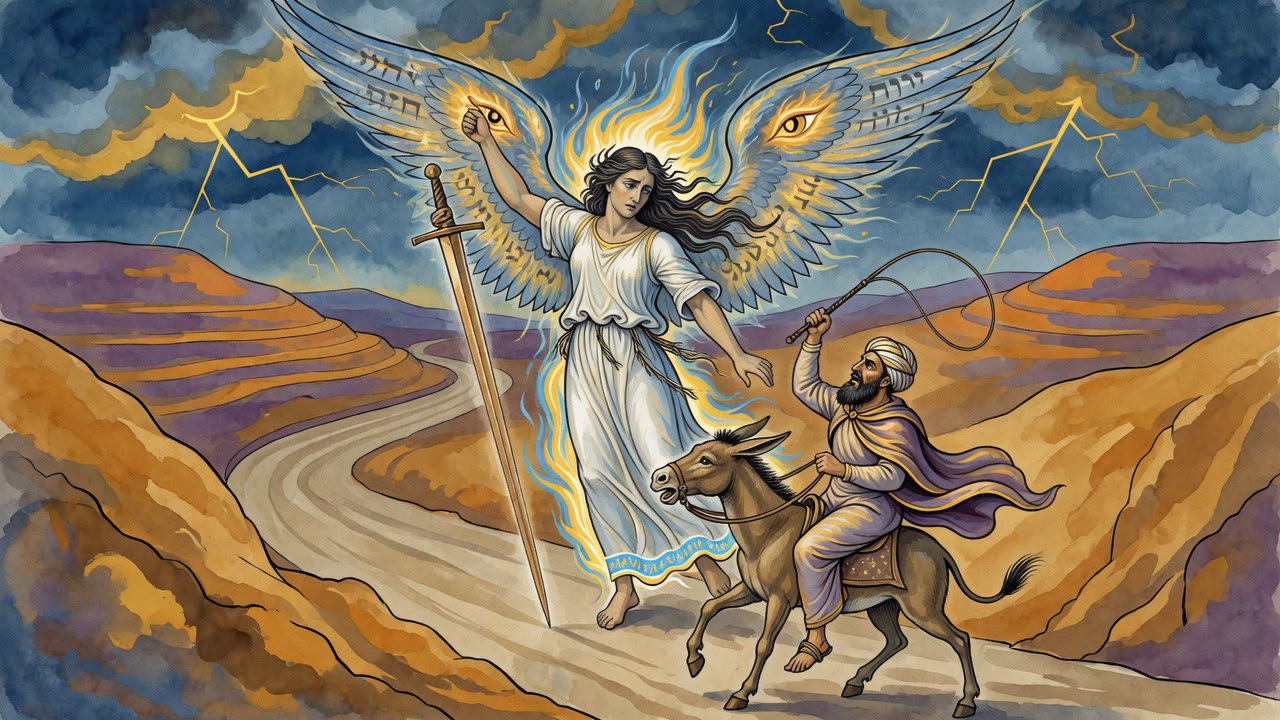
He went toward Moab sure there were hours when God was not looking. The ass saw the angel first, standing in the road with a drawn sword, occupying the gap Balaam had counted on. Three times the animal turned. Three times he beat her. Then her mouth opened, and the gap closed.
He had built a whole plan on a night question. The road did not have a blind spot. It had an angel in it.
← All myths