Isaiah Walked Through All Five Chambers of Gehinnom
The angels at the gates called one word: Come. Isaiah walked in anyway. In the fifth chamber Pharaoh sat watching the other kings.
Table of Contents
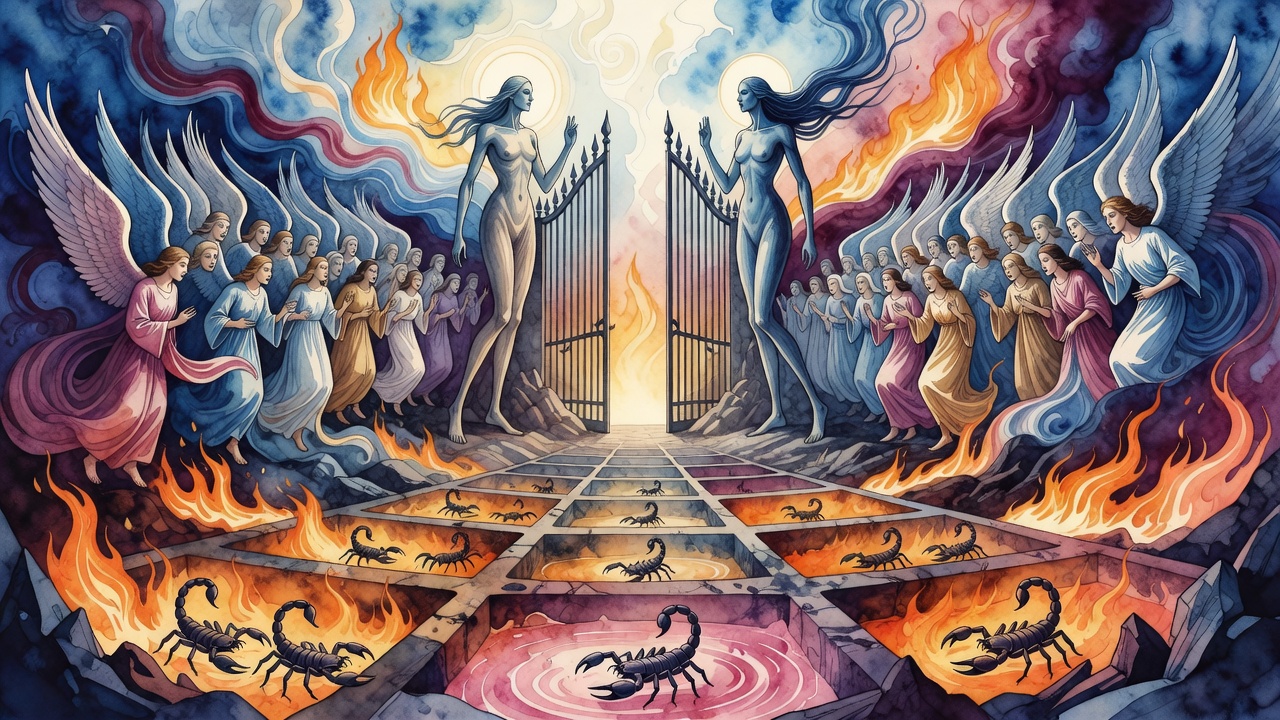
The angels at the gates of Gehinnom (גהינום) called one word, over and over. "Come. Come."
 Click for full size
Isaiah son of Amos had asked God to show him the rooms. Not a sermon about judgment. The rooms. He wanted to walk through them. God let him in.
The Gates Already Had Addresses
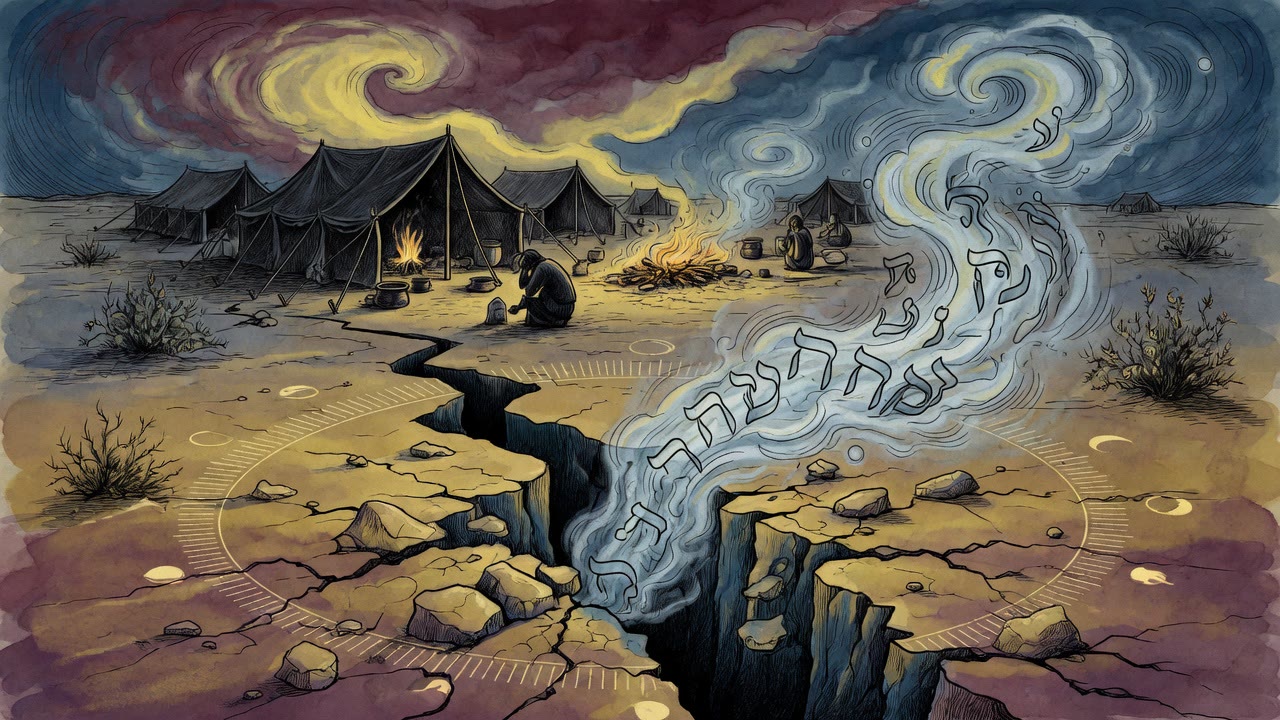
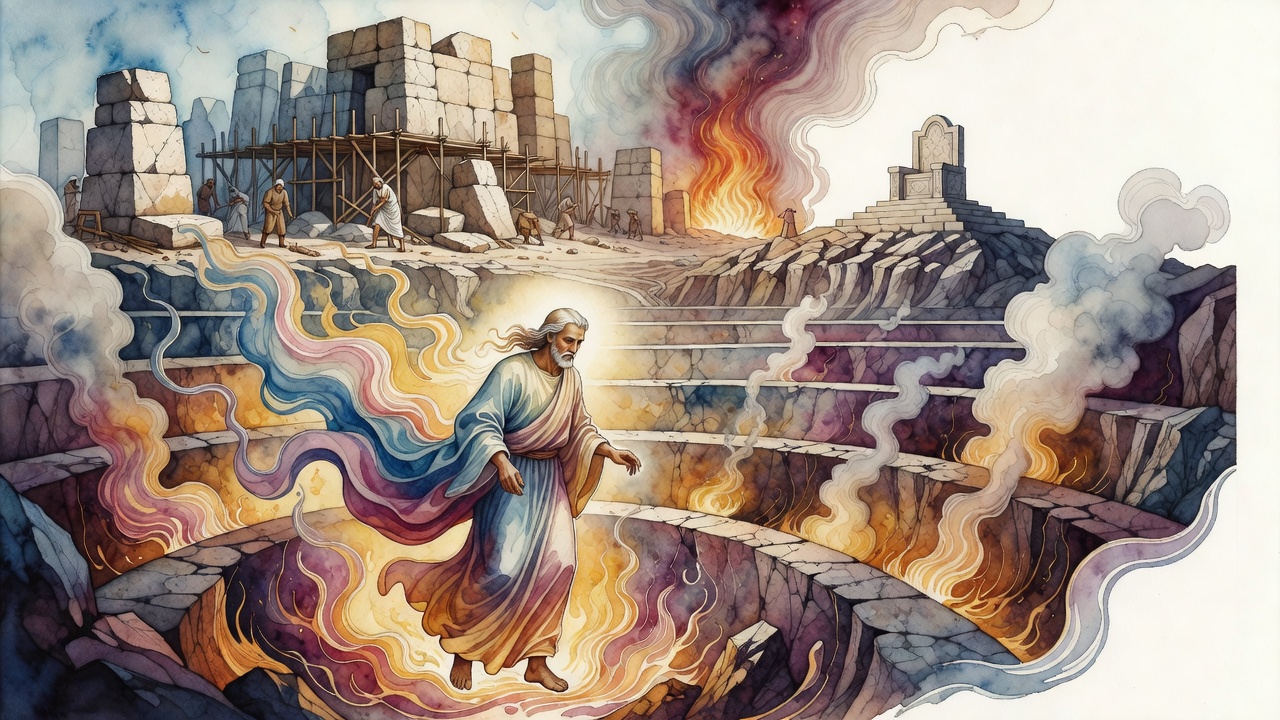
Three gates opened on the place. One at the sea, where Jonah had cried from the belly of Sheol. One in the wilderness, where Korah and his company went down alive into the earth (Numbers 16:33). The third stood in Jerusalem itself. Isaiah had already written the line without knowing it was a door: "The Lord, whose fire is in Zion, and his furnace in Jerusalem" (Isaiah 31:9).
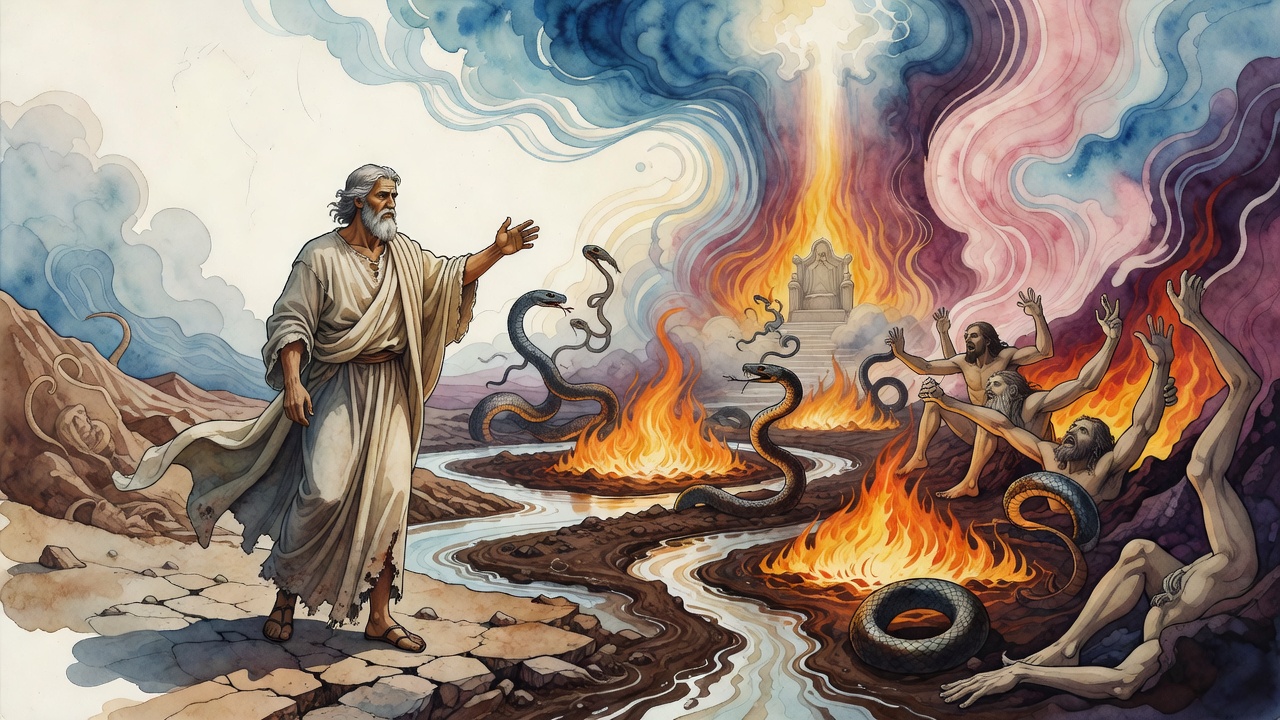
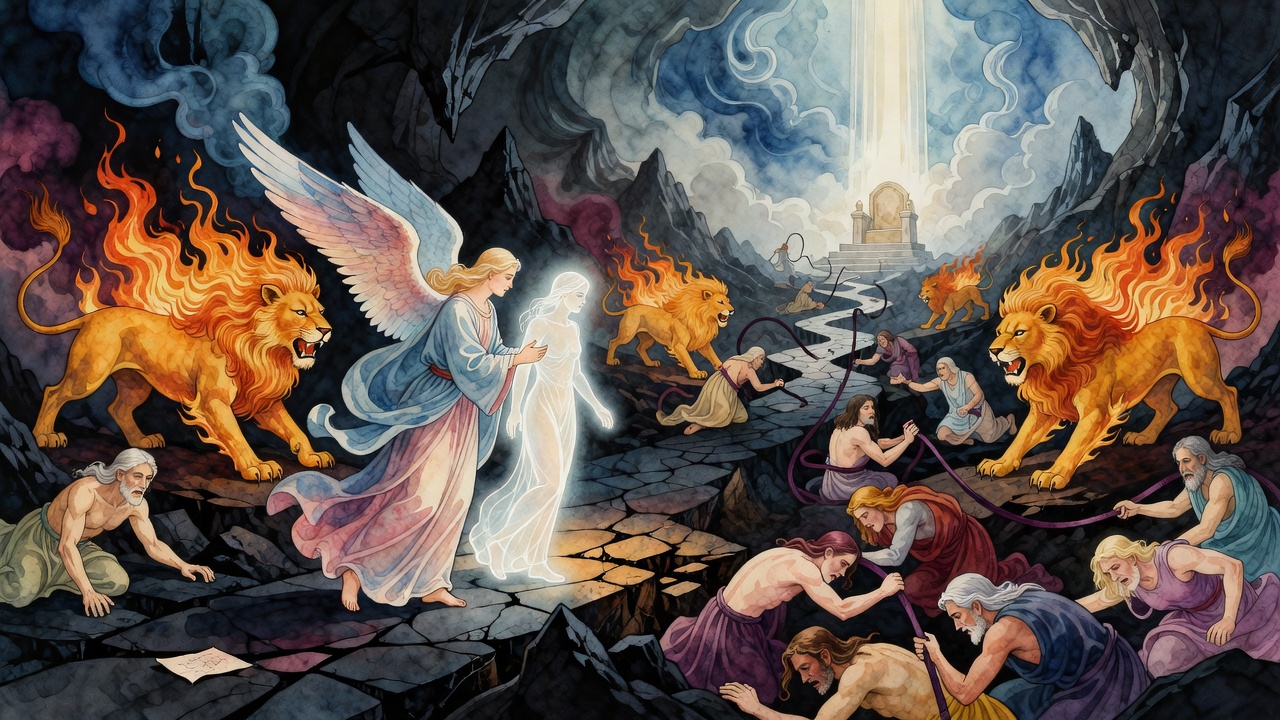
Inside, five kinds of fire burned. One ate and swallowed. One swallowed without eating. One did neither. One ate other fire. Coals sat piled like mountains. Rivers of pitch and sulfur seethed in the dark. Angels of destruction seized a sinner and hurled him toward the flame. Gehinnom opened its mouth and swallowed him whole.
Isaiah walked. Heat pressed his face. The screaming of the valley ran from one end of the world to the other, and he put his foot down anyway.
The Pit That Would Not Fill
In the first chamber two men carried pails of water on their shoulders. They poured and poured. The pit never rose. Their backs bent. Their wrists shook. The water vanished as it left the lip of the pail.
Isaiah asked what he was looking at. God said, "These coveted their neighbors' property." They had spent their lives taking what was not theirs. Now they poured and owned nothing, not even a full pit.
He did not stay. The pails kept moving behind him.
Hung by the Mouth and the Body
In the second chamber men hung by their tongues. The mouths that had run against a neighbor now held the whole weight of the body. Isaiah asked. God said, "These were slanderers."
In the third, men hung by the organs they had used in other men's houses. "These neglected their own wives and committed adultery." In the fourth, women hung by their breasts. "These uncovered themselves in public to pull men in."
Each room fitted the wound to the tool. Isaiah moved from hook to hook with the questions still in his mouth. God answered in short sentences. The chambers did not argue. They held.
Pharaoh Sat in the Smoke
The fifth chamber was different. Smoke filled it. Princes, chiefs, and great men crowded the dark, coughing, waiting. At the gate sat Pharaoh.
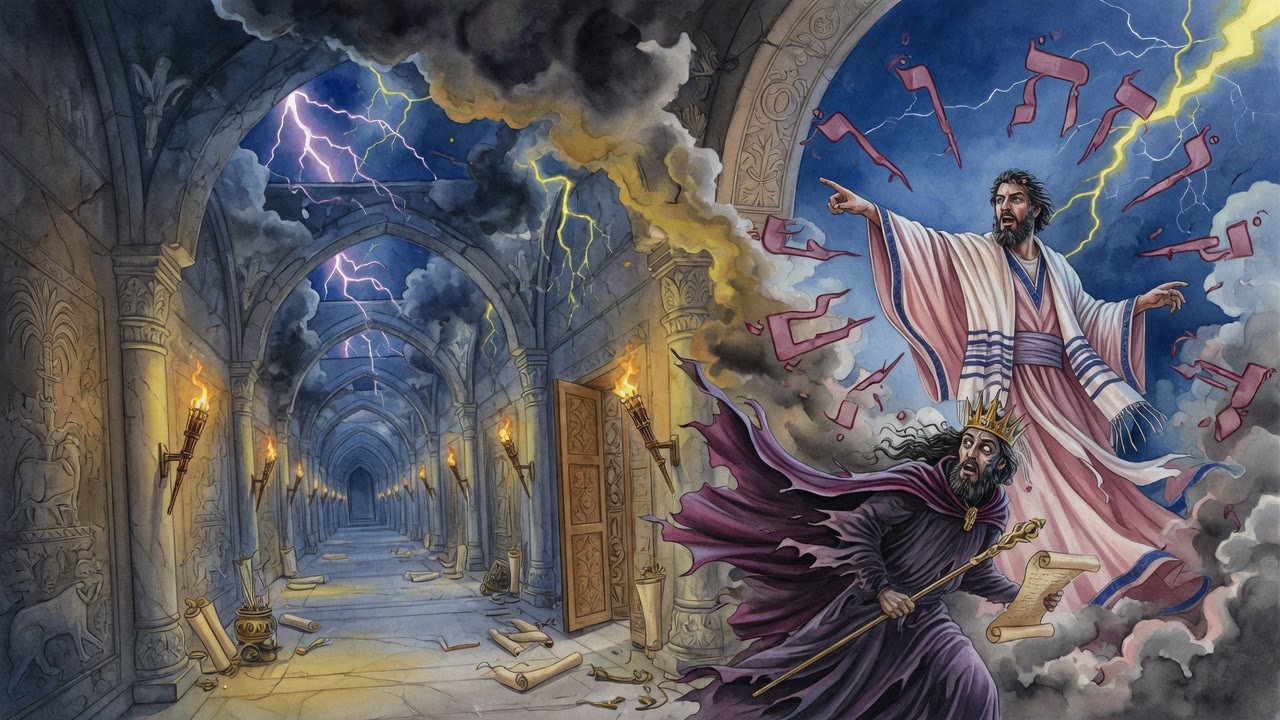
He was not inside yet. He sat watching. The king who had drowned the children in the Nile, who had driven Israel toward the sea and watched his own army go under, now kept the door of the deepest room. He looked at the other rulers as they came and mocked them.
"Why did you not learn from me when I was in Egypt?"
No one answered him. Isaiah stood in the smoke and heard a dead king lecture the living dead. Pharaoh had been the lesson. They had copied him anyway. Now he sat at the gate as if the job of warning still belonged to him, and the warning came too late to move a single foot.
The Scale Still Tipped for Mercy
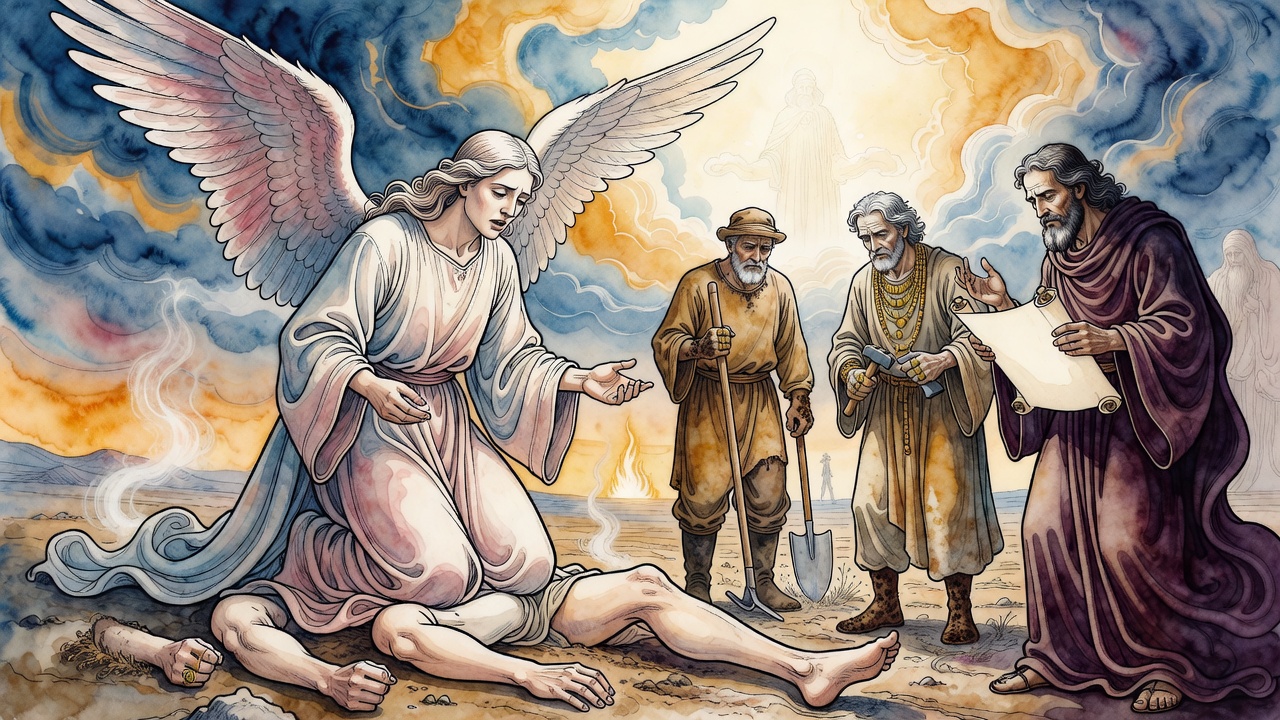
The angels of destruction seized and hurled. Gehinnom swallowed. Isaiah asked if the mouth took everyone. God said it took the one who had not performed even a single act of mercy. One gift of bread. One cloak on a stranger. One hand under a man who had fallen. That act could still move the scale.
A life of Torah and suffering could move it further. "Though I walk through the valley of the shadow of death, I will fear no evil, for You are with me" (Psalms 23:4). The rod is suffering. The staff is Torah. God spoke one more line as Isaiah turned to leave. "For I will not contend forever, neither will I always be angry" (Isaiah 57:16).
He walked back out through Jerusalem's gate, the one he had already named. The fire was in Zion. The furnace was in Jerusalem. He had been giving the address for years. Now he had stood in the heat of it, and Pharaoh's question was still hanging in the smoke behind him.
← All myths