Joseph Wept Three Times at Dinner and Nobody Knew Why
Three times Joseph excused himself from the table to cry in private. His brothers thought nothing of it. The tradition knew he was seeing centuries ahead.
Table of Contents
 Click for full size
The Most Powerful Man in Egypt Kept Leaving the Room
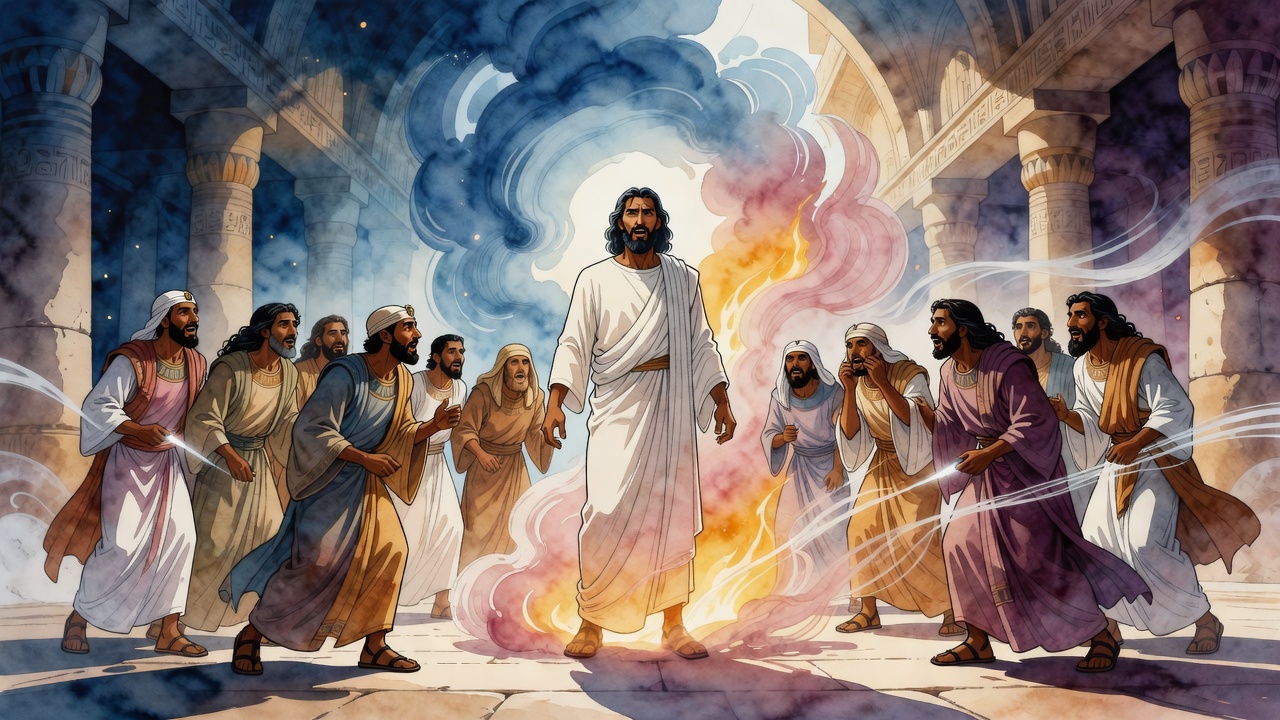
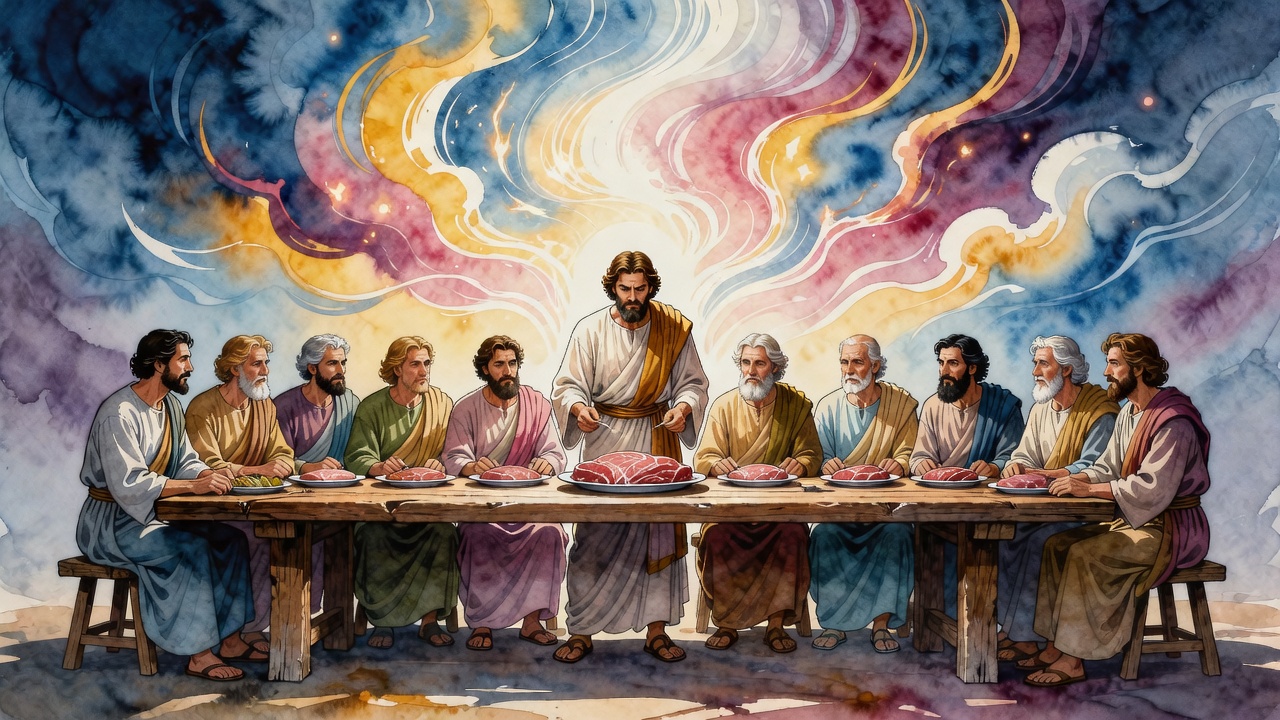
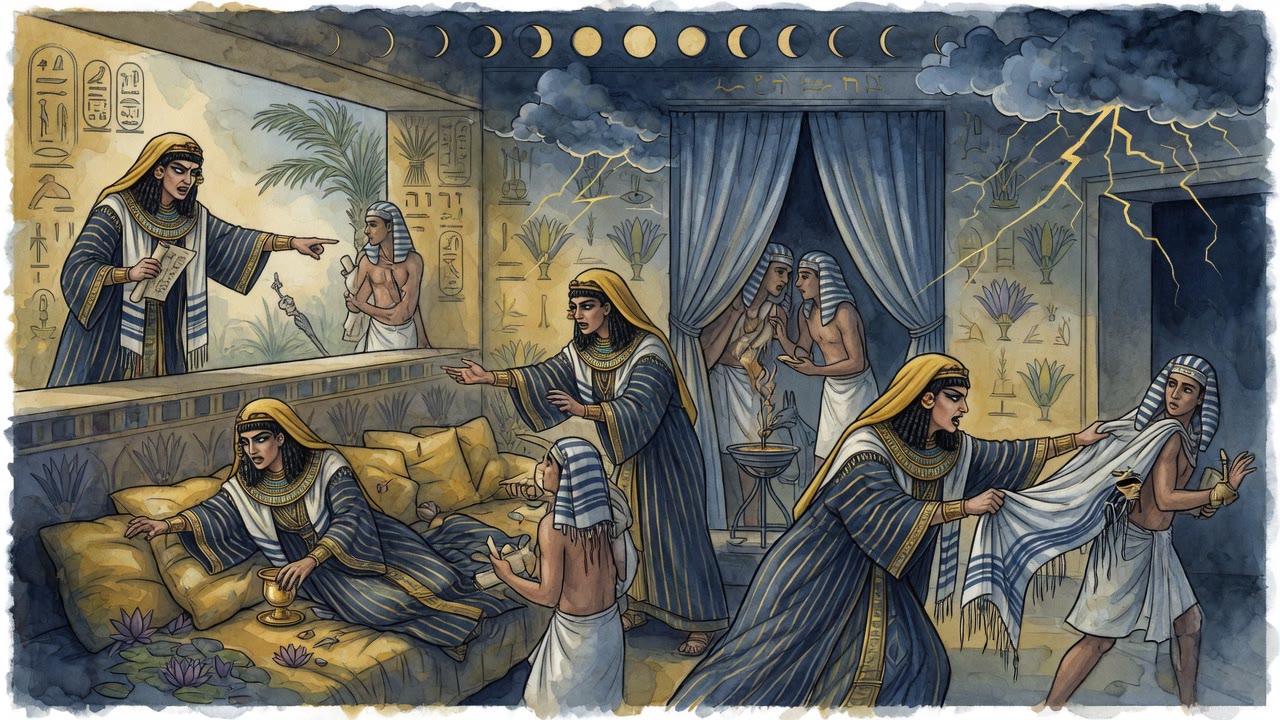
The dinner looked like a strange exercise in Egyptian generosity. The foreign official who controlled all the grain in Egypt had summoned his Canaanite suppliers for a meal, seated them in order from eldest to youngest in a way that unsettled them, had food sent from his own table to a younger brother whose portion was five times larger than the others, and then kept disappearing. Three times he excused himself. Three times he went to a private room. Three times his servants heard sounds they could not explain from behind a closed door, and three times he came back composed, face washed, presenting himself as a man in complete control of the situation.
His brothers thought they were eating with an emotionally unpredictable Egyptian bureaucrat. The silver cups were on the table. The grain deal was progressing. They were not reading anything correctly.
What He Was Seeing
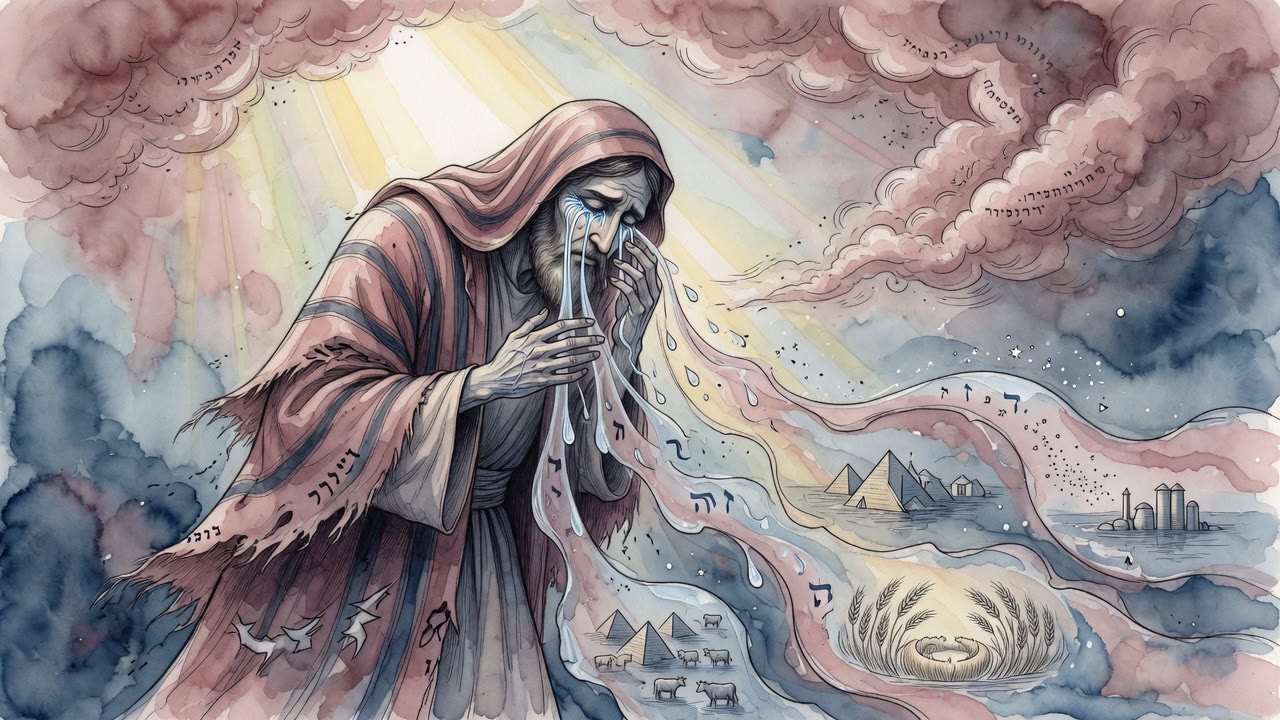
The Book of Jubilees preserved what Joseph was seeing in those private moments. When Benjamin sat across from him, when he looked at the youngest brother he had not seen since childhood, Joseph saw forward. Not into the immediate reunion, though that was coming. Past it. Into the exile.
The Targum Jonathan on Genesis made this explicit. When Joseph finally revealed himself and could not stop weeping, the Aramaic translation of the biblical text says he was seeing what would come upon his brothers' descendants. The exile from Egypt, yes. But beyond it: the Babylonian exile, the destruction of the Temple, the long centuries of dispersion through nations that would not be gentle with Israel. The Roman exile. The scattering. The suffering that his brothers' children and their children's children would have to survive.
He cried because he had already seen the end of the story, and the end included centuries of pain that the men eating dinner across from him could not imagine and could not be warned about in any useful way.
The Greek Account and the Egyptian Witness
The Greek tradition about Joseph, preserved in the Testament of Joseph and related Hellenistic Jewish texts, added another layer to the same weeping. In those accounts, Joseph's emotional breakdown was also connected to his long years of isolation: the pit, the slave market, the prison, the sustained loneliness of a man who had been betrayed by everyone who should have protected him and had survived anyway. The tears at the dinner table were not only prophetic. They were also the first tears of a man who had been holding back a decade of grief and was finally in a room with people who were part of the life he had been separated from.
The Egyptian setting of these traditions matters. Joseph had become unrecognizable to his brothers not because he had physically changed that much but because they could not imagine him in the context they were standing in. The second most powerful man in Egypt, speaking through a translator, dressed in linen, with the gold chain around his neck. They had sold a shepherd boy. They were looking at a minister of state. The cognitive gap between those two images was wide enough that they ate with him three times before the truth broke through.
What the Weeping Accomplished
The tradition that preserved Joseph's prophetic tears was not simply interested in the emotional drama of the reunion. It was making a theological point about vision and time. The man who survived the pit and the prison and the year of Potiphar's wife's pursuit had been given a gift that made ordinary survival look simple: he could see ahead. Not to protect himself from suffering. He had not seen ahead when his brothers threw him in the pit. He saw ahead into his people's suffering, and what he saw made him weep in private while he ate dinner with them in his palace and pretended to be someone else.
The tradition reads this as the shape of what Joseph was for. He was not a prophet who warned. He was a sustainer who endured and then appeared. He went down into the pit so he could be in the granary when the famine came. He wept over the exile so he could be present at the reunion. The tears at the dinner table were both backward and forward at once, mourning what was coming and receiving what had finally arrived.
← All myths