Tamar Knew She Was the Mother of the Messiah
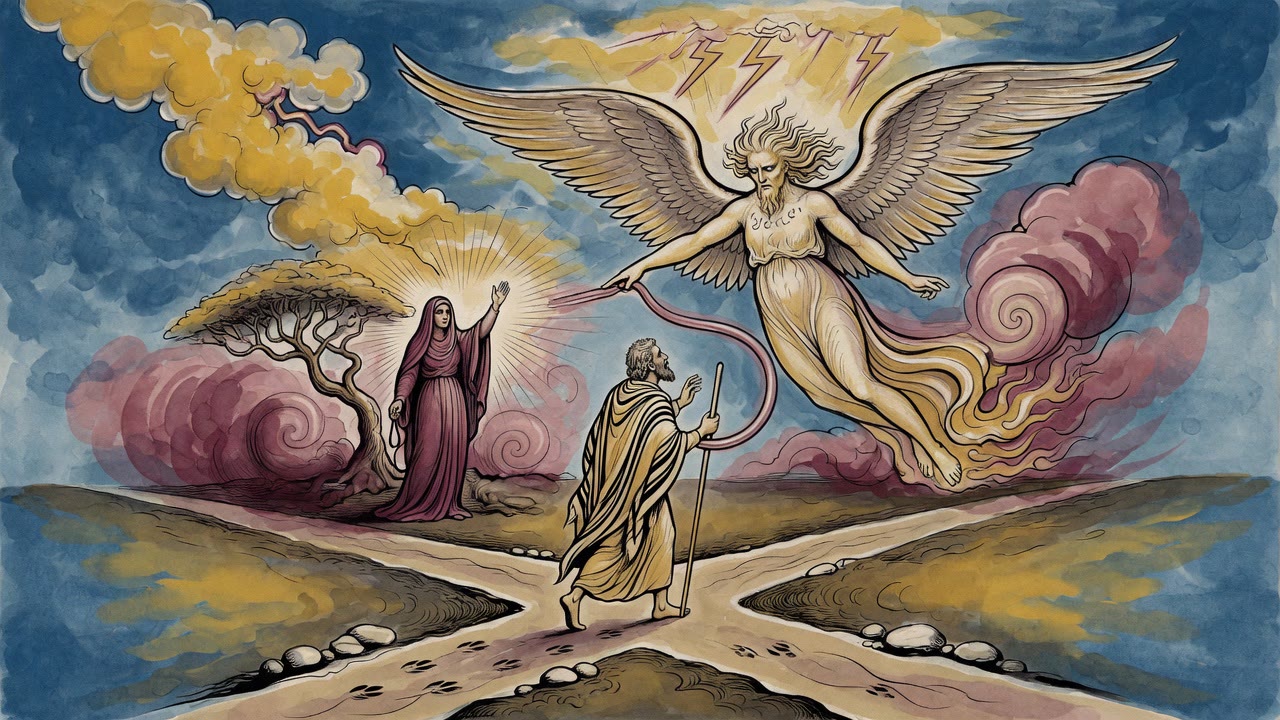
Judah walked past her on the road to Timnah. She asked heaven not to send her away empty. An angel of passion turned him back.
Table of Contents
Tamar took off the garments of her widowhood and put on a veil. Judah was going up to Timnah. The holy spirit had told her that. She sat in the gate of Abraham's tent and waited.
 Click for full size
Judah had never seen her face. In all the time she lived in his house she had kept it covered. He could walk straight past his own daughter-in-law and not know her. That was the point. That was also the danger.
Two Husbands Died and Shelah Was Withheld
Judah had left his brothers after the pit. He married Bath-shua, a Canaanite, and had three sons: Er, Onan, and Shelah. For Er he took Tamar, a woman of proper lineage. Er never touched her. An angel killed him for wickedness that had nothing to do with the marriage. Onan took her under the law that a brother must raise seed for the dead, wasted it on purpose, and died for that.
Judah told Tamar to wait in her father's house until Shelah grew. Shelah grew. Judah did not call. Bath-shua died, and still he waited, because he feared Tamar had brought death to two husbands and would bring it to a third.
She remained a widow two years. She was not only waiting for a husband. She knew, by prophecy, that she was appointed to be the ancestress of David and of the Messiah. Judah was letting that line die in her lap.
Judah Walked Past Her
He came down the road to his shearers and passed the veiled woman without a glance. Tamar lifted her eyes.
"O Lord of the world," she said, "shall I go forth empty from the house of this pious man?"
God sent the angel appointed over the passion of love. The angel turned Judah around. He came back. He took her for a harlot, because the veil was on and her face had always been hidden from him anyway.
She named her price: a kid from the flock. He had no kid with him. She asked for a pledge against its delivery. With a caution that already knew the future, she took his signet, his mantle, and his staff. Royalty, judgeship, the Messiah's line. She held all three and gave him what he came for.
The Kid Came and She Was Gone
Judah sent the promised kid by the hand of his friend, to get the pledges back. Tamar could not be found. He was afraid to search further, lest he be put to shame in the gate. He let the signet, the mantle, and the staff stay lost.
Tamar knew she was with child. She was glad. She knew she would be the mother of kings and redeemers. The widow's clothes went back on. The pledges stayed where no one would think to look for a royal line.
Three months later Judah was told that Tamar had played the harlot and was pregnant. He ordered her brought out to be burned.
She Sent Him His Own Things
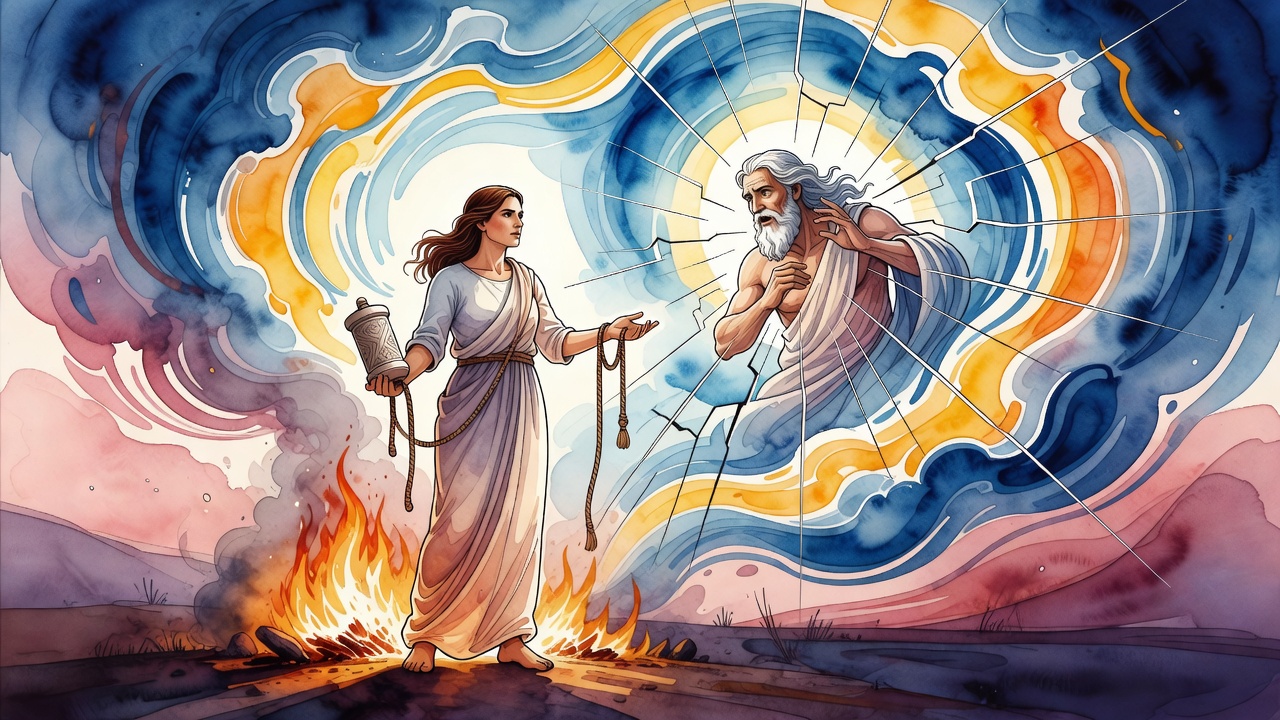
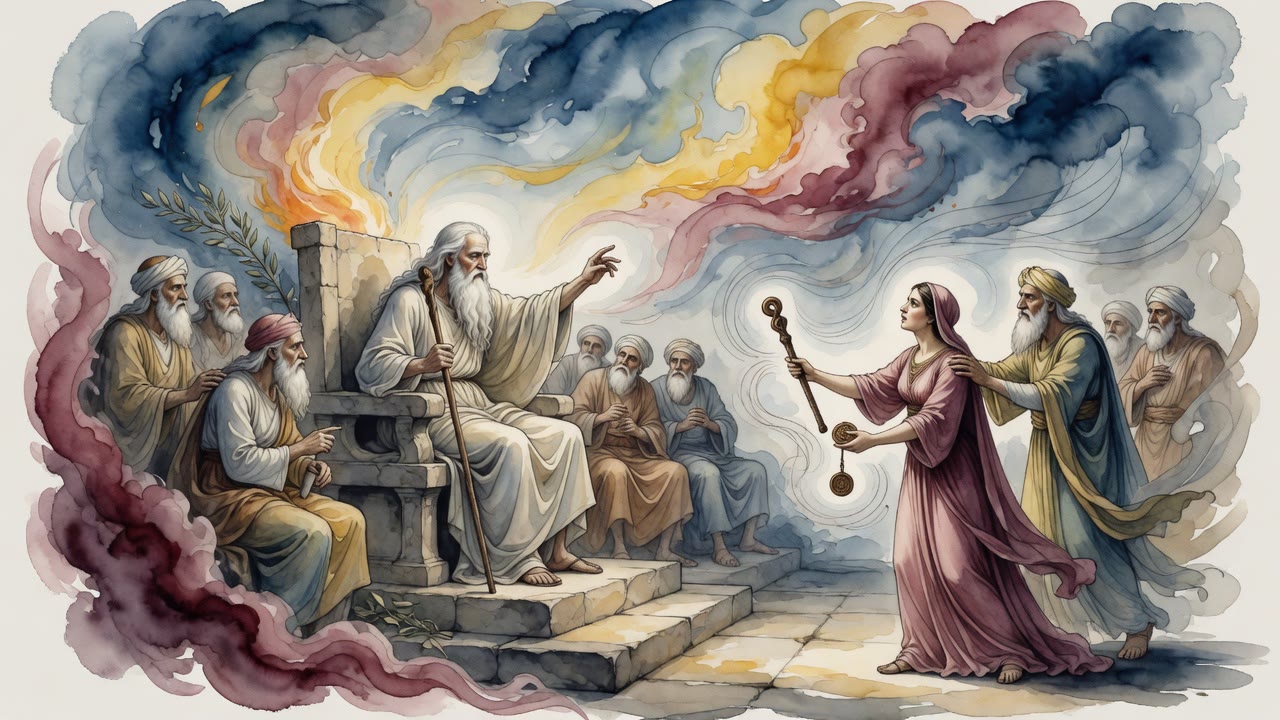
She did not denounce him in the street. She sent the signet, the cord of the mantle, and the staff, with a message: the man who owns these made me pregnant. Examine them. See whose they are.
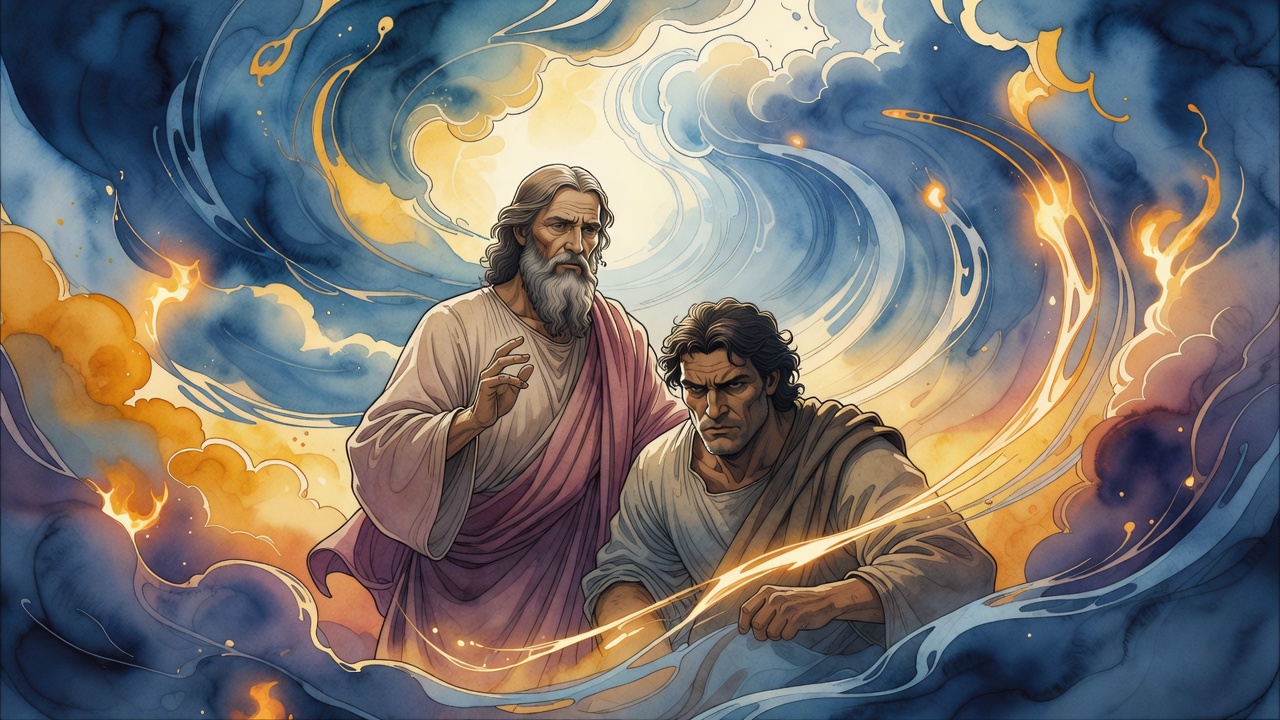
Judah recognized the objects in his hands. The heat went out of the sentence he had just spoken.
"Tamar is more righteous than I am," he said. "Therefore let them burn her not. I did not give her my son Shelah."
He did not approach her again. She was not given to Shelah. She bore twins, Perez and Zerah. At the birth Zerah put out a hand, and the midwife tied a scarlet thread on it, then the hand drew back, and Perez broke through first. His name means breach. The Messiah would come through the one who forced his way out.
Jacob Would Not Rebuke That Confession
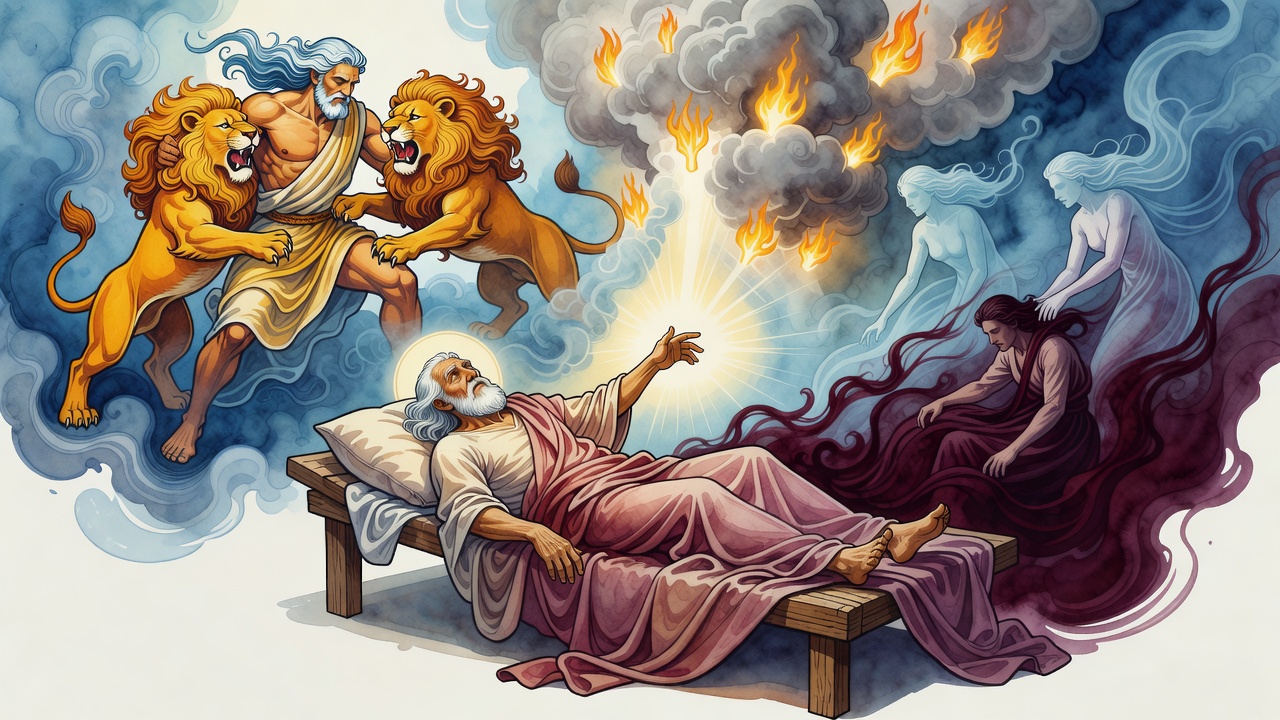
Years later, on his deathbed, Jacob rebuked Simeon and Levi. The other sons tried to slip away. Judah was afraid his father would taunt him with Tamar.
Jacob turned to him instead. Judah, thou dost deserve thy name. Thy brethren will praise thee. As thou didst confess thy sin openly, so will thy descendants. Thou didst save Joseph from death, and Tamar and her two sons from the flames. Rulers shall not cease from the house of Judah until his descendant Messiah come.
Tamar had known that sentence before Judah did. She had sat in Abraham's gate with a veil on and an angel turning a man who would have walked past her. She had kept the pledges until he was ready to say she was more righteous. The line he had tried to close had already opened in her.
← All myths