The Witch of En-Dor and the Spirit That Stood Upright
Saul took off every mark of kingship and knocked after dark. When the dead man rose on his feet, the woman knew the visitor before he spoke.
Table of Contents
 Click for full size
Ordinary Clothes After Dark
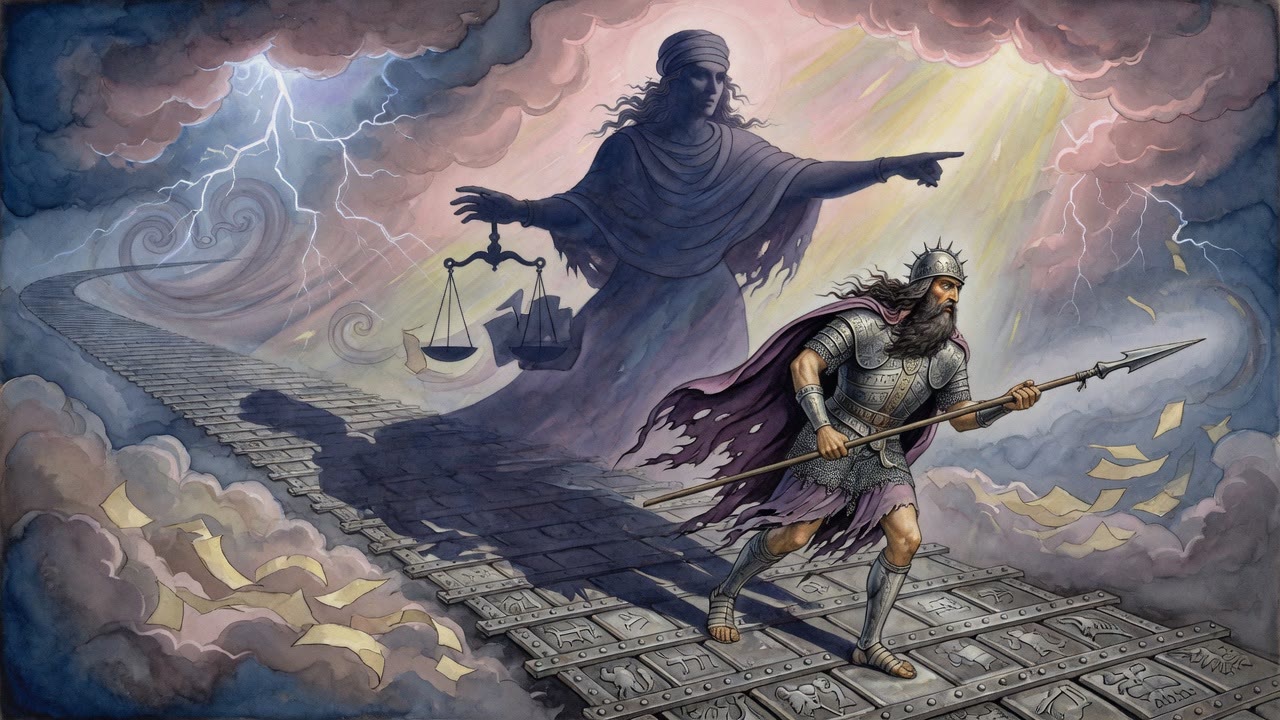
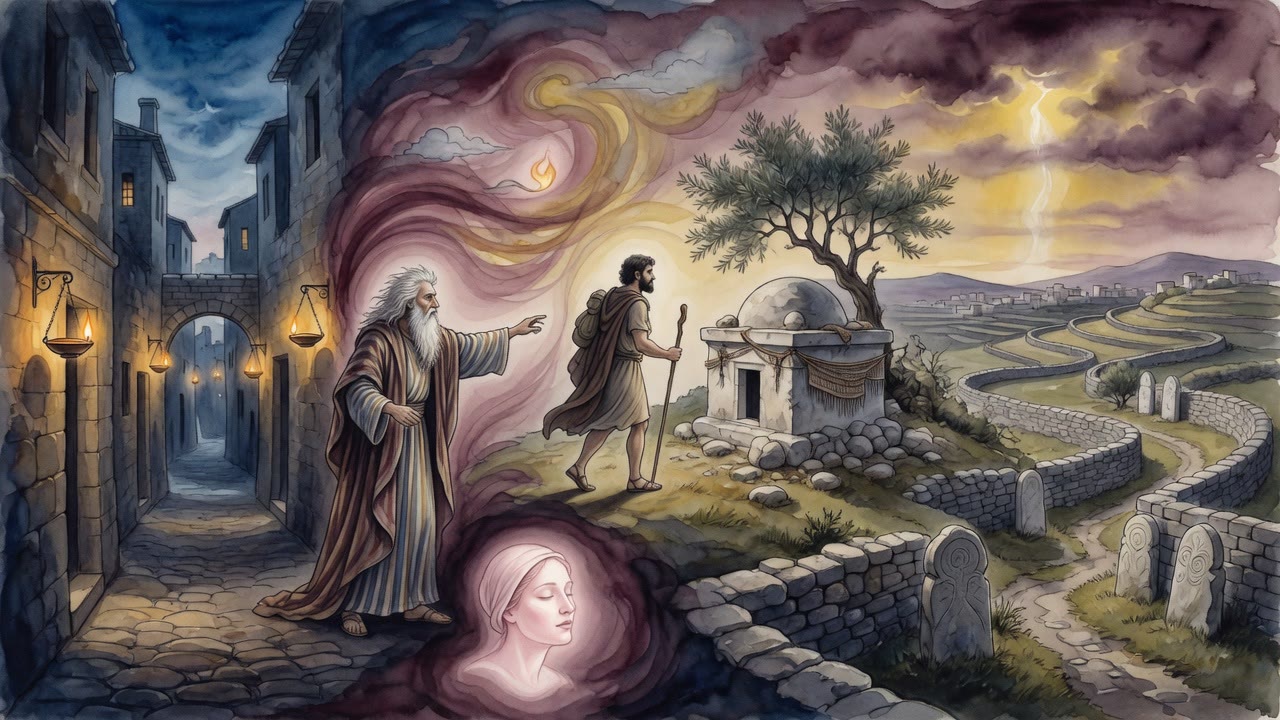
Saul reached the house at En-dor after dark in ordinary clothes. He had brought two men he trusted, Abner and Amasa. He had taken off every mark of rank. It was the kind of disguise a man builds when he has no good option left and is ashamed of the one he is about to use.
He himself had expelled the mediums and necromancers from Israel. He had done it by decree, because the Torah forbade the work. Now he stood at one of their doors and asked her to do the thing he had made illegal.
He asked her to bring up Samuel.
Feet in the Air
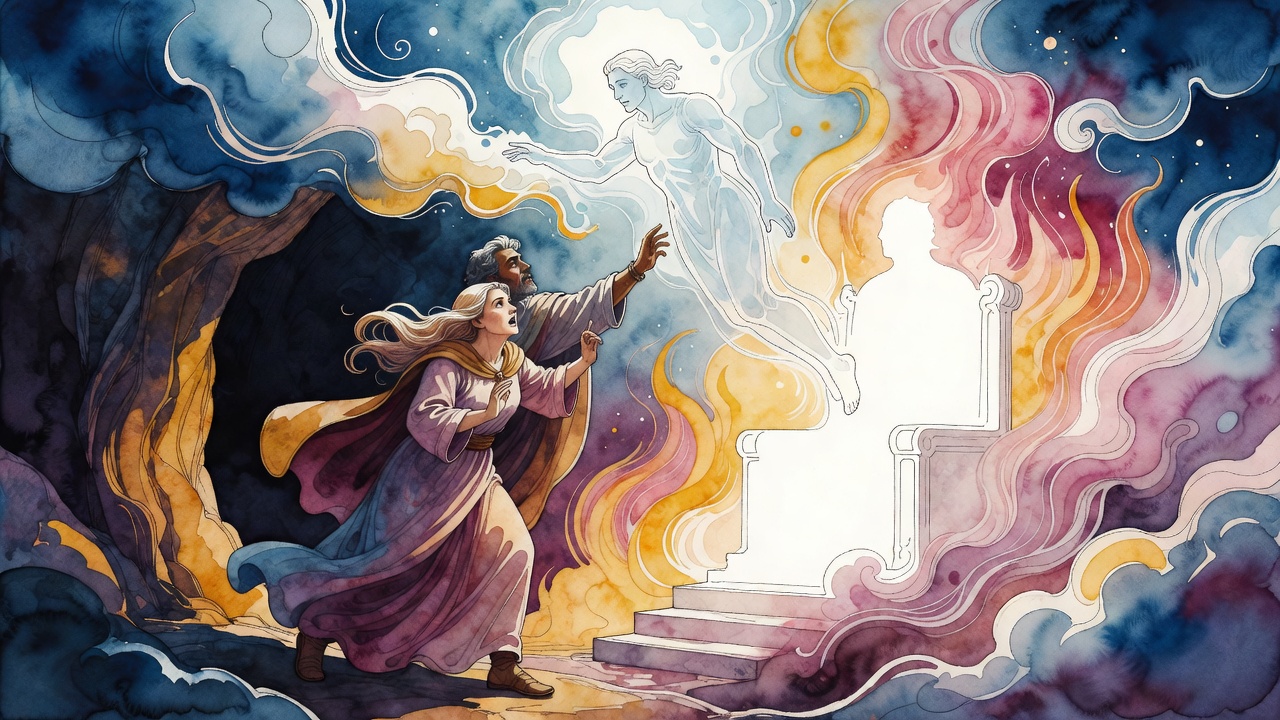
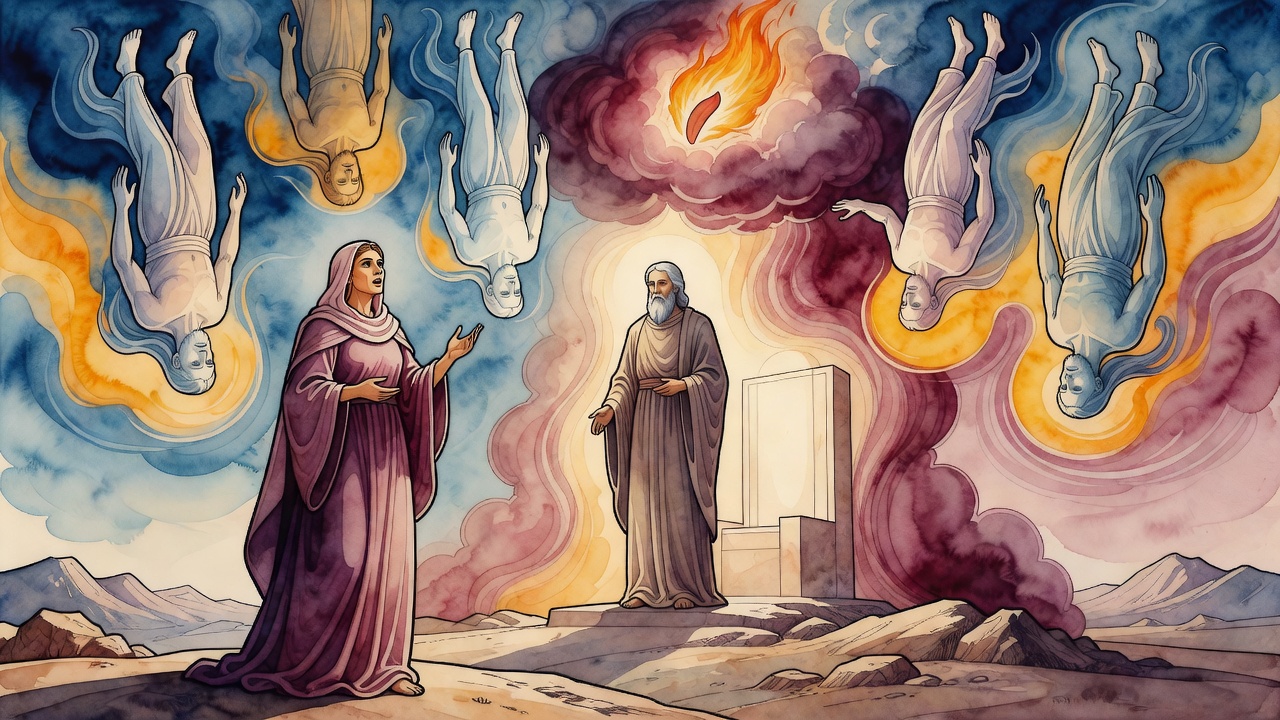
A summoned spirit comes inverted: head down, feet in the air, as if the world after death keeps a different gravity. One exception changes the posture. When a king is the one asking, the spirit rises upright, in the stance of life. Kingship, in that accounting, is a category death does not fully turn over.
The woman of En-dor did not know who was in her house. She called Samuel. The spirit stood up on his feet.
She screamed at Saul. You are the king.
She could see Samuel and could not hear him. Saul could hear him and could not see him. The two companions neither saw nor heard. Each person in the room was given one piece and denied the rest.
Tomorrow You Will Be With Me
Samuel was not pleased. His first words had the heat of a man dragged back across a border he had crossed cleanly. Saul told him the problem: the Philistines were massing, God had stopped answering through dreams and through the Urim and Thummim and through prophets, and he had nowhere else to turn.
"Why do you ask me, since God has turned from you and become your adversary?" Samuel named Agag. He named the cattle. He named the command that had not been finished. He did not pretend the silence was a mystery.
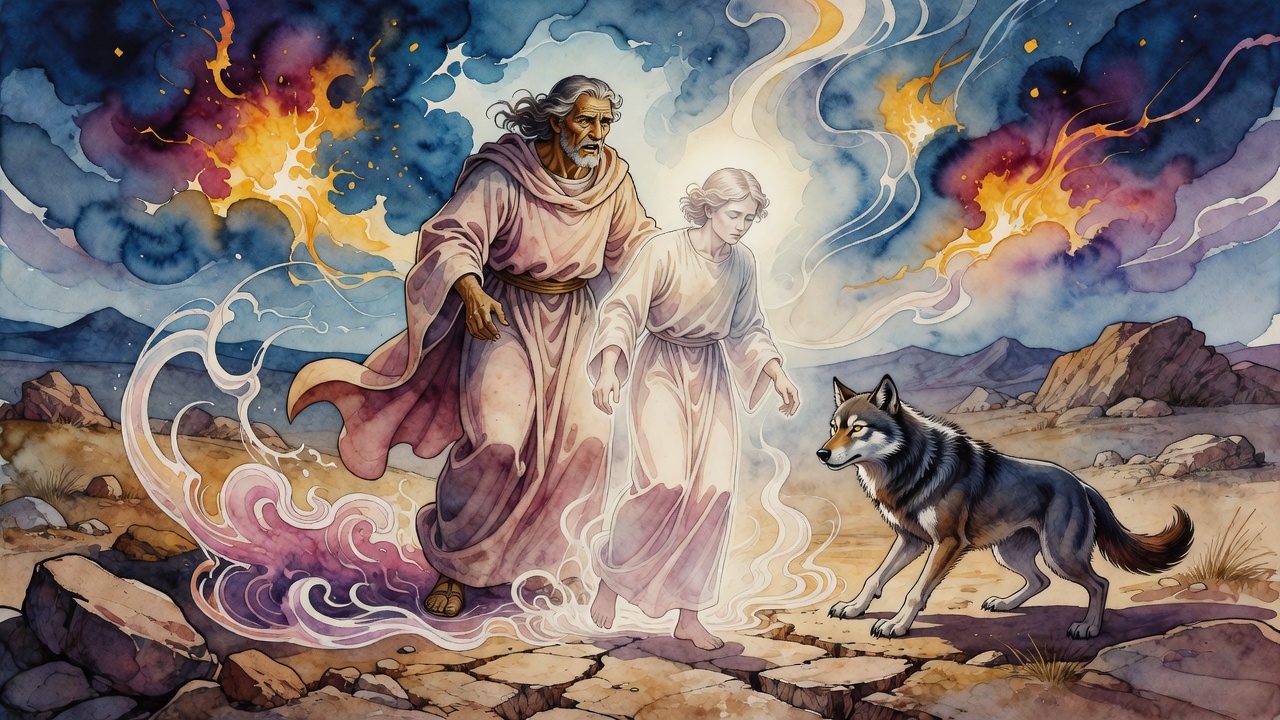
Then he said, "Tomorrow you and your sons will be with me."
There is a prophet who was stood on his feet to hear God. Ezekiel in exile heard the command: Son of man, stand upon your feet and I shall speak with you. A ruach, a spirit, came into him and set him upright, and he heard. That standing was a gift for a living mouth. Samuel's standing was not a gift. It was the mark of the king who had called him, and the words that followed were a death sentence, not a commission.
No Bargain for the Day
Saul fell full length on the ground. He had eaten nothing all day and through the night. The sentence sat on him and did not move.
No man rules the spirit. No man tells the Angel of Death to wait until the accounts are finished. You cannot send a son or a servant into the war in your place. You cannot bribe the day. Saul had been a king that morning. He could not buy an extra dawn.
Samuel had anointed him, and later had anointed David. The office the dead man had held in life was still heavy enough to stand upright in a forbidden room and refuse comfort.
Bread Before Dawn
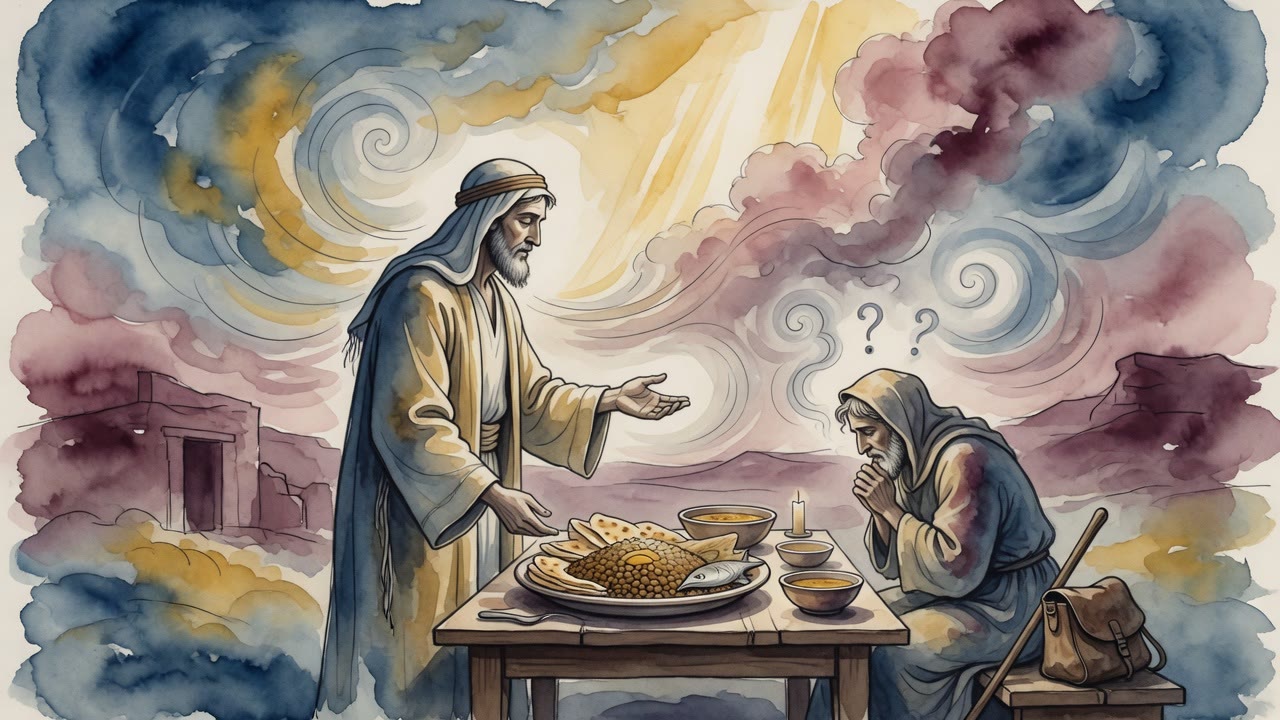
The woman had been threatened with death for the work she had just done. She killed the fatted calf herself. She baked bread. She brought the food and set it in front of him. Saul ate. Then he went out before dawn into the last night of his life.
The woman who had known him by the posture of a dead man was the last person who was kind to him. He walked toward the Philistine line with bread in him and no more questions left to ask the dead.
← All myths