Mordecai Heard Three Verses and Knew the Rescue Was Coming
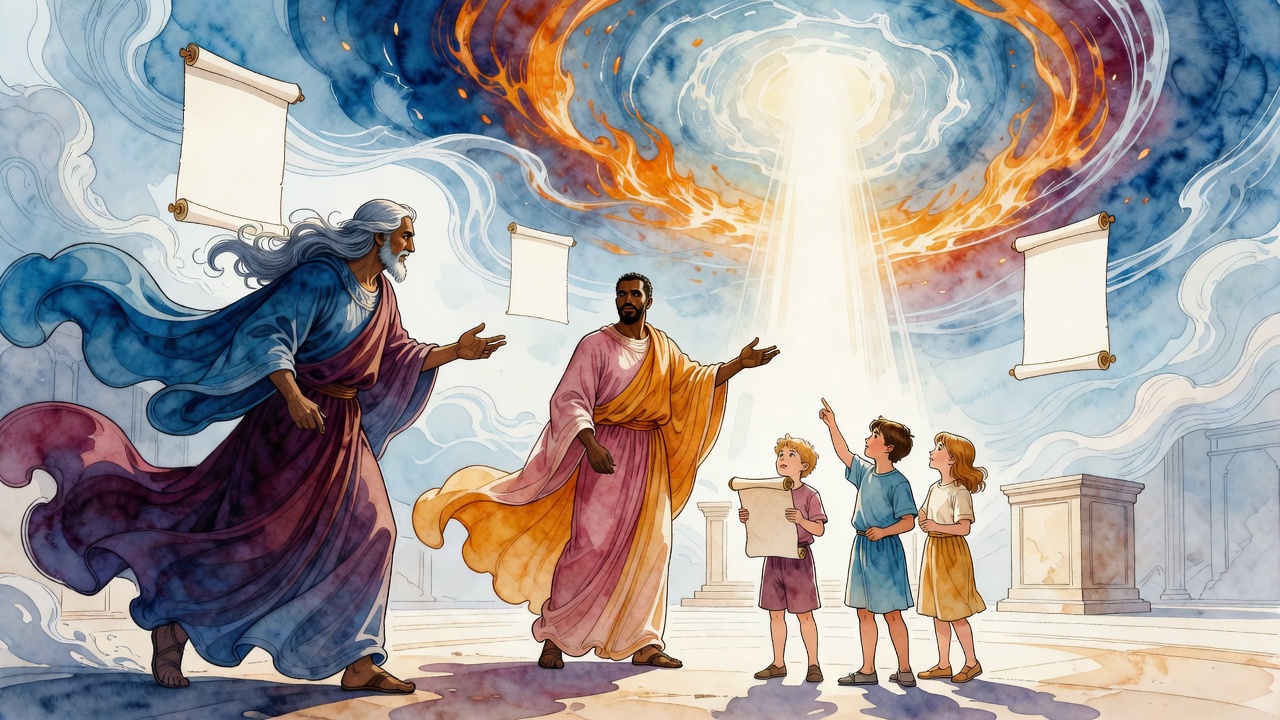
Persians in Shushan had begun telling Jews the date. Mordecai stopped three children walking home from school and asked what they had learned.
Table of Contents
 Click for full size
The Date Was Public
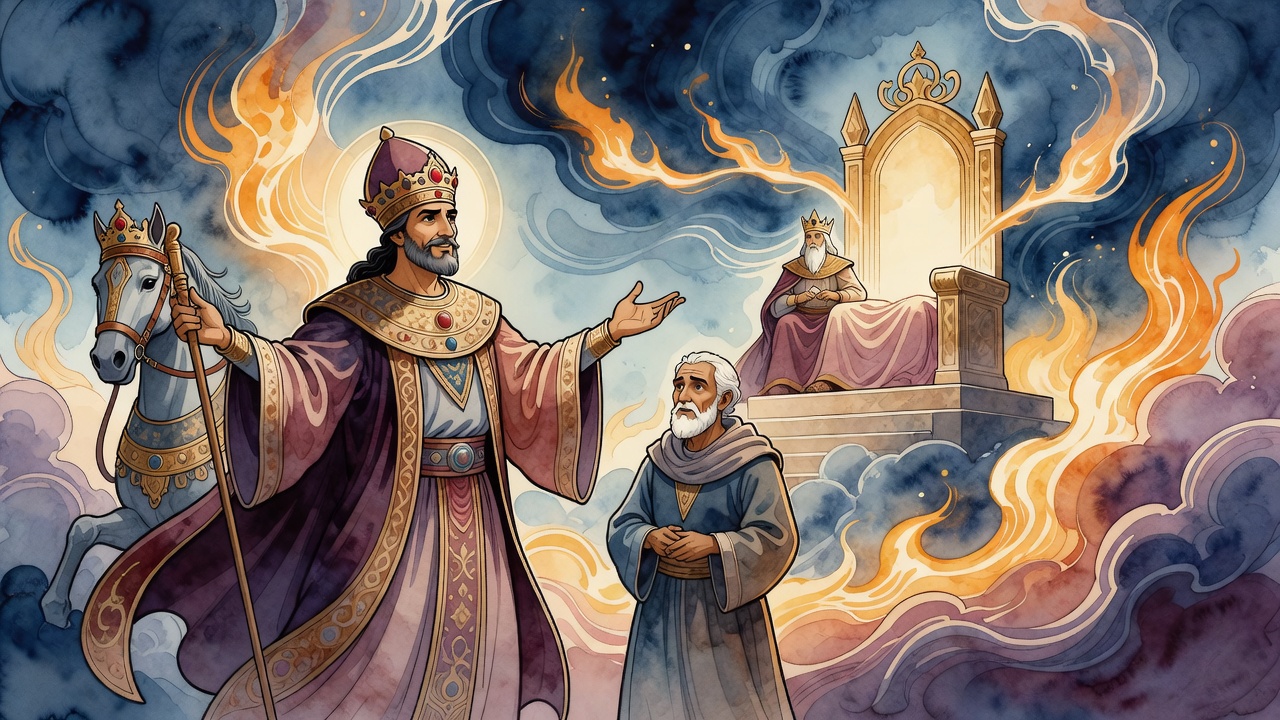
A Jew who went out for bread in Shushan got caught by the throat before he reached the stall. The Persian holding him said it almost pleasantly. "Never mind. Tomorrow will soon be here, and then I shall kill you and take your money away from you." The letters had gone to every province with the king's seal pressed into them, and the letters named the day.
Some Jews tried to sell themselves as slaves, on the theory that a man protects his property. Nobody bought. No one wanted to feed a body that was already scheduled.
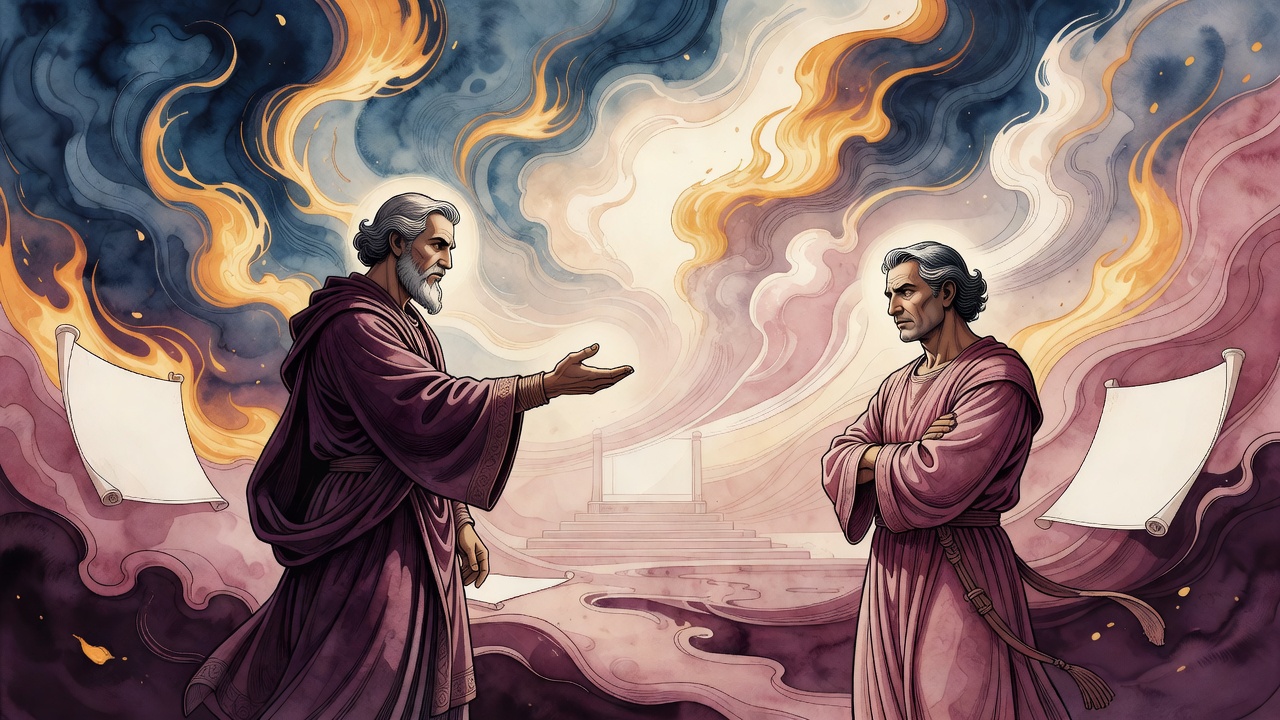
Mordecai came out of the palace that afternoon into that street. Haman and his friends had just finished telling him what the king had granted them, and they had enjoyed the telling. He walked past the shuttered stalls in sackcloth. Three children came toward him with their tablets, on their way home from the house of their teacher.
What the Children Had Learned
He stopped the first one and asked what verse he had studied.
The boy recited it the way children recite, flat and pleased to be asked. "Be not afraid of sudden fear, nor of the desolation of the wicked when it comes."
Mordecai asked the second.
"Take counsel together, and it shall come to nothing. Speak the word, and it shall not stand, for God is with us."
He asked the third. This one had been given the long verse and got through it carefully, watching Mordecai's face for the mistake. "Even to old age I am He, and even to grey hairs I will carry you. I have made, and I will bear. I will carry, and I will deliver."
Mordecai began to laugh in the street. Three verses. A rescue spoken in the mouths of children who did not know they were carrying it.
Haman Came Around the Corner
Haman had followed him out of the palace and found the man he had spent a year trying to break standing in front of three schoolchildren with his sackcloth still on, laughing out loud.
He demanded to know what was funny.
Mordecai told him. "I rejoice at the good tidings the schoolchildren have brought me."
Haman made them say the verses again. He listened to a boy tell him that a plan spoken aloud would not stand, and he understood the arithmetic perfectly, and the blood went out of his face. Then he said it. "In truth, they shall be the first to feel the weight of my hand."
He would begin with the children. He walked back into the palace to arrange it.
Eighteen Thousand Five Hundred
The laughing stopped before Mordecai got home.
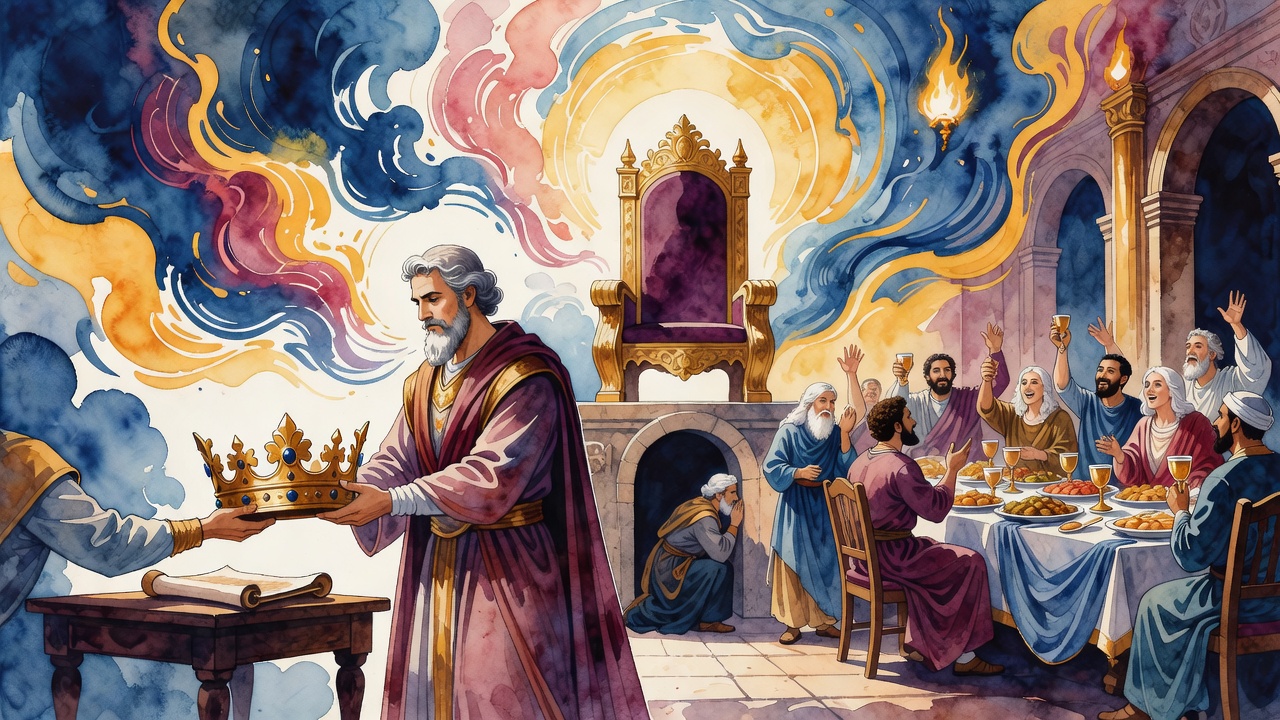
What frightened him was never Haman. It was the accounting behind Haman. Years earlier the king had thrown his banquets, the long ones, the ones the whole empire talked about, and eighteen thousand five hundred Jews had gone. They ate at those tables. They drank. They got drunk, and then they did worse than drink. Haman had counseled the king to hold those feasts, and he had counseled it for exactly that reason, and every Jew who sat down had walked into it smiling.
So the decree was not only a wicked man's malice. It was also a bill. Mordecai had spent days in sackcloth at the palace gate doing the sum, and the sum came out against his own people, and no verse a child recited on the road from school changed a single figure in it.
Naked and Bare
The same books that told him not to fear sudden terror told him something worse about the last time.
In Egypt, when the groaning finally rose, God looked at the slaves and knew. What He knew was that they had nothing. No good deeds banked, no merit on the ledger, nothing at all to justify a rescue. Ezekiel put it as a body: the hair had come in, the breasts had come in, the girl was of age, and she was naked and bare (Ezekiel 16:7). Moses and Aaron were already standing ready to bring her out. She had not earned them. The breasts in that verse, in the reading Mordecai had been raised on, were those two brothers, prepared before Israel had a single merit to show.
That was the whole comfort, and Mordecai took it. The third child had handed him the sentence without knowing what he was handing over. Not a promise that deliverance had been earned. Only a promise that the carrying had not stopped. God would carry, and God would deliver, even to grey hairs, even when the ledger was empty.
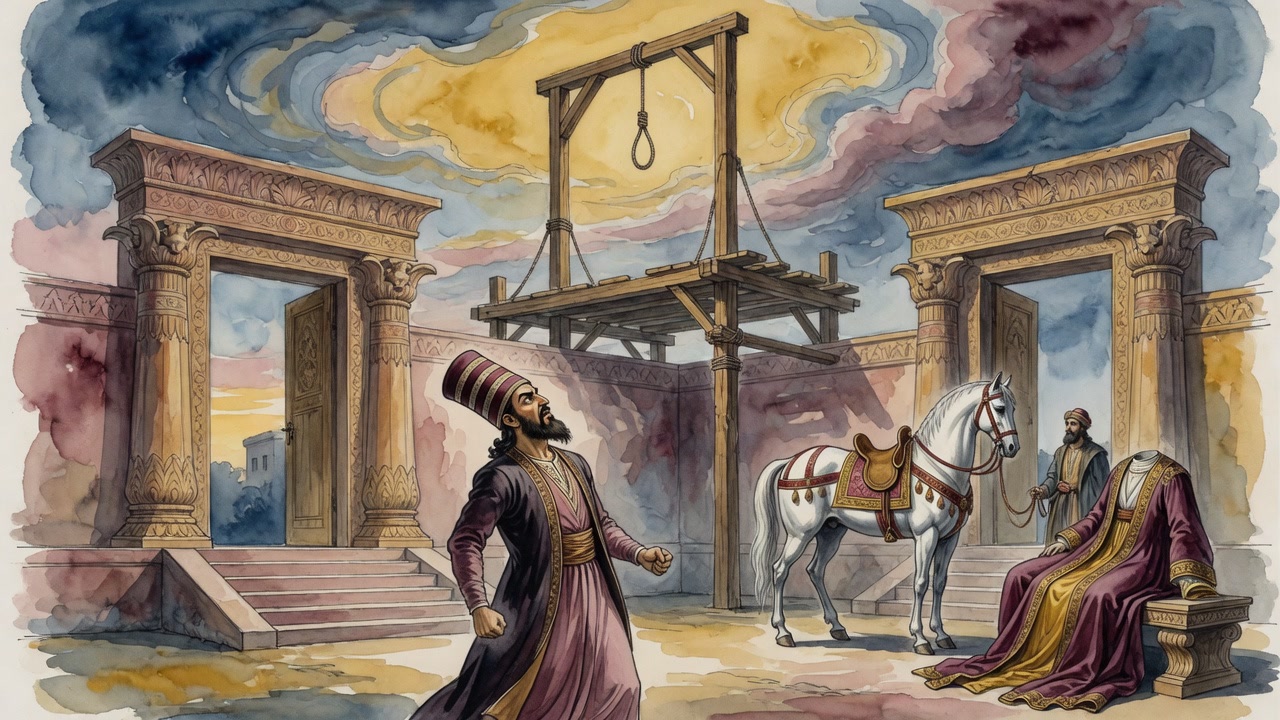
Behind him the children walked on toward their mothers, arguing about something else. Inside the palace, Haman was already measuring wood. The rescue was coming anyway.
← All myths