Ezekiel Saw What the Patriarchs Only Glimpsed From a Distance
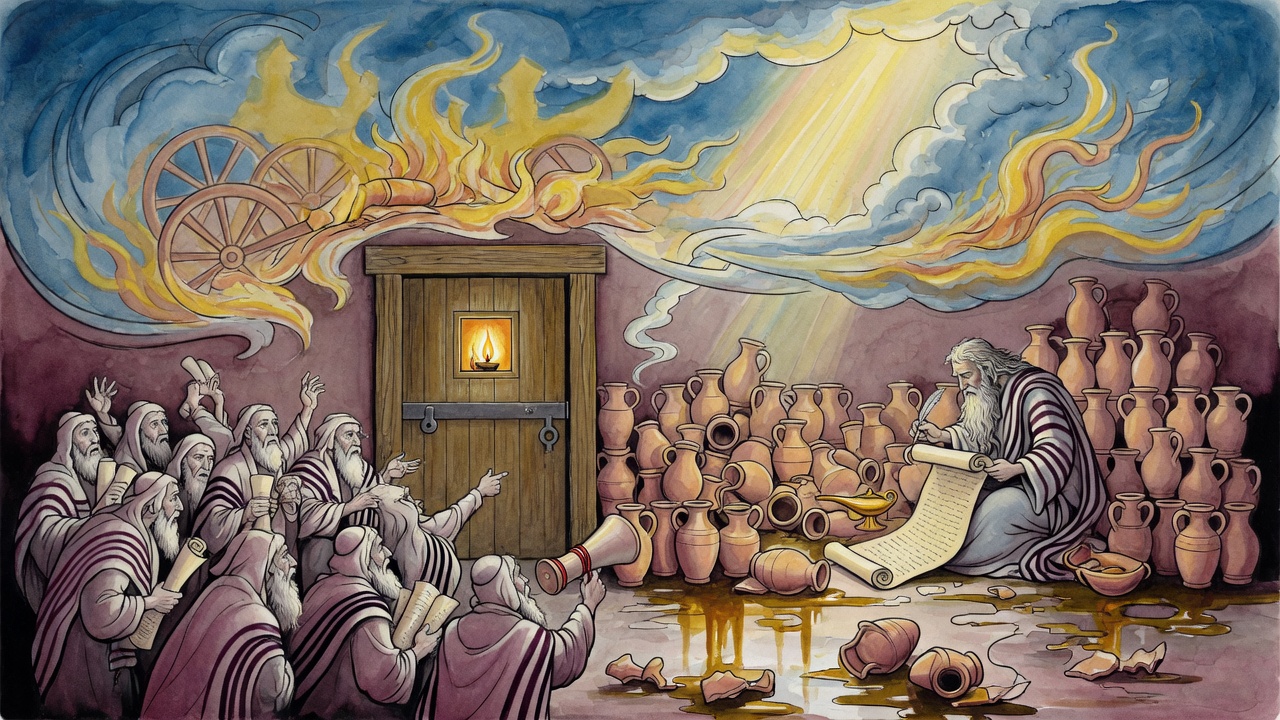
Vayikra Rabbah says a prophet sees God the way a candle is seen through a window. Abraham got nine clouded panes. Moses got one clear one.
Table of Contents
 Click for full size
Nine Words for What Cannot Be Seen
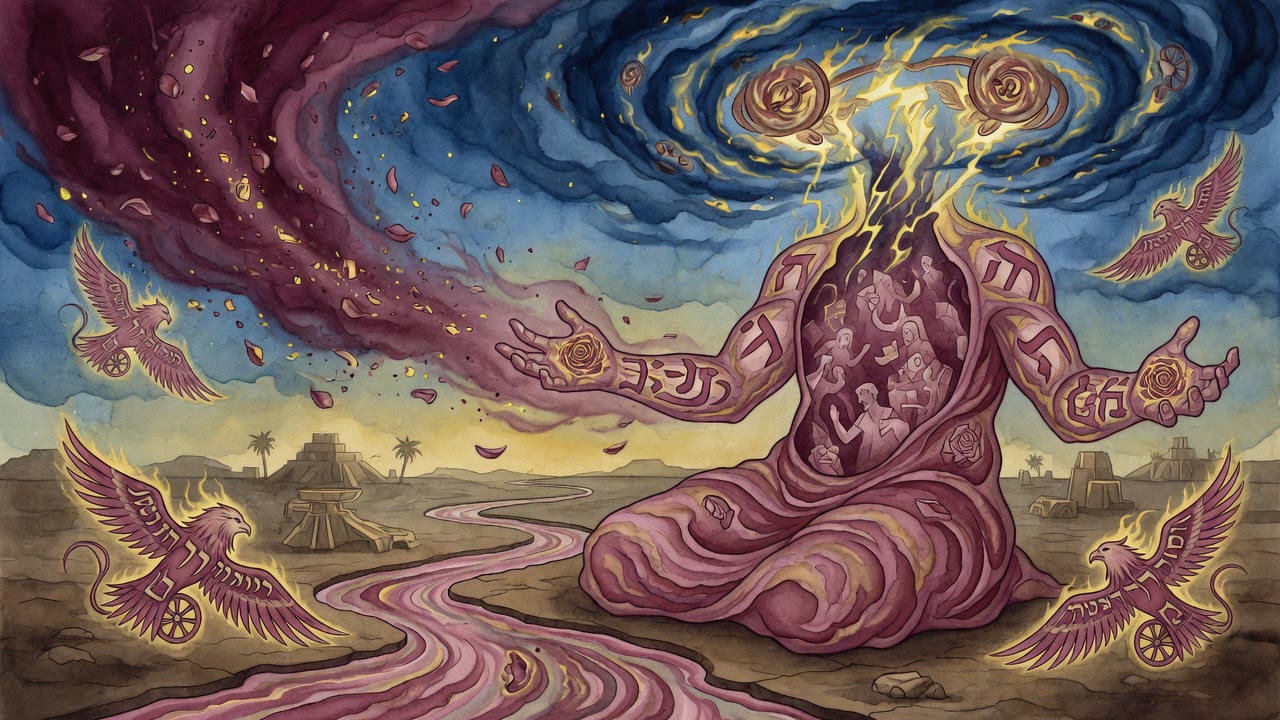
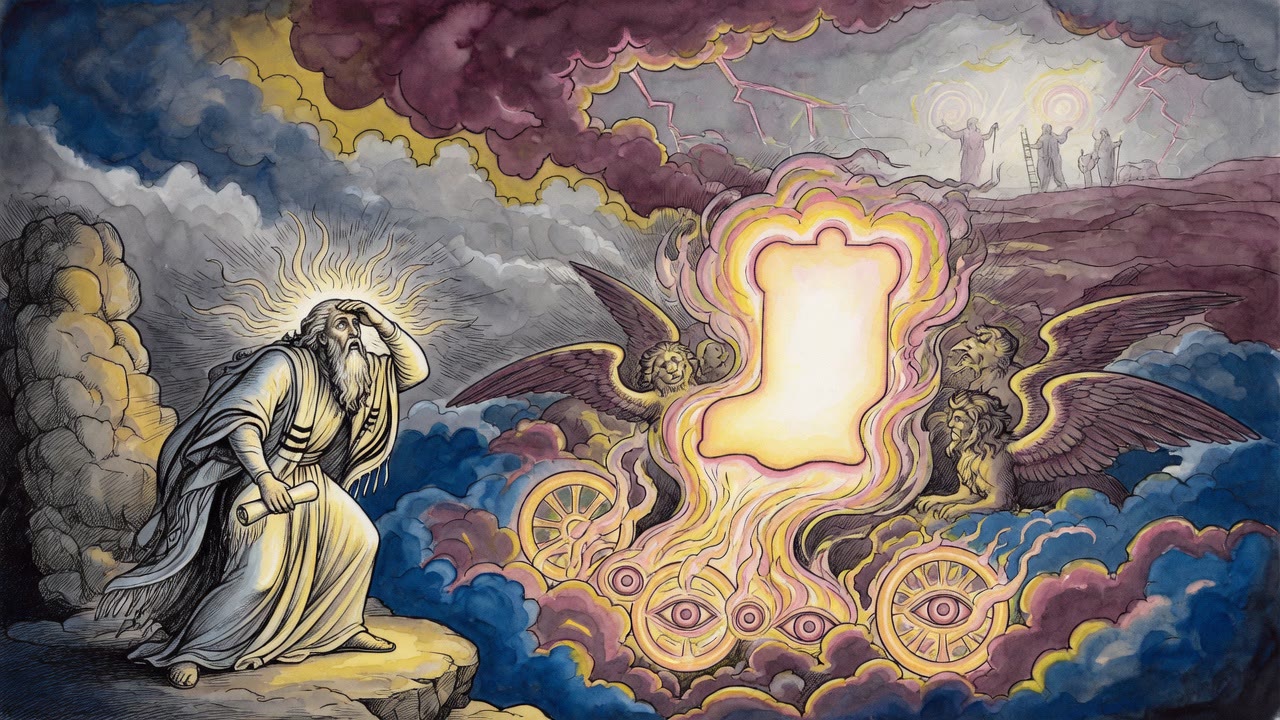
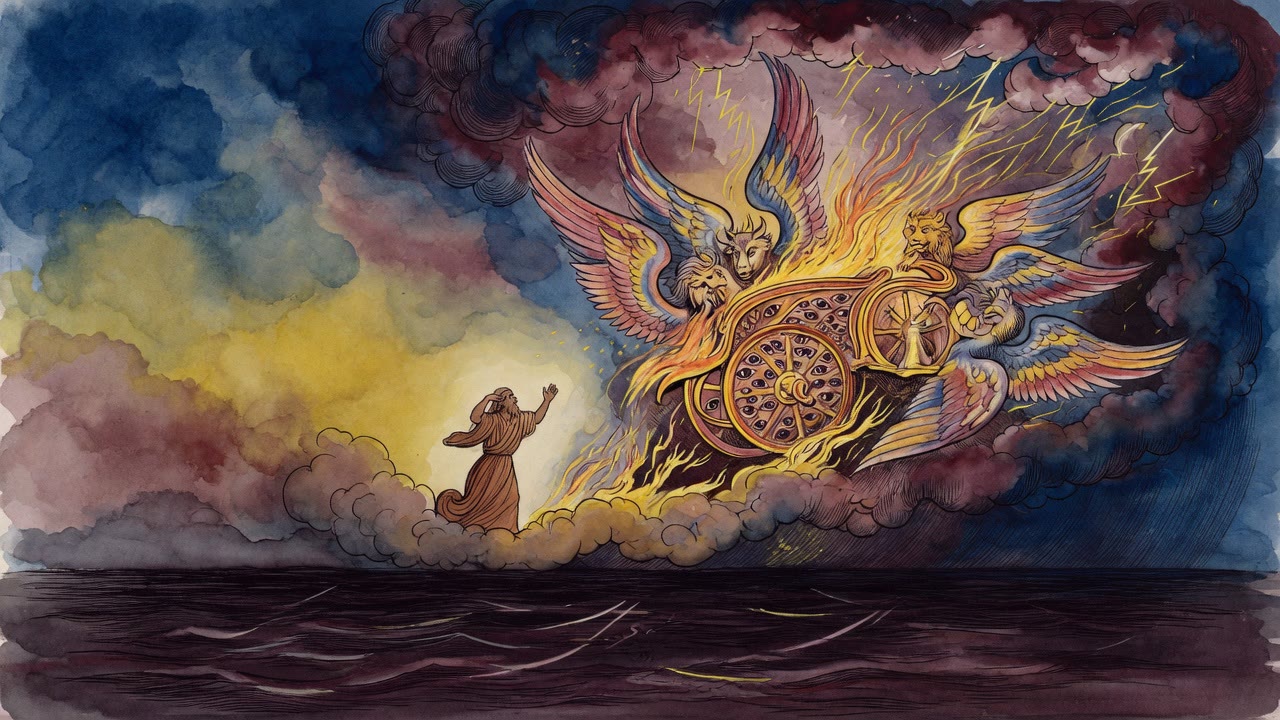
Ezekiel was a priest. He was not in the Temple when the vision found him. He was by the Chebar Canal in Babylon, sitting among the exiles, when the heavens broke open above him and the living creatures came out of the storm-cloud with their four faces and their wheels of amber and their eyes covering every rim.
He wrote it down word by word. Appearance of fire. Like the appearance of brightness. The vision of the likeness of the glory of the Lord. He stacked qualifier upon qualifier, as if no single word could bear the weight of what he had seen. Falling on his face was the only honest response.
The rabbis counted the words he used for seeing. They found nine. Nine separate instances of vision-language in the first chapter alone. And they asked the question that was already obvious: if Moses had spoken with God's face to face, mouth to mouth, clearly and not in riddles, how did Ezekiel end up using more language to describe less?
The Glass Between the Prophet and the Source
Vayikra Rabbah, the fifth-century Palestinian midrash on Leviticus, develops an answer through the figure of glass. A prophet does not see the divine directly. He sees through a medium, the way a candle is seen through a window. The quality of the glass shapes what arrives. A clear pane gives a clean image. Clouded glass gives color and blur and suggestion.
Rabbi Yehuda counted the patriarchs' experiences against this framework. Abraham saw through nine clouded panes. His conversations with God were intimate but filtered, particular but incomplete. Isaac saw through fewer layers. Jacob, who wrestled through the night and demanded a name that was not given, pressed closest.
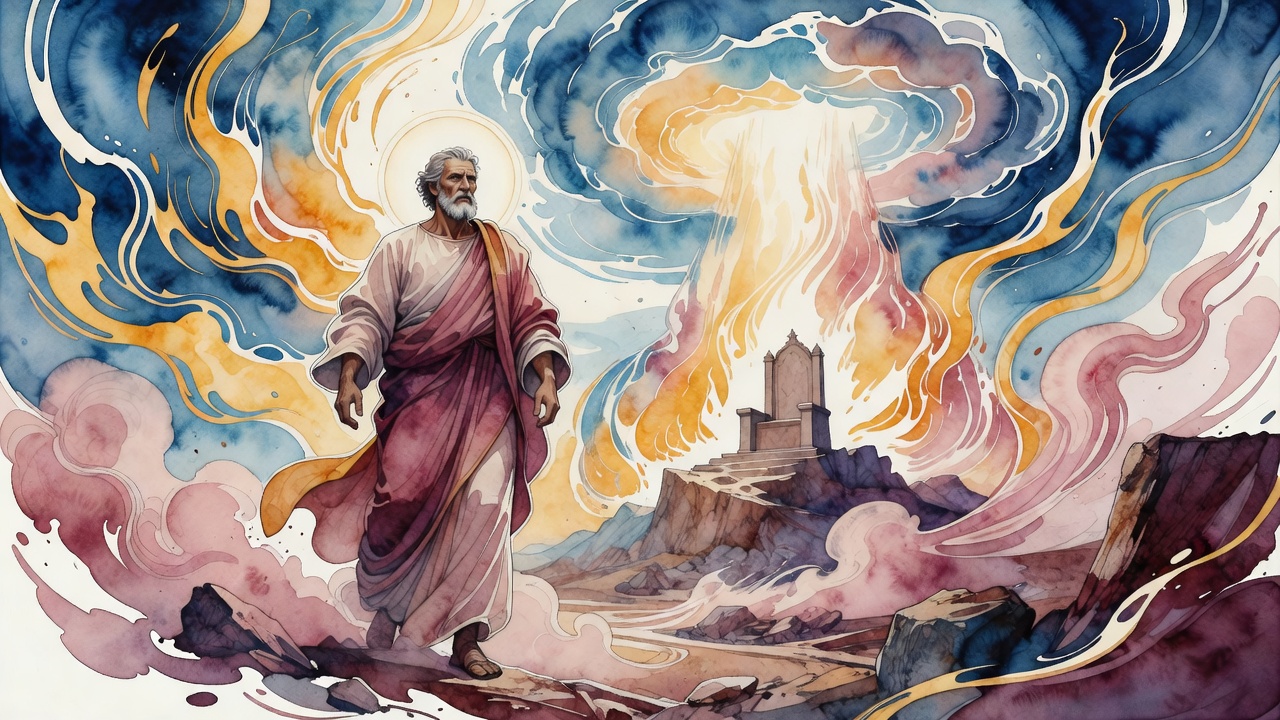
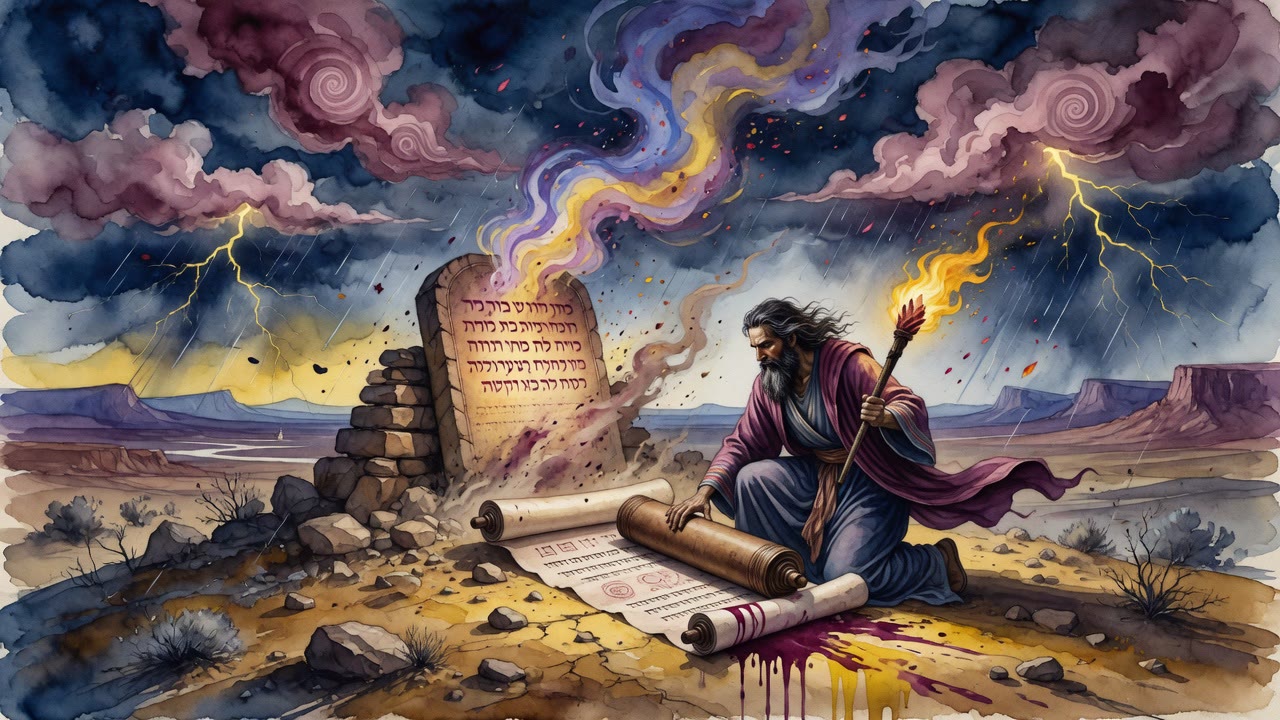
Moses was the exception. He saw through one clear pane, and the clarity was such that God said of him: I speak with him mouth to mouth, clearly, and not in dark speech. This was an achievement no other prophet reached. The Talmud would later call Moses' glass the speculum that shines.
And then the framework shifts. Ezekiel's nine vision-words point to nine clouded panes, not one clear one. By this measure, Ezekiel saw less clearly than Moses, which is what the tradition expected. But the strangeness is the description that resulted. Ezekiel's language is denser, stranger, more detailed, more overwhelming than anything in Moses' account. Nine clouded panes and yet the description fills the page and spills over.
The Explanation That Changes the Calculation
The key move appears in a passage about Ezekiel's vision that survives in several rabbinic collections. A country person and a city person both see a king's retinue. The country person has never been close to royalty. The horses, the banners, the outriders, the gleaming armor, the controlled chaos of the procession: he describes everything he can see, overwhelmed, reaching for every word he has. The city person has seen this kind of thing before. He watches and knows immediately what it is, and says so without elaborating.
Moses was the city person. He had stood at the burning bush, received the Torah, spent forty days in the cloud on Sinai, passed through the cleft of the rock while the glory went by. When he wrote about the divine, he wrote from familiarity. He could say the Lord went before them and leave it there because he knew what that meant from the inside.
Ezekiel was the country person, not because he was lesser but because his situation was new. He was in Babylon. The Temple was still standing when his first vision arrived, but the exile had already begun. He was seeing something he had no adequate preparation for: the divine presence outside the Land, outside the Temple, moving among the exiles, present at the canal. That presence had always been there. Ezekiel was the first to see it clearly enough to describe it, and what came out was not clarity but abundance.
What the Faces Said About the World
The four faces of the living creatures in Ezekiel's vision each pointed in a different direction: the face of a man, the face of a lion, the face of an ox, the face of an eagle. Rabbinic traditions traced each face to a different corner of creation. The ox was the leader of domestic animals. The eagle was the leader of birds. The lion was the king of wild beasts. The human face stood above them all.
Ezekiel saw these faces reflected in what he described as the appearance of a human figure on the sapphire throne. The entire created world, summarized in four faces, carried within the vision of the divine. The Chebar Canal was not a lesser location than Sinai. It was a different kind of revelation for a different kind of moment, and Ezekiel had been given exactly the eyes he needed to receive it.
← All myths