Abraham Guarded the Altar at Mamre Until Egypt Was Named
He spent the afternoon driving birds off the cut pieces. When the sun dropped, a darkness named Egypt and four hundred years of serving there.
Table of Contents
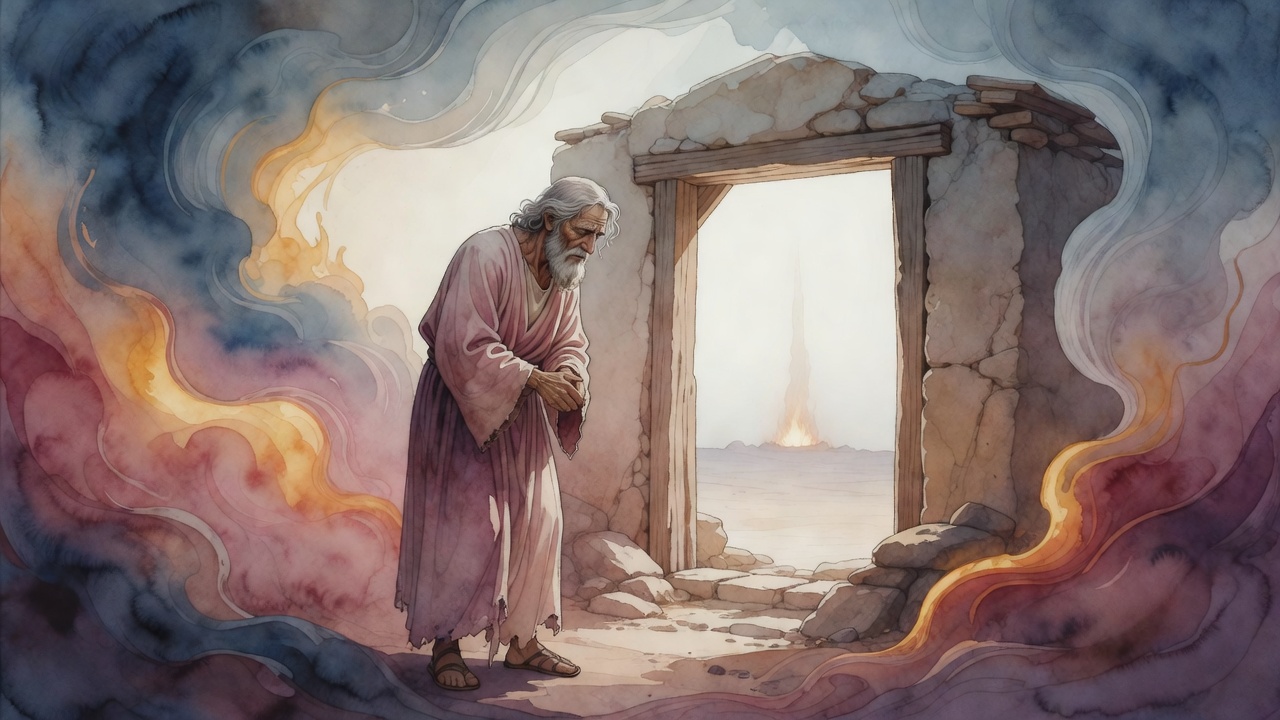
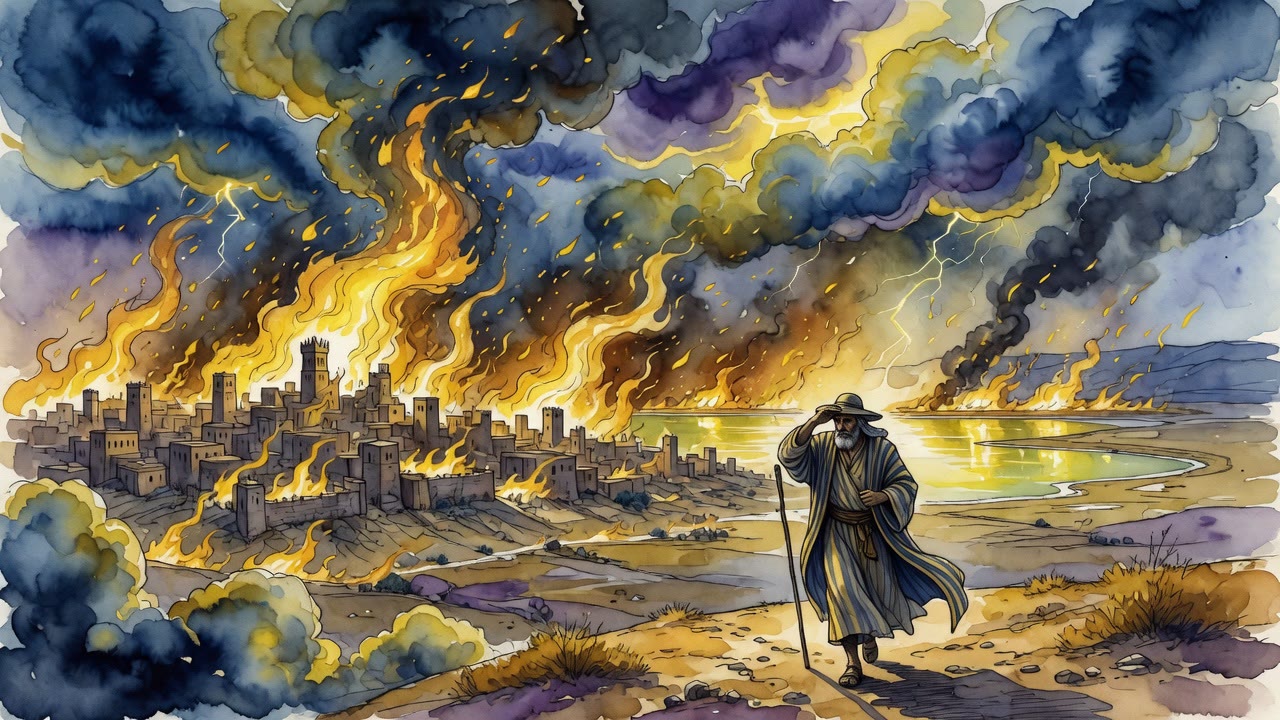
Lot walked toward Sodom in the fourth year of that week, and Abraham felt the parting in his chest. He had no children. The nephew who had come with him out of the old country was going to live among men the text already calls sinners exceedingly. Abraham stood at the oak of Mamre, near Hebron, and watched the road take the last of his brother's house.
 Click for full size
That same year Lot was taken captive, and the Lord spoke after the parting. Lift up your eyes from the place where you are dwelling, northward and southward and westward and eastward. All the land you see I shall give to you and to your seed forever. I shall make your seed as the sand of the sea. Arise, walk through the land in the length of it and the breadth of it. Abraham walked it childless, with the grief still in him, and the promise hanging over empty tents.
The Heir He Did Not Want
Fear not, Abram, the Lord said. I am your defender, and your reward will be exceeding great. Abraham did not kneel his way past the obvious. "Lord, Lord, what will you give me, seeing I go hence childless, and the son of Masek, the son of my handmaid, is Dammasek Eliezer. He will be my heir, and to me you have given no seed."
This man will not be your heir, God said. One that will come out of your own bowels will be your heir. He brought Abraham outside and told him to look toward heaven and number the stars, if he was able. Abraham looked. The count would not come. The child still would not come. Between the stars and the empty tent sat a steward's name Abraham did not want on the inheritance.
He Drove the Birds All Afternoon
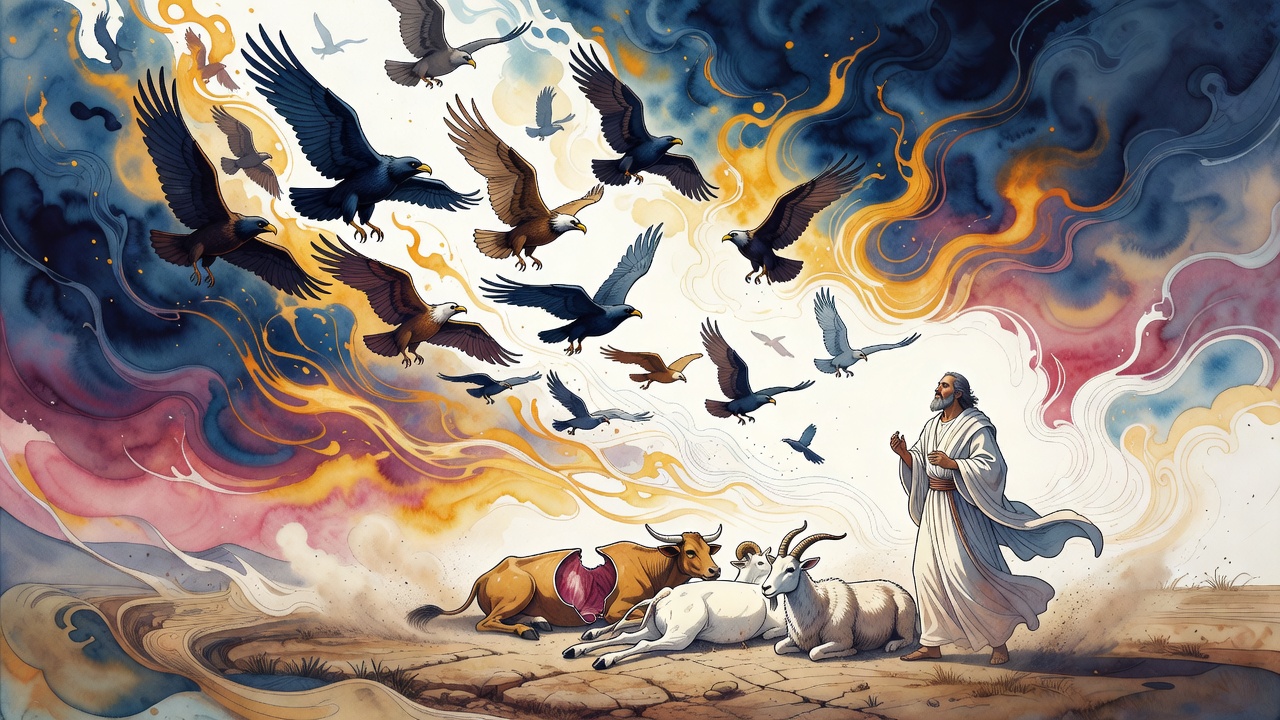
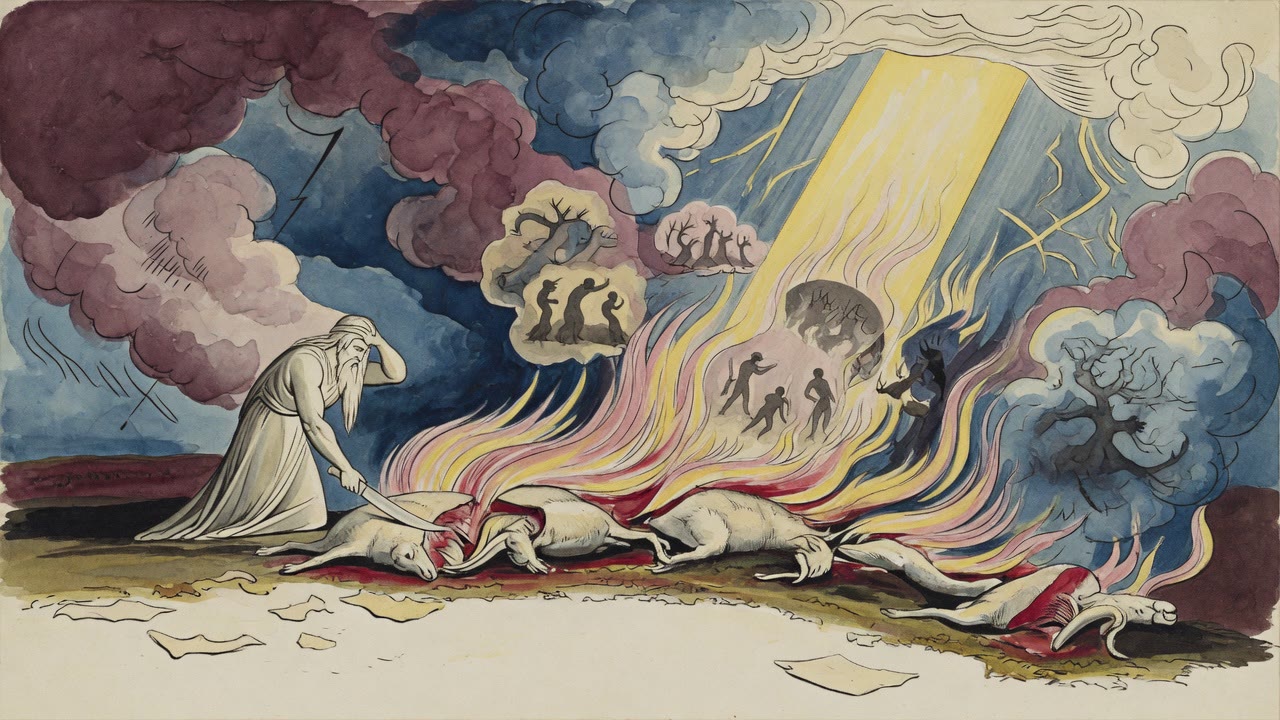
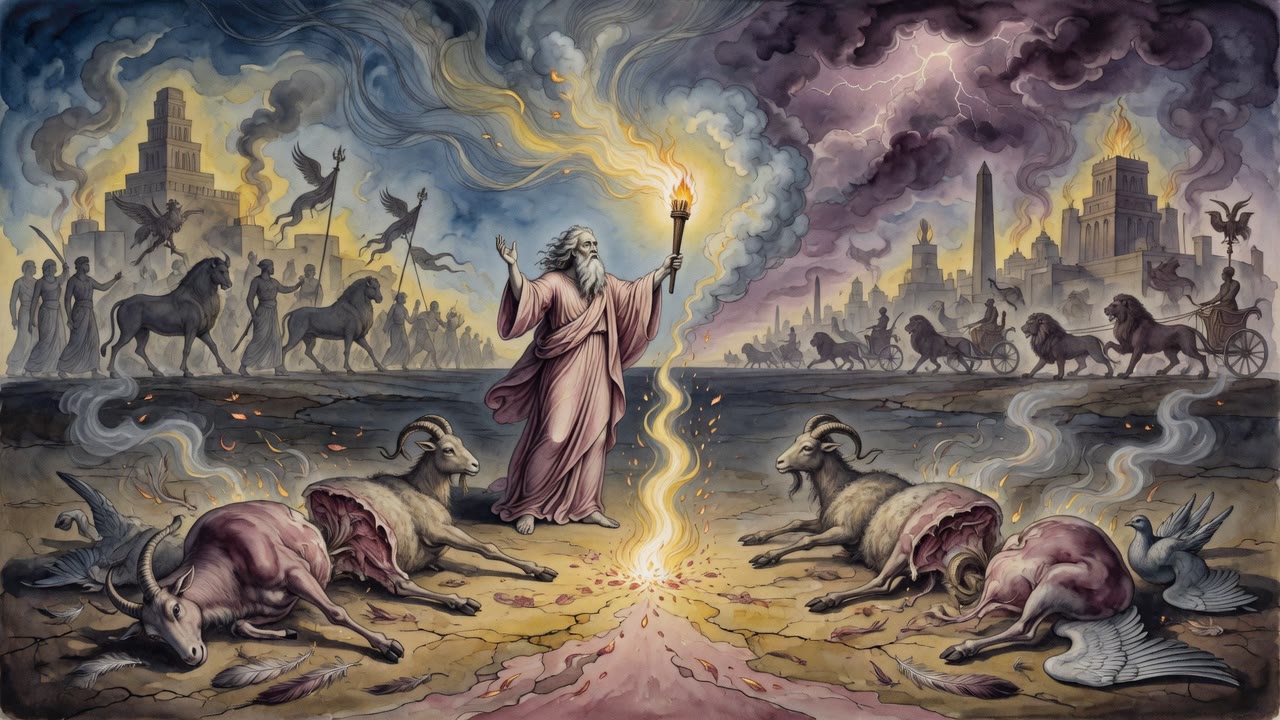
He built an altar at Mamre anyway. A heifer, a goat, and a ram, each three years old, a turtledove and a pigeon. He poured their blood. He divided the larger animals down the middle and laid the pieces opposite each other. The birds he kept whole. Then the other birds came. Not the ones on the altar. Birds of prey, drawn by the blood and the opened flesh, dropped from the Hebron sky onto the pieces.
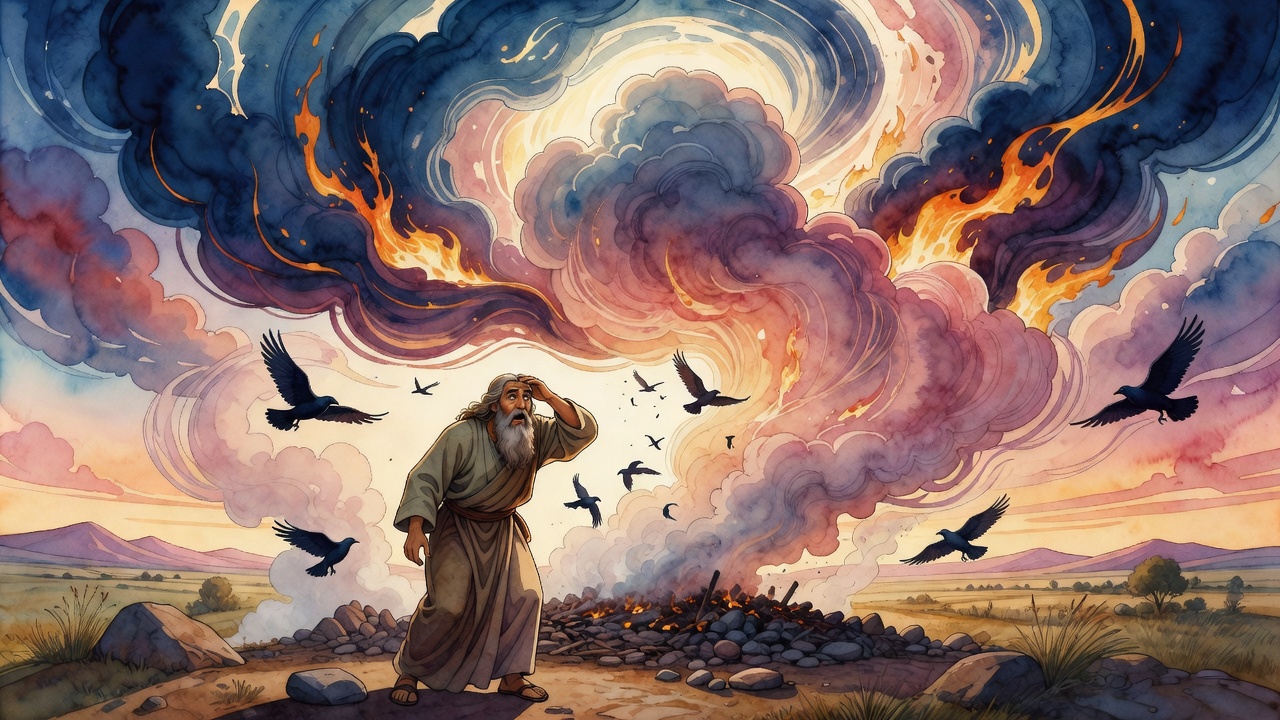
Abraham drove them off. They came back. He drove them off again. All afternoon, as the sun crossed the hills toward the west, he did this one unglamorous thing. He kept the sacrifice from being eaten by what it was not prepared for. No vision came. No voice. Just a man at his altar chasing birds, the promised seed still unborn, the nephew already gone to Sodom, the steward's name still available if the stars failed.
His arms got tired. The birds did not. Every time he turned to one end of the row, a wing hit the other. He shouted. He swung. He stood between the pieces and refused to let the covenant be a meal for scavengers before God had even spoken over it.
A Horror of Great Darkness
When the sun reached the horizon, the work was taken out of his hands. An ecstasy fell upon him. Then a horror of great darkness. This was not a nap after labor. It pressed down from outside and would not be shaken off. He went to the ground between the divided pieces, and the darkness was complete.
Rabbi Yehoshua of Sikhnin later said, in the name of Rabbi Levi, that the beginning of downfall is sleep. A man who sleeps does not toil in Torah. A man who sleeps does not do any work. Abraham had been working all afternoon. Then slumber took the work away. Rav named three kinds. The slumber of sleep, the one cast on the first man in the Garden. The slumber of prophecy, this one, at sunset over the pieces. The slumber of a trance, the deep one that kept a house from waking. Abraham's was the middle kind. He was not resting. He was being shown.
The vision arrived inside that dark. Know of a surety that your seed will be a stranger in a land that is not theirs, and they will bring them into bondage, and afflict them four hundred years. It was not a possibility. It was not a warning that depended on behavior. It was a statement of what was coming, delivered to the man who had only recently been told his seed would outnumber the stars.
The Furnace Walked Between the Pieces
That nation which they shall serve will I judge. Afterward they shall come out with great substance. And you, Abraham, you shall go to your fathers in peace. You shall be buried in a good old age. The consolation required him to live with the knowledge of what his descendants would endure in Egypt for four hundred years. He would not be there. He would be in the ground, in a good old age, while the seed he did not yet hold served in a land that was not theirs.
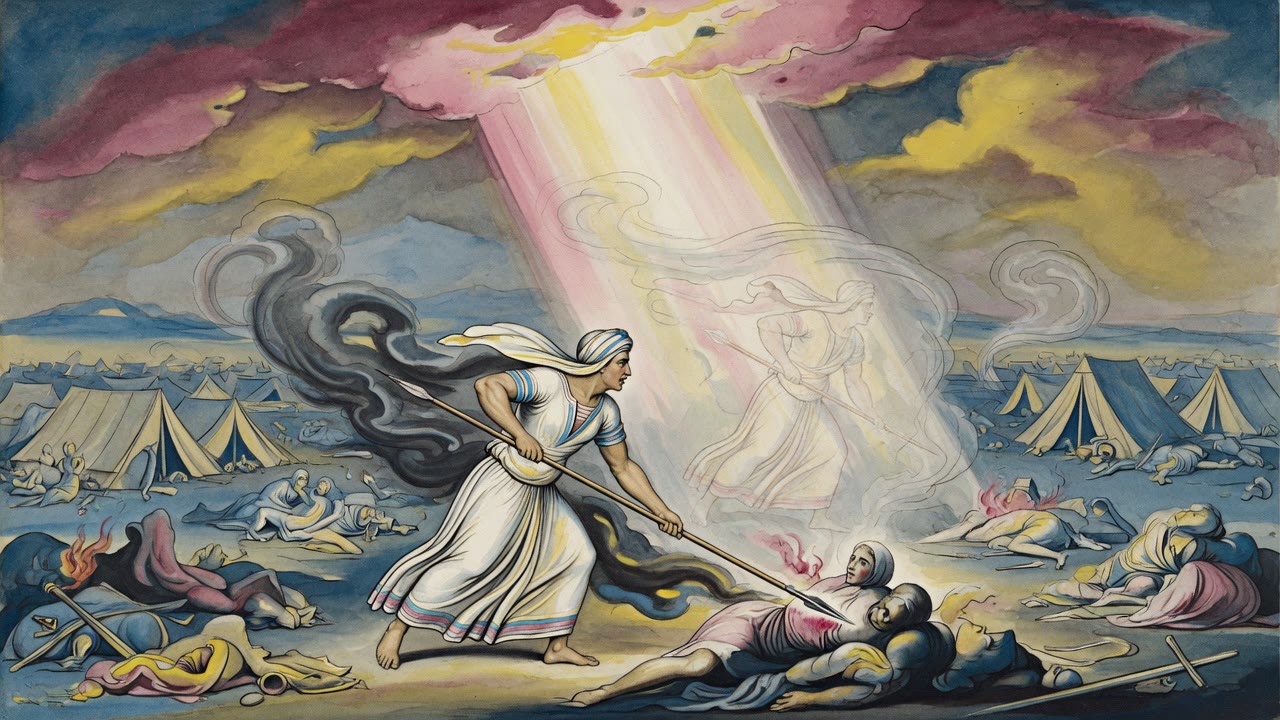
When it was deep night, a smoking furnace passed between the pieces, and a lamp of fire. God walked between the cut animals while Abraham lay unable to move, and the covenant was made. To your seed I give this land, from the river of Egypt to the Euphrates. The pieces, the blood, the birds he had spent the afternoon driving off, all of it became the formal setting of the promise. Egypt was named in the same dark that sealed the land.
In the morning he got up and built another altar. He offered a heifer, a goat, and a sheep, fruit-offerings and drink-offerings with frankincense. The Lord appeared and said, I am God Almighty. Approve yourself before Me and be perfect. I will make My covenant between Me and you, and I will multiply you exceedingly. Abraham fell on his face. The birds were gone. The furnace had gone. The four hundred years were not gone. He had guarded the pieces until sunset, and the vision that followed did not take the land back. It told him what the land would cost the children who were still only stars.
← All myths