Jacob Made Joseph Swear to Carry His Body Out of Egypt
The firstborn was in the room. So was the son who would be king. Jacob sent for neither of them, because neither one could get a body past the border.
Table of Contents
 Click for full size
He Sent for the Wrong Son
Jacob had seventeen years in Egypt and he spent the last of them getting his affairs in order.
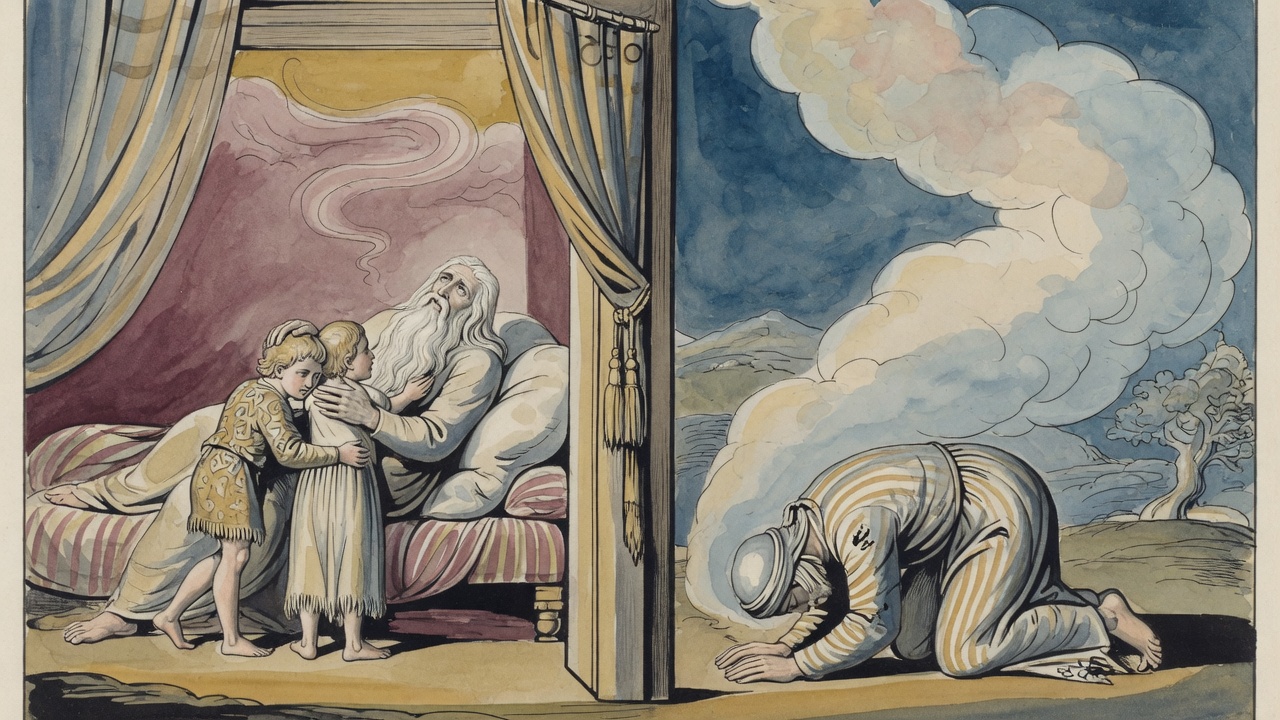
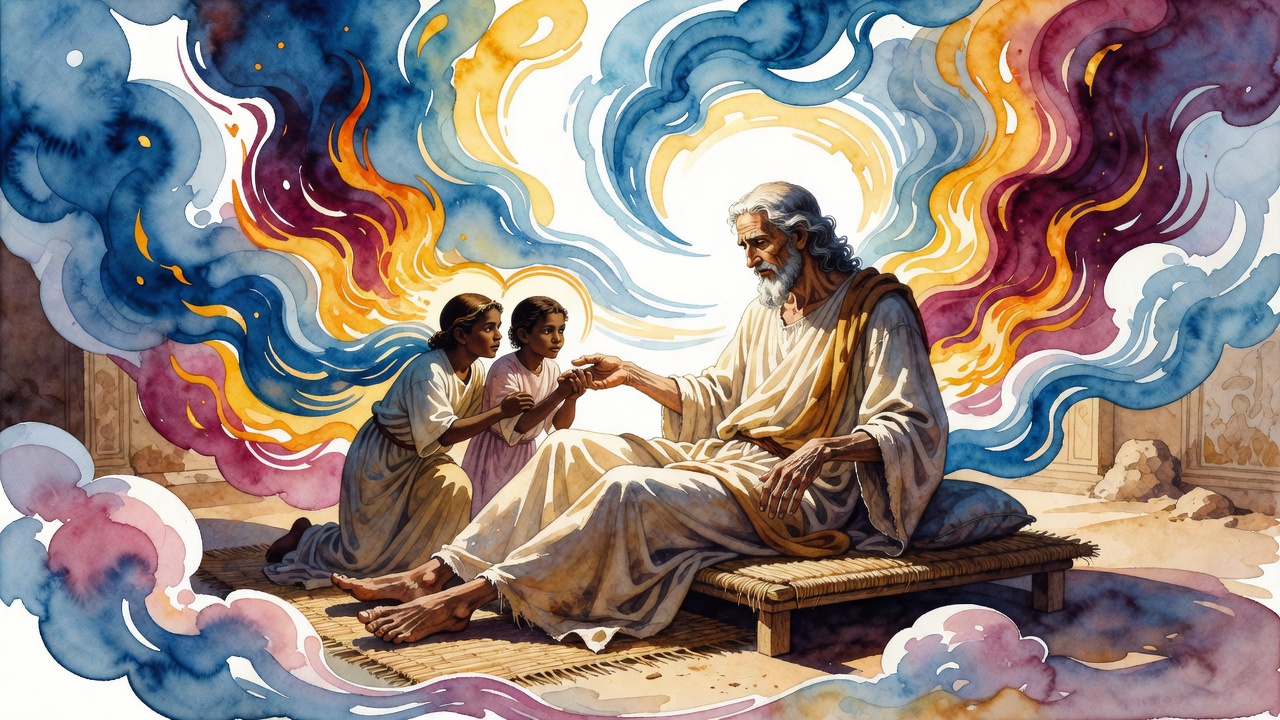
He had already dealt with the two boys Joseph fathered in that country. He took Ephraim and Manasseh onto his knees and adopted them as his own sons, and when Joseph set the elder at his father's right hand, Jacob crossed his arms and put the right hand on the younger and would not be corrected.
Then he came to the thing he actually wanted, and for that he called one son by name.
Not Reuben, who was the firstborn and standing right there. Not Judah, who was the king in everything but title. He passed over both of them and sent for Joseph, and the reason was not affection. Joseph was the one man in that family who could sign a permit. The hour belonged to him. He was the only one who could actually do the thing.
"If I have found favour in your eyes, do not bury me in Egypt."
The Kindness Nobody Can Repay
"It was for your sake I came down here at all," the old man said. "For your sake I said, now I can die. So do this for me as a true act of love. Not because you are frightened of me. Not because it would look bad. Carry me out of the land of idols and put me in the ground where God has made his name live, in the cave where four husbands and four wives lie, and I will be the last of them."
There was a saying about this that everyone in that world knew. If your friend's son dies, sit with him, because your friend is alive and will one day sit with you. If your friend himself dies, let it go. Nothing you do for him now comes back.
Which is why Jacob asked for kindness and truth in the same breath. A kindness done for a dead man is the only kindness that cannot be repaid, and so it is the only one that is entirely true.
His reasons were not sentimental. The soil of Egypt is going to be struck with lice, he said, and they will crawl through my body. And: if I am buried here they will make a god out of me, and punishment falls on the thing worshipped as surely as on the man who worships it. Daniel knew that when Nebuchadnezzar fell on his face in front of him and called for incense and a meal offering, and Daniel would not take any of it. Hiram of Tyre did not know it, said in his heart that he was a god, and ended thrown down on the ground in front of other kings so they could stand and look at him.
The last reason was the coldest. These people bow down to a lamb, he said, and I have been called a lamb. Do not let them earn anything by keeping my bones.
What Egypt Turned Into
Joseph swore it, and the family stayed on, and the country went bad around them.
The Egyptians grew soft and greedy and began to hate the Hebrews for prospering, and then the crown passed to a family that had never met Joseph and owed him nothing. So they put them on the river works, cutting channels to hold the flood off the fields, and on the city walls, and on the ramparts, and on the pyramids, and kept them at it four hundred years, each side waiting to see which of them broke first.
Then one of the sacred scribes came to the king and told him a child was about to be born to the Israelites who would bring Egypt low. The king gave the order that every Hebrew boy was to be thrown in the river, and put Egyptian midwives at the beds of the Hebrew women to make certain of it.
Jacob got his body out of that country. His great-grandchildren did not get theirs out.
Tunnels Under the Ground
The patriarchs all wanted the same soil, and the rabbis who came long after wanted it too, and they said why out loud. The dead of the land of Israel stand up first. A man who dies outside it and is buried outside it has died twice.
Rabbi Simon pushed back. Then the righteous who happen to die abroad are simply cheated, he said, and that cannot be how it works.
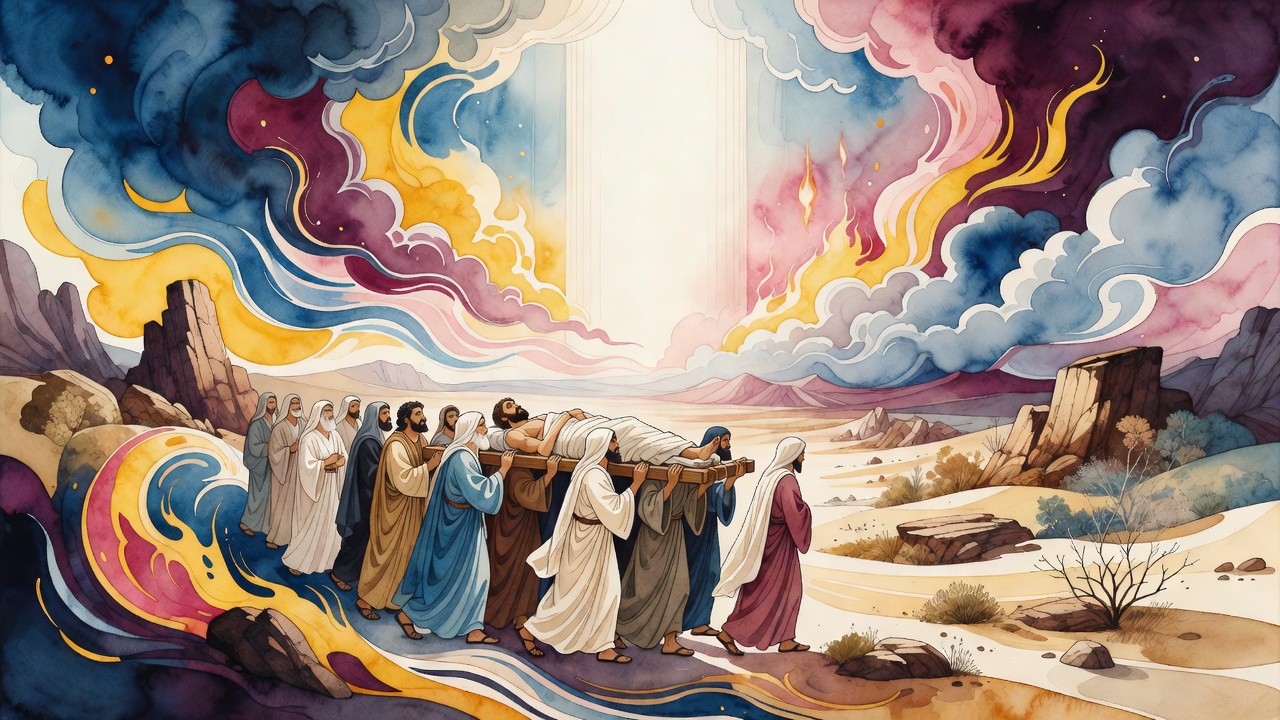
So this is what God does for them. He hollows out passages under the earth and shapes them like channels, and the bodies roll along inside those channels, mile after mile, until they come up under the land of Israel. There he puts the breath back into them and they stand.
Rabbi Yehuda HaNasi was walking with Rabbi Eliezer by the gates outside Tiberias when a coffin came up the road from abroad to be buried in the land.
"What has this one gained?" Rabbi said. "You made my inheritance filthy while you were alive, and now you come and defile my land in your death."
"Once he is in the ground here," Rabbi Eliezer said, "God forgives him. The earth of this place atones for the people in it."
What They Asked For at the End
Every one of them left instructions, and the instructions are how you learn what a man was afraid of.
Rabbi Yohanan told the people who would handle his body: bury me in clothes dyed green. Not white and not black. If I am stood up among the righteous I do not want to be shamed, and if I am stood up among the wicked I do not want to be disgraced, and green will do for either line.
Rabbi Yoshiya, dying, said, "Bring me my students." When they were all in the room he told them: bury me in white. I am not ashamed to go and meet my Creator with what I have done.
Rabbi Yehuda HaNasi left three orders. Do not move my widow out of this house. Do not have me eulogized in the towns of the land of Israel. And do not let a stranger touch my bier. The man who looked after me while I was living will look after me now.
He had lived in Tzippori seventeen years, and in those years he kept coming back to one line and reading it out over himself. Jacob lived in the land of Egypt seventeen years.
← All myths