Abraham Rode a Pigeon Into Heaven and Watched the Temple Burn
The birds had not been cut. At sundown the angel set Abraham on the pigeon's right wing, and the smoking field dropped away under his feet.
Table of Contents
 Click for full size
Forty Days Without Fire
Abraham had not eaten food cooked by fire for forty days. No wine. No oil on his skin. The list of animals was the old list, a three-year-old heifer, a three-year-old she-goat, a three-year-old ram, a turtledove, a young pigeon, but the extra word came first. Fast. Then come to the mountain. There you will learn what is kept for the ages.
He fasted. Then an angel came to walk him there.
The Angel Who Carries the Name
The angel's name was Iaoel, Yah and El fused in one mouth, the two most guarded names carried in a single body like a vessel that does not leak. This was not Gabriel. This was not Michael. This was older and stranger.
They walked forty days and forty nights. Abraham ate no bread and drank no water. Iaoel's speech was his food. Iaoel's presence was his water. The same count of days Moses would later spend on Sinai. The same count Elijah would walk to the same mountain. The body held. It fed on nearness.
At the Mount of God, Abraham looked around. No animals. No altar. He asked Iaoel how a man brings a sacrifice with nothing to lay down.
Iaoel told him to look behind them. The animals were there, following at a distance as if they had been following the whole time and had only now decided to be seen.
The Right Wing of the Pigeon
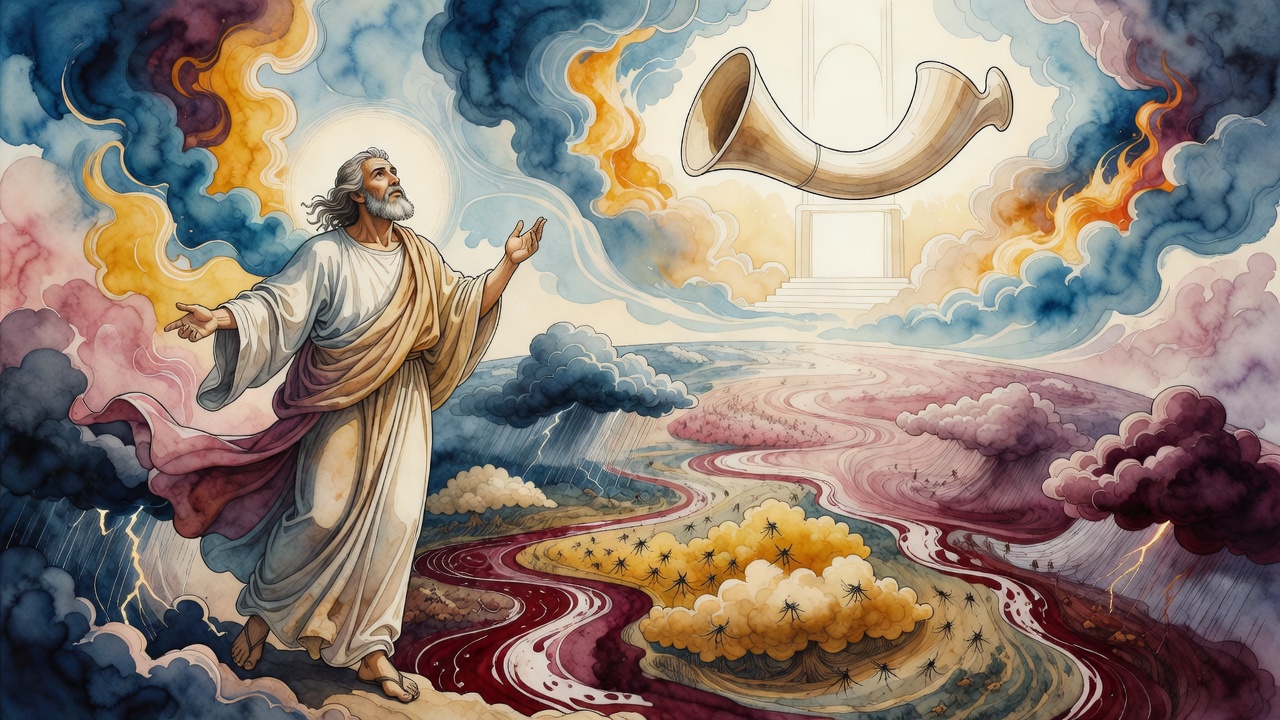
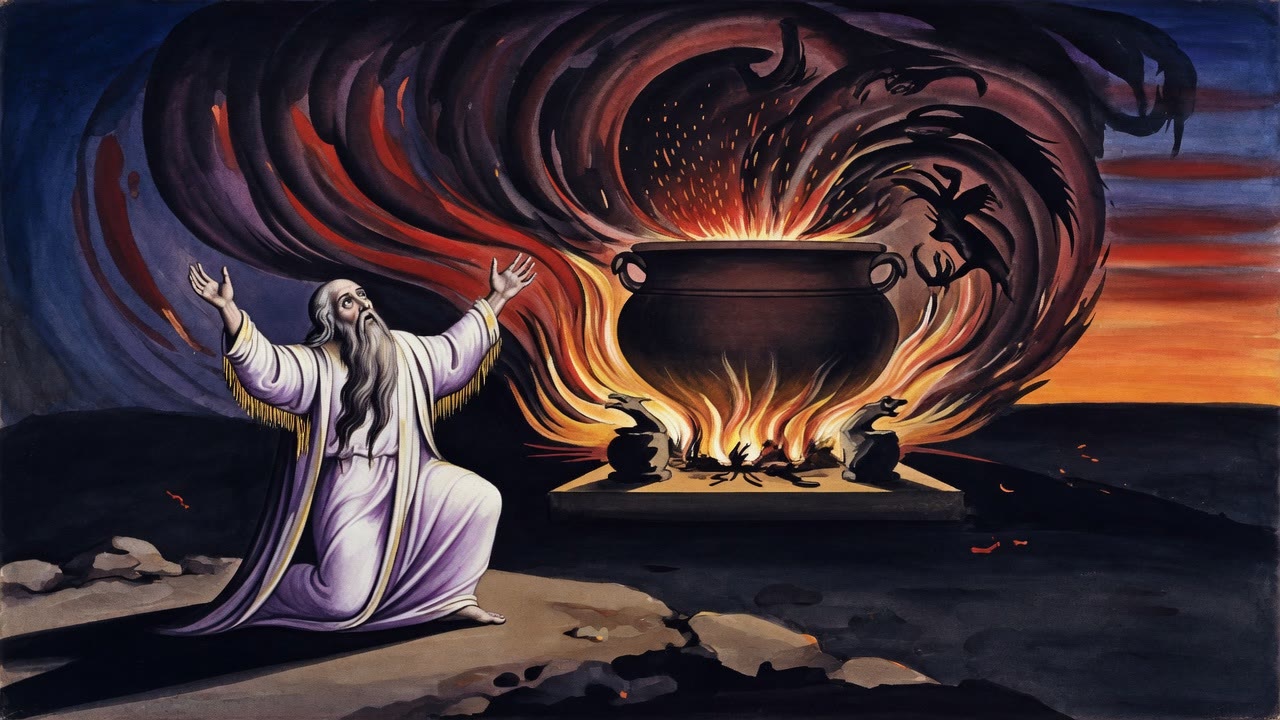
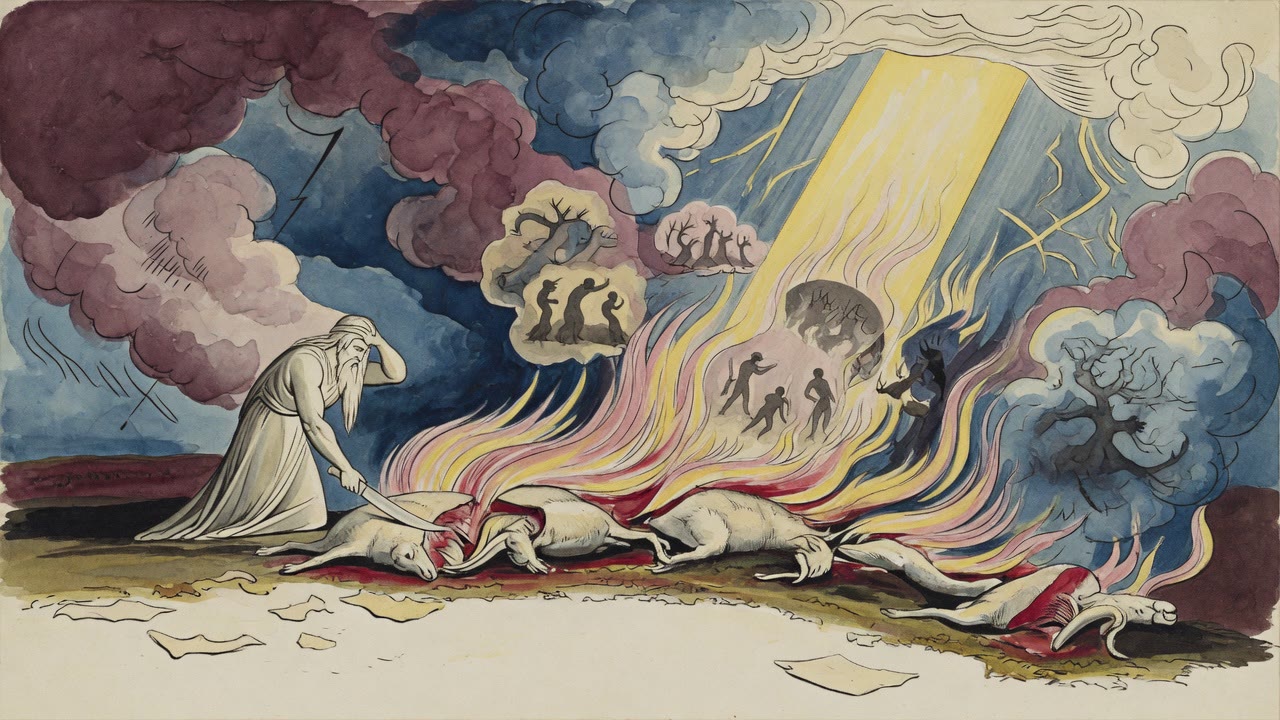
The sun went down. Smoke rose from the ground like the smoke of a furnace. The angels who held the portions of the sacrifice climbed the smoke and went up into the sky.
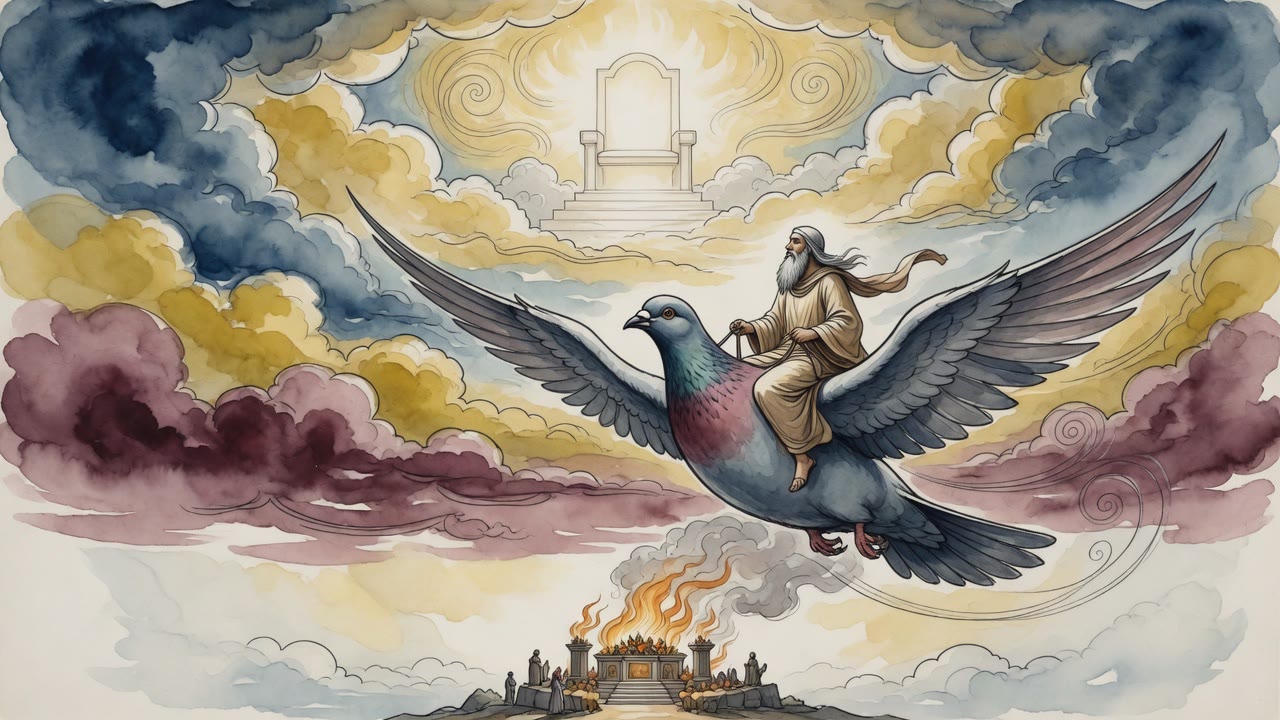
Iaoel took Abraham by the right hand and set him on the right wing of the pigeon. The angel sat himself on the left wing of the turtledove. These were the two birds that had not been divided, the ones Abraham had kept from the vultures through the long afternoon of waiting. They were not dead. They were a vehicle.
The birds lifted. The field dropped. Abraham's fingers found feathers that should not have borne a man, and bore him anyway. They went past borders of flaming fire, through winds, into the heaven fixed above the surface of the earth. On the height they reached, Abraham saw a light he could not describe, the first light, the light hidden away for the righteous at the end of days.
Stars Under His Feet
From the seventh heaven, God spoke the name twice. Abraham. Abraham. "Here I am," Abraham said, the same words he would say later with a knife in his hand on another mountain.
God told him to look down and count the stars. Abraham looked down. The whole field of them lay under his feet, the night he had once been told to number from the ground now spread below him like a floor. He answered with the honest sentence. "I am a man of dust and ashes. How can I count them?"
God said, as the number of the stars, so will I make your seed. Set apart for me in my heritage.
Then came the phrase that would not sit still. Alongside Azazel. Abraham had already heard Azazel inveigh against him before the ascent. Now the promise of his descendants was spoken in the same breath as that name. "O Eternal, Mighty One," he said. "How, while he is not now before You, have You set Yourself with him?"
The picture in the vision swayed. From its left side the nations came.
The Temple Burning Below
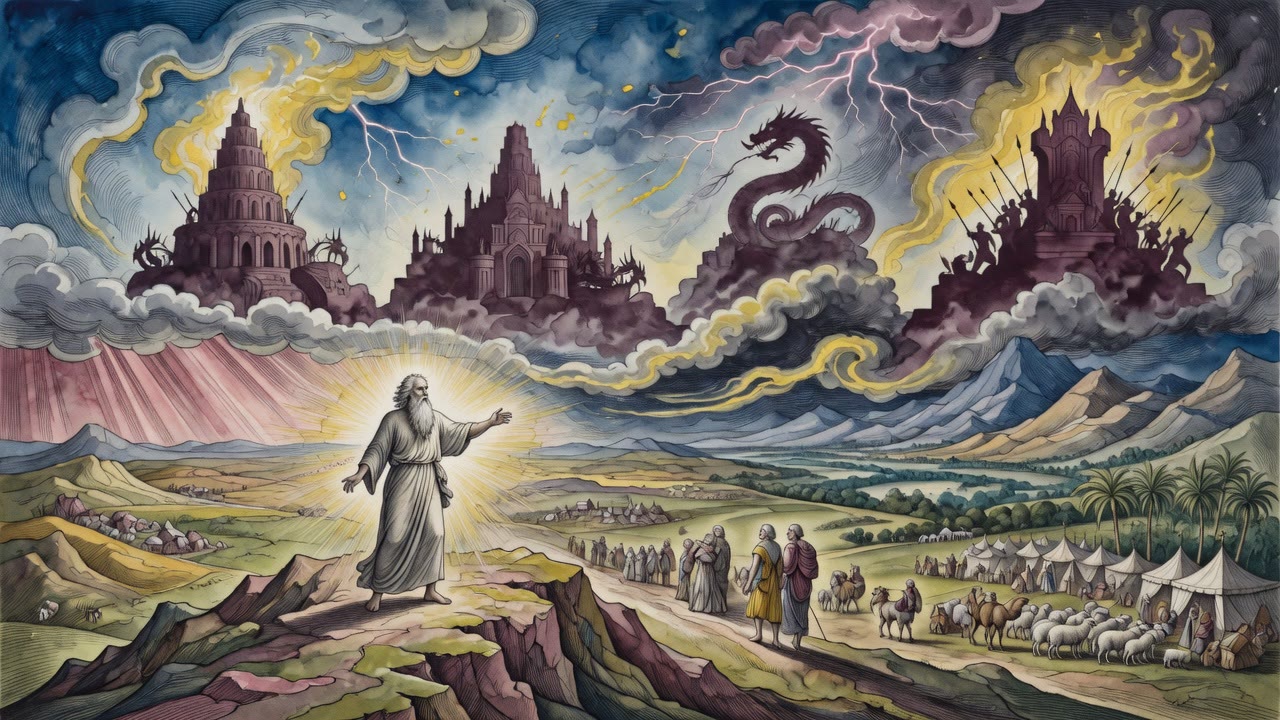
Abraham watched his descendants pass under him like a scroll unrolling. Men. Women. Children. Armies came through four entrances, four empires taking their turn: Babylon, Media, Greece, Rome. They pilfered. They carried off. They killed. Then they burned the Temple with fire.
He could not stay quiet. "O Eternal One, the people that spring from me, whom You accepted, the hordes plunder them, killing some, enslaving others, and burning the sanctuary. Why?"
God answered. Through four periods of subjugation, through everything you have seen, I will be provoked by them, and through the retribution for their deeds. When the periods are over, I will gather your descendants from every nation.
Abraham asked how long it would last.
God showed him a multitude and said, on their account.
Abraham came back down from the seventh heaven to the field at night, to the smoking torch and the halved animals and the promise already written in the stars. He had seen the whole length of it. The night the covenant was cut, he had already watched it cost everything it would cost. The pigeon folded its wing. The turtledove sat still. The ground was the ground again, and the fire on it was only the furnace smoke of the old rite, not the Temple he had watched burn from above.
← All myths