Retold in our words. Read the original at the link below.Townsend 1989 translation of Midrash Tanhuma, S. Buber Recension · CC-BY
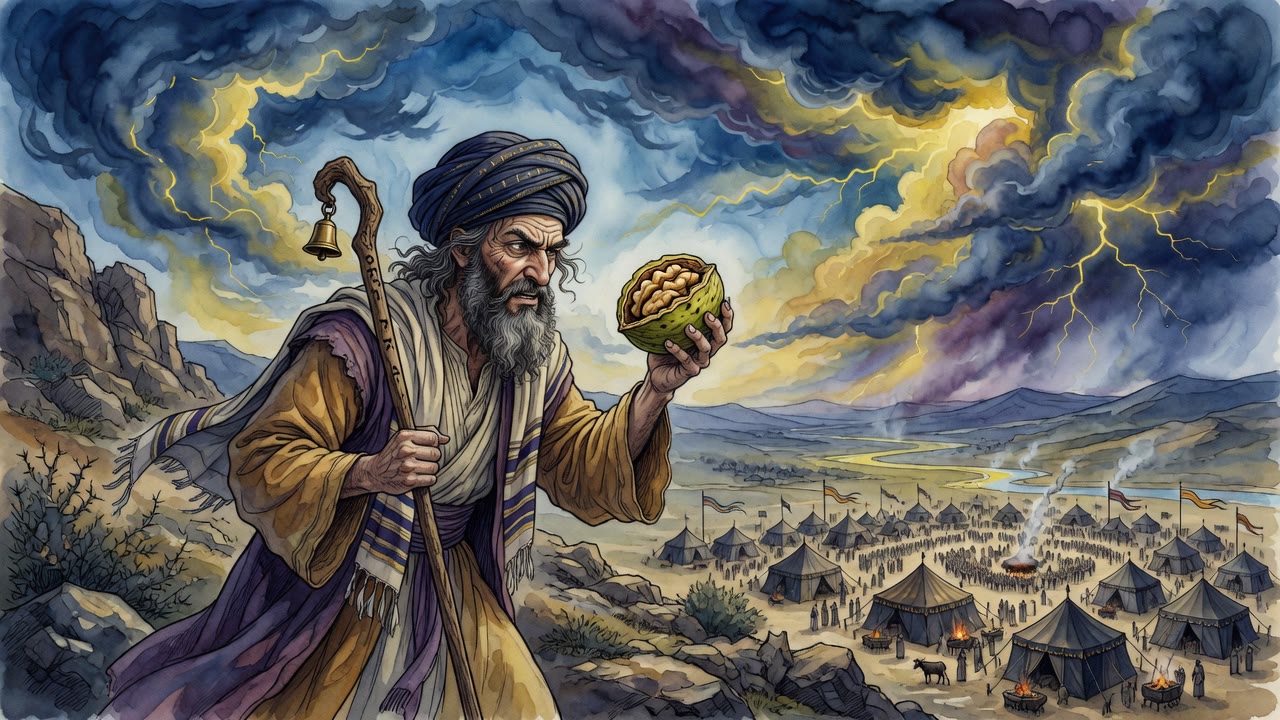
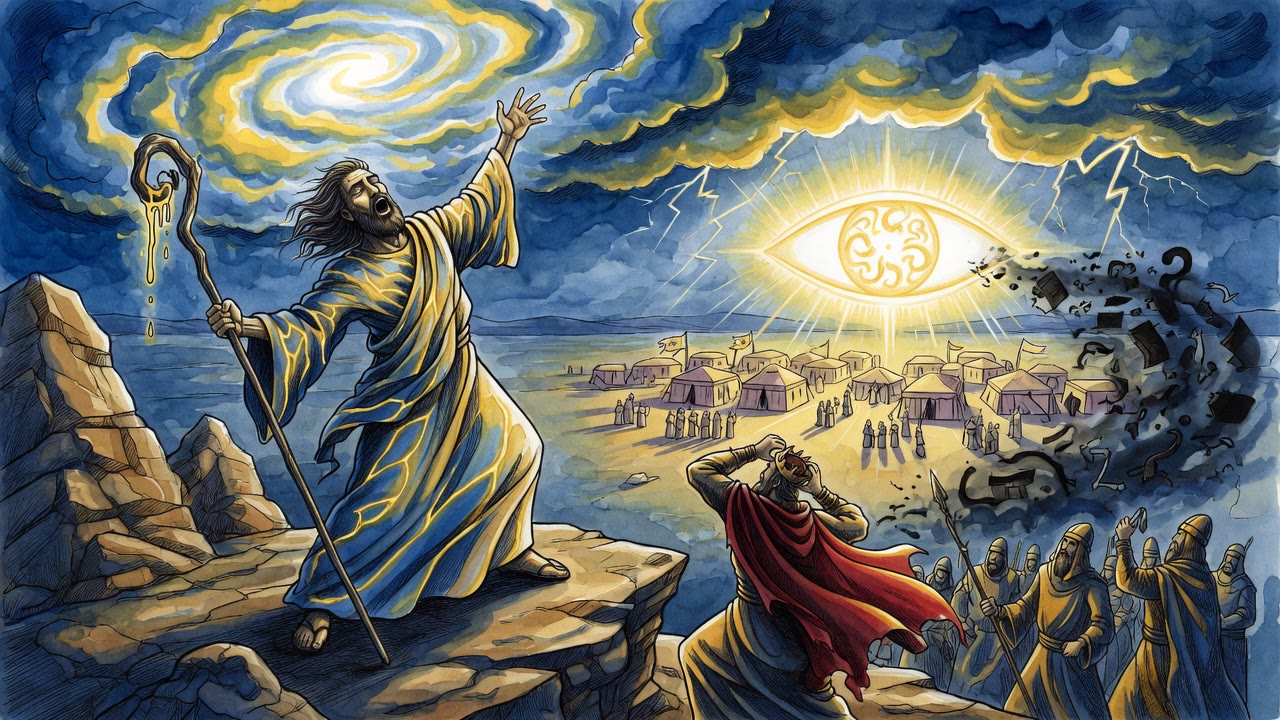
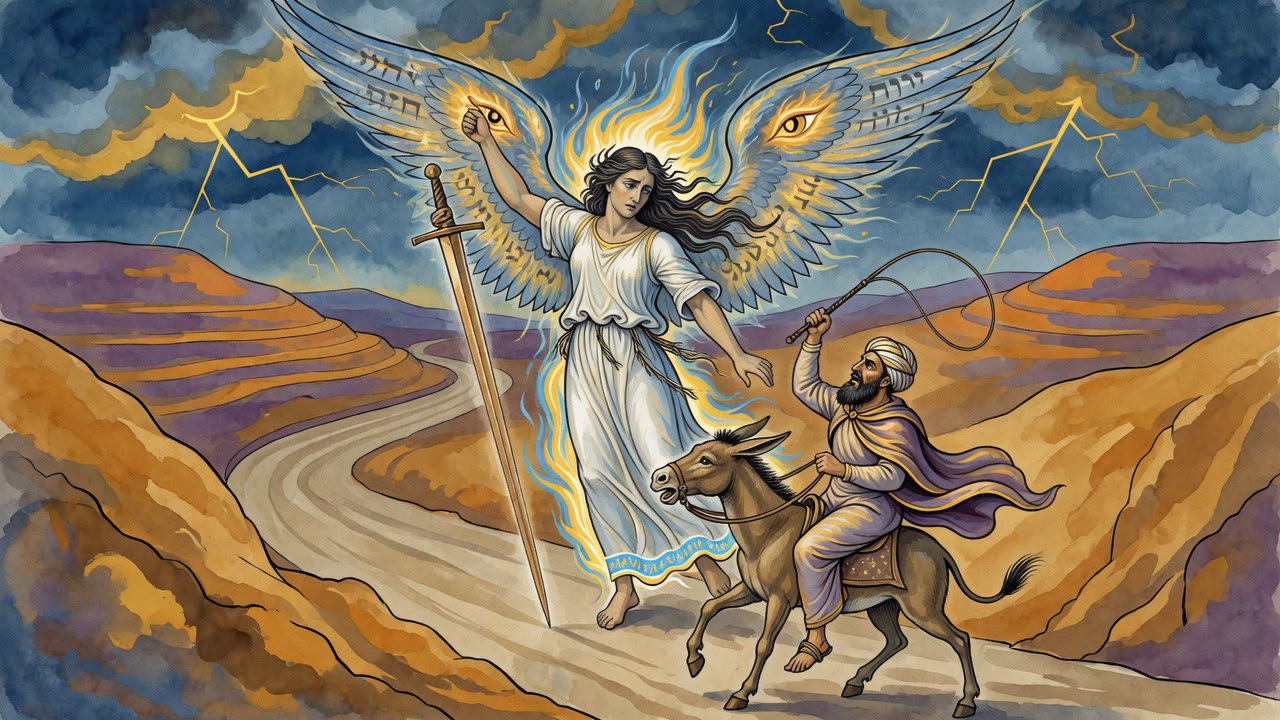
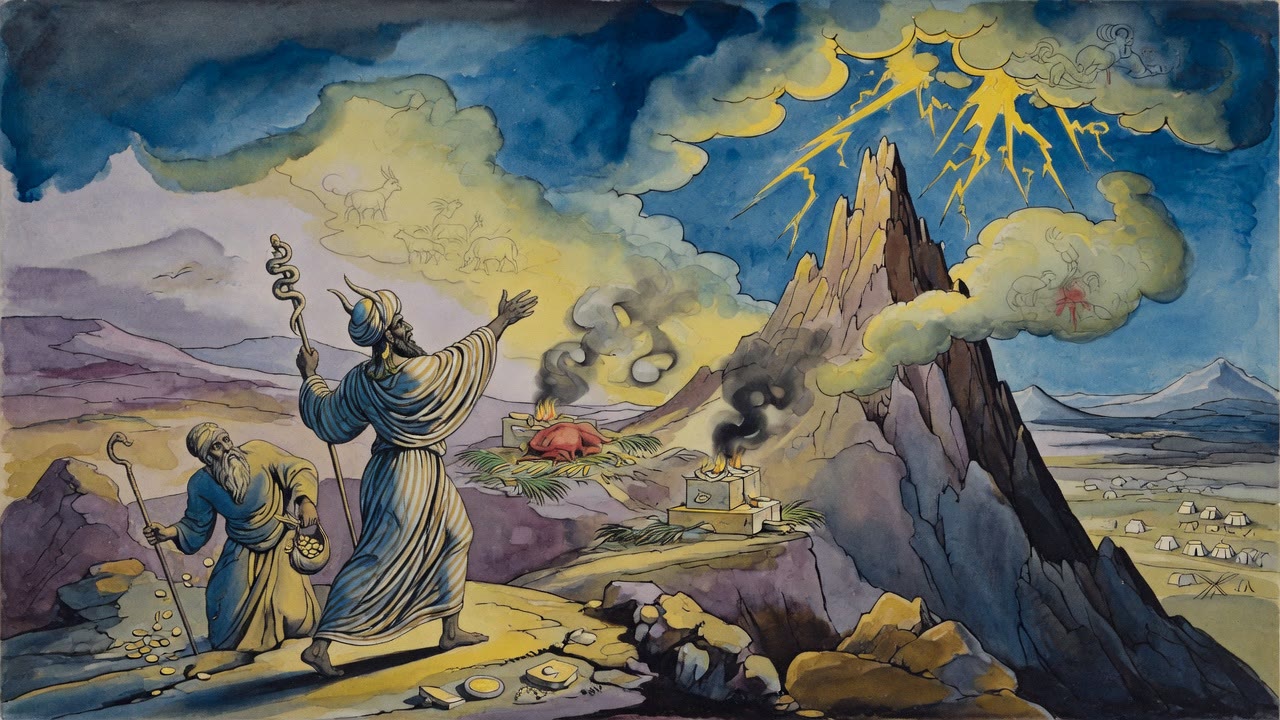
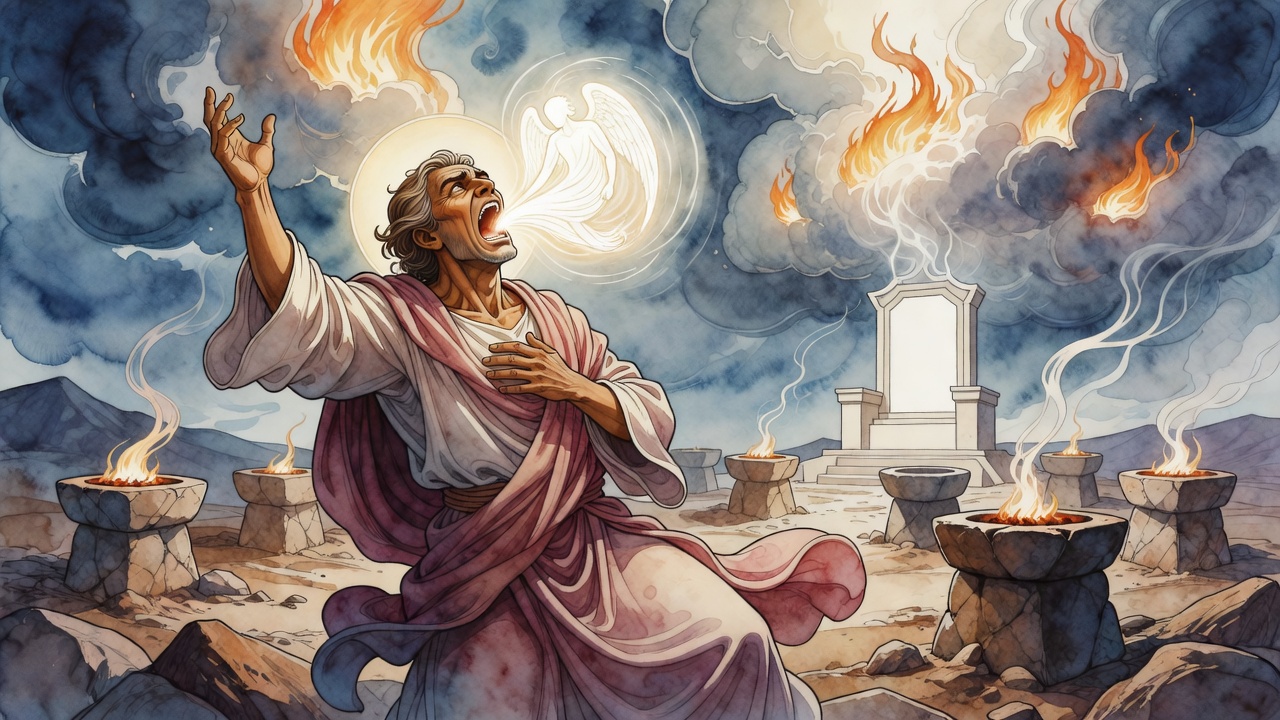
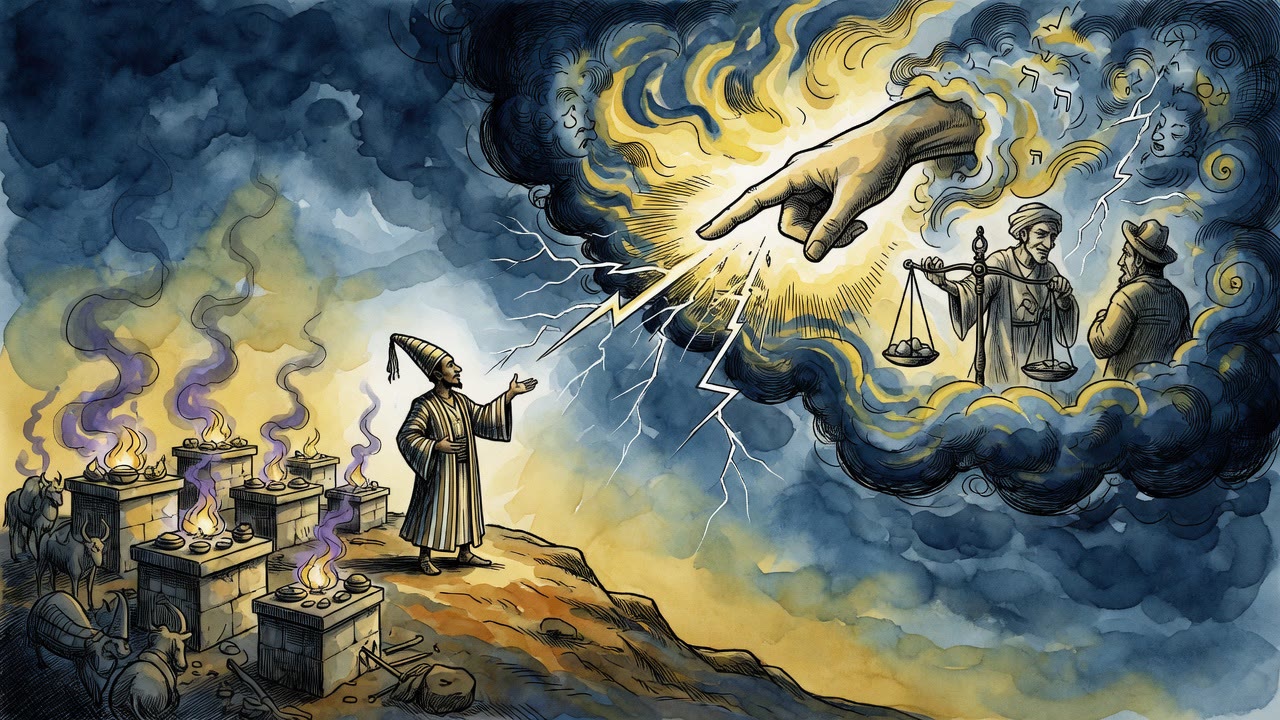
(Numb. 23:4:) “Then God encountered Balaam.” The Holy One, blessed be He, said to him, “You evil man! What are you doing?” (Ibid. cont.) “And [Balaam] said unto him, ‘I have prepared the seven altars [and offered a ram and a bull on each altar].’” [The matter] is comparable to a money-changer who lies about the weights. When the head of the marketplace came, he noticed him. He said to him, “What are you doing inflating and lying about the weights?” [The money changer then] said to him, “I have already sent a gift to your house.” So also it was in the case of Balaam. The holy spirit cried out to him. It said to him, “You evil man! What are you doing.” He said to it (in Numb. 23:4), “I have prepared the seven altars [and offered a ram and a bull on each altar].” It said to him (in Prov. 15:17), “’Better a meal of vegetable greens [where there is love than a fattened ox with hatred in it].’ Better the dinner of unleavened bread and bitter herbs which Israel ate in Egypt, than bulls which you offer with hands of [hatred].” (Numb. 23:5:) “So the Lord put a word (davar) in Balaam's mouth,” which twisted his mouth and pierced it, as one would drive a nail into a board. R. Eliezer (understanding davar as word) says, “An angel was speaking.” But R. Joshua says, “[It was] the Holy One, blessed be He, as stated, (in Numb. 23:5), “Return unto Balak and speak thus.” (Numb. 23:6:) “So he returned unto him, and there he was standing beside his burnt offerings with all the ministers of Moab,” who stood anxiously awaiting [the time] when he would come and speak. (Numb. 23:7:) “So he took up his theme and said, ‘From Aram, Balak the king of Moab has brought me, from the hills of the east.’” I was one of the exalted ones, but Balak has brought me down to the pit of corruption. (Ibid.) “Brought me (yanheni, rt. nhh),” [is to be understood] just as you say (in Ezek. 32:18), “bring (rt. nhh) the masses of Egypt [and cast them down… unto the lowest part of the netherworld along with those who go down to the pit].” Another interpretation (of Numb. 23:7), “From Aram.” I was with the highest (ram) of the high, and Balak has brought me down from my glory. [The matter] is comparable to one who was walking with the king. When he saw [some] robbers, he left the king and toured along with the robbers. When he returned to be with the king, the king said to him, “Go with whomever you have toured with, because it not possible for you to walk with me again.” Similarly Balaam had been bound to the holy spirit. When he paired himself with Balak, the holy spirit departed from him. So he returned to being a diviner as in the beginning. Thus it is stated (at his execution in Josh. 13:22), “Balaam ben Beor the diviner….” Therefore did he say, “I was high up (ram), and Balak brought me down.” Another interpretation (of Numb. 23:7), “From Aram, Balak the king of Moab has brought me, from the hills of the east.” [Balaam] said to [Balak], “We are alike, even both of us, for being ungrateful, because were it not for our father Abraham, there would have been no Balak. Thus it is stated (in Gen. 19:29), ‘And it came to pass that when God destroyed the cities of the plain, God remembered Abraham and sent Lot away.’ Except for Abraham, he would not have delivered Lot from Sodom; and you are one of the children of the children of Lot. If it were not for their father Jacob, I should not have been present in the world, because Laban had sons only through the merit of Jacob, since it is written at the beginning (in Gen. 29:9), ‘Rachel came with the sheep.’ Now if he had sons, how was his daughter a shepherdess? As soon as Jacob came there, sons were given to him, as stated (in Gen. 31:1), ‘Now he heard the things that Laban's sons [were saying].’ And it also says [that Laban said] (in Gen. 30:27), ‘I have learned by divination that the Lord has blessed me for your sake.’ So if it were not for their ancestors, you and I would not have been present in the world”. (Numb. 23:7, cont.) “Come, curse Jacob for me.” Whoever curses the Children of Jacob is cursing himself, since it is stated (in Gen. 12:3), “and the one who curses you, I will curse.” It also says (in Gen. 27:29), “cursed be those who curse you, and blessed be those who bless you.” (Numb. 23:7:) “Come, curse [Jacob] for me.” If you had told me to curse another people, for example, the Children of Abraham from the concubines, I would have been able [to do so]. But Jacob? When a king selects a portion for himself, and someone else gets up and speaks disparagingly about it, will he keep his life? Now these people are the Holy One, blessed be He’s, heritage, His portion, and His treasure. Thus it is stated (in Deut. 32:9), “For the Lord's share is His people; Jacob the portion of His heritage.” And it is written (in Exod. 19:5), “and you shall be My treasure.” (Numb. 23:7, cont.) “And come, denounce Israel.” When a king takes a crown and puts it on his head, and someone says of it that it is nothing, will he keep his life? Now in regard to these people it is written about them (in Is. 49:3), “Israel, in whom I will be glorified.” (Numb. 23:8:) “How shall I curse whom God has not cursed?” When they deserved to be cursed, they were not cursed, when Jacob went in to receive the blessings. It is written (in Gen. 27:16), “Then [she clothed his arms and the hairless part of his neck] with the skins of goat kids.” His father said to him (in Gen. 27:18), “Who are you?” He said to him (in vs. 19), “I am Esau, your first-born.” Does not the one who puts forth a lie with his mouth deserve to be cursed? But not only [was he not cursed], but he was blessed; as stated (in Gen. 27:33), “he shall also be blessed.” So how do I curse them? (In the words of Numb. 23:8) “God has not cursed.” Another interpretation (of Numb. 23:8), “How shall I curse whom God has not cursed?” According to universal custom, when a legion rebels against the king, it incurs the penalty of death. Now since these denied and revolted against Him, when they said to the calf (in Exod. 32:4), “This is your God, O Israel,” did they not, therefore, deserve to have Him destroy them at that time? [Still] He did not cease to cherish them. Instead He had clouds of glory accompany them. Nor did He withhold the manna and the well from them. And so it says (in Neh. 9:18-20), “Even though they had made themselves a molten calf […], You in Your great mercies did not abandon them in the desert […]; and You did not withhold Your manna from their mouth […].” How can I curse them? This [question] is related (to Numb. 23:8), “How shall I curse whom God has not cursed?” When He commanded them concerning the blessings and the curses, He mentioned them (as the people) in connection with the blessings where it is stated (in Deut. 27:12), “These shall stand [on Mount Gerizim] for blessing the people;” but He did not mention them in connection with the curses. Thus it is stated (in vs. 13), “And these shall stand on Mount Ebal for the curse.” Moreover, when they sin and He plans to bring a curse upon them, it is not written that He Himself is bringing them (i.e. the curses); but with respect to the blessings, He Himself is blessing them; for so it says (in Deut. 28:1, 8), “And it shall come to pass that, if you diligently obey […], the Lord your God will set you high [over all the nations of the earth]. The Lord will command the blessing to be with you.” But with respect to the curses, it is written (according to Deut. 28:15), “And it shall come to pass that, if you do not obey […], then [all these curses] shall come upon you,” [i.e.] of their own accord. Ergo (in Numb. 23:8), “How shall I curse whom God has not cursed?” (Numb. 23:9:) “For from the top of the rocks I see him,” in order to make the hatred of that evil man (i.e. Balaam) known to you. As from his blessing you may know his thoughts. To what is he comparable? To someone who came to chop down a tree. One who is not an expert chops off the branches one at a time and becomes tired, but the clever one exposes the roots and [then] chops it down. Similarly that wicked man said, “How shall I curse each and every tribe? Rather I will go to their roots.” When he came to touch them, he found them hard [to cut]. It is therefore stated (in Numb. 23:9), “For from the top of the rocks I see him.” Another interpretation (of Numb. 23:9), “For from the top of the rocks,” these are the patriarchs; (ibid. cont.) “and from the hills I behold him,” these are the matriarchs. (Numb. 23:9, cont.) “Here is a people dwelling alone.” When He makes them rejoice, no nation rejoices along with them. Rather they are all afflicted, [as stated (in Deut. 32:12),] “The Lord alone did lead him, and there was no foreign god with him.” (Numb. 23:9, cont.), “And they shall not be reckoned (rt. hshb) among the nations.” But when the nations are rejoicing in this world, they (i.e. the Children of Israel) eat with each and every kingdom, and no one is charging [such pleasures] against their account (rt: hshb). It is so stated (in Numb. 23:9, cont.), “and they shall not be reckoned (rt. hshb) among the nations.” (Numb. 23:10:) “Who has counted the dust of Jacob?” Who is able to count the commandments which they carry out upon the dust: (In Deut. 22:10,) “You shall not plow with an ox and an ass together”; (in Deut. 22:9,) “You shall not sow your vineyard with two kinds of seed”; (in Numb. 19:9,) “Then someone clean shall gather the ashes of the heifer”; (in Numb. 5:17,) “[Then the high priest shall take holy water in an earthen vessel] and some of the dust which is on the floor of the tabernacle”; (in Lev. 19:23,) “[Moreover, when you come into the land and plant any tree for food, you shall count its fruit as forbidden,] three years it shall be forbidden to you, [it shall not be eaten]”; and so on with all of them. (Numb. 23:10, cont.) “Or numbered the sand (rb') of Israel,” [i.e.] their copulations (rt. rb'). Who can number the masses that have emerged from them, from those women who seize on and cherish the commandments (of procreation), as stated (in Gen. 30:15), “But she said to her, ‘Is it a small matter that you have taken away my husband?’” [And so too (in Gen. 30:3, 9),] “Here is my maid Bilhah; go into her.” “When Leah saw that she had ceased bearing children, [she took her maidservant Zilpah and gave her to Jacob as a wife].” [And so too (in Gen. 16:3),] “So Abraham's wife Sarai took her maidservant Hagar the Egyptian… [and gave her to her husband Abraham as a wife].” (Numb. 23:10, cont.) “Let me die the death of the upright.” The matter is comparable to a butcher who came to slaughter a cow that belonged to a king. The king began to take notice. When [the butcher] realized [what was happening], he began by discarding the knife, then giving [the cow] a rubdown [and] filling the feeding trough for it. He began to say, “Let my life be forfeit for coming to slaughter it; but observe that I have [now given it sustenance].” Similarly Balaam said, “Let my life be forfeit for coming to curse, but I will bless [them].” Ergo (in Numb. 23:10), “let me die the death of the upright!”

 Click for full size