The Patriarch Who Warned That Sodom's Sin Would Destroy the Temple
Centuries before the Temple was built, a patriarch warned his children: act like Sodom and your sanctuary will fall. He had read it in the tablets of heaven.
Table of Contents
 Click for full size
A Warning Given Before There Was a Temple to Lose
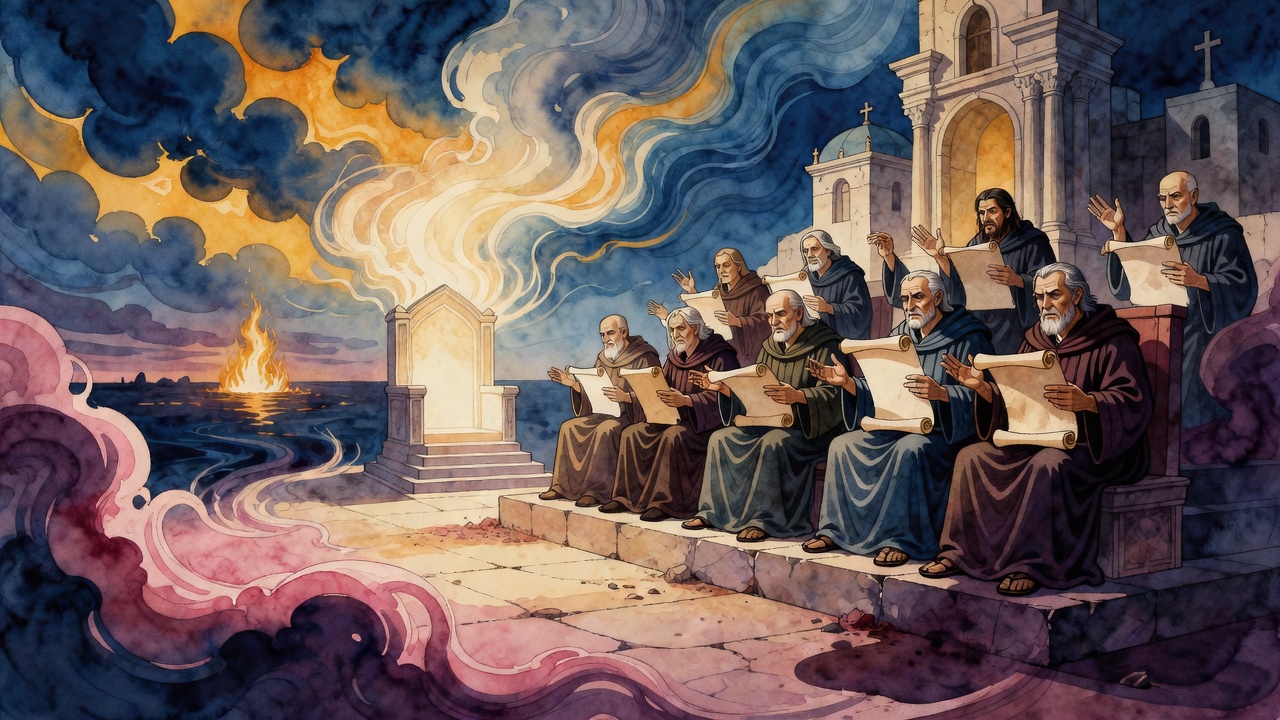
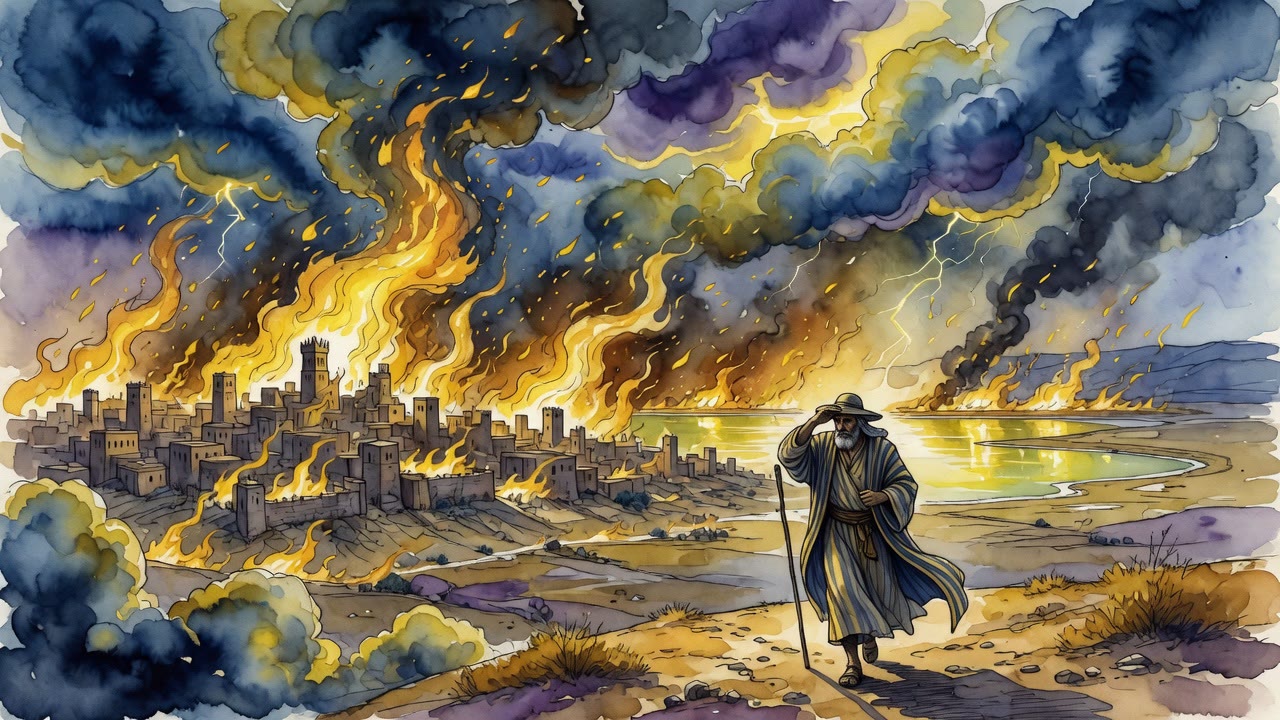
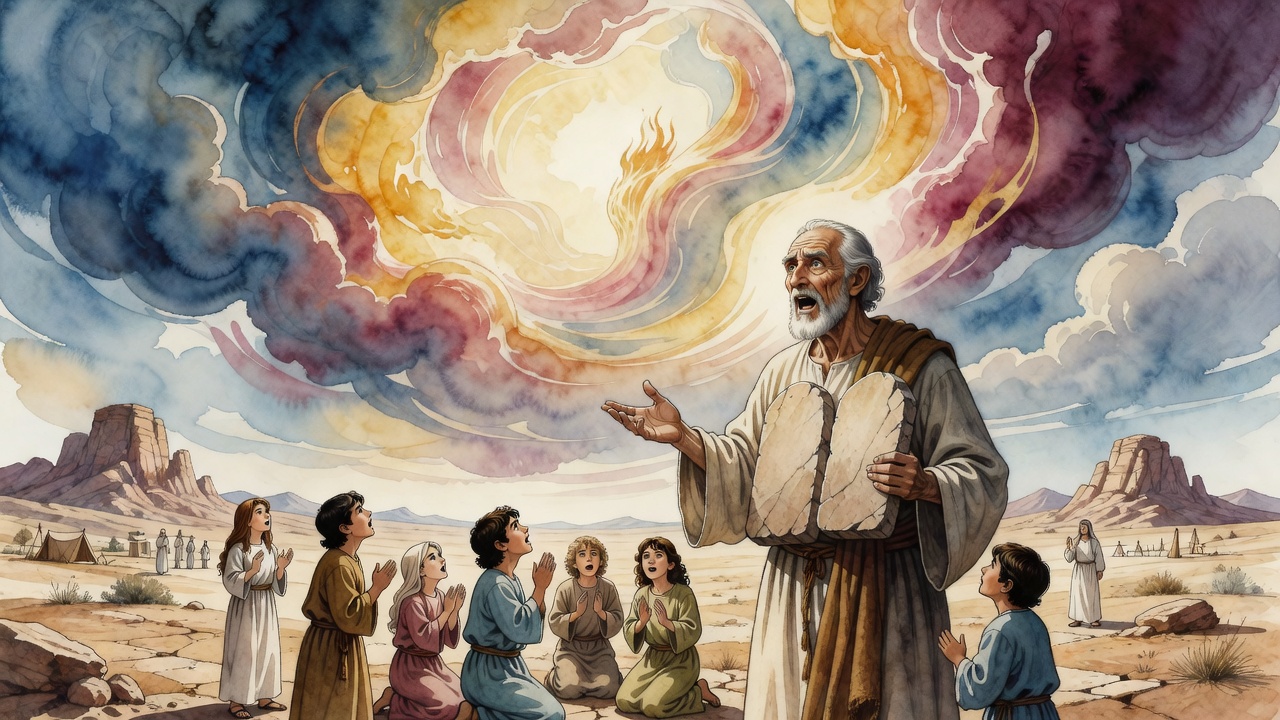
Asher was dying, and the Temple he warned his children about had not yet been built. There was no king in Israel. There was no holy city on the mountain. The covenant was young and the nation it applied to was barely a nation yet, more a collection of tribes holding a promise. And into this moment, before any of the institutions that would later be destroyed had been constructed, Asher looked at his gathered children and told them what he had read in the heavenly tablets about what Sodom looked like.
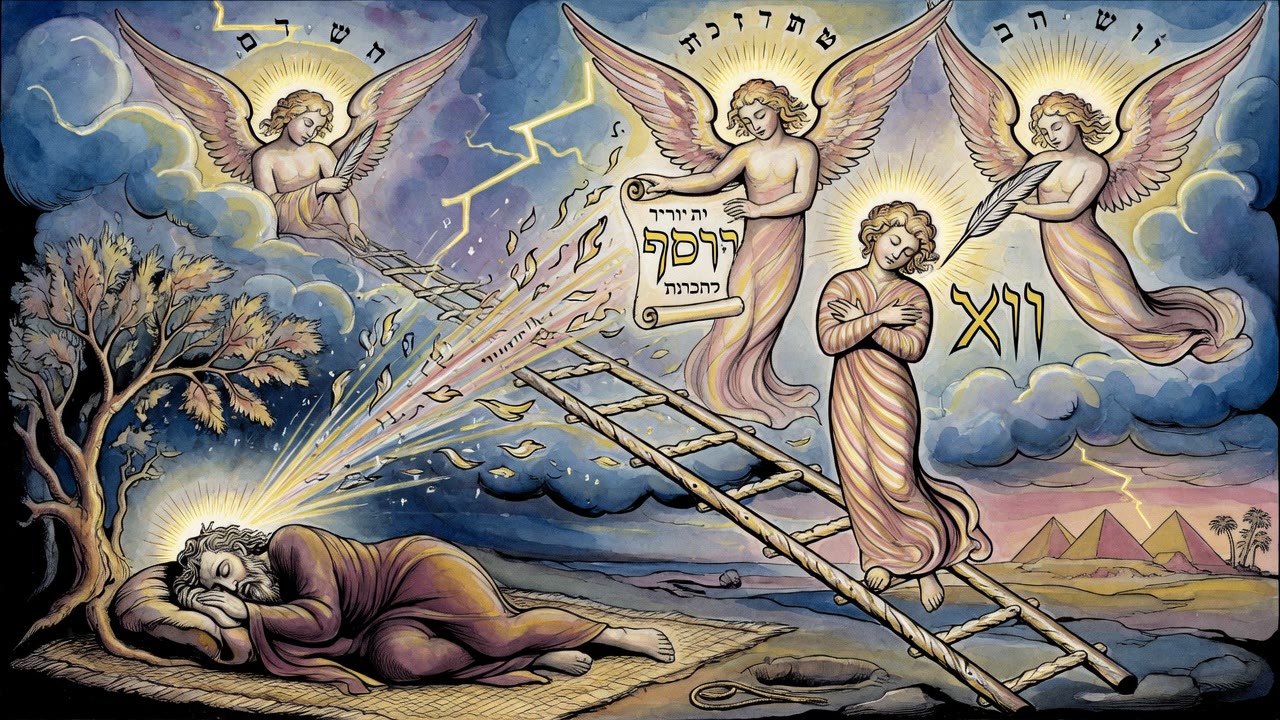
He knew about Sodom from his grandfather's memory and from the tablets that recorded the acts of the world since creation. He had seen what the Lord had done to those cities and why. And what he saw in the heavenly record was a pattern that ran forward from Sodom to somewhere his children would eventually build and inhabit and lose.
A Sanctuary Foretold and Foredoomed
He told them plainly: be not like Sodom, my children, which recognized not the angels of the Lord when they came to the city, and was delivered into the hands of enemies, and its land cursed, and its people scattered to the four corners of the earth, and scorned in the confusion like worthless water poured out. This was not a general appeal to righteousness. It was a specific analogy with a specific terminus. The structure of Sodom's failure and the structure of what Asher was warning against were the same structure.
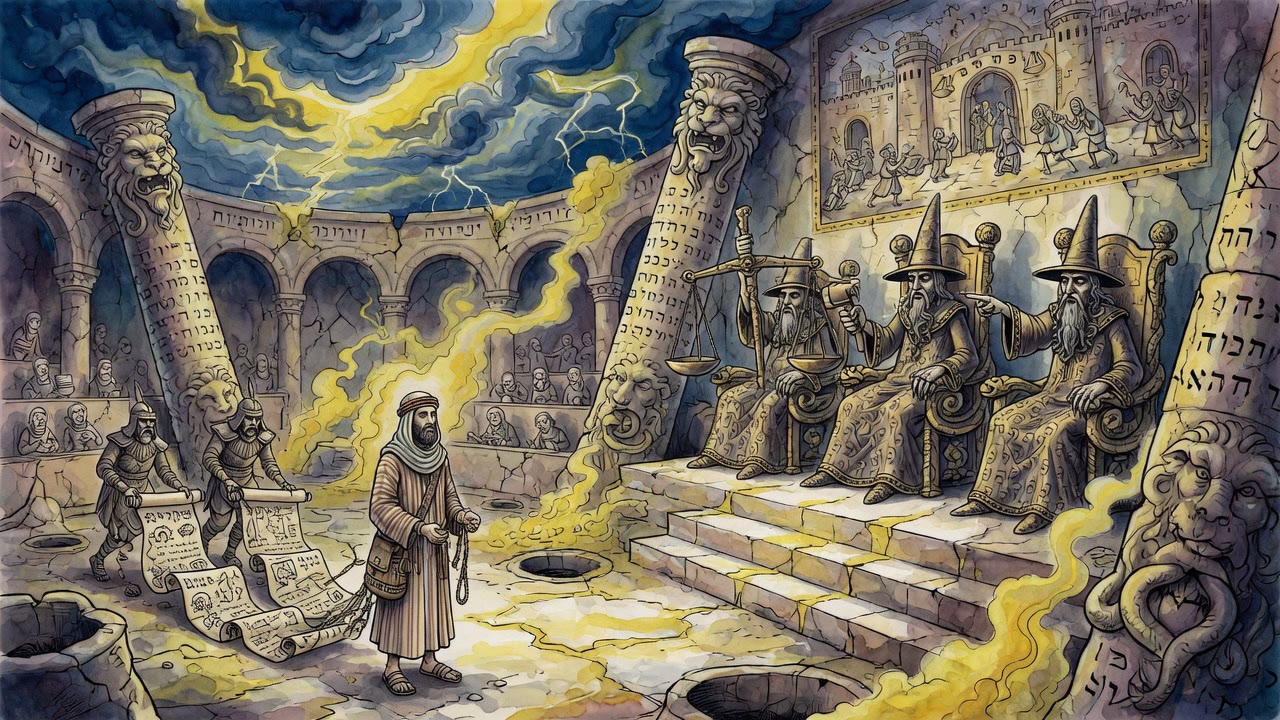
Sodom had rejected the stranger. Sodom had made cruelty into law and called it order. The judges of Sodom had devised systems that took from the poor while maintaining the appearance of neutrality, systems so refined in their injustice that they could describe themselves as legal without anyone on the inside being forced to acknowledge what they actually were. The tradition preserves their laws in detail: beds that guests were stretched or shortened to fit, fines assessed on the man who bled rather than on the man who struck him, compensation paid to the man who cut off another man's ear because the service of bloodletting had been rendered without being requested.
What the Cities of the Plain Actually Were
The tradition's account of Sodom is not a record of private vice. It is a record of organized cruelty elevated to the status of civic policy. The citizens of Sodom had wealth, the land was good, the harvests were reliable. They had enough. What they did with enough was build a legal architecture that made sure none of it reached the people who needed it. The stranger at the gate was not just an annoyance to Sodom. The stranger was a category of person that Sodom's entire civic structure was designed to eliminate or exploit.
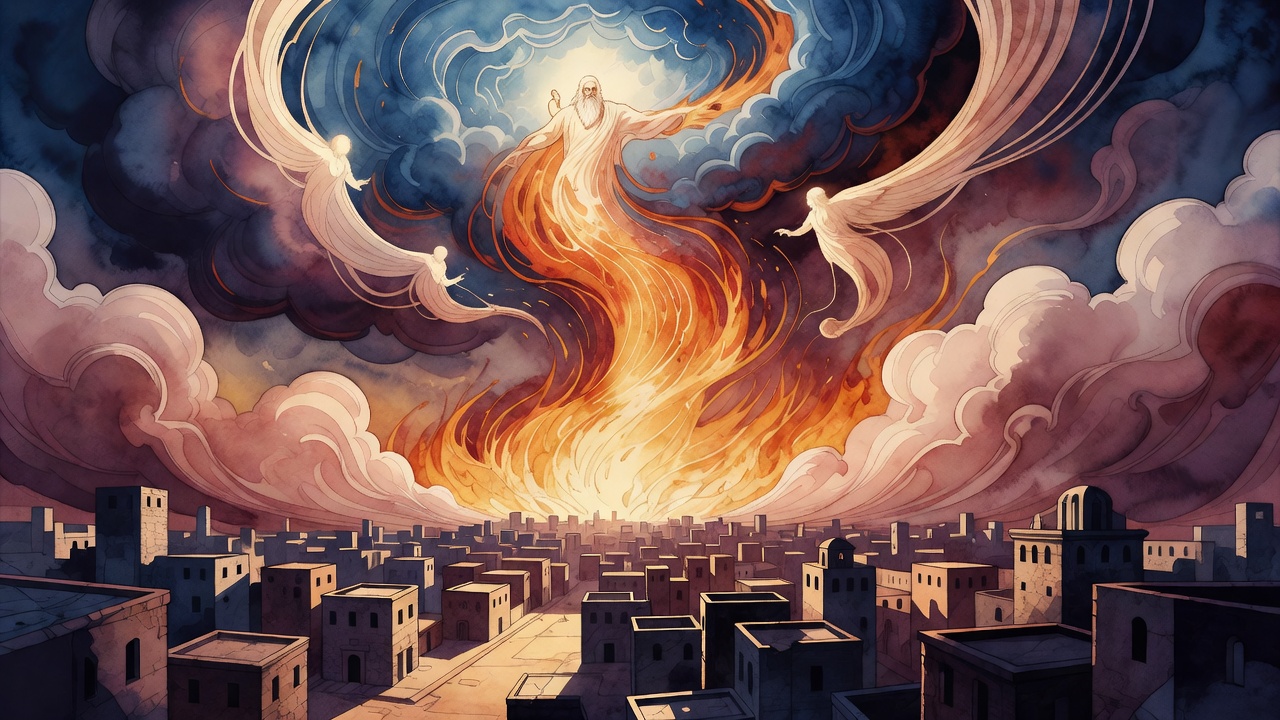
When the angels arrived at Lot's door and the men of the city surrounded the house, the tradition reads that scene as the city's final act in a long pattern. They had not woken up that night and spontaneously decided to be monstrous. They had been practicing this for years in courts and marketplaces and at city gates. The angels were just the occasion on which the practice became visible to the Lord in a way that required response.
The Line From Sodom to the Temple Mount
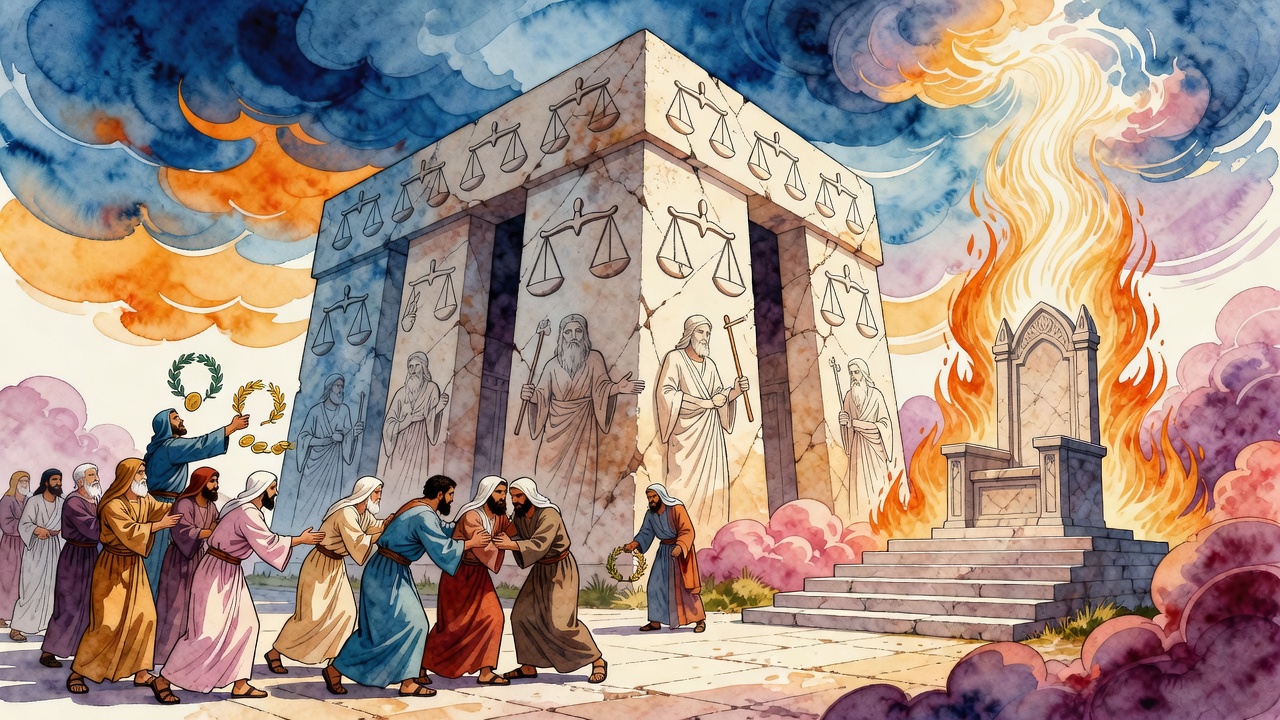
Asher had read this pattern in the heavenly tablets and he had seen where it ran. A sanctuary required a people willing to recognize the presence of the holy within their midst. A people who had trained themselves not to recognize the stranger, not to see the person in need, not to hear the appeal for justice when it came in an inconvenient form, would eventually apply that same trained blindness to the presence of the Lord Himself. And then the sanctuary would empty. And then it would fall. And then the dispersion that Sodom had already experienced would come for them.
He was not prophesying to be dramatic. He was reading the record to his children so they would recognize the pattern when they encountered it, in markets, in courts, at city gates, in the laws their leaders would propose and the judges their communities would seat. He had been given access to the heavenly tablets, which meant he had been given responsibility for what those tablets contained. He passed that responsibility to his children on the morning of his death, which was the only morning he had left for it.
← All myths