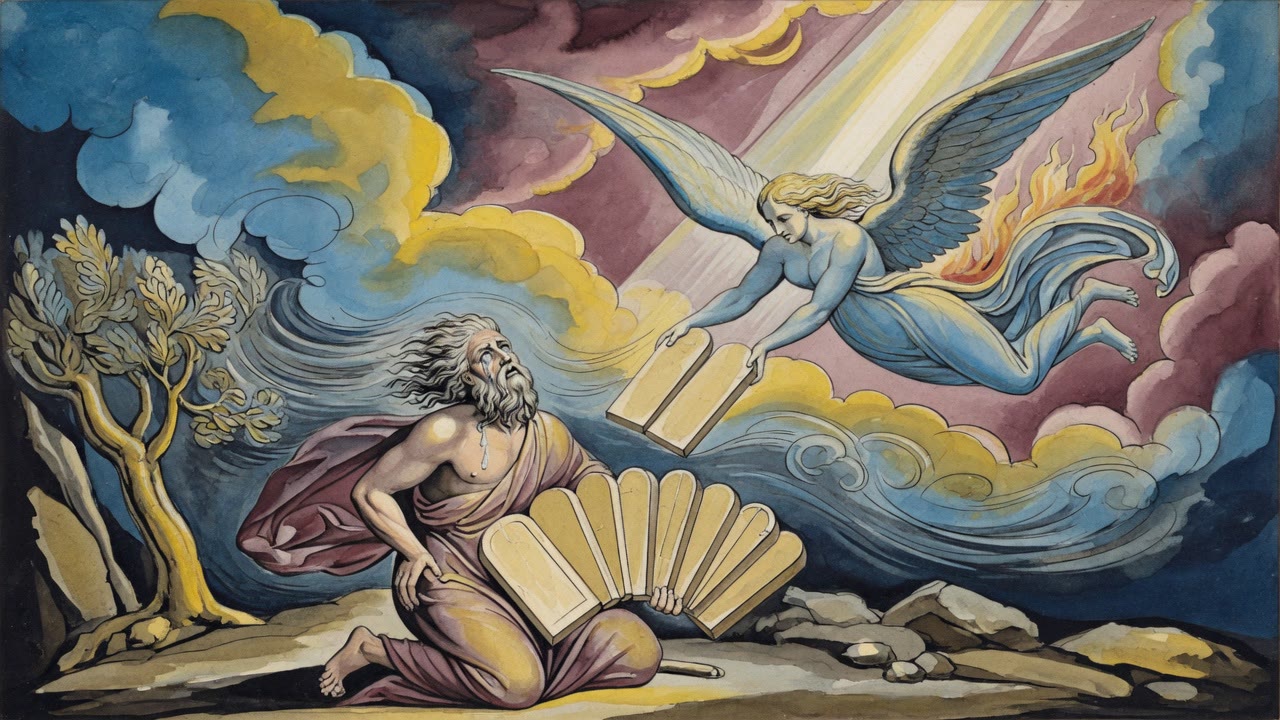
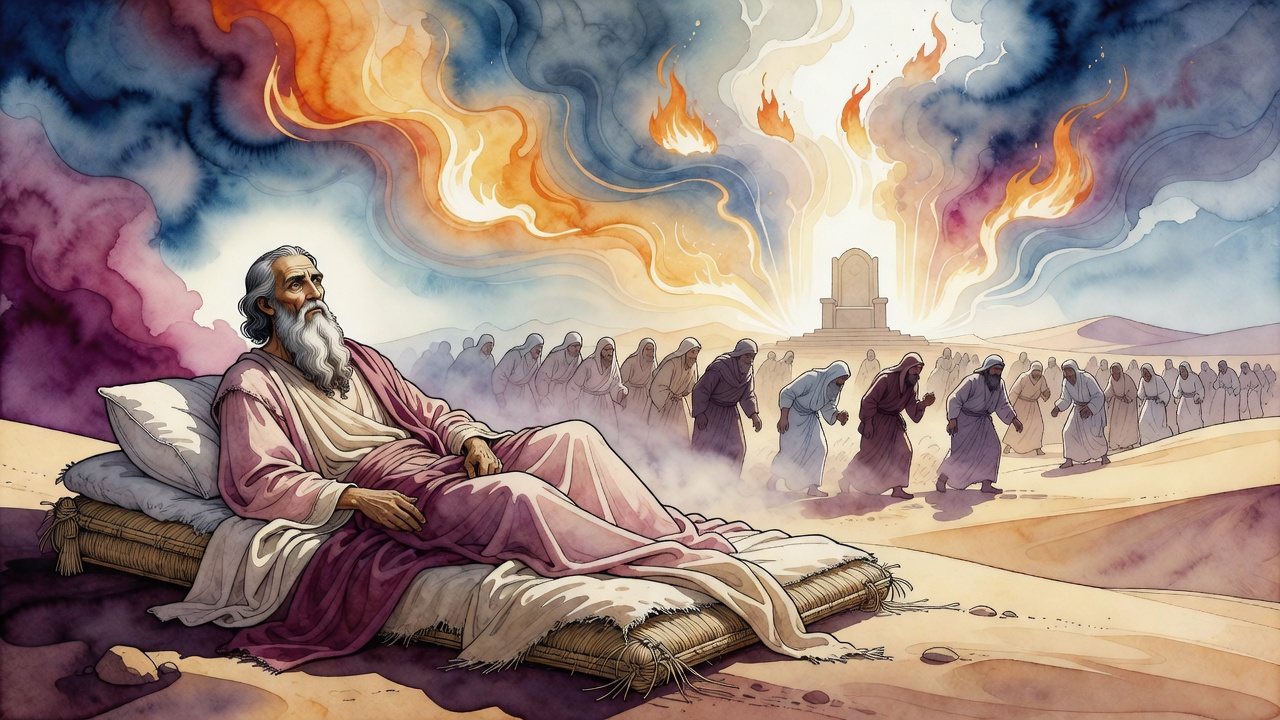
Jacob Dreamed a Golden Idol Before the Land Was His
Jacob slept on a stone with Esau's threat behind him. The thing in the dream was gold, sixty cubits high, and three men would not bow.
Table of Contents
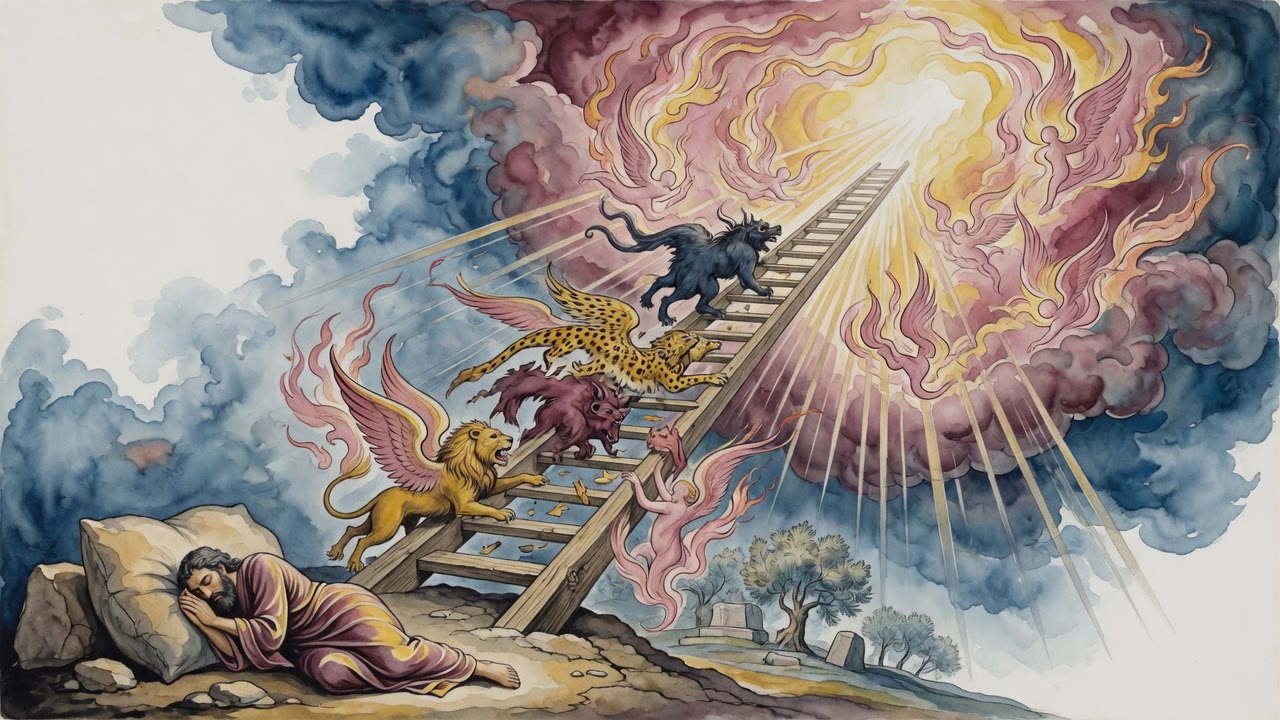 Click for full size
Stones Under His Head
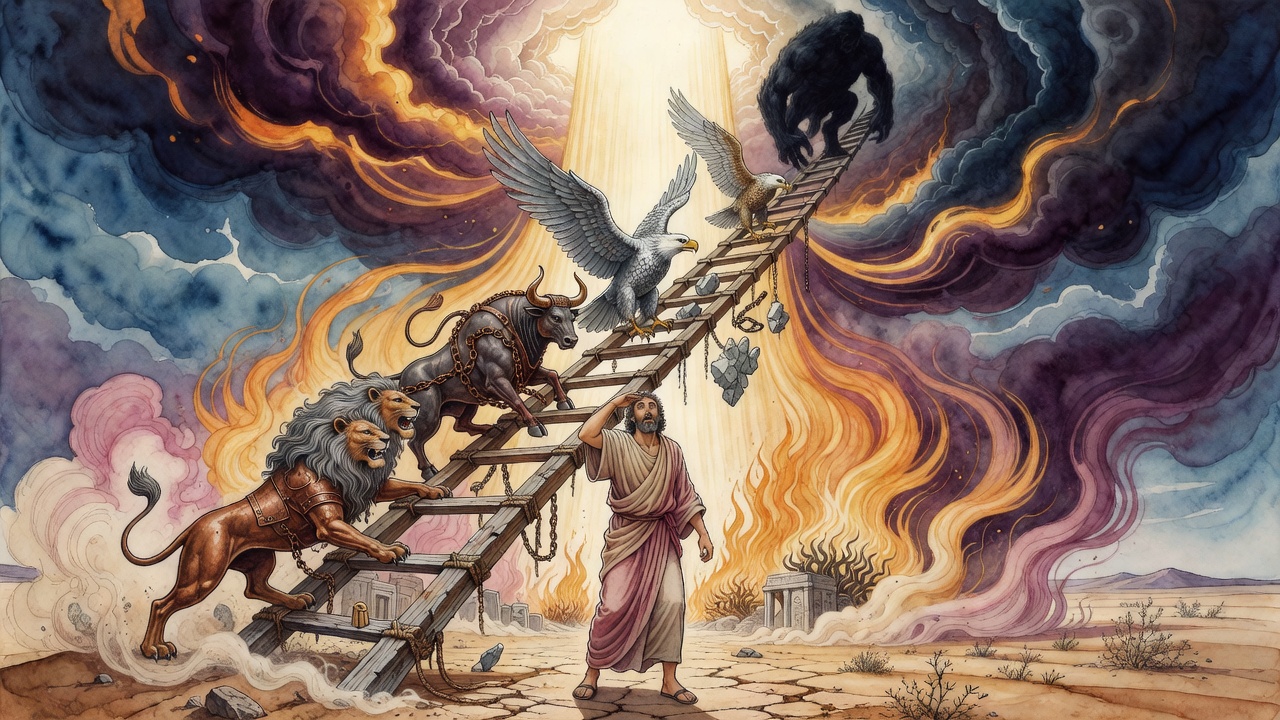
Jacob went out from Beersheba with Esau's threat at his back and the north road empty in front of him. The sun dropped early. He stopped because the dark had arrived first. He took stones off the ground, set them under his head, and lay down in the open.
He owned none of that dirt. The land had been spoken over his grandfather and his father. It was not yet a field he could plant, not a well he could name, not a grave he could claim.
Then he dreamed.
Gold on the Plain of Dura
What stood on the earth with its head in the heavens was gold. Sixty cubits high. Six cubits wide. A king had raised it on the flat of Dura in Babylon and wanted every province on its knees in front of it.
Herald. Horn. Pipe. Harp. When the music started, the nations were to go down. The statue did not need to walk. It only had to stand while the administrations filed past it.
Jacob was asleep on a rock in Canaan, generations early, watching it.
Three Who Would Not Bow
The figures going up and down in front of the gold were Hananiah, Mishael, and Azariah.
They raised the king's honor and they lowered it in the same breath. They danced. They leapt. They paid what a throne can demand in tax and service. Where the statue was concerned they gave him nothing.
The furnace was already heating. The door stood open. Heat came off the brick in a sheet. They did not look at the door. They looked at the king.
"Let it be known to you, king, that we will not serve your gods, and we will not bow down to the golden image you have set up."
The Lord stood over the whole scene. When the door of the furnace opened the other way, the voice that called into the fire used their titles and not the king's. "Servants of God Most High, come out."
They walked out of it on their own feet.
Nails in the Straw
The king kept a serpent, and it ate whatever was thrown to it. Nothing came back out. He liked to show it off.
"Look at its strength," he said to Daniel. "It swallows everything put in front of it."
"Give me permission," Daniel said, "and I will finish it."
He got the permission. He took straw, worked nails down inside the bundle where nothing showed, and threw it. The serpent took it the way it took everything else. The nails went through its insides.
What Babylon had swallowed came back out of its mouth.
Oil on the Stone
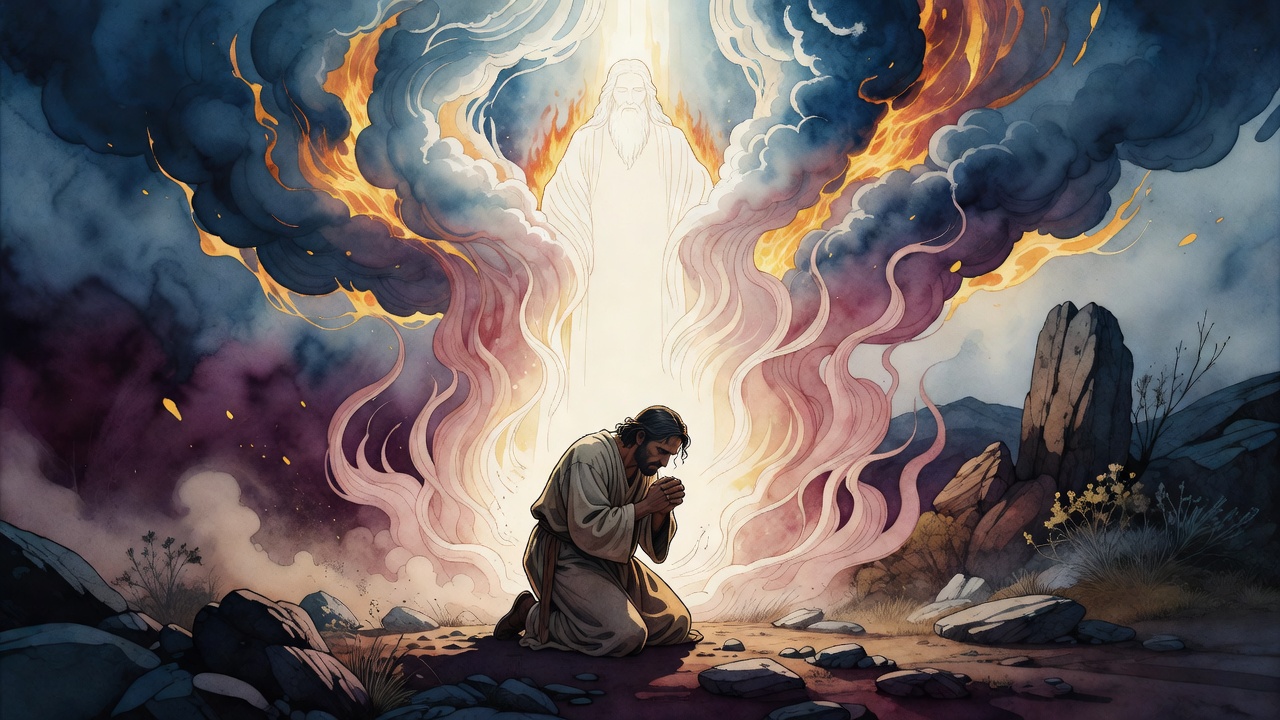
Jacob woke on the ground with the taste of all of it still in him.
"The Lord is in this place," he said, "and I did not know it." Then the fear caught up. "This is nothing other than the house of God. This is the gate of heaven."
He took the stone he had slept on, stood it upright, poured oil over the top of it, and gave the place a name.
He owned none of the ground under that oil. The land was still ahead of him, and so was the wife, and the flocks, and the limp he would come back with. What he had that morning was a wet stone and the certainty that empires would set up statues on this dirt, and that his children would stand in front of them, refuse, and walk out of the fire.
The count of the seasons was older than any king. Seedtime, harvest, cold and heat, summer and winter. Adam had handed the reckoning to Enoch, and Enoch handed it to Noah, and it kept running under every kingdom that thought it owned the year. Fields would have to be worked here. Cities would fatten and forget the country. The land would still ask for planting.
Jacob picked up his bag and walked north. He had read the land in his sleep before a single furrow of it was his.
← All myths