Hillel Waited at Table and Named King Saul at Endor
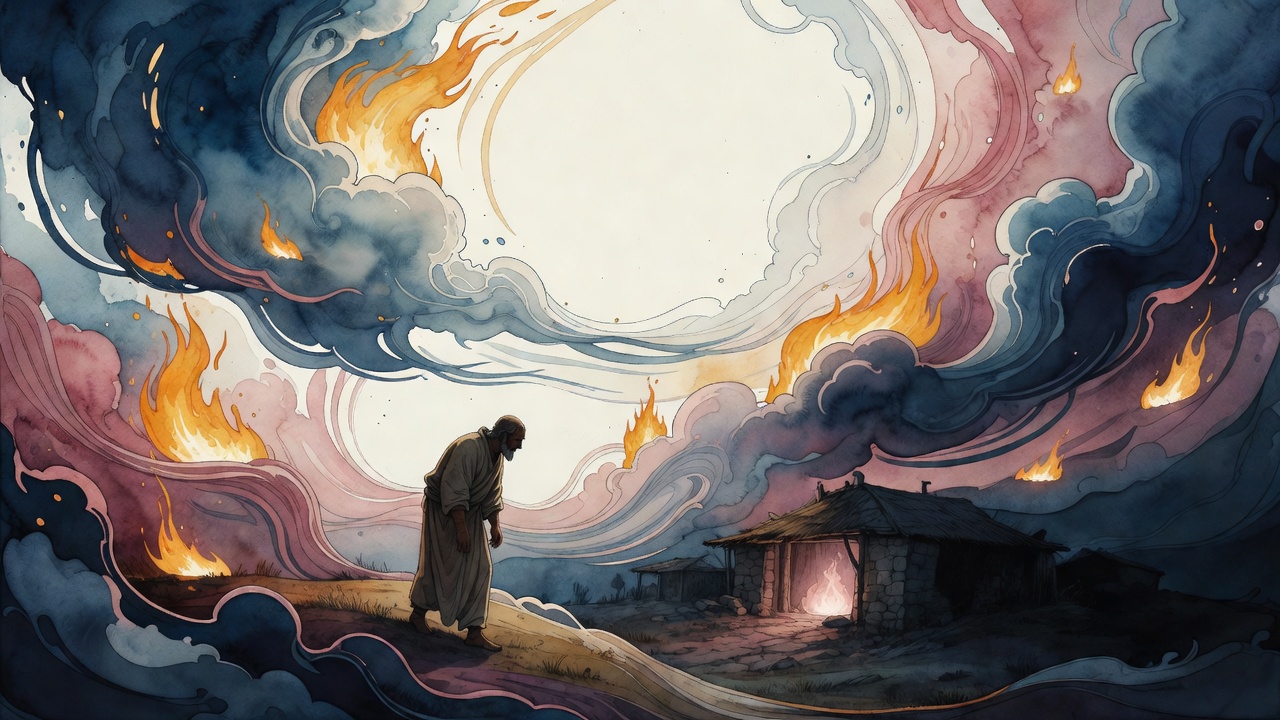
The bread sat untouched. One chair was empty. Hillel would not start, then he named a king who went looking among the dead.
Table of Contents
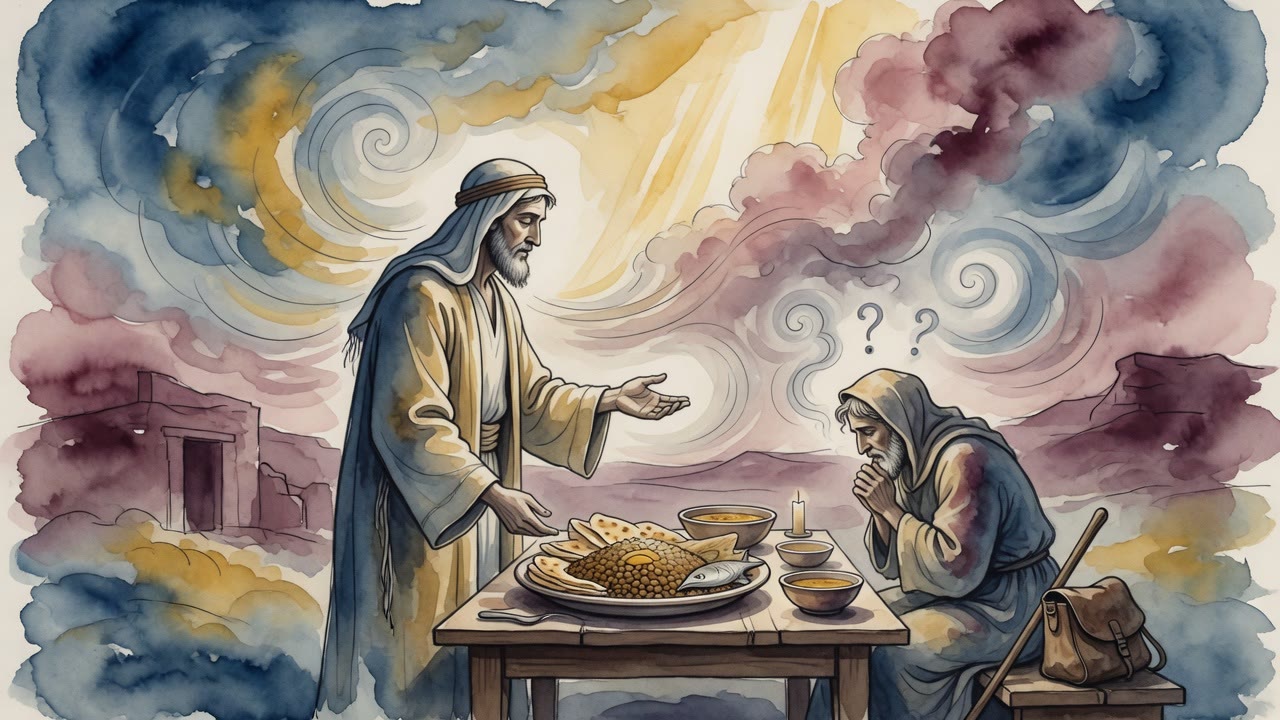
Hillel the Elder did not lift the bread. The late guest had not come. Steam had left the bowls. The other men at the table had stopped talking and started looking at the door.
 Click for full size
A reasonable host would have begun. Hillel sat with his hands on the cloth and waited.
The Empty Chair
Hours went by. The food went cold. Someone muttered that the man had no right to hold a house hostage over his own lateness. Hillel did not answer. He had set a place, and a place is a kind of vow.
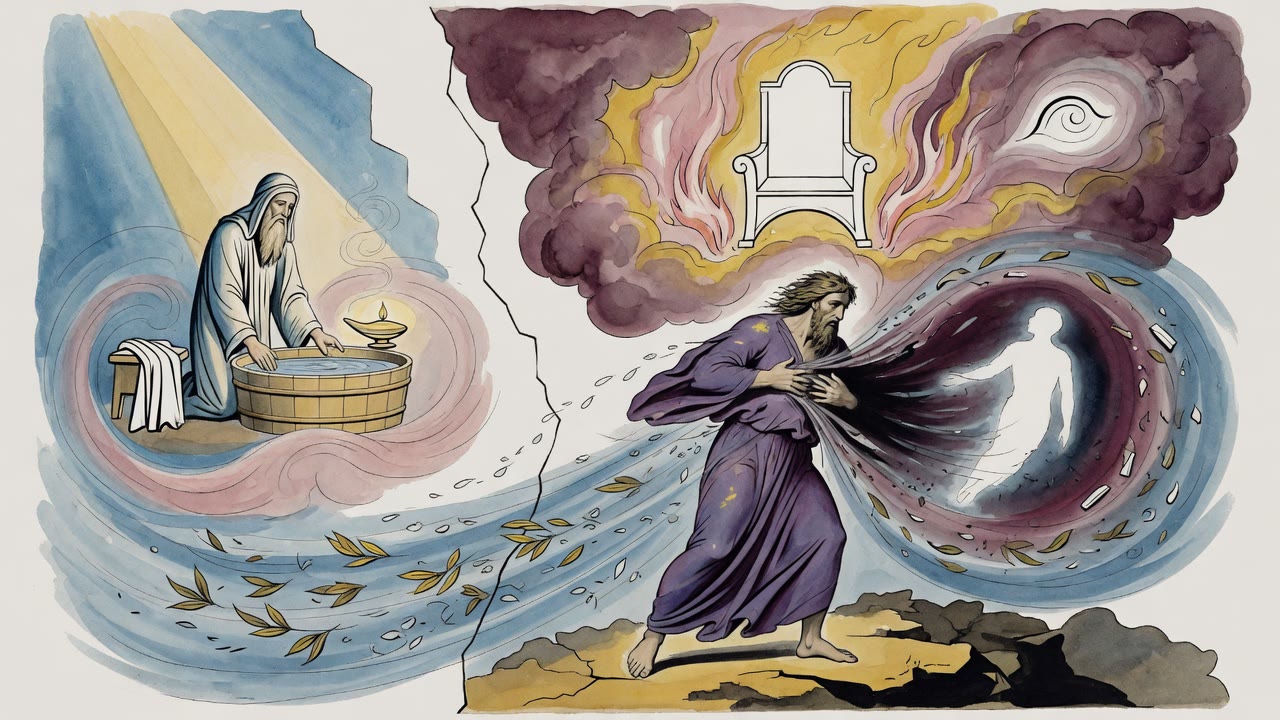
When the guest finally came, he came with excuses stacked in his mouth. The room leaned in for the rebuke. Hillel stood, received him as if he had arrived first, and served him as if the hour had never turned against him.
No pointed look. No joke about the time. The other guests watched a man refuse to draw blood with a sentence. Shaming a guest, even a guilty one, was a worse wound than cold meat. Hillel would rather let a meal die than let a face die in front of the table.
Only after the late man had eaten did Hillel speak of a king who could not wait.
He Named a King Who Could Not Wait
The lesson he gave them was not a proverb. He named Saul.
Samuel had already told that king the cost. Was it not enough that you did not listen, that you did not spend God's anger on Amalek? You go now to a woman with a familiar spirit, and you ask the dead for a future you would not take from the living.
Woe to the shepherd, Samuel said, and woe to his flock. On your account the Holy One has given Israel into the hands of the Philistines. The Holy Land would not hold a king who had already let go of the voice that had made him king.
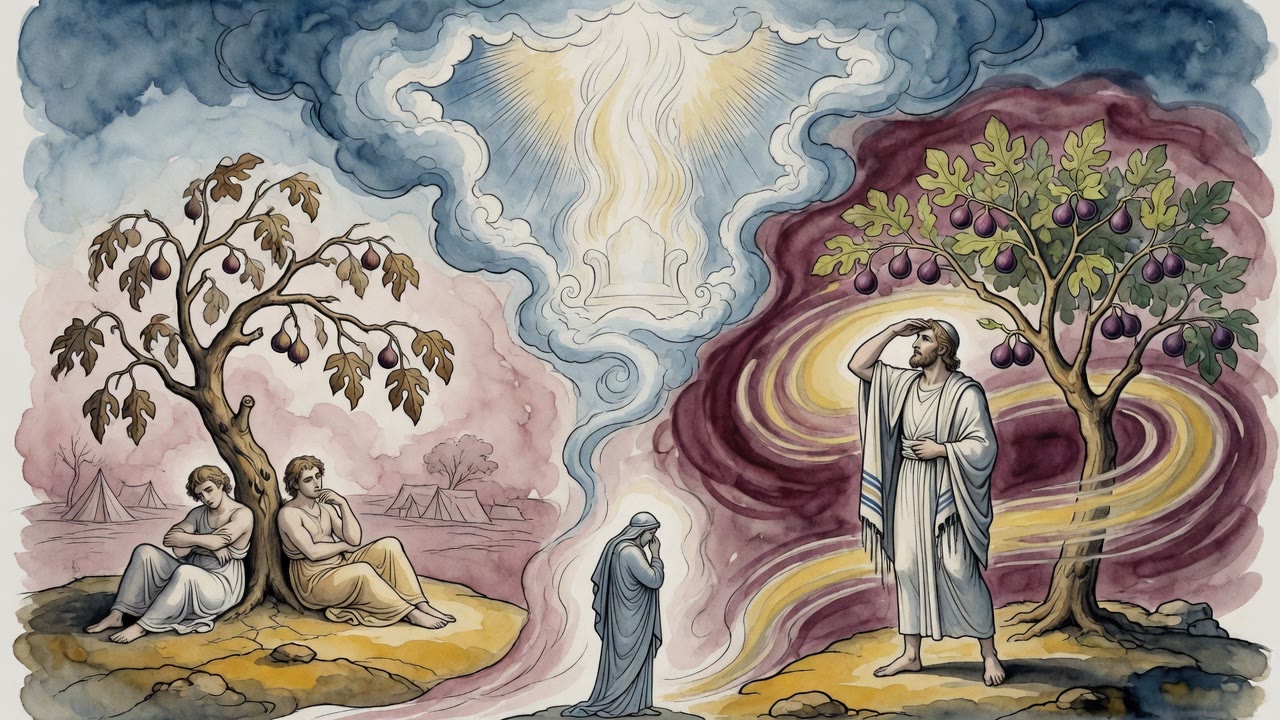
Saul had already edited a war. He kept Agag and the best of the sheep and called the leftover animals piety. Samuel heard bleating and told him that because he rejected the word, God had rejected him as king.
Hillel's guests had wanted a meal on time. Saul had wanted a better version of a command. Both hungers look small until they are named.
The King Who Killed the Roosters
Saul had cleared the land of conjurers. Then, with the Philistines on him and Heaven silent, he told his servants to find him a woman who raised the dead.
Reish Lakish had a picture for that hour. A king orders every rooster in a province slaughtered. At dawn he asks for a cock to crow so he will know when to rise. They stare at him. Are you not the one who killed them?
Saul put on plain clothes. The kingship slid off him with the robe. The word for the disguise is the word for a man set free. He became free of the throne before the battle even started. Two men went with him, Avner and Amasa, the way Abraham had taken two lads when he walked toward a mountain with a knife.
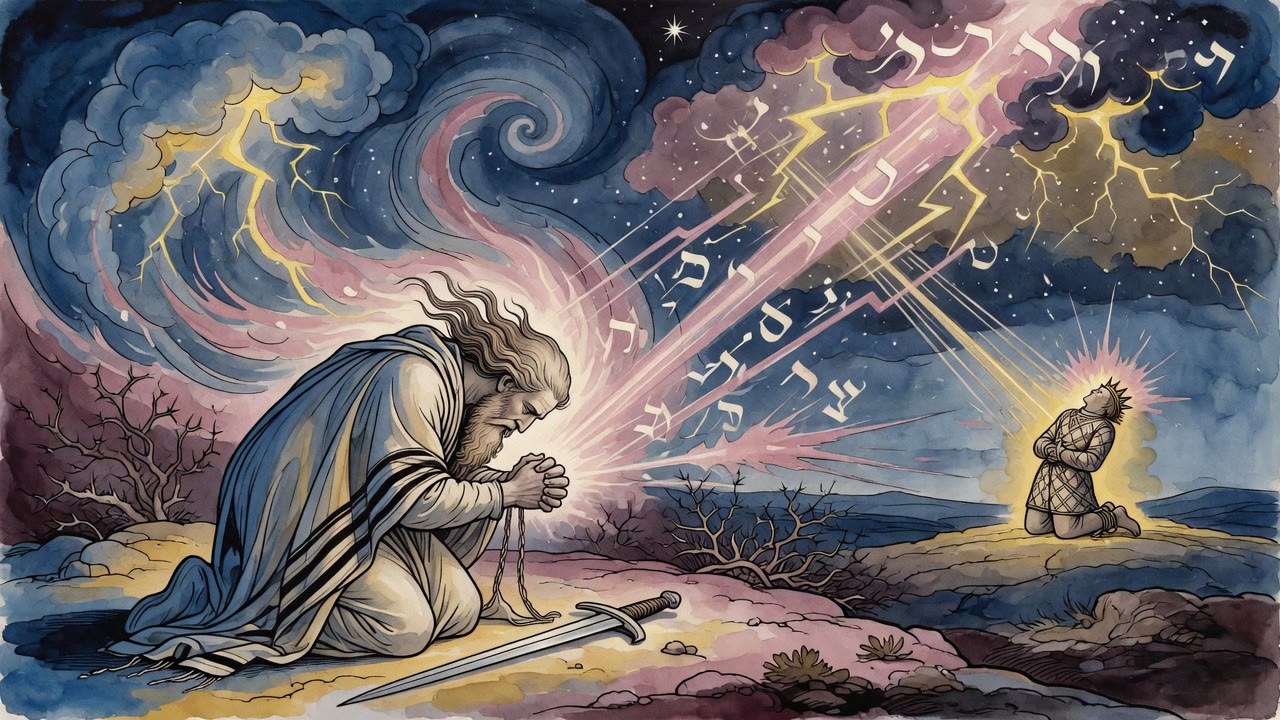
They came to the woman at Endor. It was night in the verse, though the work she did was said to fail at night. The dark was not clock-dark. It was the dark of a soul that had already shut every legal door. Dreams gave nothing. Prophets gave nothing. He would not name the Urim, because the Urim would have named Nov, the priest-city he had struck, and the bitterness of his own soul would have answered him.
Samuel Came Up Face First
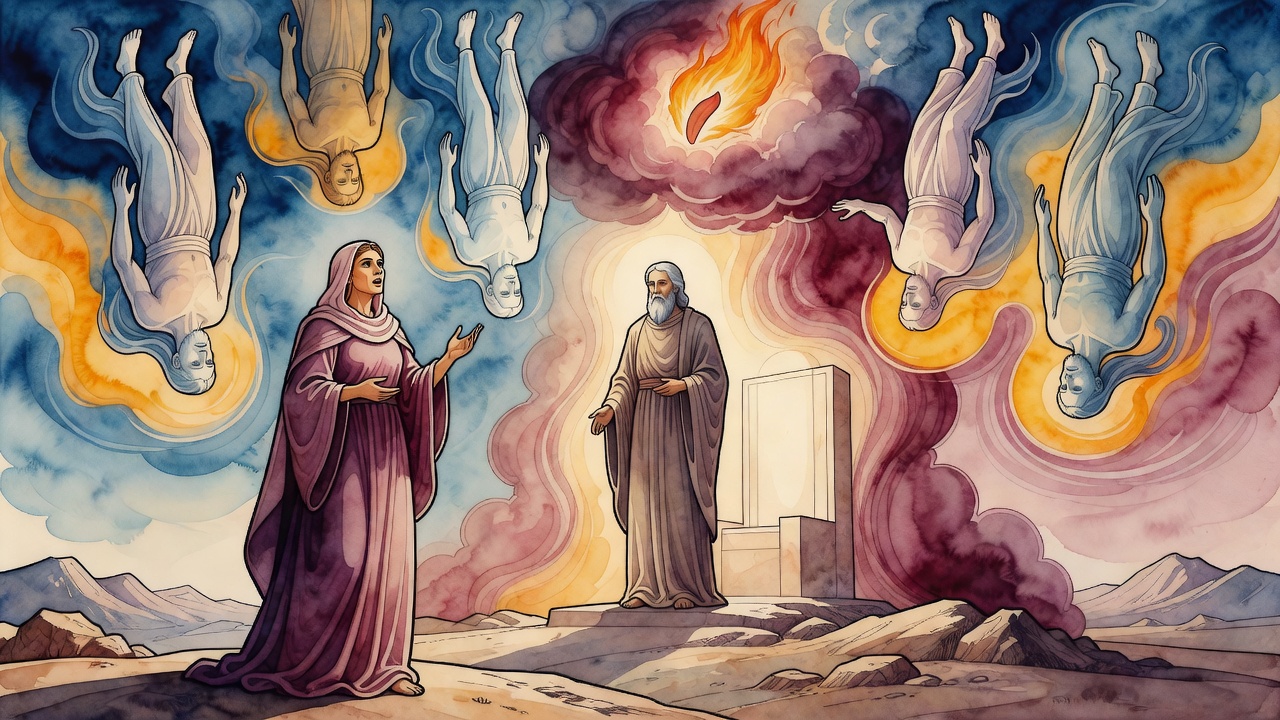
The woman cried out. A spirit does not rise for a king the way it rises for a commoner. For a commoner it comes face down. For a king it comes face up. She knew him by the way the dead arrived.
She saw. Saul heard. Avner and Amasa got nothing. Three rooms in one hut: a woman watching a prophet she could not hear, and a king hearing a voice he could not see. The two captains sat in a silence they mistook for empty air.
"Why have you irritated me to raise me?" Samuel said. You had nothing else with which to trouble your Maker, that you made me into an idol? Do you not know that He pays the worshipped as He pays the worshipper?
Some say Samuel thought it was the Day of Judgment and brought Moses up with him. Even a faithful prophet can panic when the ground opens.
Saul said he was in distress. The Philistines were at him. God had left him. Samuel did not soften. He has gone to your enemy. The kingdom is torn. Tomorrow you and your sons are with me.
If you flee, you live. If you take the judgment on yourself, you die in the morning, and you die inside Samuel's partition, not outside it. Saul heard the fork in the road and did not take the road that kept him breathing.
He Took His Sons to the Battle
He fell his full length on the ground. Then he stood up and lied to the men who had walked with him. Samuel says we will win, he told them. Your sons will be made officials.
He took his three sons and went out to the war.
Heaven called the angels to look. A man going to a feast does not bring his children, for fear of the evil eye. This man is going to a killing he has already been promised, and he takes his sons with him, and he is glad of the justice that will strike him.
Hillel's table had waited for one late soul and refused to shame it. Saul had not waited for the living God, then walked his own house into the grave to keep a sentence he had earned at Amalek and finished at Endor.
The bread at Hillel's house was cold. The king of Israel was already on the road. Between the two rooms sat the same fact. A soul can be honored in an empty chair, or spent in a disguise, looking for a voice among the dead while the Holy Land slips into another army's hand.
← All myths