Moses Sat on God's Throne While God Stepped Aside
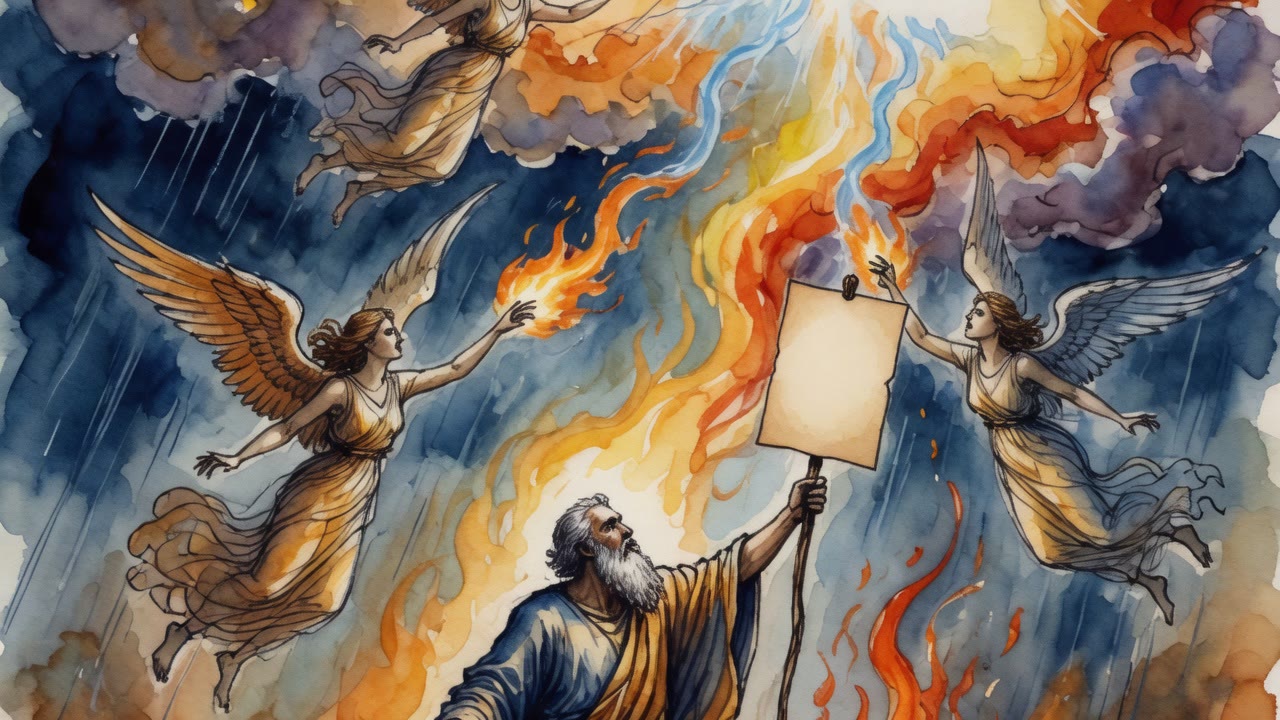
Thirty thousand angels escorted Moses upward, and he was terrified. Qemuel met him at the first gate and told him he came from a place of defilement.
Table of Contents
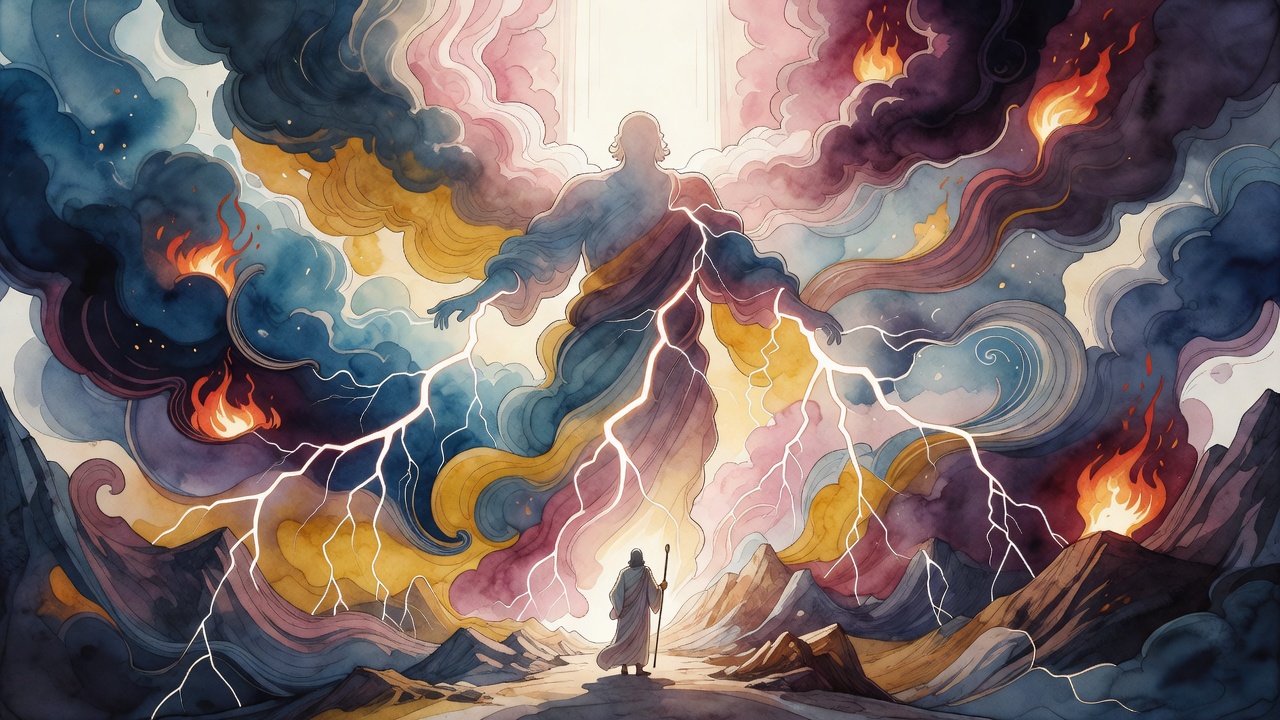
The figure on the throne was not waiting for Moses to approach. He was waiting for Moses to sit.
 Click for full size
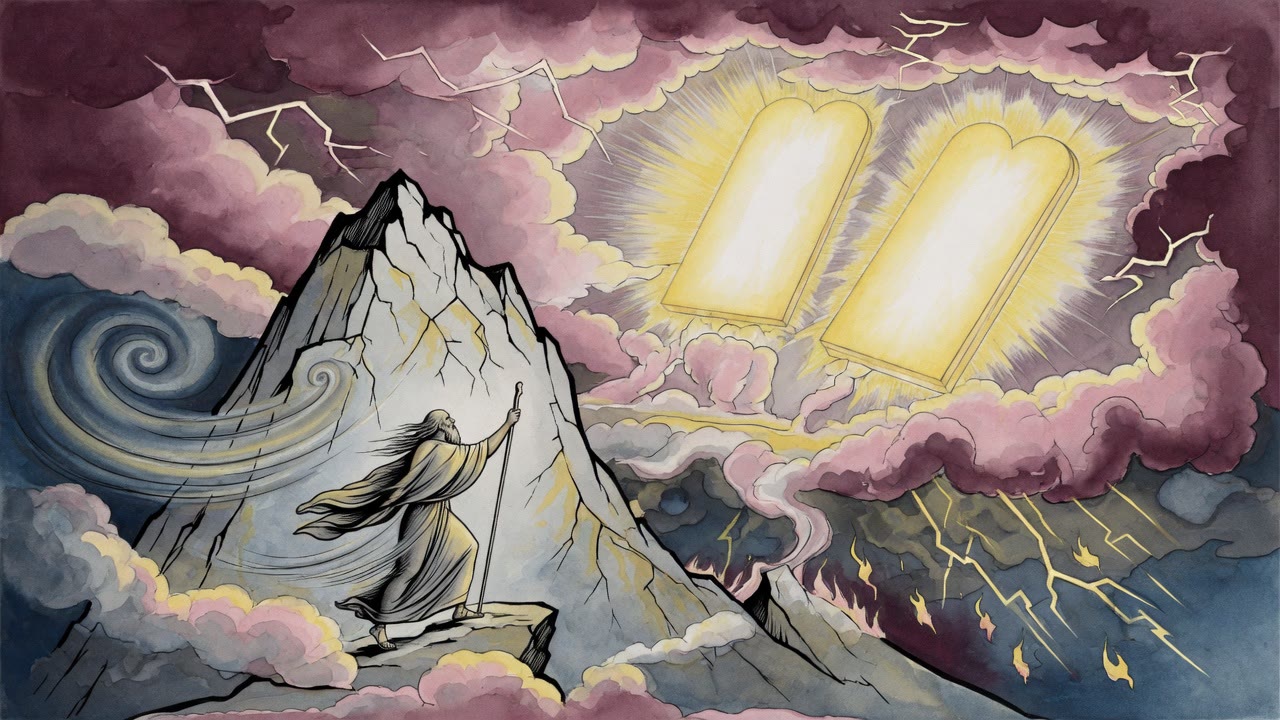
Philo of Alexandria, writing in the first century CE, follows Moses past the tablets, past the commandments, past everything the Sinai narrative in Exodus stops to record, to a throne so vast its top reached through the clouds of heaven. What happens there is not recorded in the plain text of scripture. Philo found it in the logic of Moses's elevation, in the verse from Exodus 7:1 where God tells Moses I place you in the role of God to Pharaoh, and in the accumulated weight of what the tradition said this man had become.
Philo Put a Throne at the Summit
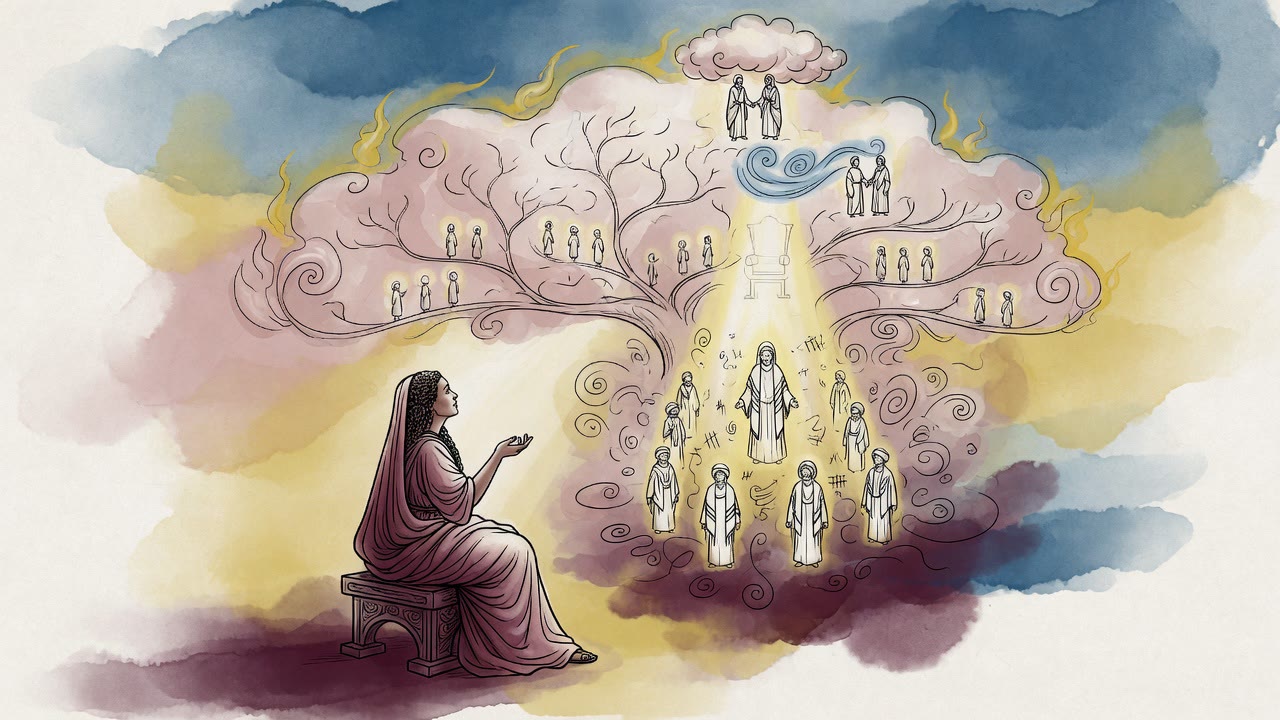
Life of Moses 1:155-158, Philo's biographical and philosophical account of Moses composed in Alexandria, gives the scene with characteristic restraint. Moses climbs the peak. He sees a figure of noble bearing seated on a throne that touches the clouds. The figure wears a crown. He holds a scepter. He calls Moses forward, hands him the scepter, places a crown on Moses's head, and withdraws. The throne is now empty except for Moses.
The withdrawal is the shock. Moses is not merely receiving authority. He is being seated in the place where authority resides. Philo reads this as the logical extension of the divine declaration in Exodus 7:1. To be placed in the role of God to Pharaoh was a legal formulation about delegated power. In Philo's reading, that delegation was not figurative. Moses's face shone with divine radiance after Sinai (Exodus 34:30) because he had been in contact with divine fire at its source. He came back carrying something that had changed his face.
Ben Sira Knew the Older Claim
Ben Sira, composed in Hebrew around the early second century BCE and preserved in the Apocrypha, describes the same elevation in different terms. Chapter 45 says God honored Moses and strengthened him in the heights. With his words, the letters sped up. He stood before Pharaoh strengthened by God. The people saw his glory. This is the biography of a man whose power over language was not a personal gift but a transmitted one. God gave Moses his words. The letters moved faster because of what was behind them.
Ben Sira does not describe the throne. It describes the effect: glory visible enough for the people to see, strength sufficient to face Pharaoh, an elevation into the heights that left marks on Moses that others could observe. The Philo account makes explicit what Ben Sira leaves implicit in the imagery of height and honor.
Thirty Thousand Angels and the Fiery Gates
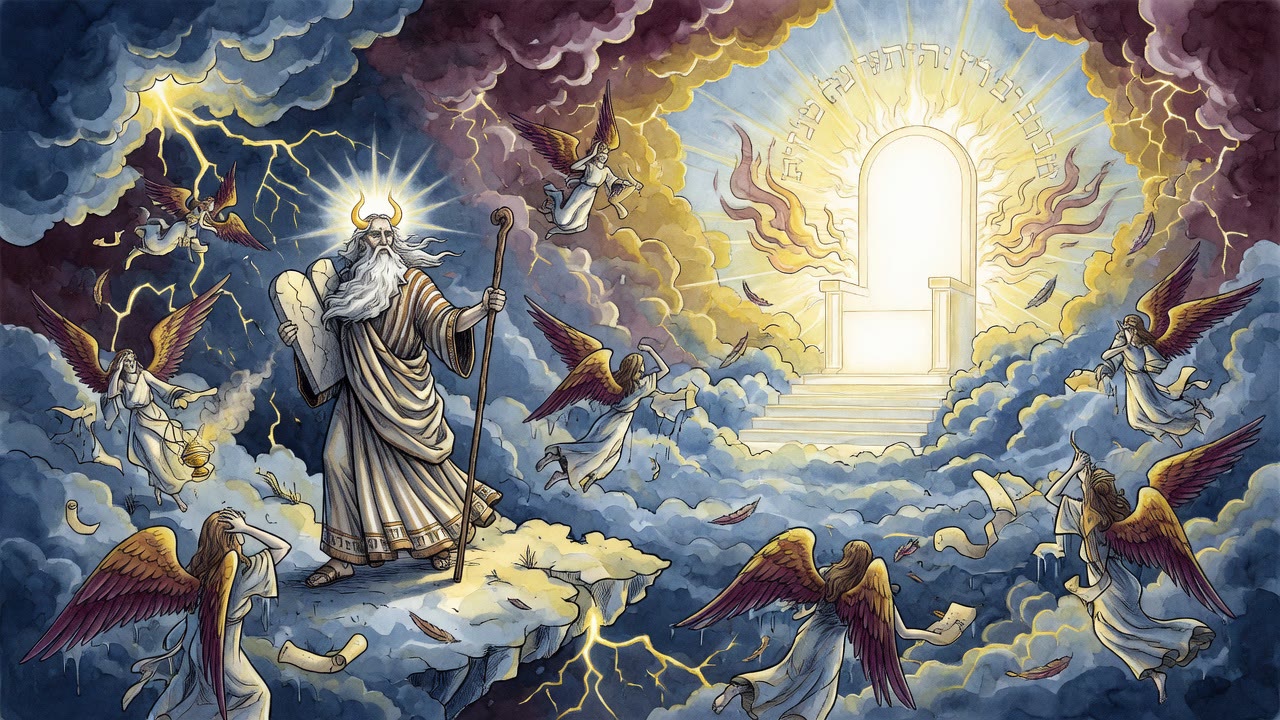
The Legends of the Jews, Louis Ginzberg's early twentieth-century synthesis drawing on midrash, Talmud, and later sources, turns Moses's ascent into a gauntlet. God sent thirty thousand angels to escort Moses upward, fifteen thousand to his right and fifteen thousand to his left. Moses was terrified. He cried out to Metatron, the angel who had been Enoch before his transformation, who identified himself as Moses's ancestor and the one charged by God to accompany him to the throne.
The gates of the lower heavens were guarded. The first angel Moses encountered was Qemuel, commander of twelve thousand angels of destruction who challenged Moses immediately: you come from a place of defilement and dare walk in a place of purity. Moses answered simply: I am the son of Amram, and I have come to receive the Torah for Israel. Higher up was Hadarniel, who stood sixty thousand parasangs above the other angels, whose every word sent twelve thousand sparks of lightning into the air. Moses was afraid of him. God rebuked Hadarniel, and he became Moses's guide.
In the seventh heaven, Moses beheld the Hayyot, the holy living creatures that support the throne of God. He met Zagzagel, the prince of Torah, the angel of wisdom whose task was to teach Torah in seventy languages to the souls of humankind. The Torah existed up there before Moses arrived to carry it down. His ascent was a retrieval operation, not a commission. He went up to take back what had always been destined for Israel.
The Cloud That Swallowed Him
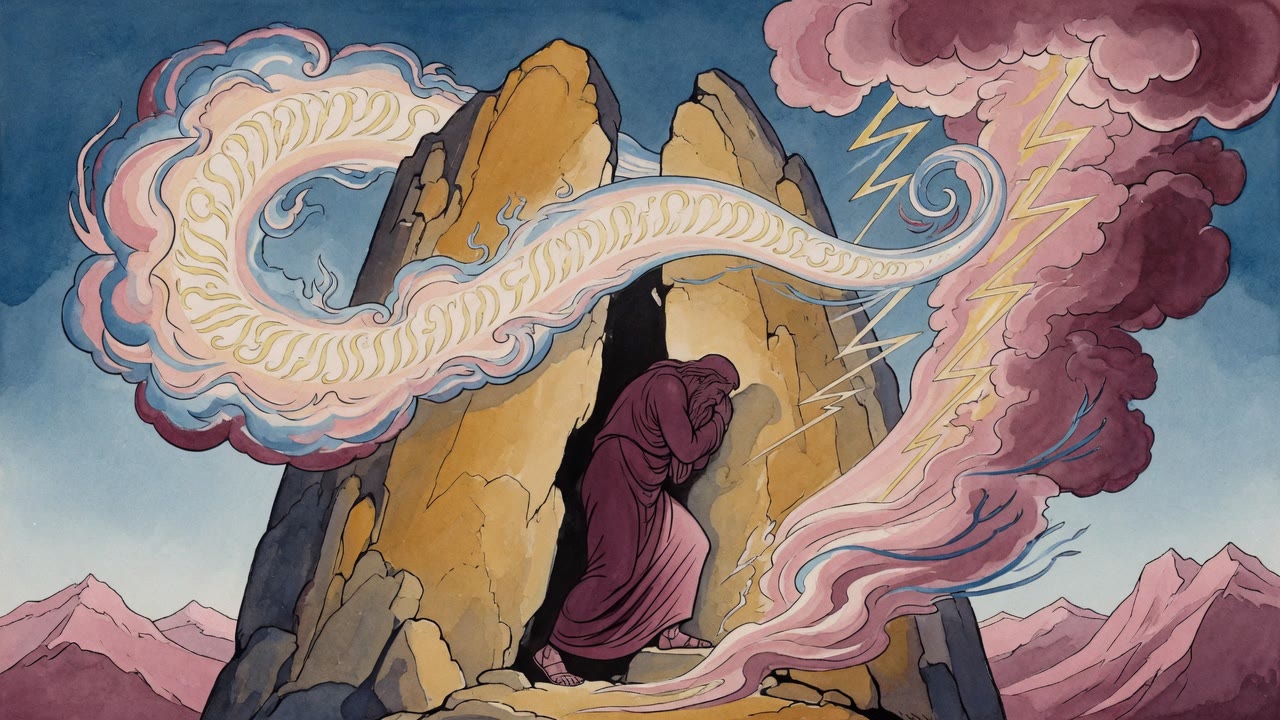
The Chronicles of Jerahmeel, a twelfth-century Hebrew chronicle drawing on earlier Jewish legendary material and translated by Moses Gaster in 1899, describes the moment Moses first encountered the cloud at the top of Sinai. He did not know whether to ride it or grab hold of it. The cloud opened, swallowed him inside, and carried him upward. Then Moses walked across the firmament the way a person walks across the earth. He was inside the sky. It supported him the way ground supports a man who has not yet thought about whether the ground will hold.
This is the kind of detail the Philo account leaves out. Philo gives the throne and the crown and the withdrawal of the figure who was sitting there. The Jerahmeel account gives the physical texture of an ascent that was strange enough to require improvisation at every step. Together they describe the same journey from two different angles: the philosophical summit and the terrifying approach to it.
← All myths