Joseph Read the Three Patriarchs Hidden in the Butler's Grape Dream
Two officers of Pharaoh woke up frightened. Joseph looked at their faces and asked why they seemed worse this morning than on all the mornings before.
Table of Contents
 Click for full size
Two Faces Worse Than Yesterday
They had tried to poison the king. The chief cupbearer and the chief baker had taken counsel together to put the poison of death into Pharaoh's food and into his drink, and when Pharaoh heard of it he threw both of them into the round house where Joseph was being held. The captain of the guard put the two officers into Joseph's care, and Joseph carried their meals and emptied their pots and watched them for days.
One morning both of them looked wrong.
He had no reason to ask. He was a slave who had been carried off out of the land of the Hebrews and put in a pit for something he had not done, and these were two courtiers who would step over him on their way back to the palace. He asked anyway.
"Why do your faces look worse today than on all the other days you have been here?"
They said they had each dreamed in the night and there was nobody to tell them what it meant. Joseph told them interpretations belong to God, and to go ahead.
The Vine With Three Branches
The cupbearer went first.
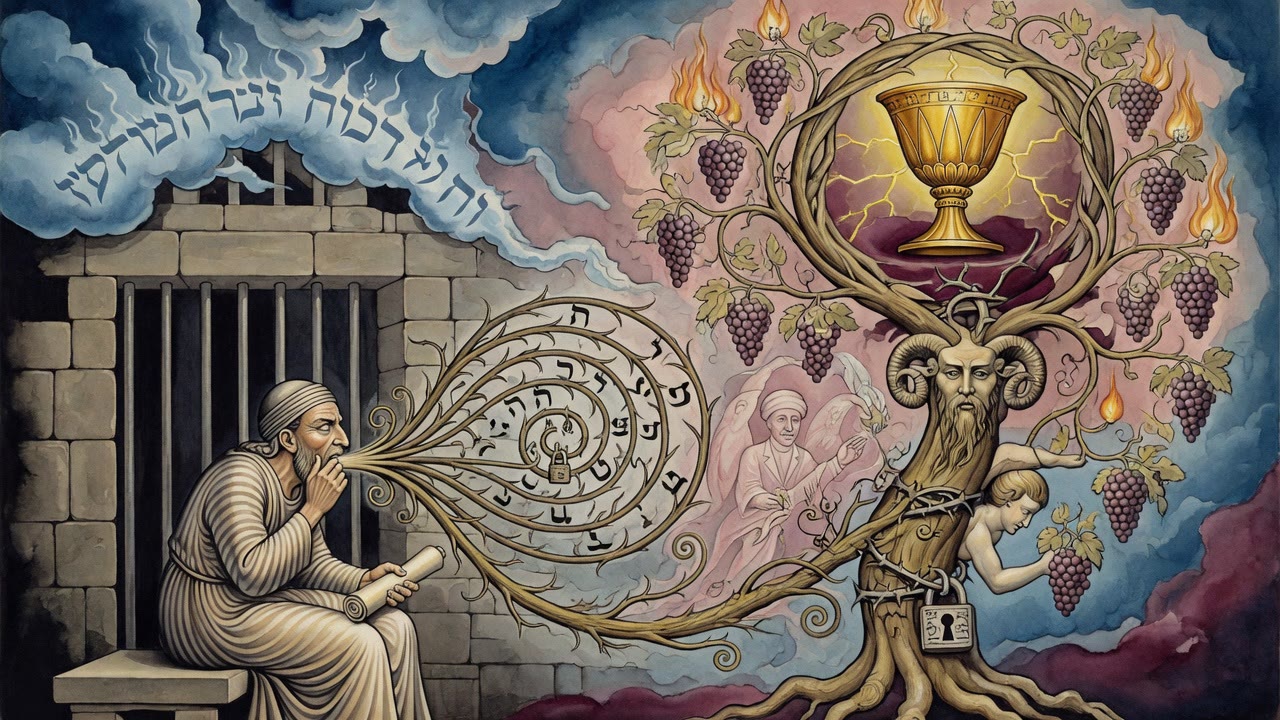
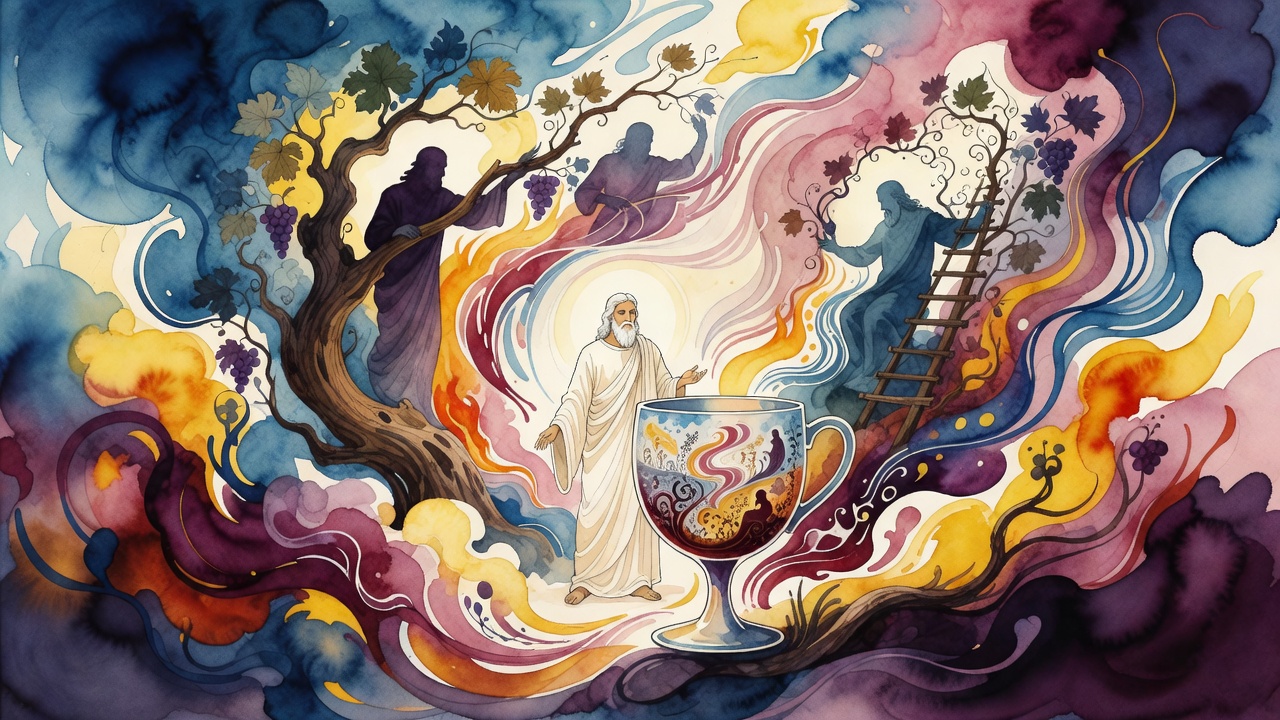
There was a vine in front of me, he said. It had three branches on it, and while I stood there it budded, and the blossoms came out, and the clusters ripened into grapes in one motion, the way nothing ripens. Pharaoh's cup was in my hand. I took the grapes and squeezed them into the cup and put the cup into Pharaoh's hand.
The man was talking about grapes. He wanted to know whether he was going to live.
What Joseph Saw and Did Not Say
Joseph looked at the vine and saw three men standing in it. Abraham, Isaac, Jacob. His own great-grandfather, his grandfather, his father, whose grandchildren were going to be worked to death in this country in clay and brick and every labor of the open field. Then he saw them come out again, brought up by the hand of three shepherds, and the shepherds had names: Moses, Aaron, Miriam. And the cup being pressed into Pharaoh's hand was the cup of wrath that a king of Egypt would drink to the bottom at the end.
He was thirty years from that country's border, in a cell, and a stranger had just handed him the whole future of a nation that did not yet exist.
He kept it. Not one word of it went to the cupbearer.
What he gave the man instead was the small reading, the one that fit a cupbearer's life. Three branches are three days. In three days Pharaoh will lift up your head and put you back in your place, and you will set the cup in his hand the way you always used to pour for him. It was good news, and Joseph gave it gladly, because of the other good news he was not going to repeat.
The Baker Pushed In
The baker had been listening. When he heard how well the first reading had gone he started talking fast, before he could be stopped.
Three baskets of white bread were on my head, he said. The top basket had all of Pharaoh's baked work in it, everything the confectioner makes, and birds were eating out of it off my head.
Joseph saw two things in the baskets again. Three enslavements the house of Israel would go under. And three days.
He gave the man the one that belonged to him. In three days Pharaoh will take your head off your body with a sword and hang you on a gibbet, and the birds will cut your flesh from you.
The Favor That Cost Two Years
Then Joseph asked for something. Remember me when it goes well with you. Mention me to Pharaoh and get me out of this house. I was stolen out of the land of the Hebrews, and I have done nothing here either.
He had let go of the mercy above him and taken hold of a man.
On the third day Pharaoh had a birthday and made a feast for his servants, and he lifted up both heads in the middle of the party. The cupbearer went back to the cup, because the inquiry cleared him of the plot. The baker went up on the gibbet, because it did not.
The cupbearer stood at the king's elbow that evening and poured, and the wine went down, and he did not remember Joseph. He forgot him.
Two years later the king dreamed about cattle coming up out of the river, and every wise man in Egypt stared at the floor, and the cup shook a little in the cupbearer's hand. They shaved Joseph and dressed him and walked him up out of the ground. He was thirty years old when Pharaoh set him over the whole country and gave him an Egyptian name, Zaphenath-paneah, which they said meant the revealer of secrets.
← All myths