Twenty-Five Men Stood in the Temple and Faced East
Ezekiel was a priest by a canal in Babylon with no altar to serve. The sky opened over the ditch, and four creatures came out of the fire.
Table of Contents
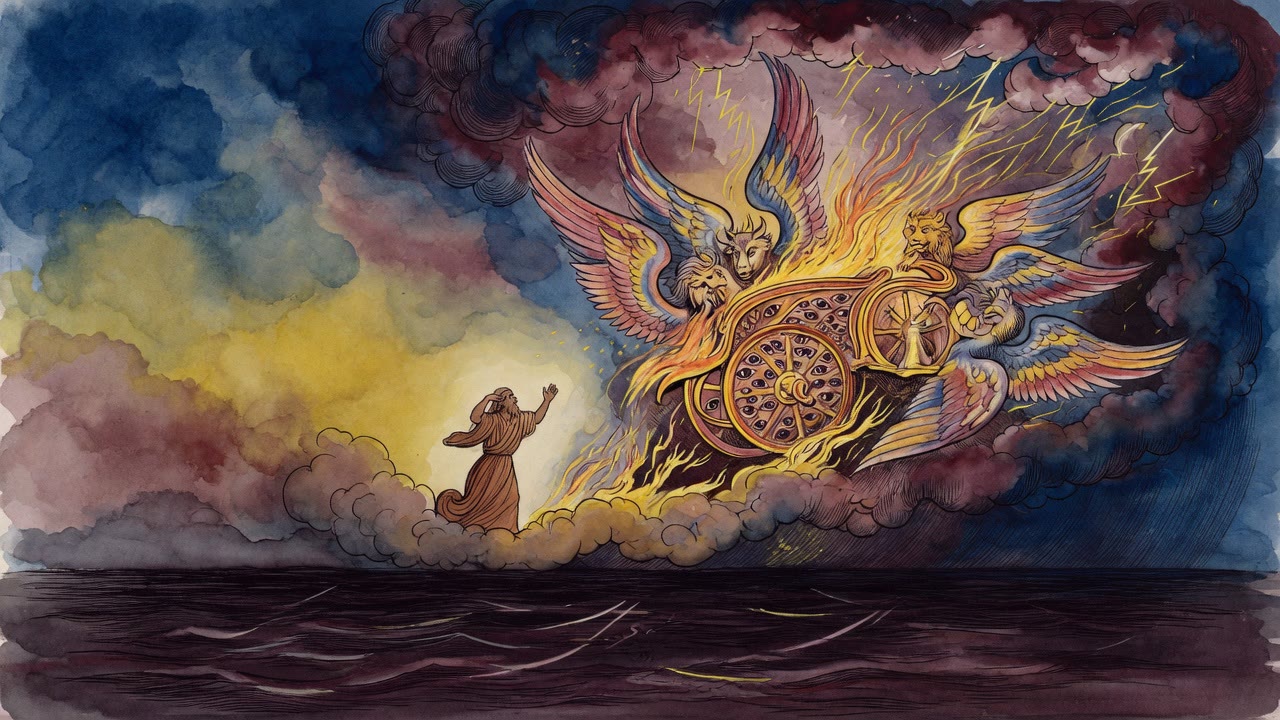
Ezekiel was a priest with no altar to stand at, which in Babylonia made him a man like any other man by the water. The Chebar was a working canal, dug for barley and barges, and the exiles from Judah lived along it because that was where the empire had put them. King Jehoiachin had come down that road ahead of them with the leading families of Jerusalem. On the fifth day of the fourth month Ezekiel was standing on the bank when the heavens opened over an irrigation ditch.
 Click for full size
The Storm Out of the North
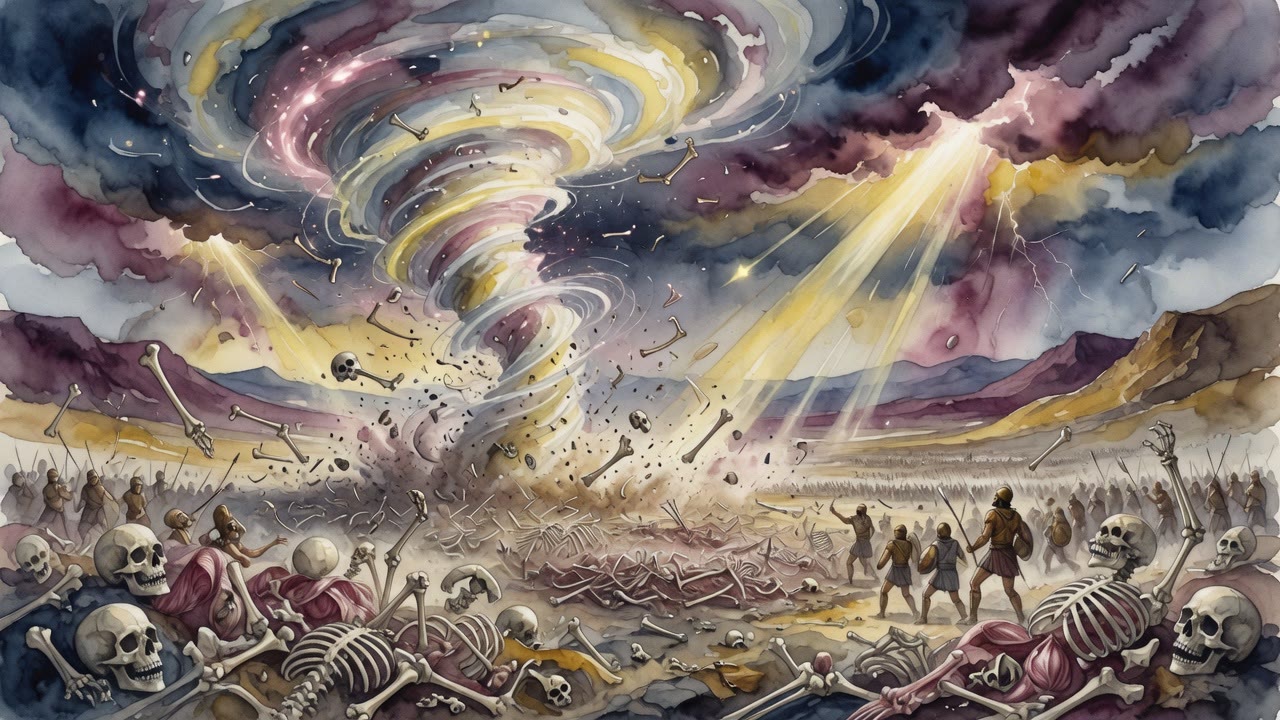
It came from the north, a cloud with fire turning over inside it and a brightness all around the edge, and at the center of the fire something the color of amber. Four living creatures came out of that. Each had the shape of a man and four faces on the one head, a man and a lion and an ox and an eagle, and four wings apiece, with human hands underneath the wings. Their legs did not bend like legs. They ended in a single calf's hoof, and the hooves threw back light like polished bronze.
They never turned. Whichever way a face pointed, that was the way the creature went, so the whole formation could cross the sky sideways without one of them swinging around. Beside each of them on the ground stood a wheel that gleamed like beryl, a wheel with a second wheel through the middle of it, and the rims of all four were high and terrible and covered over with eyes. When the creatures moved the wheels went with them, since the spirit that drove the creatures was in the wheels too. Ezekiel went down on his face in the mud of the towpath.
The Lightning That Sorts
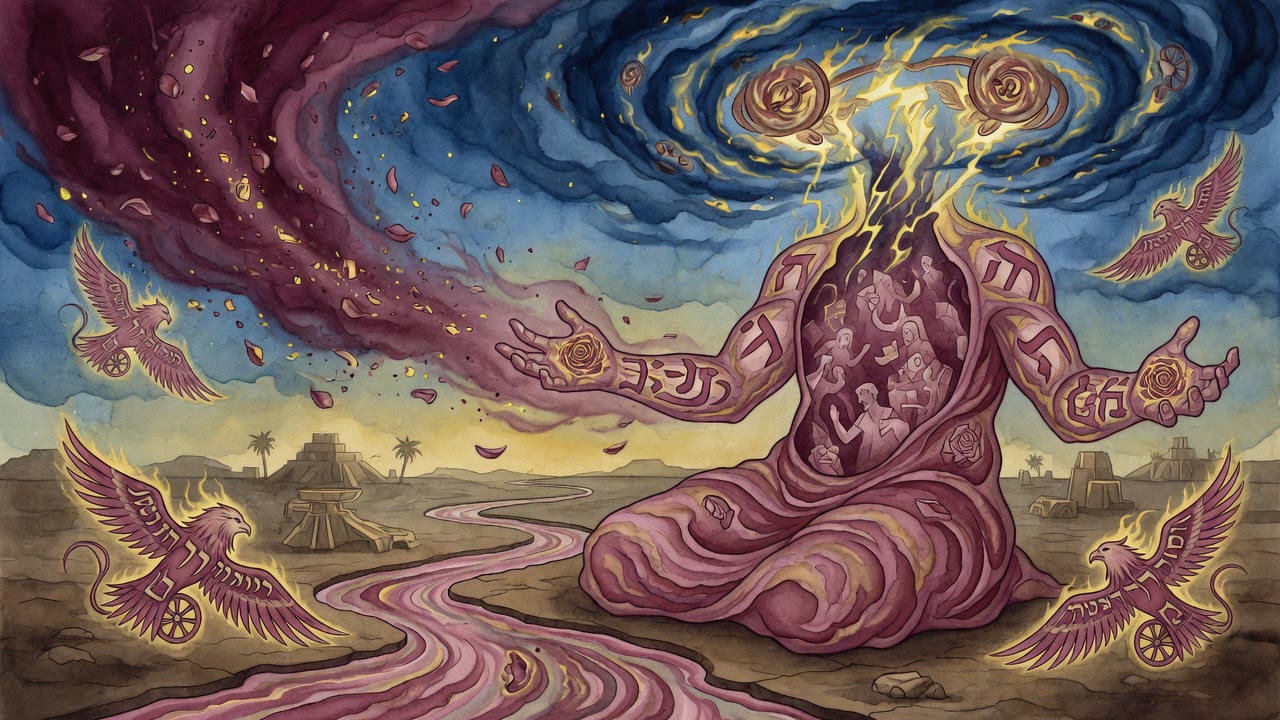
Between a man and the chariot there is a bolt of lightning that does not travel. It hangs across the way, fixed, and it divides those who are fit to come near from those who are not, and it does the dividing before anyone at the gate has said a word.
If a man is fit and hesitates when they tell him to enter, they tell him again. "Enter," they say, and the second time is not a courtesy. When he goes through, the ones inside call out over him that here is another of those who descend to the chariot, and the word goes ahead of him through the palaces. If a man is not fit and goes in anyway, they lay a thousand pieces of iron on him where he stands.
Ezekiel came through. He got up off the towpath afterward with canal mud drying on his sleeves, still a priest with no altar, and he knew what the gate would have done to him if it had sorted him the other way.
Twenty-Five Backs
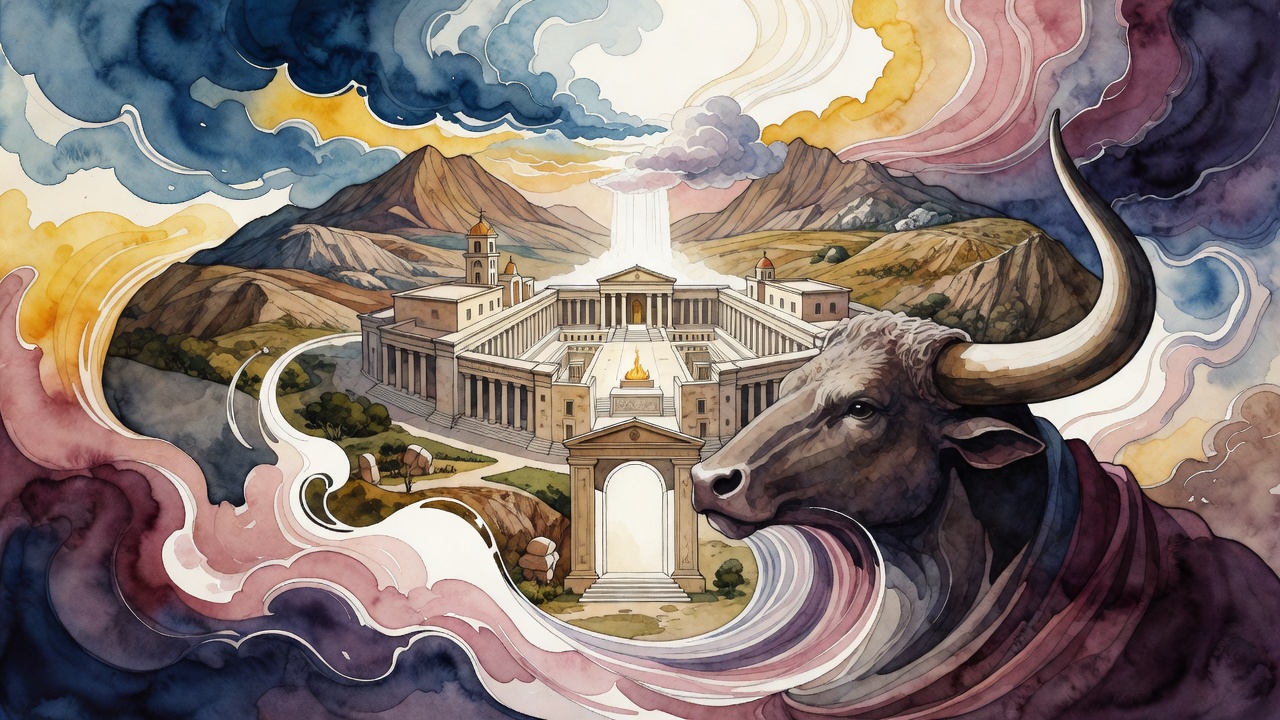
Later the hand took him up between earth and heaven and set him down in Jerusalem, inside the Temple, in the inner court where he had once served.
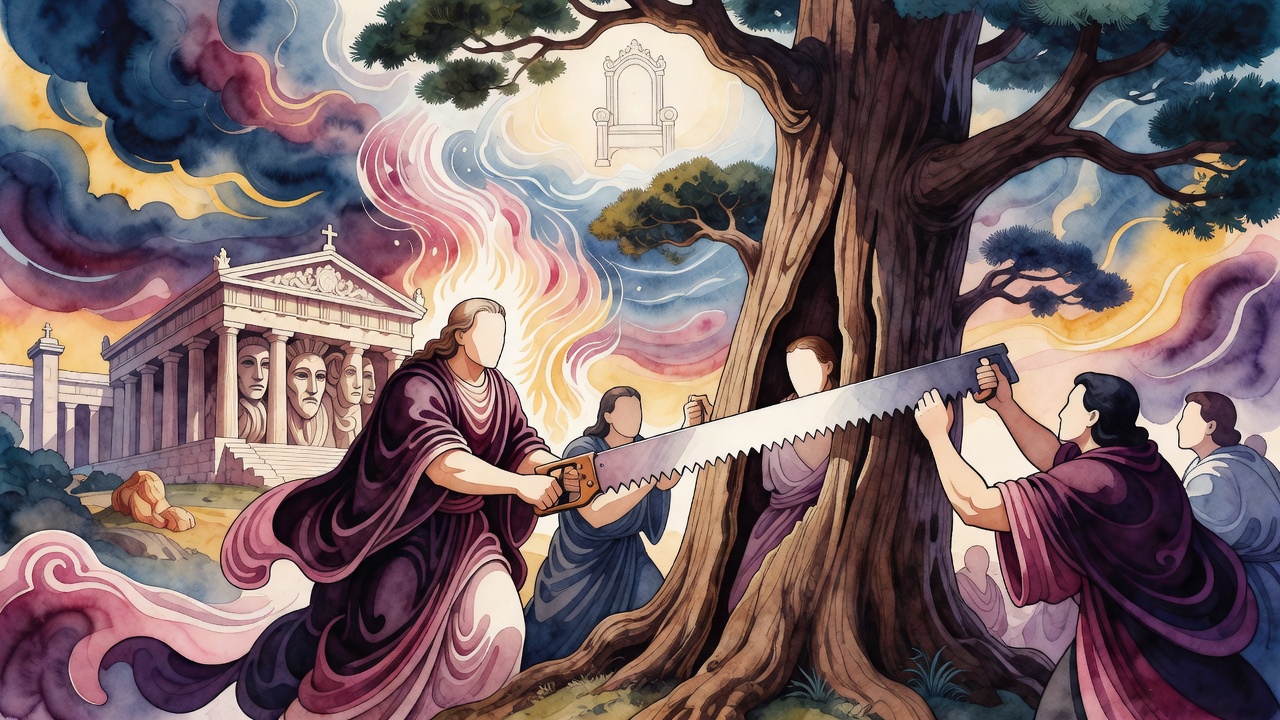
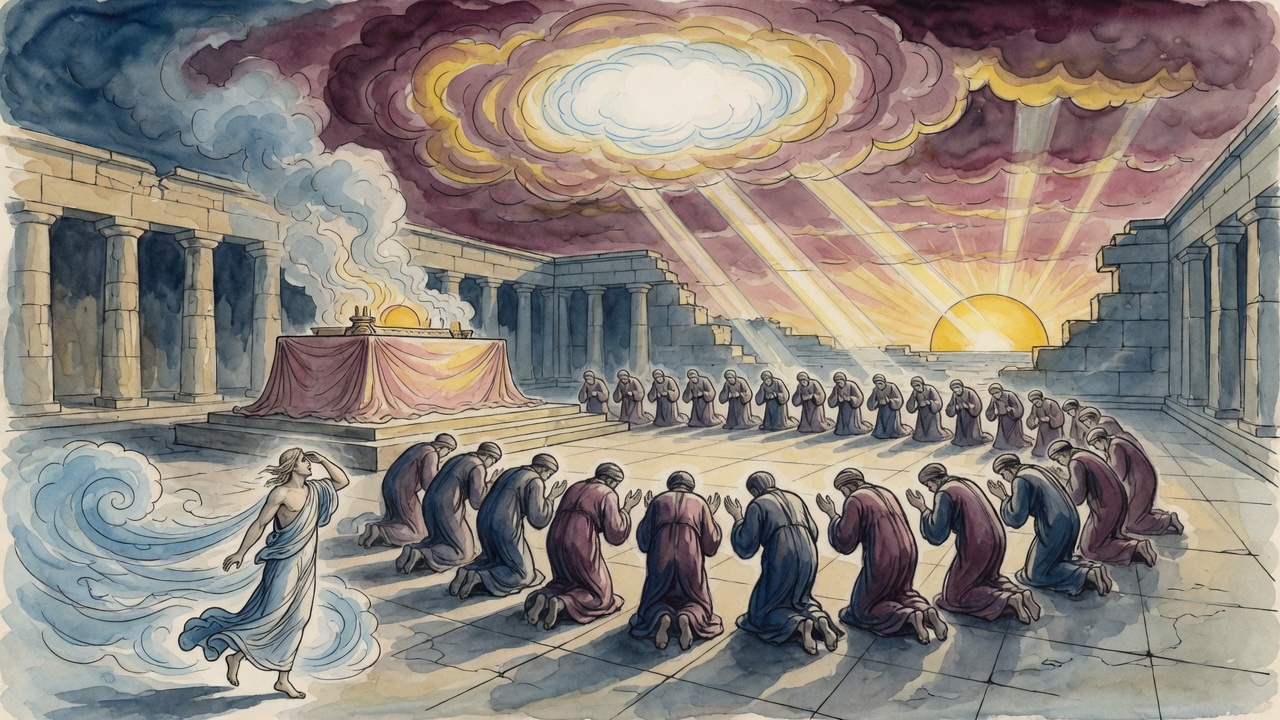
The stones were the stones. The bronze was where the bronze had always been. Between the portico and the altar, on the paving no man could walk on unless the service had put him there, twenty-five men stood with their backs to the sanctuary doors. Their backs were to the altar as well. They had put themselves in the exact middle of the holy precinct and aimed every part of themselves the other way, out past the eastern gate, toward the place where the sun would come up.
He knew that ground. He knew what a man had to do to his hands and his clothes before he was allowed to cross it. So he stood behind them and counted, twenty-five, and waited for the frozen bolt to fall on them, because he had just come through a gate that would have crushed him for one wrong step over an irrigation ditch in a foreign country, and these men were standing in the house itself with their shoulders to the Presence.
Nothing fell on them. They went on with their worship, and the court held its ordinary morning quiet. Somewhere behind the wall a bird went over, and the twenty-five did not move, and the sky above the eastern gate began to go pale.
What He Said About the Throne
The sun cleared the wall. The twenty-five bowed together, without a signal, the way men bow who have done a thing every morning for a long time, and their shadows went out behind them across the paving and lay over the altar.
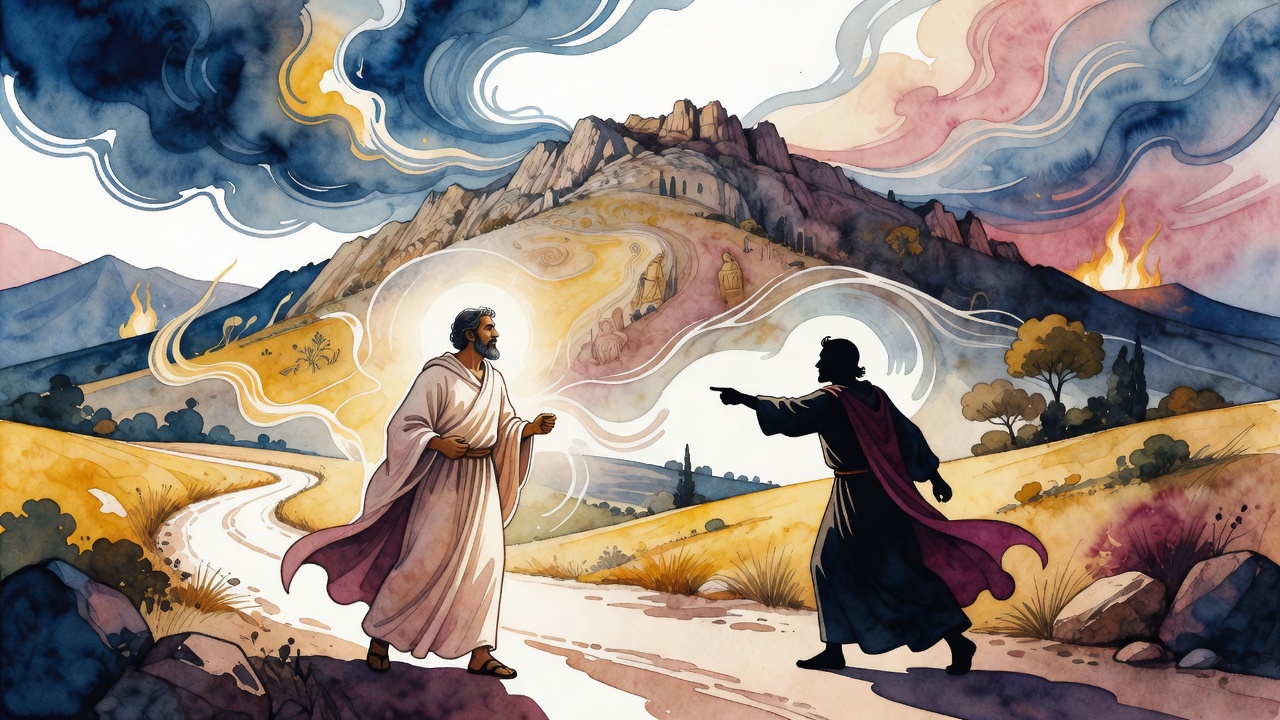
Ezekiel did not pray for the men. He had seen what burned above the Chebar, the wheels with their rims full of eyes and the fire the color of amber, and he had seen a bolt hanging in the road that sorted the fit from the unfit before they opened their mouths, and now he had seen twenty-five priests turn their backs on all of it in the one place on earth built to face it. So he prayed for the throne. "Do not reject us, for the sake of your name. Do not let the throne of your glory be brought low."
The shadows shortened as the sun came up. By the time the sun was clear of the gate the men had straightened and the paving was bright, and the altar behind them stood in the light with nobody looking at it.
← All myths