Jacob Read Seven Tablets of the Future and Was Refused a Sanctuary
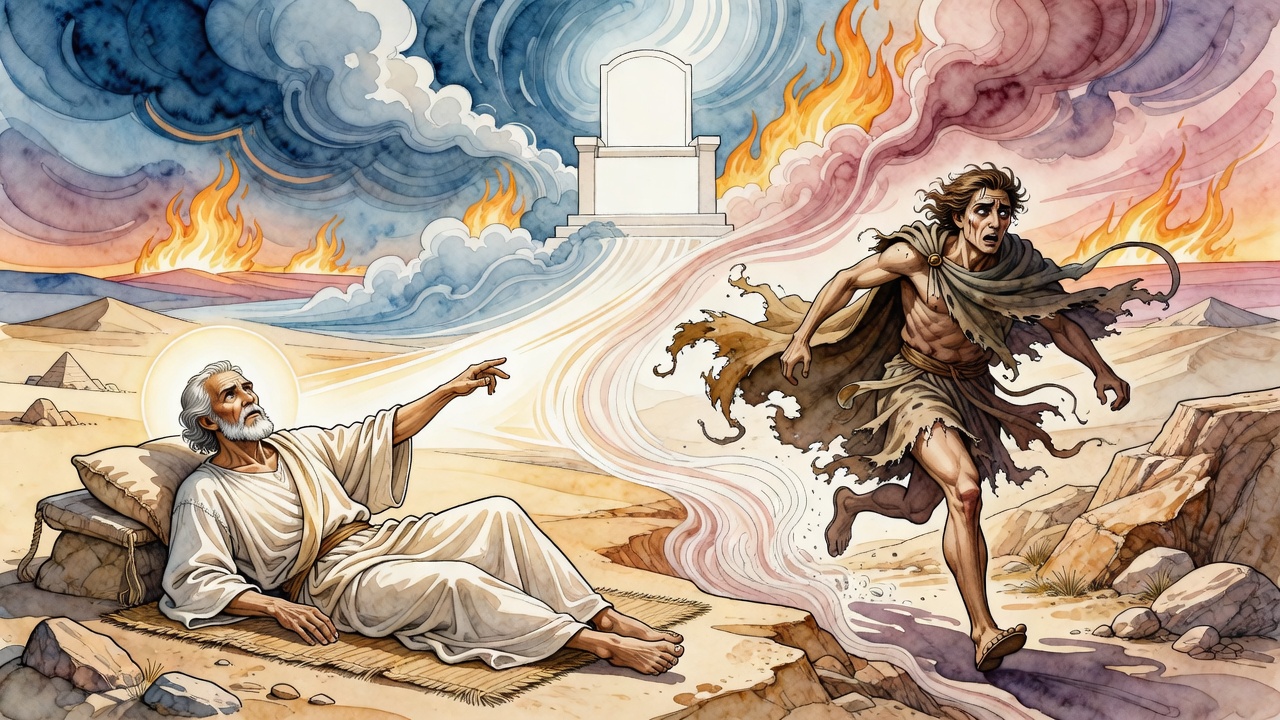
He had already put up the altar and planned the wall. Then an angel handed him everything that would happen to his sons, and told him to leave.
Table of Contents
 Click for full size
The Place He Meant to Make Permanent
Jacob came back to Bethel a rich man with a limp, and he decided to stay.
He had slept on that ground once before, on the worst night of his life, running from a brother who had promised to kill him, with a stone under his head. Now he was back with herds and wives and sons, and he set about doing what a man does with ground that has proved holy. He built an altar. He planned a wall around a courtyard. He meant to make the place a sanctuary that would stand forever, and to live the rest of his life beside it.
God spoke to him there and blessed him and told him again that nations would come out of him, and then went up. Jacob stood and watched until there was nothing left to watch.
Seven Tablets in an Angel's Hands
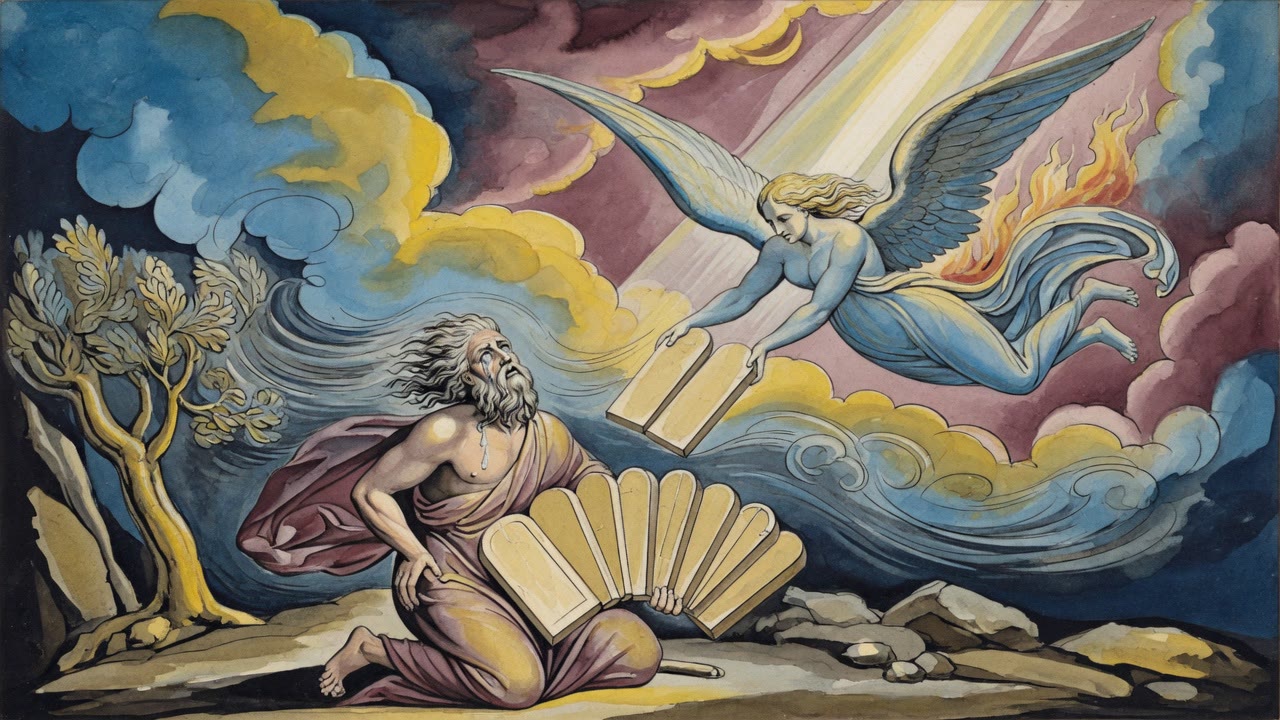
That night an angel came down through the same air, and Jacob received seven tablets from its hands.
Jacob read them. What was written on them was everything that would happen to him and to his sons through all the ages, from the field he was lying in to the end of the count, and when he had finished reading he knew it all.
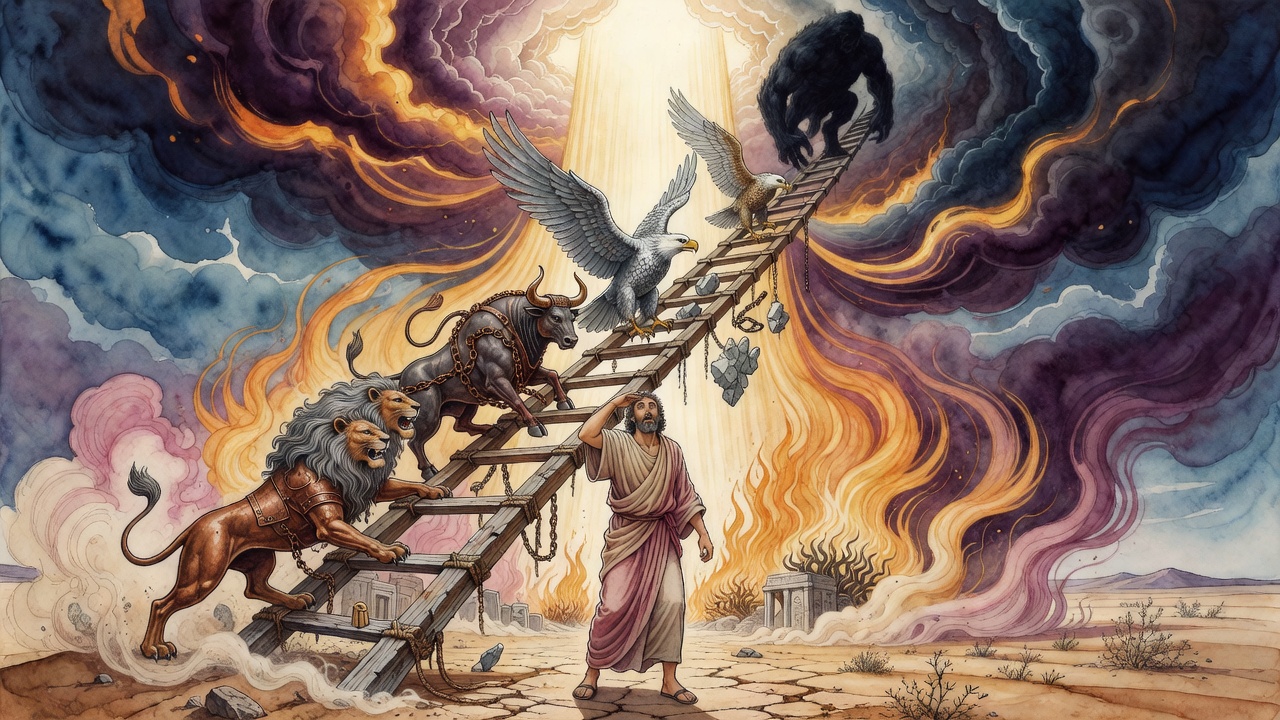
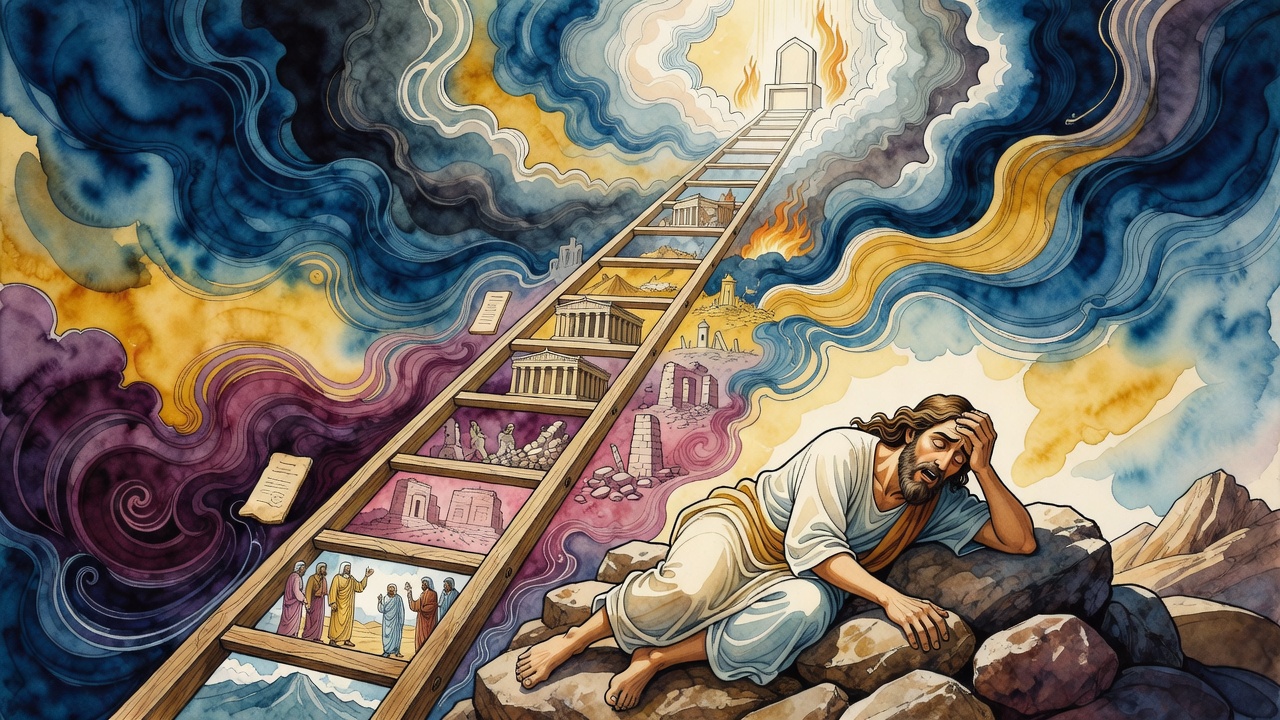
Some of it he had been shown already, the first time he slept at that place, in pieces and out of order. A mountain in the desert wrapped in smoke, where his descendants would be handed a law. Elijah going up out of the world without dying. A Temple standing in its full weight of gold, and the same Temple stripped and gutted. A furnace in Babylon with three young men standing inside it. A man refusing to bow to an idol called Bel. He had been promised the ground under his body that night, all of it folded up small so that he could lie on the whole land at once, and he had been told his children would be like the dust of the earth, which outlasts everything that walks on it and gets walked on by everything.
The tablets did not soften any of that. They filled it in.
Not This Place
Then the angel showed him what was written and said the one thing he had not braced for.
"Do not build this place," the angel said. "Do not make it an eternal sanctuary, and do not dwell here. This is not the place. Go to the house of your father and stay with Isaac until the day he dies."
Jacob had just been handed the entire future of his line, and the single thing he wanted out of it was struck through. A house for God on the ground where God had spoken to him twice. He had seen the Temple standing in the tablets. It would be built, and it would be built somewhere else, by a man not yet born, and then it would be pulled down.
The angel went back up with the tablets before morning. In the morning Jacob took the road south to his father.
The Brother Who Would Not Wait
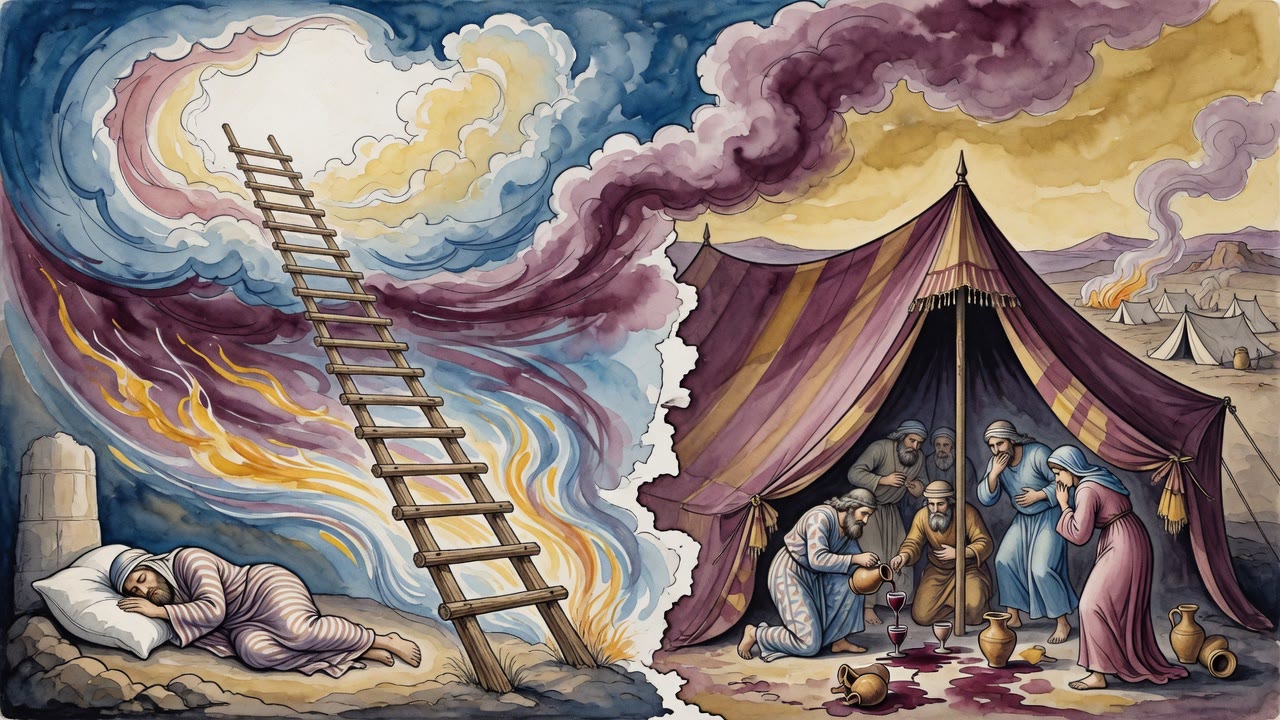
Isaac had blessed him once before, in a tent, with a borrowed voice and a goatskin on his arms: dew of heaven, fat of the earth, corn and wine. Good things, and small ones beside what came after. The blessings that reached him at Bethel were the foundations of the world, and they held in this world and the next one, and the blessing of Abraham came bound in with them.
His brother never learned to wait for the end of anything. Esau ate what he killed on the day he killed it and shared none of it with anybody. He came in from a hunt once having caught nothing at all, found Jacob at a pot of red lentils, and said, "Let me gulp down some of that red stuff." Jacob looked at him. He had come out of their mother red, and here he stood, red, wanting red. The name stuck to him from that afternoon on. Edom.
The Portions He Dealt Out in Egypt
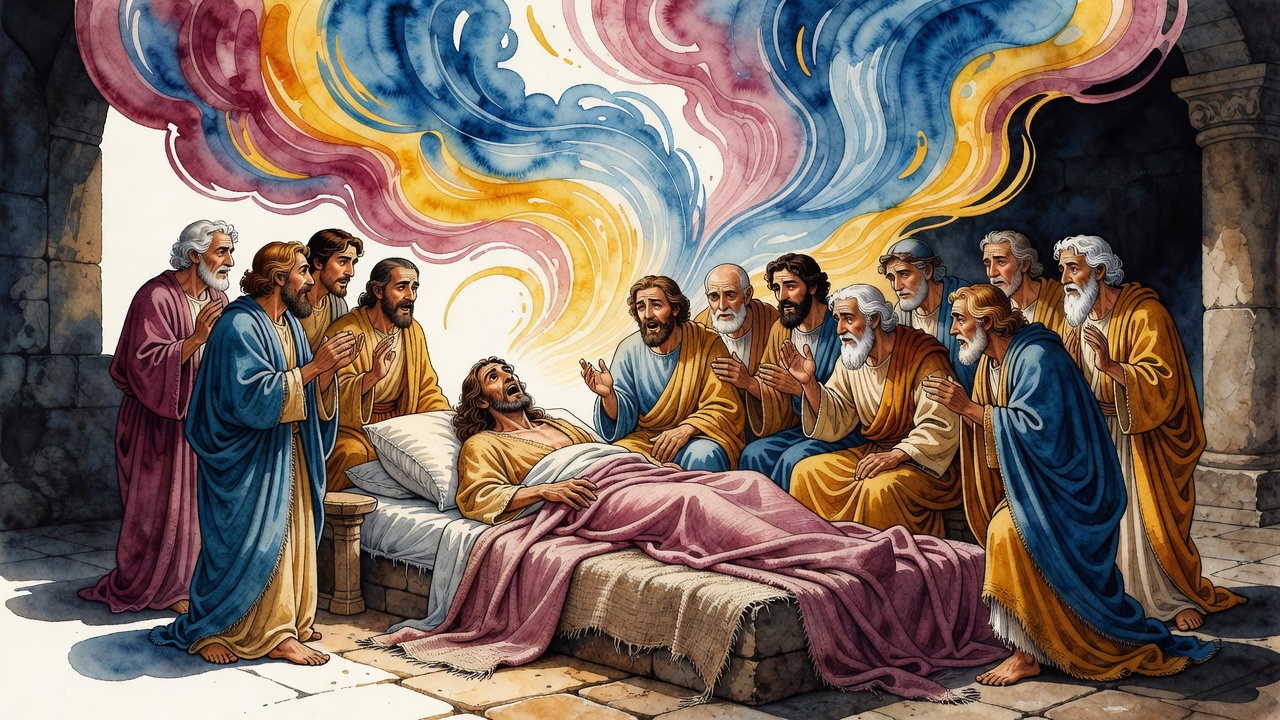
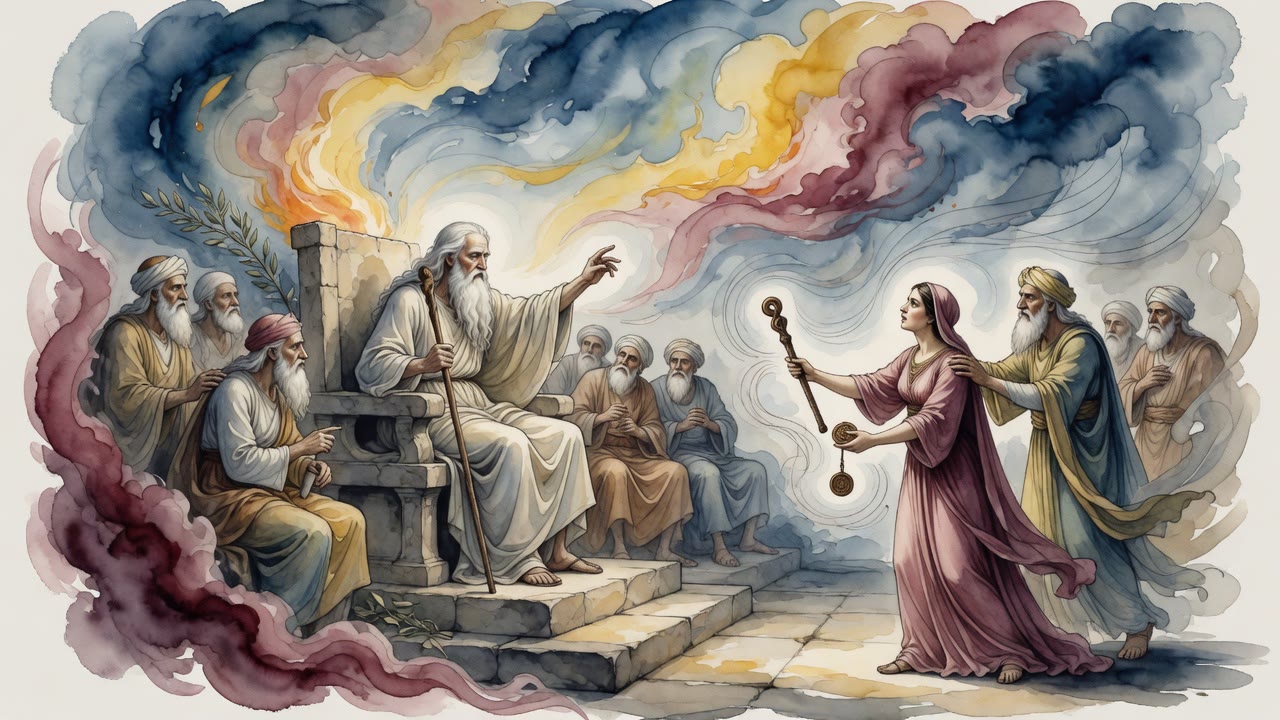
Decades later Jacob lay dying in Egypt with his sons around the bed, and he began handing out what he had read.
He started with the rebukes. Simeon and Levi got theirs together, and a sentence with it, that he would divide them and scatter them. Even so he did not send those two away empty. Out of Simeon would come the teachers and the beadles the whole country needed, and out of Levi the scholars who would explain the law and rule on it.
The rest of the sons watched three brothers get taken apart and started edging toward the door. Judah edged fastest. He had the matter of Tamar behind him, and it had been public, and he could see it coming.
What came instead was his own name. "Judah, you deserve your name," his father told him. "Your mother called you Yehudah because she gave praise at your birth, and your brothers will praise you, and they will all call themselves by your name." Because he had confessed his sin out in the open, his descendants would confess theirs out in the open too, and be heard. He had the nerve of a dog and the courage of a lion. He had pulled Joseph out of a pit and pulled Tamar back from the fire.
Then came the last of it, the part at the end of the tablets. Rulers would not stop coming out of Judah's house and teachers of the law would not stop coming out of his line until a descendant arrived whom all the peoples would obey. Jacob described the man the way someone describes a thing he has already seen. Loins girded, walking out to fight. No king able to stand in front of him. The mountains dyed red with the blood of his enemies, and his clothes like the clothes of a man treading a winepress. His eyes clearer than wine, because they would never look at bloodshed or filth. His teeth whiter than milk, because they would never bite anything taken by force.
He had read all of it on one night at Bethel, off tablets an angel carried back up before the sun came, in the same hour he was told to pack up and go.
← All myths