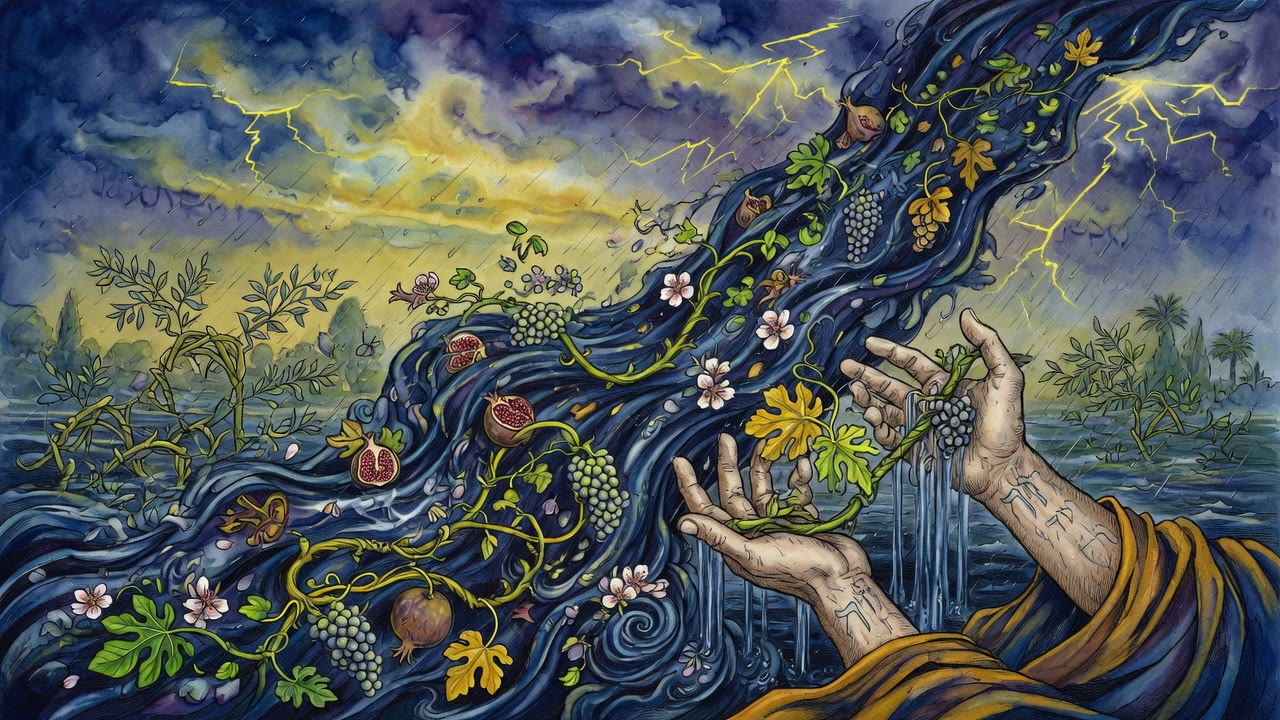
Noah Planted Eden's Vine and Drank a Prophecy About the End of Days
The ground was barely dry. Noah set a cutting from Eden into it. Satan walked up with a lamb, a lion, a pig, and a monkey.
Table of Contents
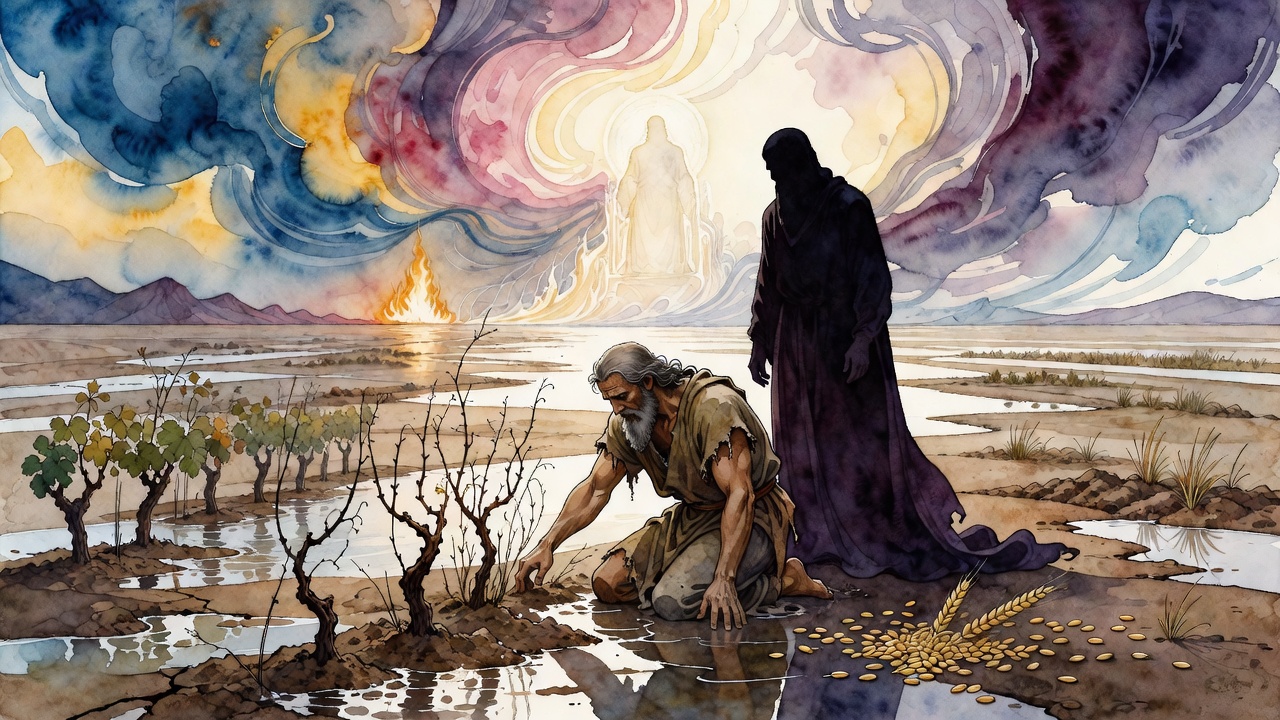
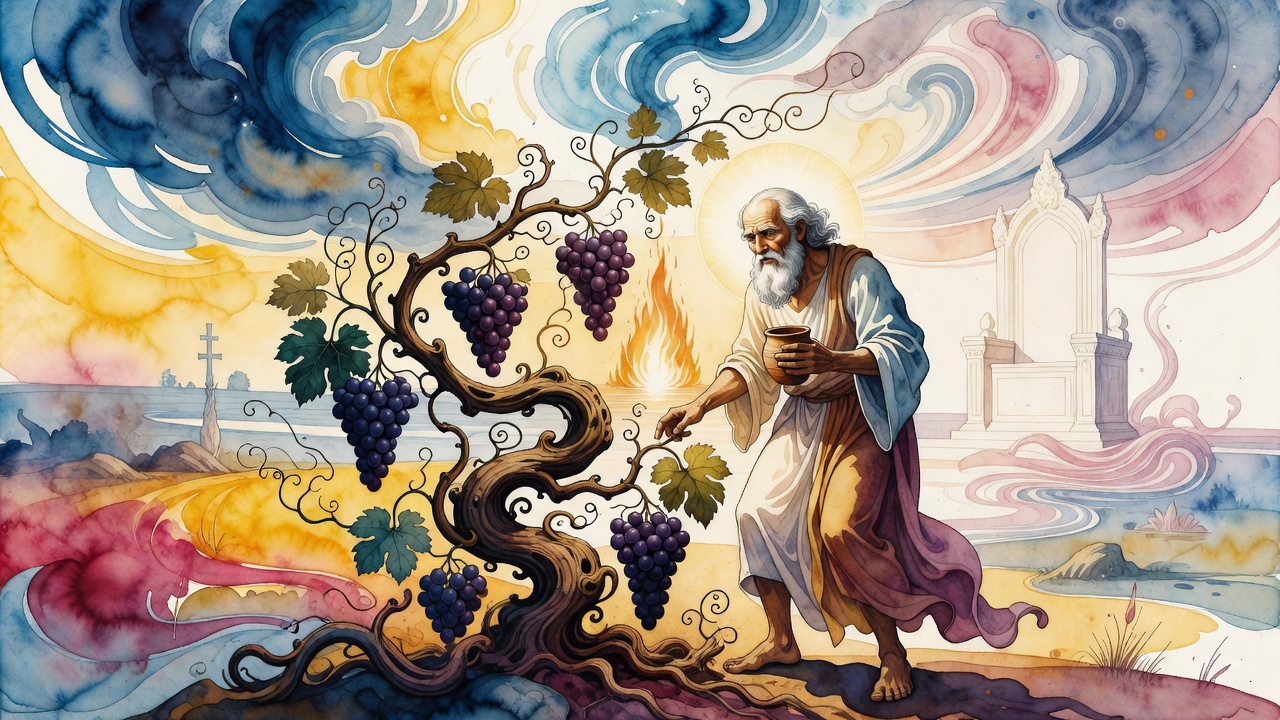
The mud still held the shape of the water. Noah pressed a cutting into it before he set a single stone for a house.
 Click for full size
The cutting had ridden the ark in a wrap small enough to hold in one hand. Adam had taken it through the gate of the Garden when he was driven out. Not a fruit. Not a whole tree. A piece of the vine that had grown at the divine table. Father handed it to son until it reached the man who had watched the world drown. For a year it floated above the graves of everyone else. Now the ground was back, and Noah put Paradise into it.
Satan Stopped Beside the Hole
Satan, the Accuser who works the heavenly court, came along the new earth as if he had been walking the whole time. He stood over the hole.
"What is it thou art planting here?"
"A vineyard," Noah said.
"Let me be partner in this work."
Noah asked what a partner like that would bring. Satan did not offer a stake or a blessing. He offered blood.
Four Beasts under the Roots
He slaughtered a lamb, a lion, a pig, and a monkey, and ran their blood under the vine while the roots were still white. He named what the cups would do. Before a man drinks he is gentle as a lamb. After a little he is bold as a lion. After more he wallows like a pig. After more he is a monkey, dancing, singing what he should not sing, and he does not know his own mouth.
Noah did not send him away. The partnership held. The blood went into the ground with the cutting from Eden, and from that hour wine carried those four creatures in it.
From Planting to Shame in One Day
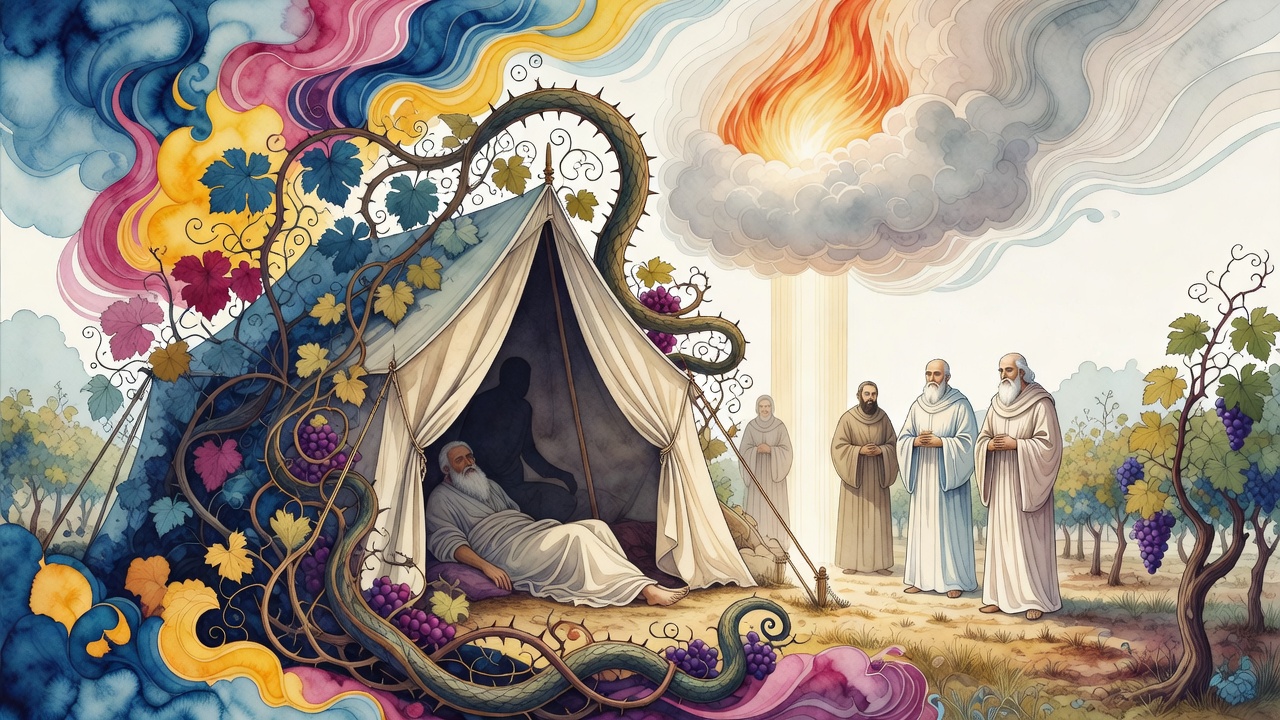
The vine did not wait for a season. It fruited the same day it was planted. Noah pressed the grapes. He drank. The man who had been called pious became, in a few hours, a man of the ground. The fire of that first wine was larger than his body. What he drank was more than wine. A prophecy about the end of days poured through him, a comforter's vision his body could not hold. He stripped. He lay uncovered in his wife's tent, undone, mouth open on a world that had just begun again.
Ham found him there and looked. He did not cover his father. Shem and Japheth took a garment, walked backward, and laid it over the nakedness they would not stare at. The flood had ended in a rainbow (Genesis 9:13). The first afternoon of dry ground put shame back inside a family tent.
The Name They Hid from Sorcerers
His grandfather Methuselah had given him two names. Menahem (מנחם), comforter, was the name spoken in the street, because that generation worked sorcery and a true name could be used as a hook. Noah was kept back. Menahem is a comforter's name, a messiah's kind of title, the hope that a child might console a cursed ground. He had been born already circumcised. God had told Adam the curse on the soil would last until a male child arrived who did not need the knife, and Noah was that child. People had waited for him as if a prophet were coming. He had come. He had saved a remnant. Then he planted a vineyard and could not stand up in his own tent.
Blood for Blood, and a Father Teaching Law
After the water, the rules of the world changed. Adam had not been given meat for pleasure. Noah's children were. A new line arrived with the permission. No limb torn from a living animal. And a harder line: "From every beast I will demand it, and from man" (Genesis 9:5). Blood would be required for blood. A man could not spill himself as if his life were his own coin.
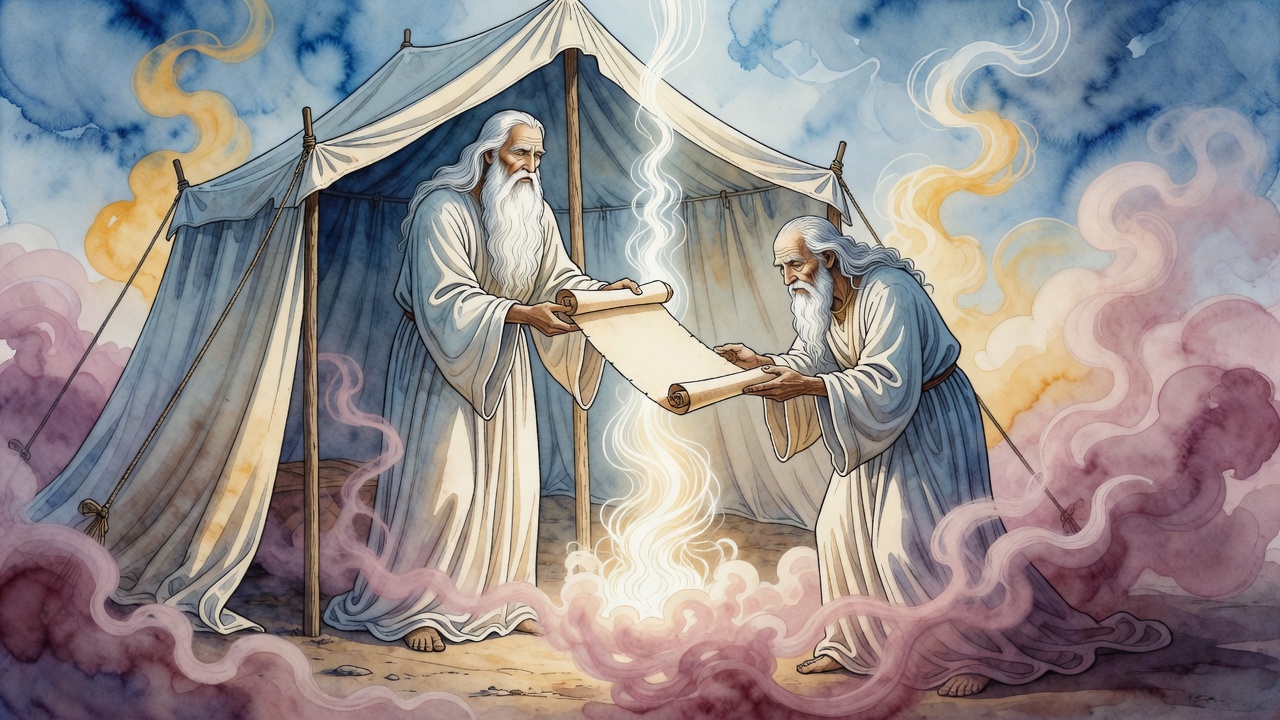
Noah gathered his sons before they scattered. He spoke like a prophet to a family of eight. He warned them against the old sins that had brought the water: sexual immorality, impurity, the small jealousies that grow into killing. He told them to leave a fruit tree untouched for three years, and in the fourth to keep the fruit for holy use. He was trying to build a covenant the later ages would still call Noah's, a first template, while the stain of the four bloods was still wet under the first vine.
The comforter had replanted Eden. The Accuser had watered it. The children had to cover their father with a garment and then sit still for the law.
← All myths