Moses Saw Sodom's Destruction and Jerusalem's Glory in the Same Glance
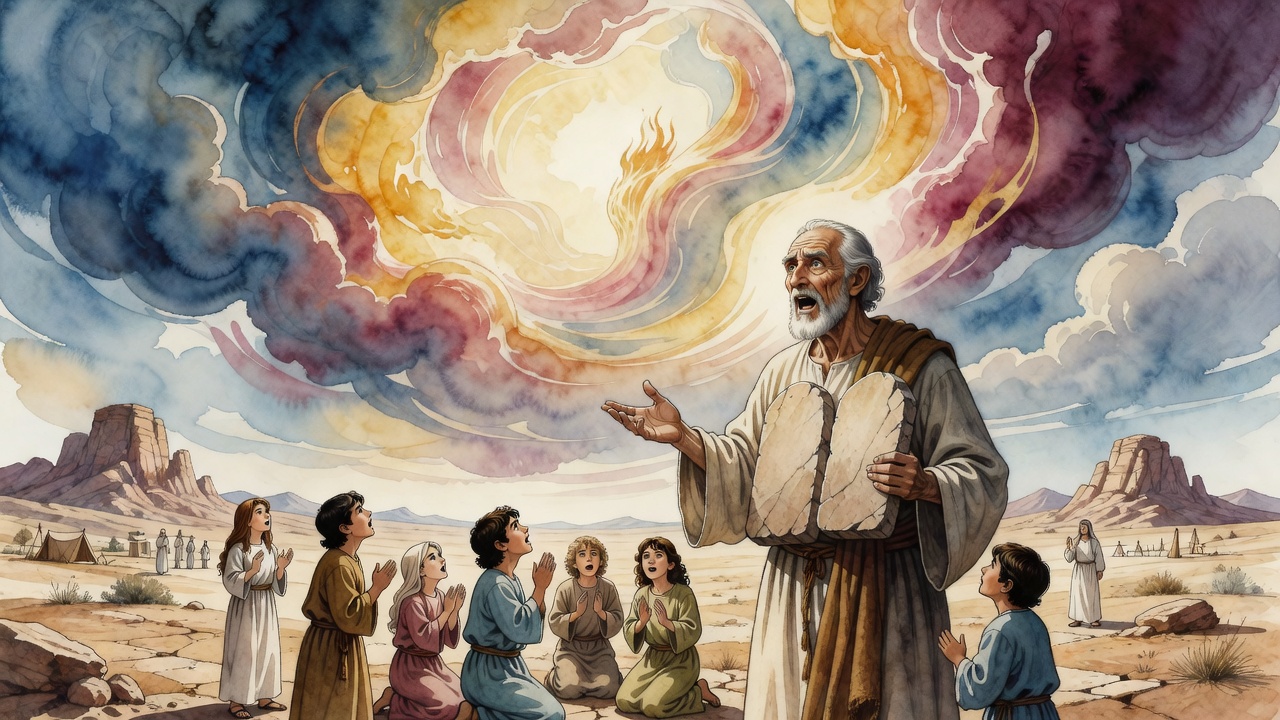
From Mount Nebo, God showed Moses two moments the plain below had witnessed: the cities consumed by fire and the dynasty that would make the same ground holy.
Table of Contents
 Click for full size
The Plain That Remembered Everything
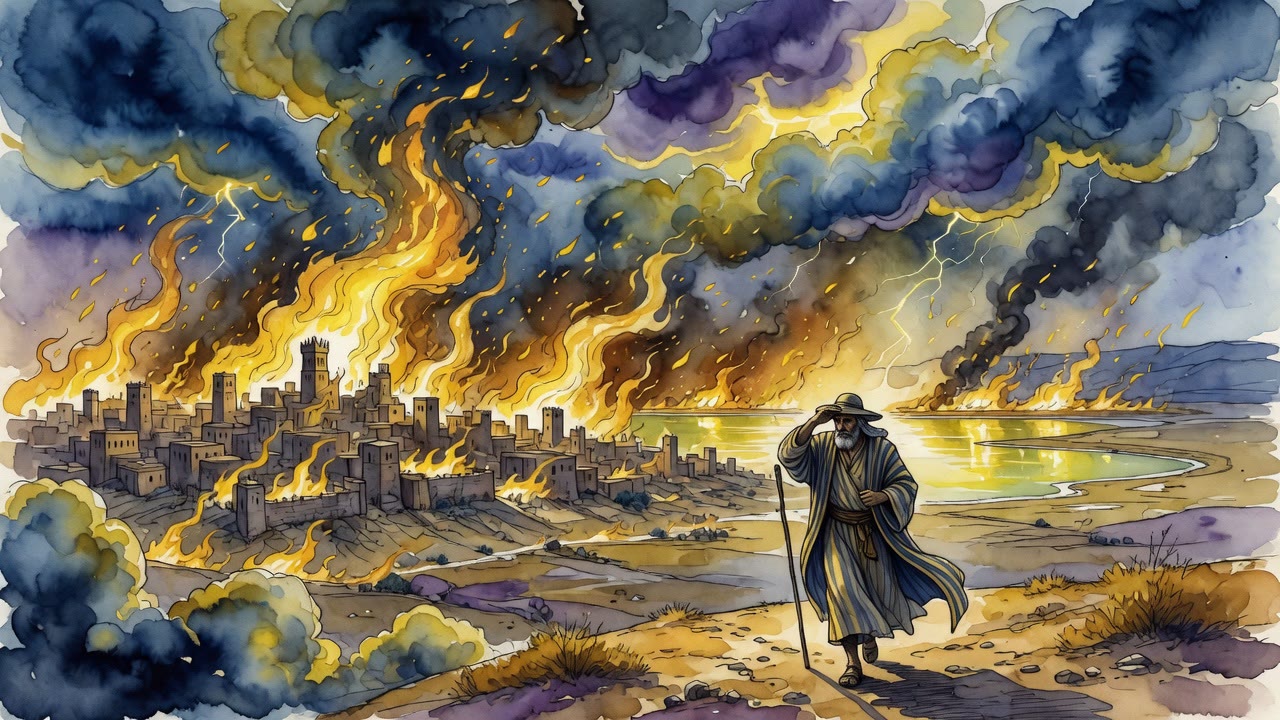
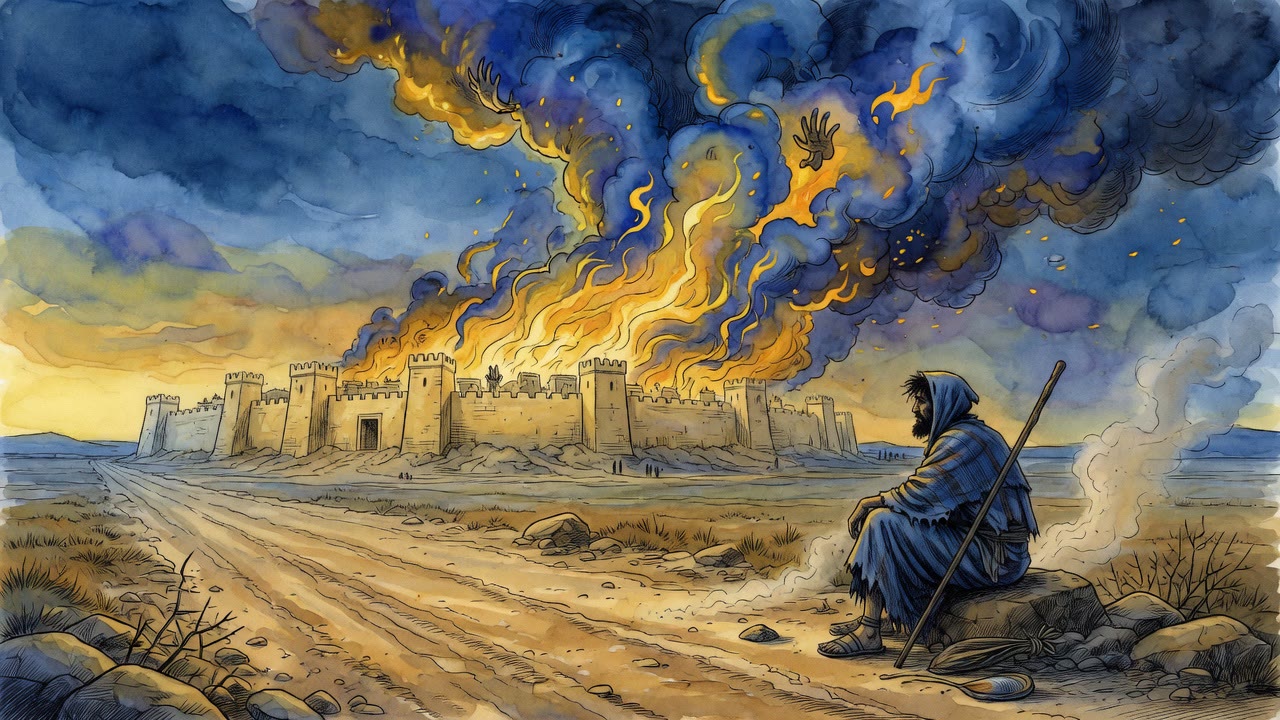
The Jordan valley below Moses was not neutral ground. It had been Sodom's valley, the well-watered plain that Lot had chosen when Abraham gave him first pick of the land, the place that had looked like Egypt before the fire came. By Moses' time it had been scorched and salted and reshaped. The southern end of what would become the Dead Sea marked where the cities had stood. The plain still bore the memory of what had happened to it.
God showed Moses this memory as part of the final vision on Nebo. Sifrei Devarim takes the phrase and the plain from Deuteronomy 34:3 and reads it as more than topography: we are hereby taught that He showed him the overturning of Sodom and Amorah. The destruction was ancient by Moses' day, something that had happened in Abraham's generation, more than four hundred years before. But from the mountain, Moses saw it again as if present. The plain was still marked by it. The vision was historical and geographical simultaneously.
Why Sodom Belongs in Moses' Final Vision
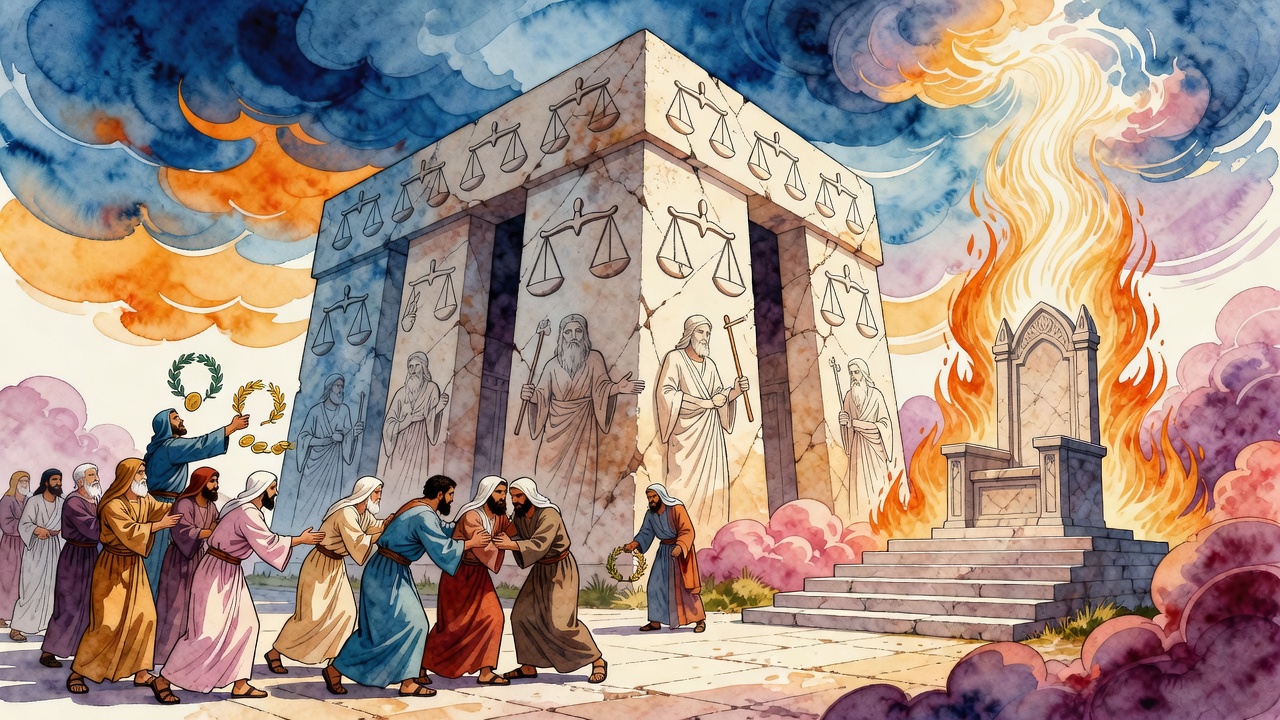
Sodom's destruction was not random. The tradition is precise about the cause: the city had institutionalized cruelty to strangers. It had taken the treatment of the outsider, the undefended, the person with no local claim, and turned hostility toward them into civic policy. The judges of Sodom ruled against the stranger as a matter of law. The city that welcomed no one was consumed by fire in a demonstration that the treatment of the unprotected has consequences that outlast the civilization that practiced it.
Moses stood on Nebo and saw that fire. He had spent forty years leading a nation of former strangers, people who knew what it was to be undefended in a foreign land, people who had built cities for Pharaoh without rights or recourse. The destruction of Sodom was not a story from someone else's history. It was the story of what happens when the lesson Israel was supposed to embody is refused and its opposite is systematized.
David and Solomon in the Same Vision
The Sifrei does not stop at Sodom. The same vision that showed Moses the cities burning showed him the Davidic kingdom rising. David's conquests. Solomon's Temple. The moment when the same plain that had been Sodom's territory became part of the inheritance of the dynasty that would make Jerusalem the center of the world. Moses saw both: the destruction that marked the land before Israel arrived and the glory that the land would hold after Israel settled it.
The pairing is theological. What makes the Davidic kingdom meaningful is not just its power or its architecture. It is the contrast with what came before, with the Sodom-logic of cruelty to strangers that God had burned away so that something else could grow on the same ground. Solomon's Temple on the Temple Mount, which the vision also included, was the architectural statement of what the land was for: not to be held by those who excluded the vulnerable but to be the place where the covenant was kept, where the stranger was welcomed, where the law that protected the powerless was observed.
The King's Successor
The tradition about Sodom and the king draws on earlier stories in which kings of the region tried to test or challenge the divine order that governed Sodom's territory. Those encounters never ended well for the kings who pressed them. The plain had been contested ground from Abraham's time, when he had pursued armies to rescue Lot and negotiated with angels about the fate of the cities. Moses seeing this history from Nebo was Moses understanding the full arc of what that ground had meant and what it would mean.
← All myths