6 min read

Joseph's Dream and the Six Hundred Thousand Who Would Come

Midrash Tehillim on Psalm 45 contains a remarkable statement from Rabbi Elazar: in the messianic future, every single Israelite will have descendants as numerous as those who left Egypt at the Exodus, six hundred thousand. This tradition reads Joseph's dreams not as personal ambition but as a vision of exponential blessing written into the DNA of the covenant.

Table of Contents
  1. Joseph and the Dreaming That Made It Possible
  2. The Number Six Hundred Thousand and Its Sacred Weight
  3. How Does Suffering Become Exponential Blessing?
  4. What the Messianic Future Looks Like Through This Lens

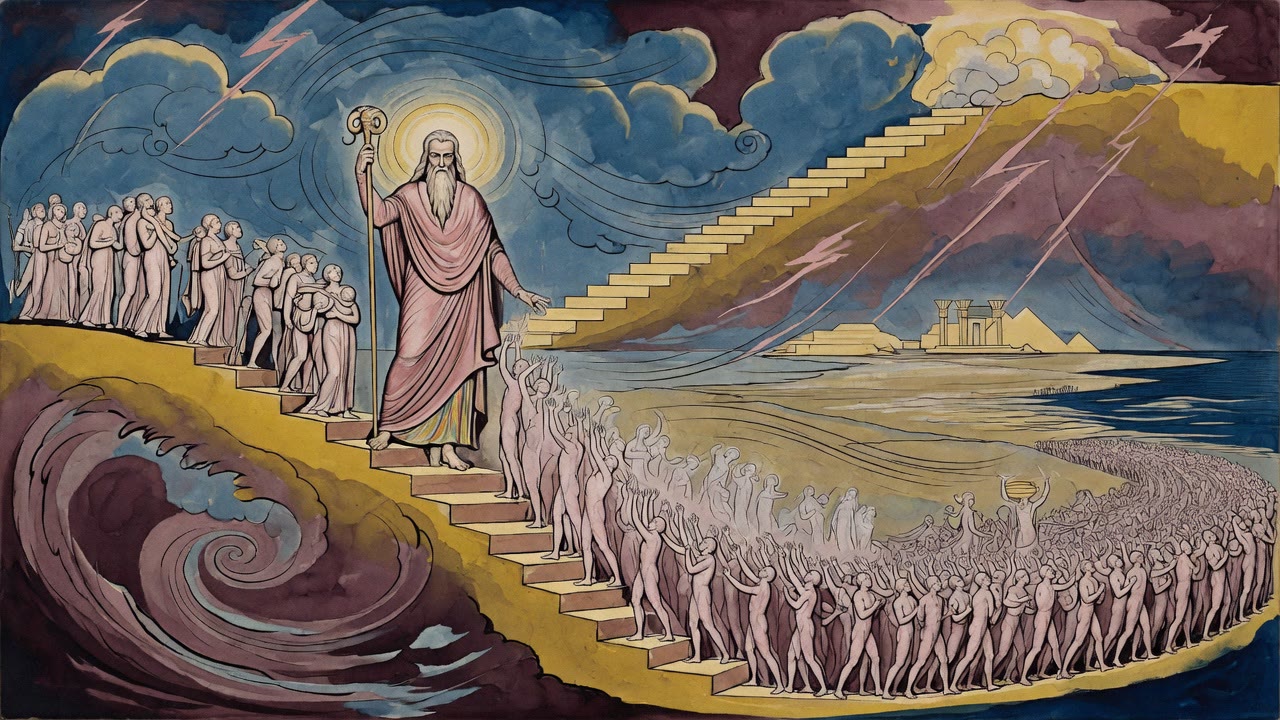
Six hundred thousand Israelites crossed the sea when Egypt collapsed. That number runs through Jewish liturgy, Jewish law, and Jewish memory like a kind of sacred fixed point: the founding population of the covenant people at the moment of their freedom. Now imagine, says Rabbi Elazar in Midrash Tehillim, that in the future every single person from Israel will have descendants as numerous as that original six hundred thousand. Every one. Exponential beyond calculation.

The verse he builds this from is Psalm 45:17: your children shall be under your fathers. A genealogical statement, on the surface. But Midrash Tehillim, the collection of rabbinic interpretations on Psalms compiled across several centuries of late antiquity, reads genealogical statements as prophetic ones. The children who will come are not only biological descendants. They are the fulfillment of what the fathers were promised.

Joseph and the Dreaming That Made It Possible

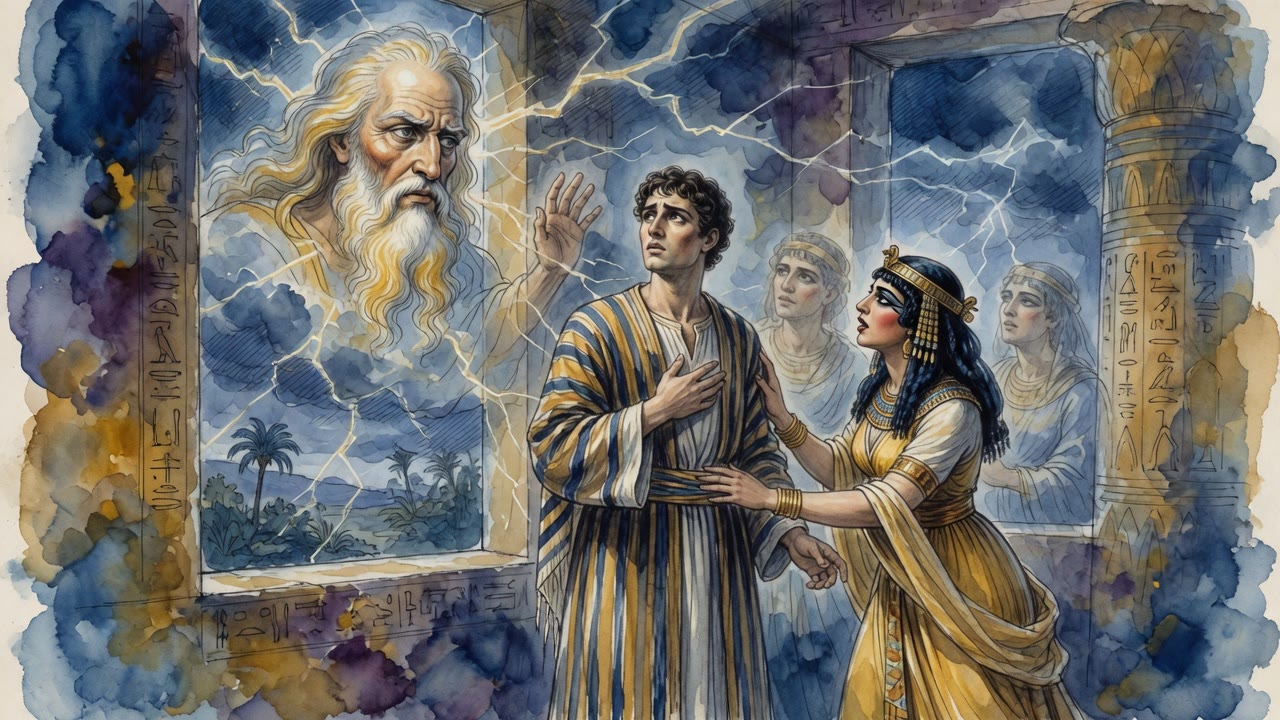
The connection to Joseph is not incidental. Psalm 45 is associated in the midrashic tradition with the Joseph story in multiple registers. Joseph's dreams of the sheaves bowing down, of the sun and moon and eleven stars bowing, are not only about his brothers' submission. The Legends of the Jews, Louis Ginzberg's compilation from sources spanning the second through twelfth centuries, describes Joseph's dreams as cosmic: he saw a configuration of heaven and earth that described not only his personal future but the structure of the covenant's unfolding through history.

The Psalm's royal imagery, the king whose throne endures forever, the anointing with oil of gladness, the daughters who are princesses, connects in the midrashic imagination to Joseph as the paradigm of the righteous ruler whose authority comes from divine appointment rather than human ambition. Joseph did not scheme for his position in Egypt. He was placed there. Every act of his administration, the gathering of grain, the distribution during famine, the management of Pharaoh's household, was oriented toward sustaining life for the sake of the covenant's future.

The 3,205 texts of the midrash-aggadah tradition contain a striking teaching: Joseph's management of Egypt's grain was not primarily about Egypt. It was about ensuring that Jacob's family would survive, that the twelve tribes would not starve before they had a chance to grow into a nation. Every kernel of grain that Joseph stored was, in the midrashic view, a seed for the future six hundred thousand who would leave at the Exodus.

The Number Six Hundred Thousand and Its Sacred Weight

Rabbinic tradition assigns enormous significance to the number six hundred thousand. The Torah has 600,000 letters, according to one tradition, and each letter corresponds to a soul at Sinai. Every Israelite who stood at the mountain was a letter in the Torah. Every letter is a soul. The correspondence is not metaphorical but structural: Israel and Torah are the same thing arranged differently.

The Zohar, composed in thirteenth-century Castile, Spain, elaborates this into a full theology: the divine light contracted to make room for the world, the Torah emerged as the blueprint of that world, and the 600,000 souls of Israel are the living expression of the Torah's inner structure. Rabbi Elazar's statement in Midrash Tehillim that each of those souls will in the future produce descendants equal to the original 600,000 is not a demographic fantasy. It is a claim about the covenant's capacity for multiplication.

Joseph, who produced two sons, Ephraim and Manasseh, who became two full tribes, who doubled the count of the patriarchal inheritance, is the template for this multiplication. His loss, his pit, his prison, his years of servitude in Egypt, did not reduce what he produced. They amplified it. The suffering was absorbed into the covenant's generativity rather than consuming it.

How Does Suffering Become Exponential Blessing?

The question the midrash implicitly raises is the hardest one in the Joseph story: how do the pit and the prison become the palace? How do seventeen years of suffering produce a position from which the entire world was fed? Midrash Tehillim's answer to Rabbi Elazar's vision of exponential future blessing is that the multiplication is not disconnected from the suffering. It flows directly through it.

Joseph's two sons, Ephraim and Manasseh, became full tribes because Joseph was exiled. If he had stayed in Canaan, he would have inherited a portion like any other son of Jacob, a fraction of the land divided eleven ways. Because he went down to Egypt, because the pit and the prison preceded the palace, he became the administrator of the world's food supply at the moment the world was starving. And because of that position, his two sons received the inheritance of a firstborn, a double portion, a multiplication of what any single son of Jacob would have received in ordinary circumstances.

The Mekhilta de-Rabbi Ishmael, the tannaitic midrash on Exodus compiled in the second century CE in the school of Rabbi Ishmael, connects Joseph's bones being carried out of Egypt at the Exodus to the covenant's self-completing nature: what goes down must come up, what is hidden must be revealed, what is lost in one generation is found multiplied in the next. Moses himself carried Joseph's coffin because Joseph had made Israel swear they would take him home. The going-down and the coming-up are one arc.

What the Messianic Future Looks Like Through This Lens

Midrash Tehillim connects Rabbi Elazar's statement to the verse's specific grammar: your children shall be under your fathers. The fathers here are the patriarchs, Abraham, Isaac, Jacob, and by extension Joseph. The children are all subsequent generations. To be under the fathers is not to be diminished by them but to be supported by them, rooted in them, protected by their merit and oriented by their direction.

The 2,921 texts of Midrash Rabbah describe the patriarchal merit as a structural force in history: when Israel is in danger, it is the accumulated goodness of the founding generation that acts as a counterweight. Joseph's righteousness in Egypt, his refusal to betray Potiphar's trust, his compassion for the prisoners, his truthful interpretation of Pharaoh's dreams, these actions did not disappear when Joseph died. They entered the covenant's account and remained available.

The vision of every Israelite producing 600,000 descendants is ultimately a vision of what happens when that account is fully drawn upon, when the accumulated merit of every righteous act from Abraham's hospitality to Joseph's prison interpretations to Moses's intercession at Sinai is expressed in the fullness of the covenant's blessing. The dreams Joseph dreamed as a seventeen-year-old shepherd were not about brothers bowing. They were about this: a people so multiply blessed that no number available in ordinary language could describe the fullness of what the covenant had always intended.

← All myths