No One Had Ever Thanked God Until Leah Named Her Fourth Son
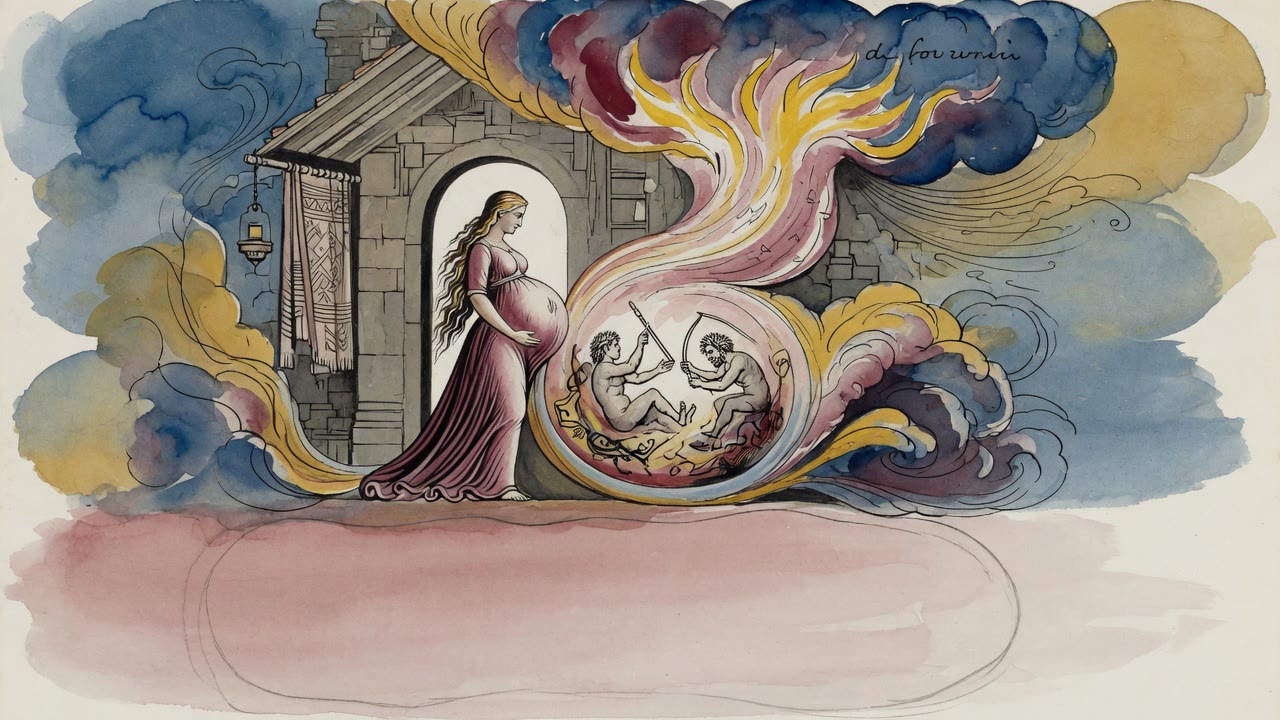
Jacob would have four wives and twelve sons. Three apiece was Leah's portion and she already had hers. Then a fourth boy came, and she counted.
Table of Contents
 Click for full size
Three Names Out of One Wound
Leah named her sons the way a person presses on a bruise to see whether it still hurts.
The first she called Reuben, because the Lord has seen my affliction, and the affliction she meant was that her husband had gone to sleep beside her sister and woken up beside her, and had never once looked at her the way he looked at Rachel. The second she called Simeon, because the Lord has heard that I am hated. She used the word. Nobody in the tent argued with it. The third she called Levi, because now, surely now, after three sons, my husband will be joined to me.
Three names, three petitions, and Jacob's tent still pitched where it had always been pitched, nearest to Rachel.
The Arithmetic in the Tent
Leah knew the number. Everyone in that household knew it. Jacob would have four wives, and out of the four would come twelve sons, and twelve divided among four is three.
Three was her portion. She had received it in full. Whatever else the years held for her, the account was settled and closed and there was nothing outstanding, and a woman who has been handed exactly what is owed her has no particular reason to say anything about it.
Then she went into labor a fourth time.
The Priest at the Threshing Floor
A priest walks down to the threshing floors at harvest to collect what the law assigns him. The farmer meets him at the edge of the heap, measures out the portion set aside from the crop, adds the tithe on top of it, and hands both across. The priest takes them, loads them, and goes. He says nothing. Nothing has happened that requires him to say anything. The grain was never the farmer's to keep.
Now the same priest at the same floor, and the farmer measures out the portion and the tithe, and then reaches back into his own heap and adds a basket that no law obliges him to give.
The priest opens his mouth on the spot.
This Time I Will Thank
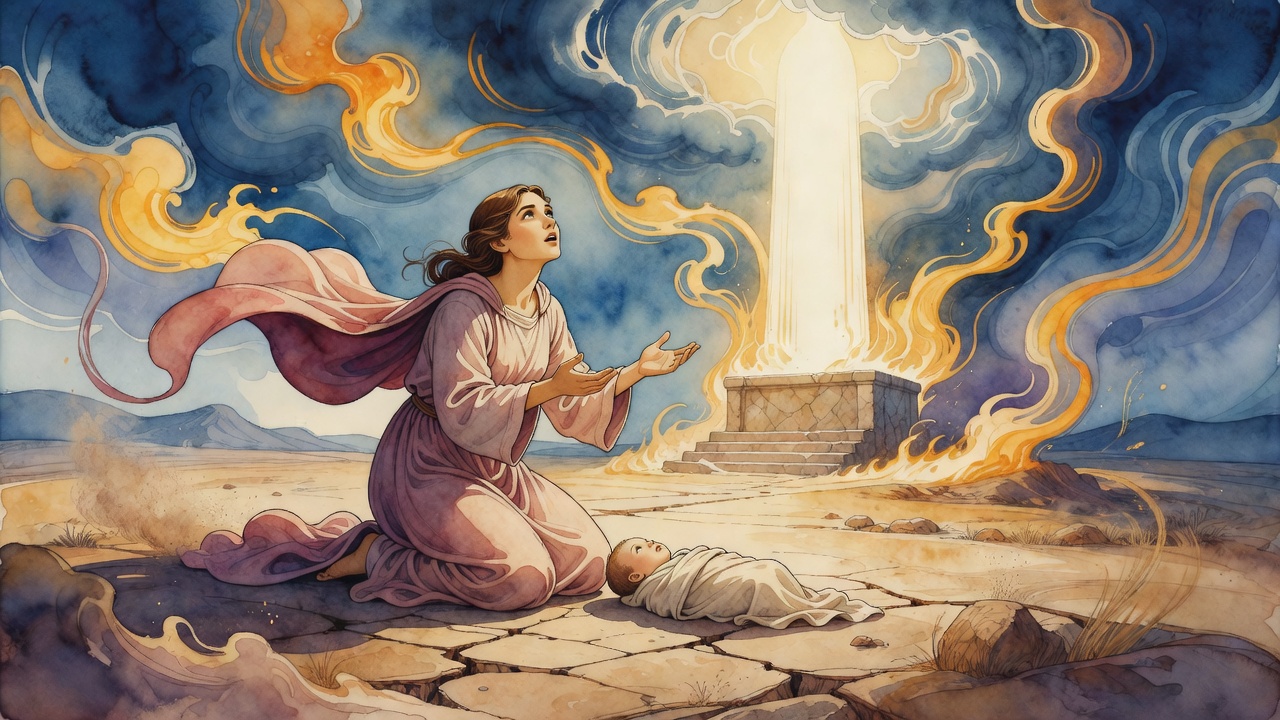
The boy was born and Leah held him and did the sum again, and it came out the same both times. Four. One more than had ever been hers to expect.
"This time I will thank the Lord."
She called him Yehudah, and the word for thanks sat inside the name where anyone could hear it, and from the day the Holy One finished making the world down to that afternoon in a tent in Haran, no human being had ever done what she had just done. Adam had not. Noah had not. Abraham, Isaac, Sarah, Rebekah, none of them. People had begged, argued, bargained, wept, and sworn. People had built altars out of terror and out of relief. Leah, who had spent four confinements measuring herself against her sister and coming up short every time, was the first one to stop counting long enough to say thank you.
See the Difference Between My Son and His
Later, holding the account she had kept her whole life, she named the one entry she was proud of.
"Look at the difference between my son and my father-in-law's son."
Her Reuben had his birthright taken off him by force and handed to the sons of Joseph, and he never turned on the boy for it. When his brothers stood over the pit at Dothan deciding whether to kill Joseph, Reuben heard them, and he pulled Joseph out of their hands.
And Esau, who sold his birthright himself, of his own will, for a bowl of red stew he could have gone without, hated his brother for the rest of his life over the thing he had sold.
One man was robbed and stayed a brother. The other made the sale himself and never forgave anyone for it. Leah, who had been handed to a man who did not want her and had counted every son since, could tell the difference between the two, and she said so out loud, and the son she said it about was the one she had thanked God for.
← All myths