Elijah the Prophet Still Bridges Heaven and Earth
Elijah never died. He was taken to heaven in a whirlwind and has moved between worlds ever since, present at every seder, every circumcision, every crossing.
Table of Contents
 Click for full size
The Whirlwind That Did Not Return Him
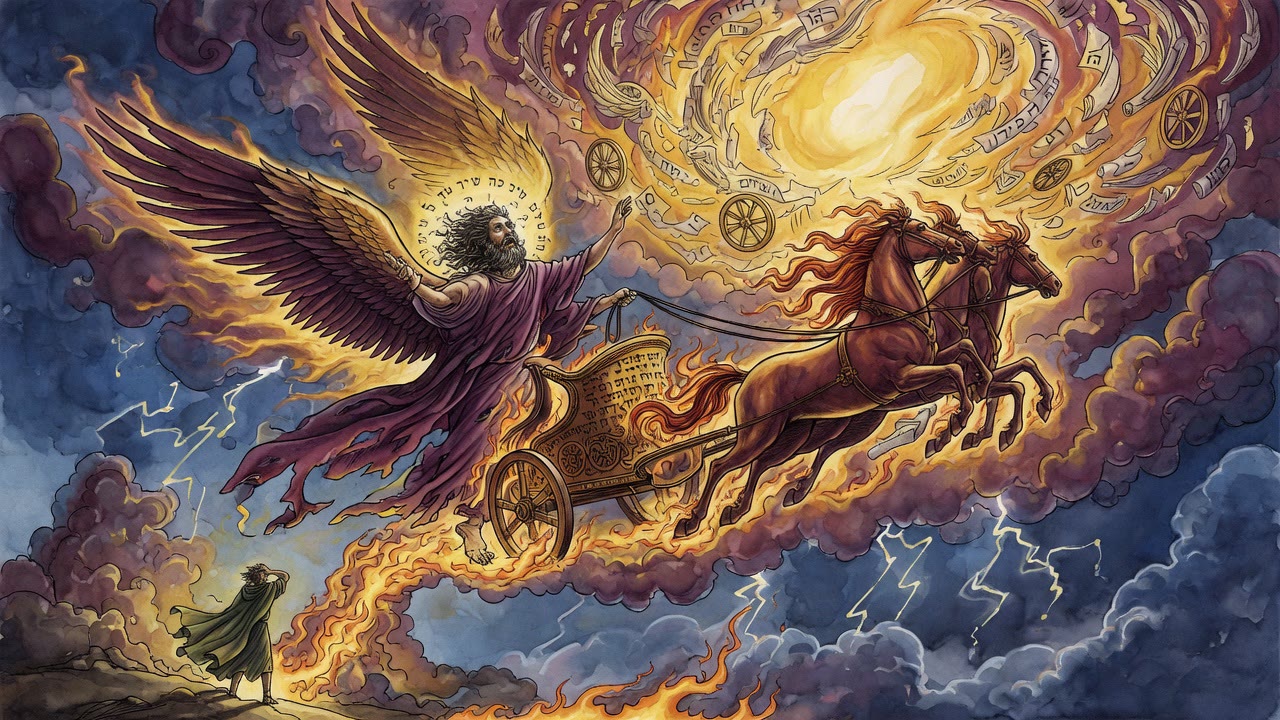
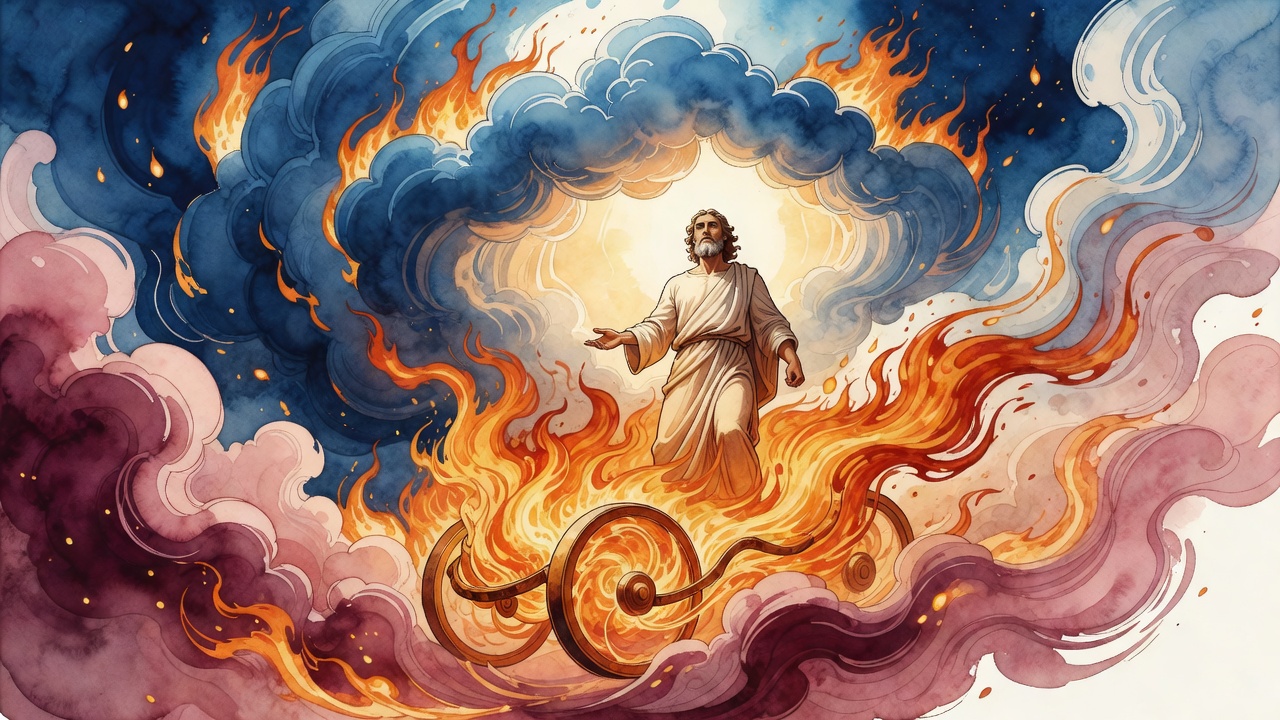
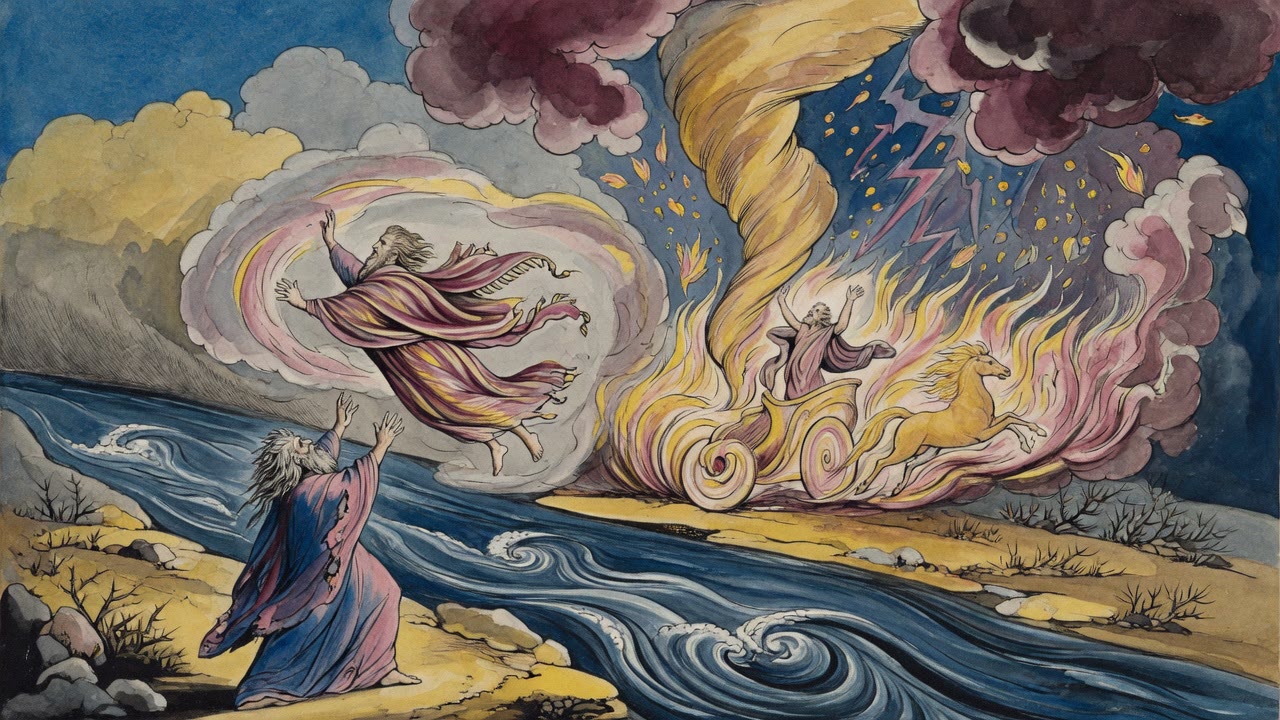
The chariot came for Elijah at the Jordan. Elisha watched it happen: horses of fire, a chariot of fire, and then a whirlwind that took his master up. Not death. Not burial. A crossing in the body, still breathing, still flesh, into the place where breathing has a different meaning. Elisha tore his garments and picked up the cloak that fell. He was the only witness, and what he witnessed was not an ending but a transformation of category. Elijah had become something the world had no word for yet: a man who had passed through the boundary and kept going.
The traditions that followed his ascent tried to name what he had become. Second Kings records the event. The Talmud and later the Kabbalists pressed into its consequences. If a person is taken alive into the upper worlds, what happens to him there? What role does he now play in the architecture that connects heaven and earth? The Tikkunei Zohar, the great mystical compilation of thirteenth-century Castile, had a precise answer. Elijah became a bridge. Not a memory, not a symbol. A structural link between the upper and lower worlds, open as long as he exists.
What Ezekiel's Chariot Has to Do With It
The Tikkunei Zohar begins its account of Elijah not with his biography but with Ezekiel's vision of the Merkavah, the divine chariot. Four living creatures, hayot, surround the throne. A wind comes. Their wings make a sound like the voice of the Almighty. Beneath them, four wheels turn inside larger wheels, full of eyes, moving without turning away. This is the machinery of divine governance as Ezekiel saw it from the riverbank of Chebar in Babylon, exiled and far from Jerusalem.
Elijah is connected to this vision because he too was taken up in a chariot. The chariot of Ezekiel and the chariot of Elijah are not the same event, but they are the same category of event: a human being drawn into proximity with the upper world through fire and wind. The Tikkunei Zohar reads Elijah as inhabiting a position within the structure of the Merkavah, permanently stationed at the crossing point where heaven and earth exchange their energies.
From Egypt to the Messianic Age
Elijah's life before his ascent spanned more than most people know. The Tikkunei Zohar preserves a tradition that links him to figures far earlier than the ninth-century BCE prophet who challenged the prophets of Baal at Mount Carmel. His soul, the tradition suggests, was present at the exodus from Egypt, that he has walked through the generations of Jewish history the way certain souls walk, drawn to the hinge moments, the places where everything could break or hold.
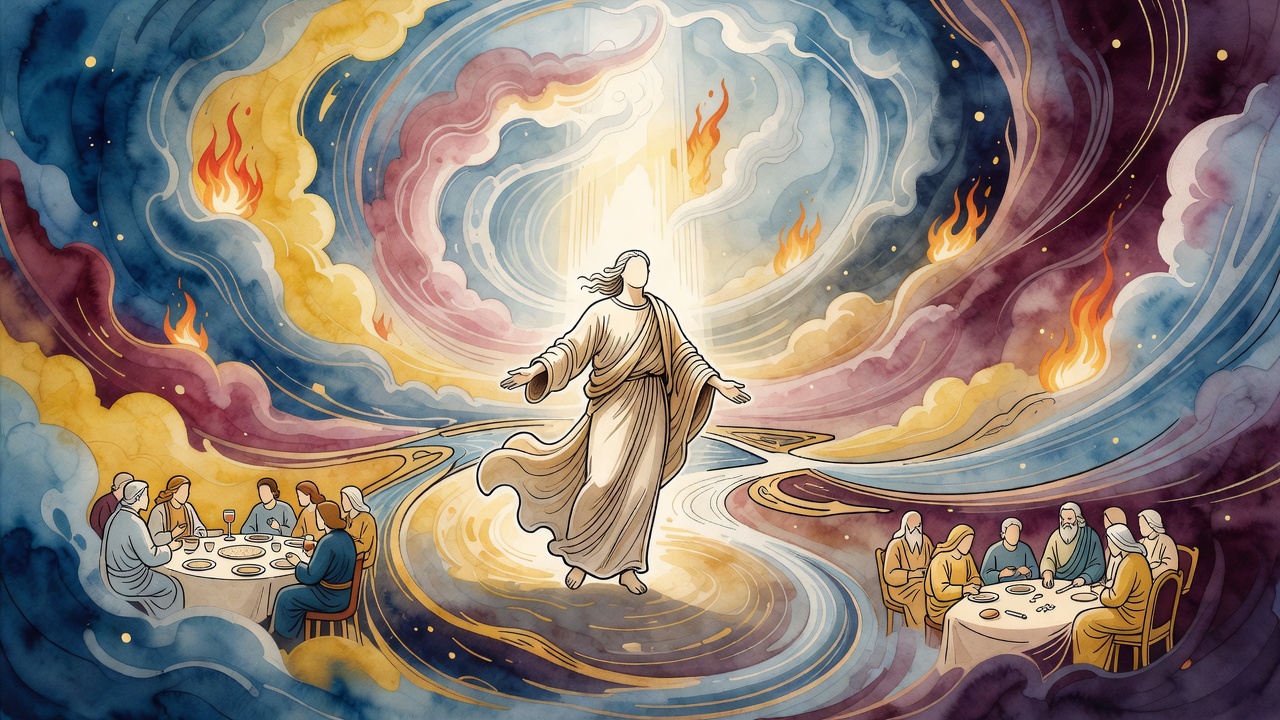
He appears at circumcisions because the covenant of Abraham requires a witness from the upper worlds. He appears at the Passover seder because the liberation from Egypt is not only a historical event but a continuing structure, renewed annually, and a crossing point needs its guardian. When the door is opened on seder night and the cup is poured, children watch the wine level. The adults in the room know, from somewhere below knowledge, that the watching is correct. Elijah is there. Not as a metaphor. As a presence sustained by the fact of his never having left.
The Tour of Gehinnom With Rabbi Joshua
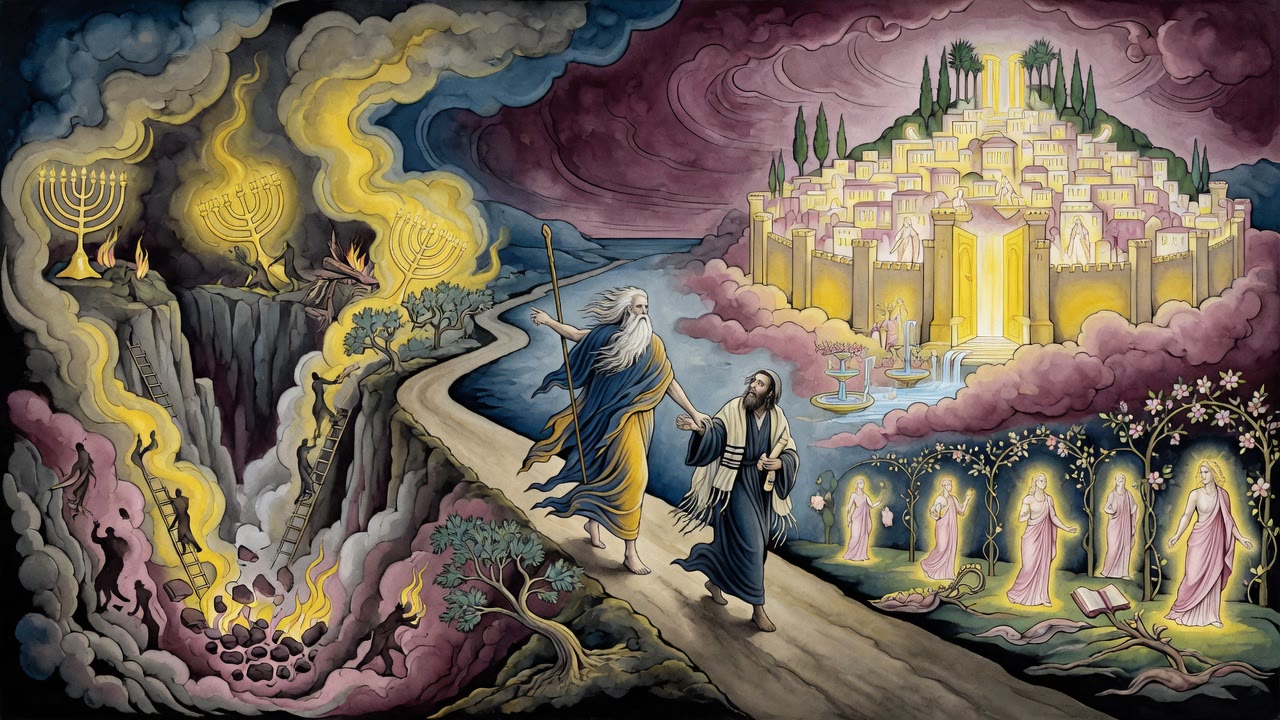
The legend preserved in later midrashic collections describes Elijah taking Rabbi Joshua ben Levi on a tour of Gehinnom, the realm of the dead. This could only happen if Elijah had access to both worlds simultaneously, if the crossing he made at the Jordan had not severed him from the lower world but rather given him passage in both directions. Rabbi Joshua sees things in Gehinnom (the realm of judgment after death) that he cannot speak of fully. Elijah serves as guide and interpreter, explaining what he sees with the calm of someone who has already integrated the vision.
This is the function of the bridge: not to be in two places at once in a miraculous sense, but to have absorbed both realities so thoroughly that moving between them requires no crossing at all. Elijah does not travel from heaven to earth when he appears at the seder. He is already present in both at once. The whirlwind that took him up did not remove him from the world. It removed the limitation that kept him in only one layer of it.
What He Is Waiting For
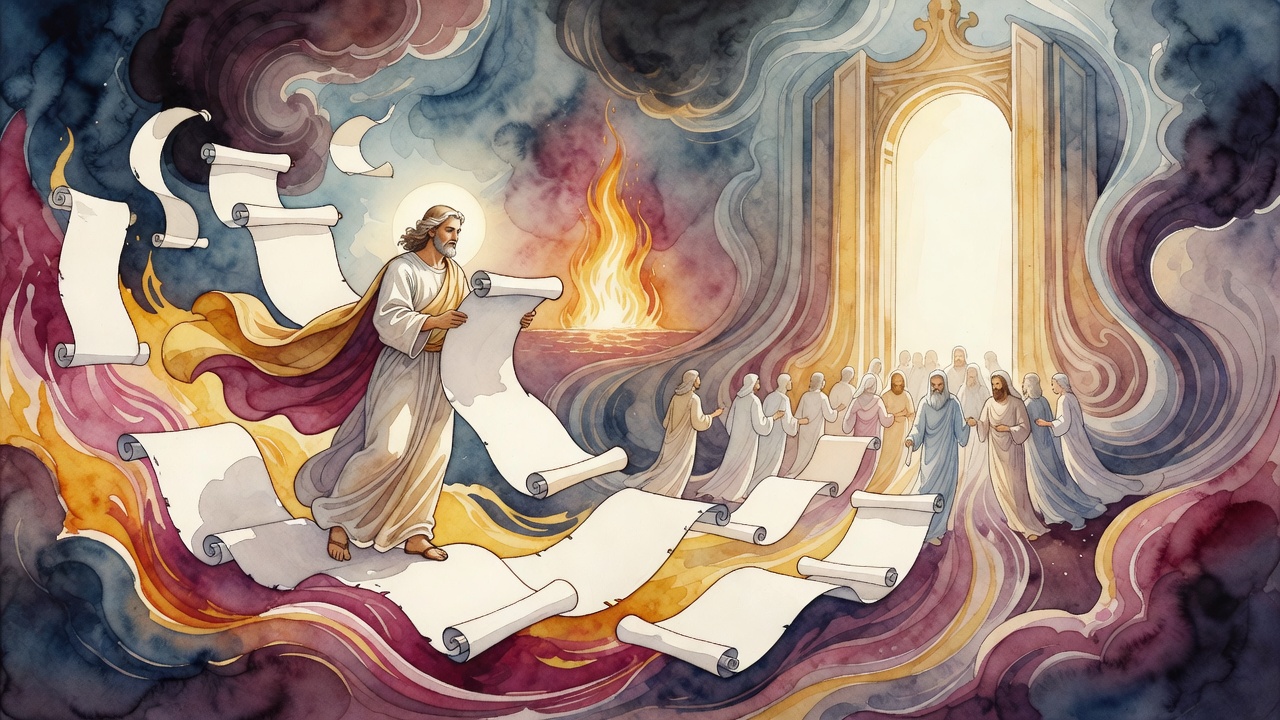
The tradition that Elijah will announce the Messiah is older than the Tikkunei Zohar, rooted in the last verses of Malachi, the final book of the prophets. Before the great and terrible day of the Lord, God says, I will send you Elijah the prophet. He will turn the hearts of the fathers to the children and the hearts of the children to the fathers. The announcement requires someone who has been present for all of history, who knows what has accumulated, who has walked through Egypt and Carmel and Jericho and Babylon and the generations beyond counting.
Only Elijah qualifies. He is the witness who has not left, the prophet who has not died, the figure who holds the memory of the entire span of Jewish history because he has been present for it, moving between worlds, appearing at the moments that matter, waiting for the dawn that Malachi promised and the Kabbalists described in detail and the children watching the cup of wine can feel approaching, even if they cannot say why.
← All myths