God Put an Angel in Balaam's Throat So He Could Not Curse
Balaam said of himself that he knew the knowledge of the Most High. He could not see the angel in the road, and his donkey could.
Table of Contents
 Click for full size
The Prophet the Nations Were Given
After the flood God sent for Shem and told him something close to an admission. "If My Torah had been among those ten generations," He said, "I do not suppose I would have wiped the world out with water. Go now. Tell the nations what I have said, and ask them whether they will take it."
Shem walked the earth as a prophet for four hundred years. Nobody took it.
Job came after him, and the four friends who argued him into the ground, all of them out of the line of Nahor. And then, so that no nation could ever stand up and say we would have taken the Torah if we had been given a Moses, God gave them Balaam. Moses had to ask to be shown God's ways. Balaam said of himself that he knew the knowledge of the Most High, and he was not lying.
He never once used any of it to do a single good thing for anybody. What he did with the largest voice ever loaned to a man outside Israel was rent it out, and with his tongue he came near to destroying the world.
The Donkey Saw What He Could Not
He was on the road to Moab with the fee agreed and two servants behind him when his donkey stopped.
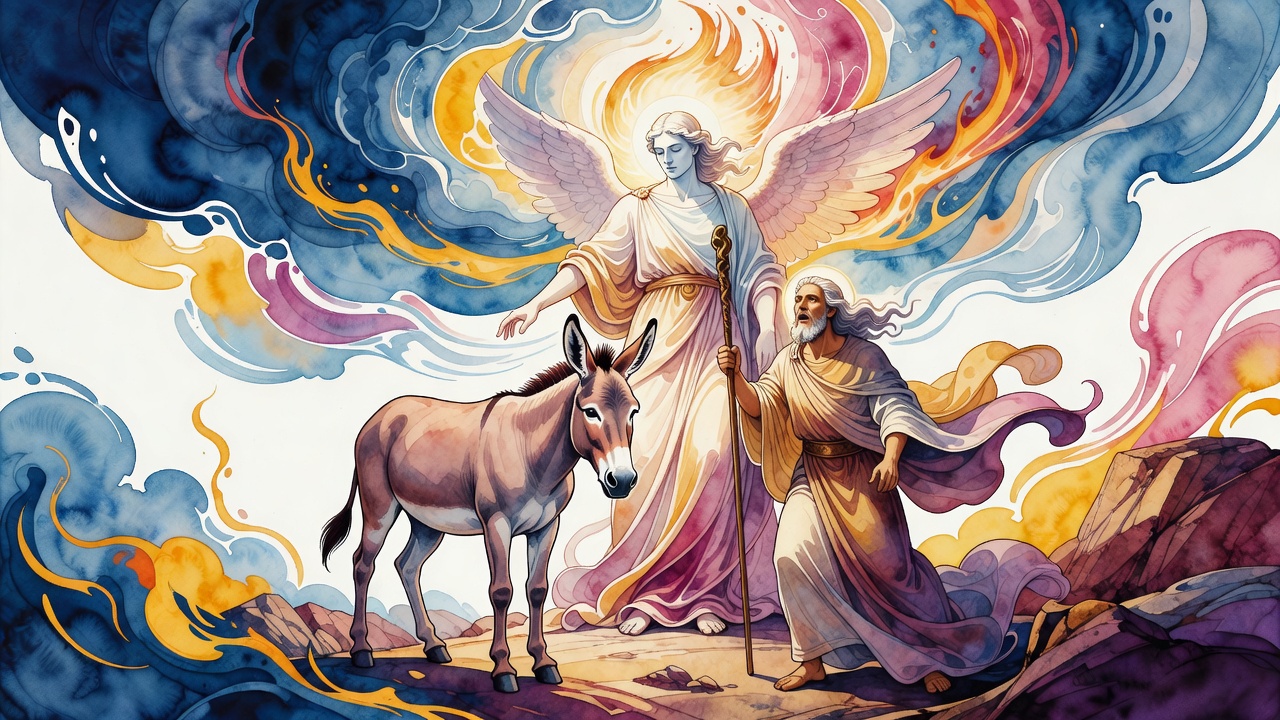
There was an angel standing in the road with a drawn sword, and the donkey could see it. Balaam could not. She went off into a field and he beat her back onto the road. She crushed his foot against a wall and he beat her again. Then she lay down under him in a place too narrow to turn, and he took his stick to her a third time, and she opened her mouth and asked him what she had done to him.
Then God uncovered his eyes.
He had not been blind. The eyes had been working the whole time. He was being told that even his own eye was not his to command, and the man who advertised that he knew the knowledge of the Most High got down off the animal and put his face in the dirt.
The Angel Asked About the Donkey
"Why did you strike her these three times?"
The question was not rhetorical. Satisfaction was being sought, formally, on behalf of a donkey, and the angel laid out the arithmetic. "If I have been sent to collect from you over an animal that has no merit of her own and no merit from her ancestors, work out for yourself what I have been sent to collect over a whole people you are riding out to uproot."
The world had been built on a condition. Before God made anything He consulted the Torah, written in black fire on white fire, and He told the works of creation on the sixth day that if Israel took it the world would stand, and if not He would put it all back to formless and empty. The people Balaam was hired to erase were the ones holding that agreement.
He had come out to block the road, the angel said, because the way was against him. The donkey had turned aside three times and saved a life doing it. If she had not turned, the sword would have gone through Balaam and she would have been left standing. She was not left standing. He killed her later.
He Said I Have Sinned and Meant Something Else
"I have sinned," Balaam said, "because I did not know."
He knew exactly what he was doing. Nothing holds off punishment like repentance, and a man who says I have sinned ties the hand of the angel standing over him with a sword. So he said it, and it worked, and it was the most calculated sentence of his life. His own mouth convicted him in the same breath. The man who announced everywhere that he knew the knowledge of the Most High had just said out loud that he did not know.
"If this is evil in your eyes," he added, "I will turn around." Then he could not resist the dig. "I did not set out until He told me to go, and now you tell me to go back. That is His habit. He told Abraham to slaughter his son and then sent an angel to stop the knife."
"Go with the men," the angel said. "Your lot is with them, and your end is to be wiped off the world with them."
Seven Altars to Match Seven Men
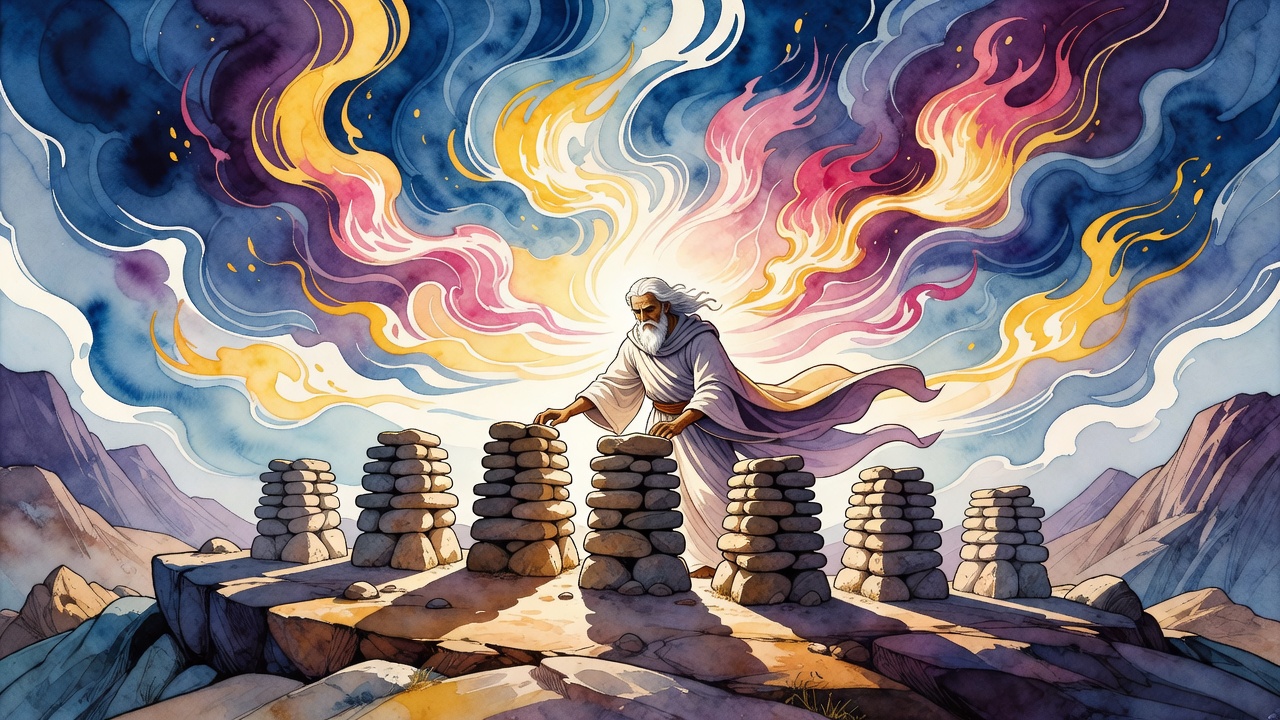
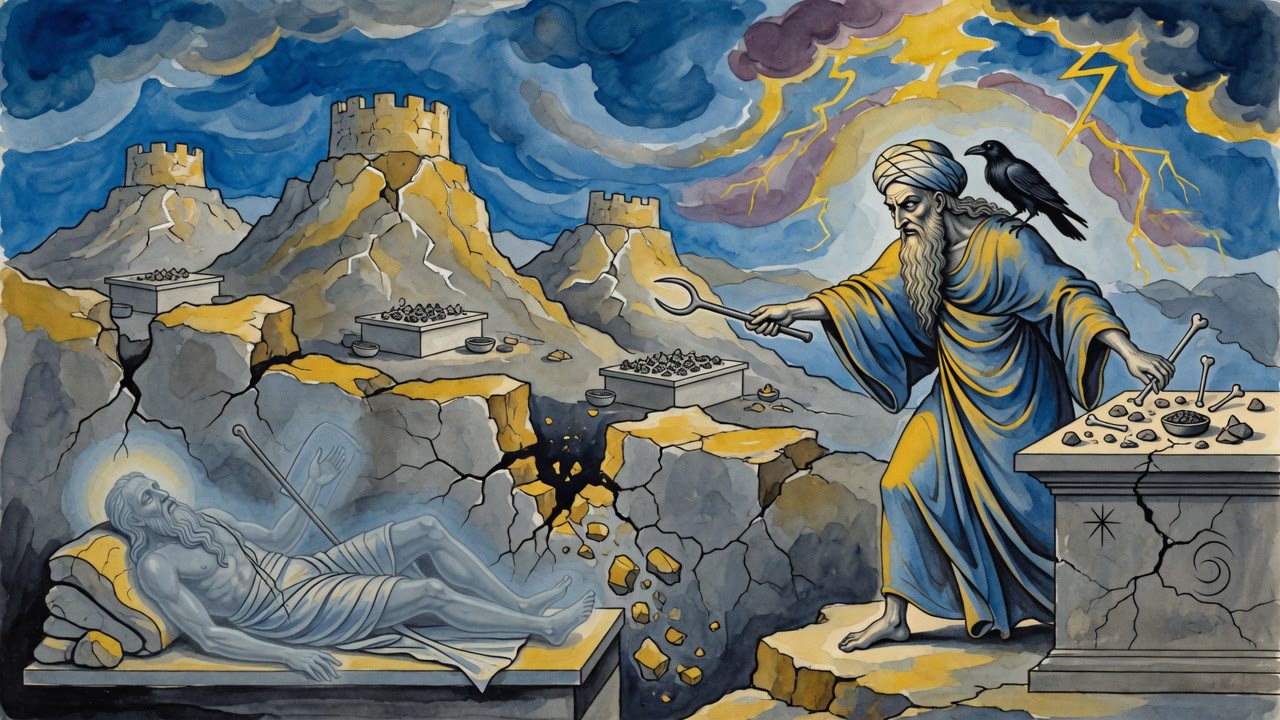
On the high place of Baal he had Balak build seven altars, and the number was not decoration. Seven altars had been raised since the beginning of the world by seven men: Adam, Abel, Noah, Abraham, Isaac, Jacob and Moses. Balaam was matching the entire record of Israel's dealings with God in one afternoon, out of loose stone, on a hill in Moab, with a bull and a ram burning on each.
Then he made his case. "Why do You favor these people," he said, "if not for the offerings they bring You? Would You not rather be worshipped by seventy nations than by one?"
"A dry crust with quiet in the house," came the answer, "beats a house full of sacrifices and quarrelling."
He tried again. "What are you doing here?" God asked him, standing at the altars. "I have built You as many altars as the three fathers of Israel built," Balaam said, "and I have put bulls and rams on all of them."
"A dinner of herbs where there is love beats a fattened ox where there is hatred. The unleavened bread and bitter herbs Israel ate in Egypt please Me more than your bulls. And if I wanted offerings, you knave, I would send Michael and Gabriel to fetch them. I have sworn to take them from Israel and from nobody else."
The Angel in His Throat
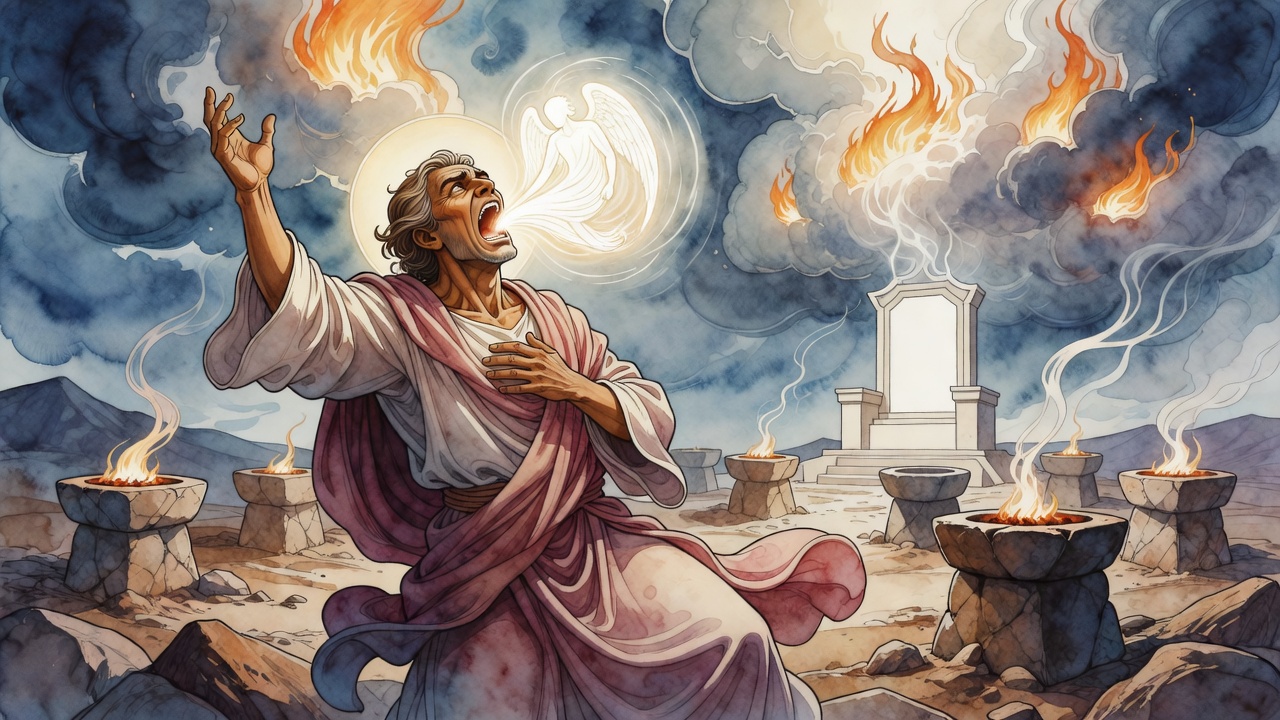
Then God handed him over to an angel, and the angel went into his mouth and settled in his throat and stayed there.
Balaam opened his mouth on the ridge above the camp, seven altars smoking behind him, Balak at his elbow waiting for the curse he had paid for, and what came out was a blessing. Second hill, second try. A blessing. Third hill, and this time a blessing with a star rising out of Jacob inside it, which the king of Moab had not commissioned and did not want.
The last prophet the nations were ever given had one instrument, and something was sitting inside it, and it chose every word he said until he stopped talking.
← All myths