Abraham's Idol Shop Made Buyers Doubt Their Gods
Abraham's father sent him out to sell idols. Abraham turned the shop into a courtroom and made every buyer doubt his god.
Table of Contents
Abraham was supposed to sell the gods.
 Click for full size
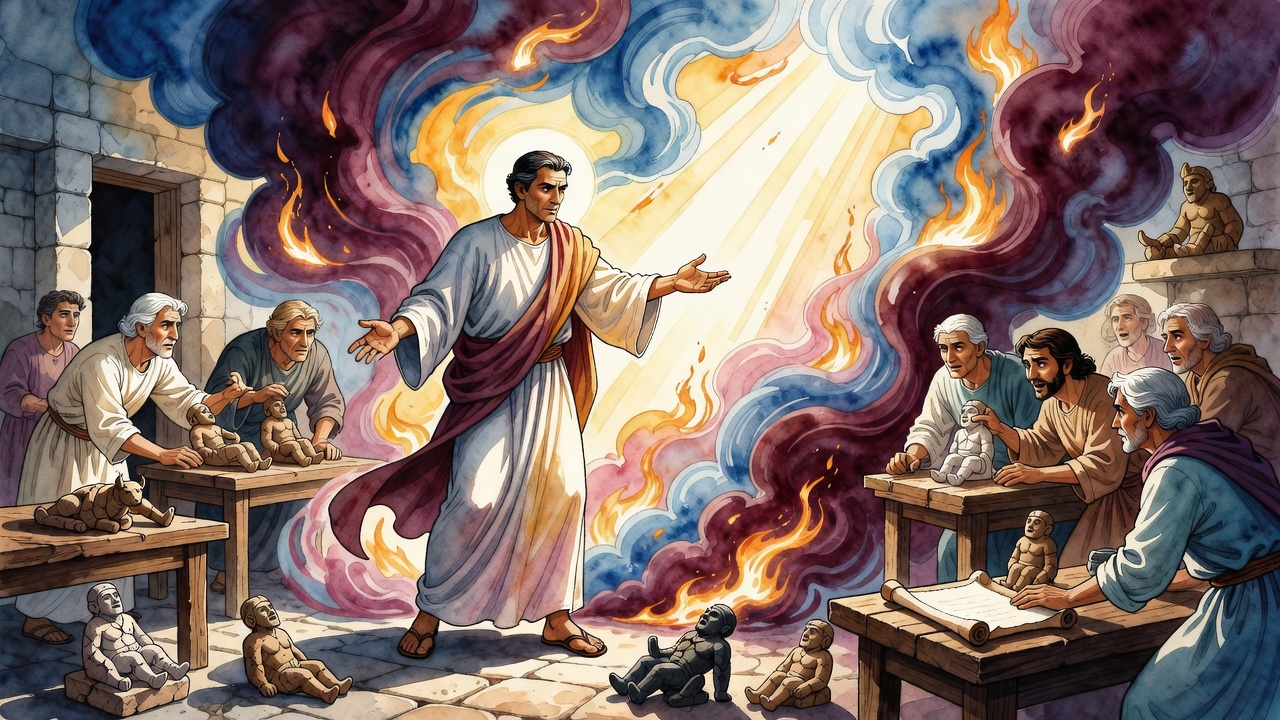
His father Terah had a business to run, and business did not pause because a son had questions. The shelves held carved figures, painted figures, small gods for modest houses and larger gods for men who wanted their fear to look impressive. Buyers came with coins. Terah wanted those coins. So he sent Abraham out with merchandise.
Abraham took the idols. Then he ruined the sale.
The Boy Behind the Idol Table
A man would come near the table and reach for a figure. Abraham would name a price. Then he would ask the buyer his age.
Thirty, the man might say. Forty. Fifty.
Abraham would look from the man's beard to the little object in his hand. Then he would ask how a man that old could bow to something made yesterday. The question landed harder than a sermon because the idol was right there, fresh from the workshop, paint barely dry, still smelling of human hands.
Some buyers left angry. Some left ashamed. All of them left with a crack in the story they had come to purchase. Abraham did not have to smash every idol. He made the buyer see the dust on it.
The Gods That Could Not Answer
Handling idols every day sharpened him.
He saw how easily a block became a god when a craftsman gave it eyes. He saw how quickly fear became devotion when a buyer carried it home. He knew the secret of the objects because he had touched them before the worshippers did. They were wood, stone, paint, price, and profit.
The work forced the argument into his hands. A god that cannot hear the chisel cannot hear a prayer. A god that must be carried cannot carry a mourner. A god that can be priced cannot be the Maker of the world.
Abraham's doubt did not float above life. It stood in the marketplace with a figure under one arm and a buyer waiting for change.
The Prayer in the Old Language
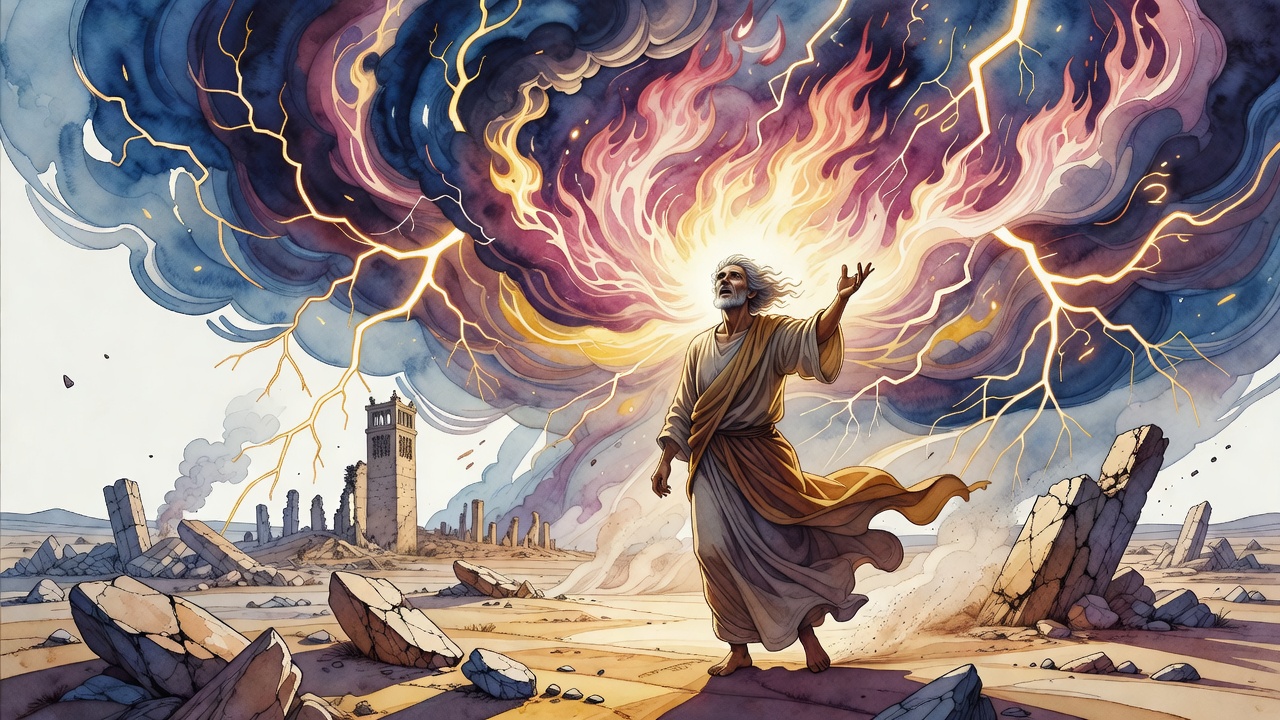
When the idols became too small for his mind, Abraham turned toward the One who had not been made.
He prayed to God Most High. Not a household power. Not a spirit assigned to a hill or river. The one God over heaven, earth, stars, breath, language, and judgment. He chose that God with the clarity of a man who had tested the alternatives by touch.
The prayer came in Hebrew, the language the tradition remembered as the tongue of creation. Abraham did not borrow the language of the shop for the God beyond all shops. He reached back toward the first speech, toward a world made by command rather than carved by trade.
The idol-seller's son had found the God no one could stock, wrap, or sell.
The Cell That Could Not Hold the Argument
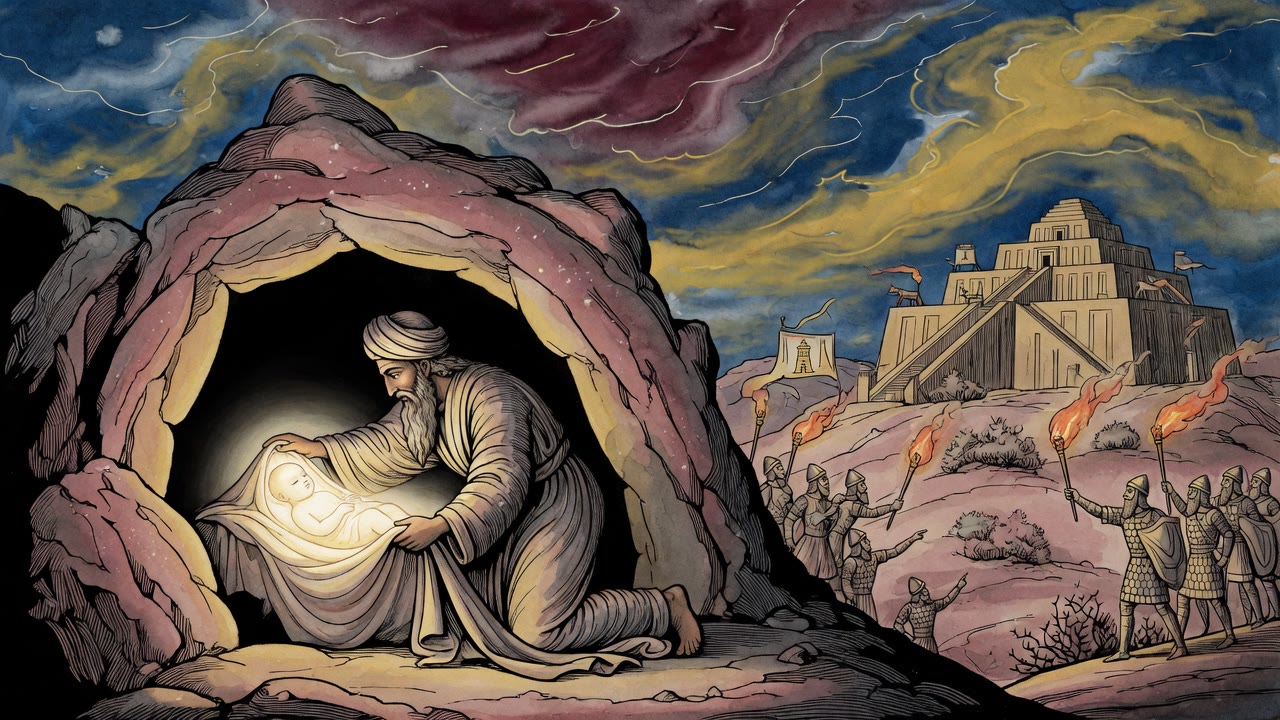
The city noticed.
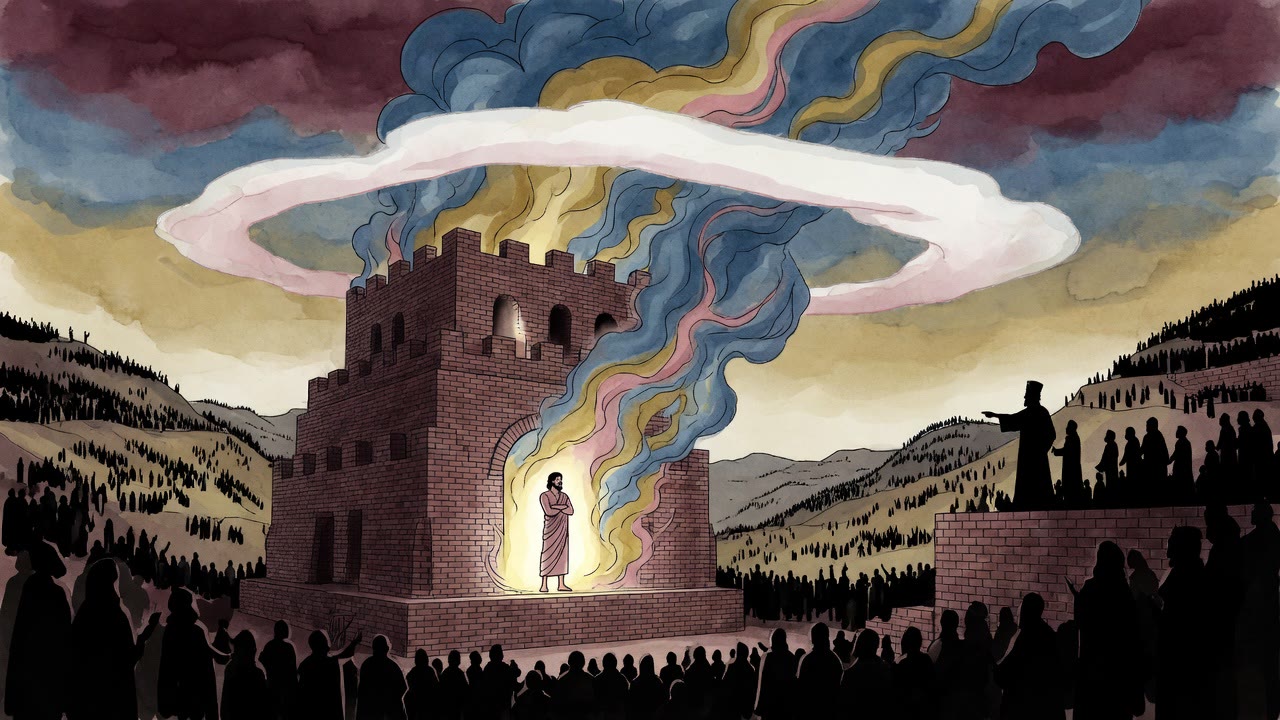
Commerce can tolerate private doubts. It cannot tolerate a man who turns every transaction into a public humiliation of the product. Abraham's questions threatened money, fathers, priests, customers, and kings at once. A man who convinces buyers that gods are false has attacked more than religion. He has attacked the whole economy of fear.
So Abraham was imprisoned with others who believed as he did. The cell gave him what the shop had not: silence. No bargaining. No painted faces. No old men buying young gods. Only the conviction that had survived the marketplace and would now have to survive confinement.
It did.
The Covenant Born From a Failed Sale
Abraham's greatness began in refusal.
He refused to let a buyer leave without a question. He refused to let his father's trade define the truth. He refused to confuse an inherited world with a necessary one. By the time the command came to leave land, birthplace, and father's house, he had already left them inwardly. The shop still stood behind him, but its gods had lost their authority.
The covenant did not begin with a man who had never seen idolatry. It began with a man who knew its smell, its price, its sales pitch, and its weakness. Abraham's hands had carried the carved figures. His mind had weighed them. His questions had made them ridiculous.
Then he walked away toward the God who could not be carried.
← All myths