Judah the Lion Who Had Nowhere to Retreat
Most of the camp walked off when they finished counting. Eight hundred stayed. Judah looked for the right wing and went at it anyway.
Table of Contents
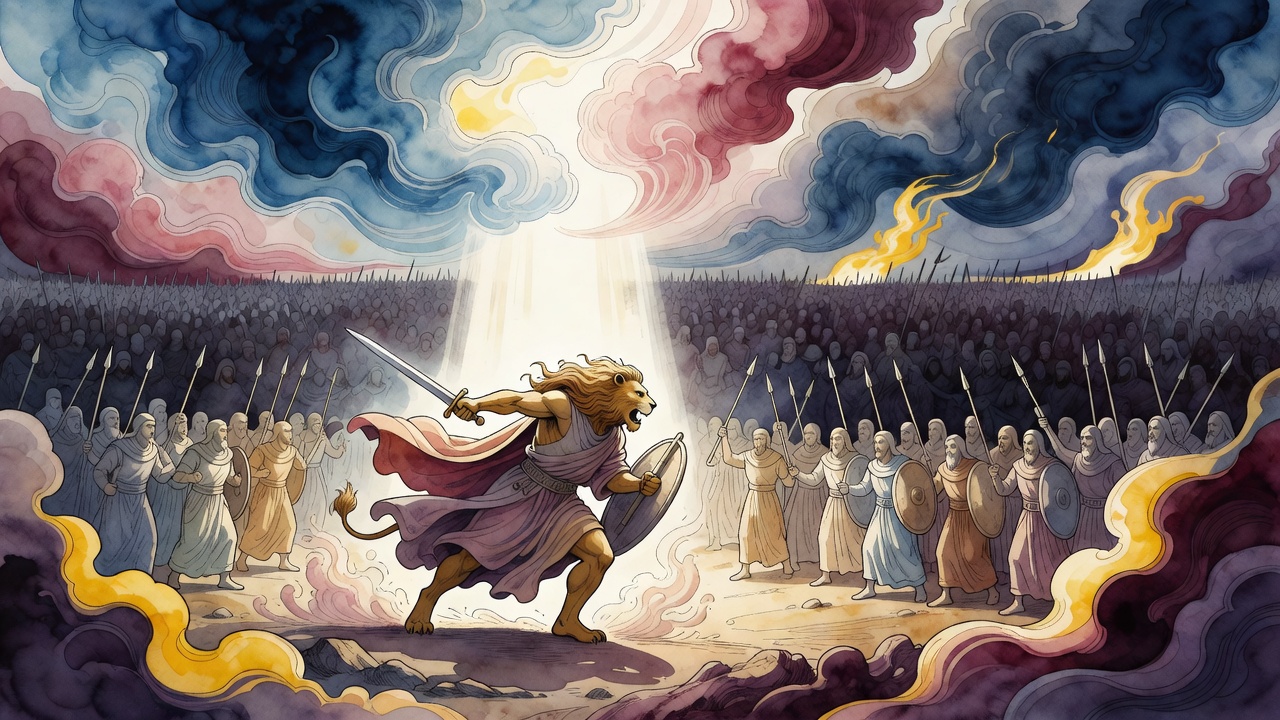
He put on the breastplate the way a giant puts it on. Six years of battles had built Judah into something the chronicle could only reach for by borrowing a beast: like a lion in his acts, like a lion's whelp roaring for prey. He had driven armies three times his size off the field. He had taken back the Temple, rededicated the altar, and set the menorah burning again in a sanctuary that had been given over to other gods. He had done it with fewer men, worse weapons, and no cavalry.
 Click for full size
He girt his warlike harness about him and made battles, protecting the host with his sword. The wicked shrank for fear of him. Salvation prospered in his hand. Then the arithmetic arrived that would not prosper, and there was nowhere left to retreat.
The Sword Taken From Apollonius
Apollonius, captain of the Macedonian host, heard that someone had dared to rebel against his lord the king. He gathered a large and strong multitude and marched to fight Israel. Judah went out to meet him. The battle was fierce. In the middle of it Judah saw Apollonius standing in the Macedonian company, and he ran toward him in the fury of his anger into the valley, smiting right and left and in front of him, cutting down the mighty men of Greece the way a reaper cuts sheaves.
He reached Apollonius and struck him with the edge of the sword and felled him to the ground. The Greeks and Macedonians fled. Judah and the assembly of the Hasidim pursued them and smote them with a very great slaughter. Judah seized Apollonius's sword and fought with it all his life.
Dawn at Beth-Horon
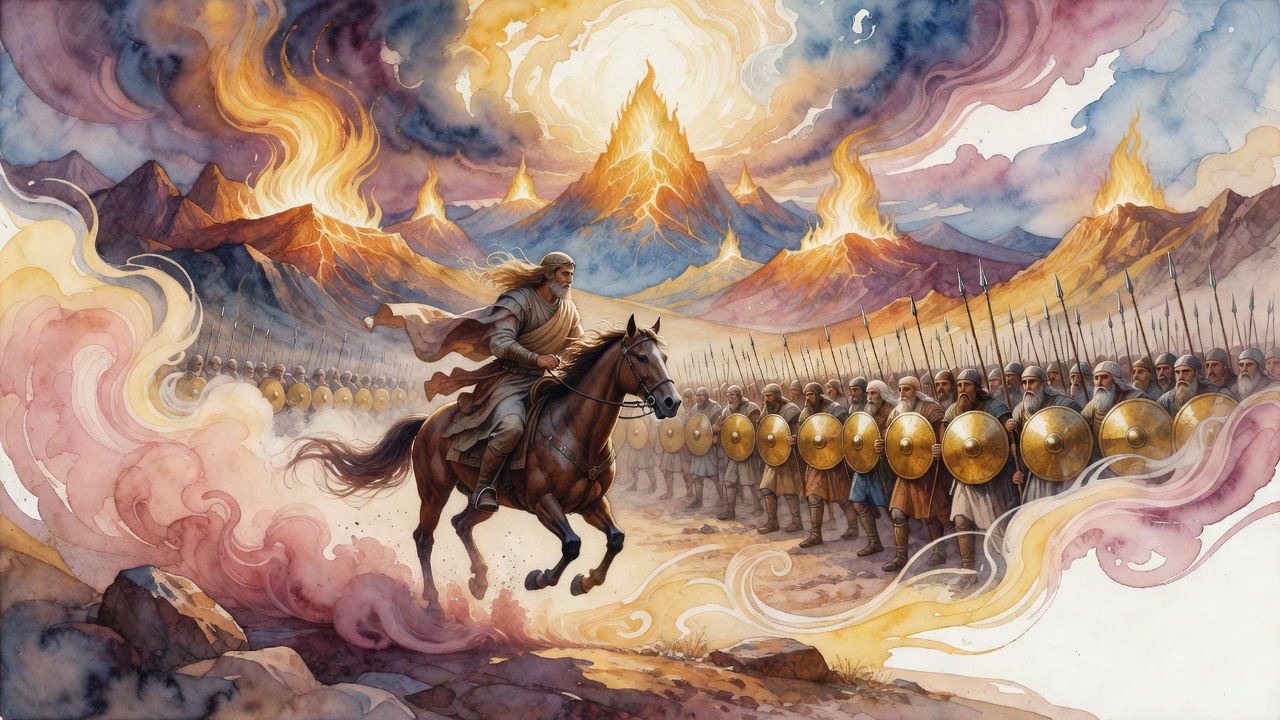
When Seron, captain of the host of Syria, heard this, he said he would go and fight Judah and make a name for himself. He summoned his people and went to Beth-Horon. Judah heard it and told his men there was no time for delay. "Let us go out to them, although our brethren the Hasidim have gone away from us. If we wait until they return, our enemies will say we are afraid of them."
They marched all night. At daybreak the people beheld in the distance a strong and mighty army, and they said to Judah, "How can we who are so few go to war against this great multitude?"
Judah answered, "Cry unto heaven, and you shall be saved. The battle is in the hands of the Lord, to deliver the many into the hands of the few. It is in His power to save either with a multitude or with a few."
He went sideways near the enemy's camp and leapt upon them. Seron and all his men fell into confusion. Judah pursued him, overtook him, and smote him. That day some eight hundred corpses of the Syrians lay piled in heaps on the field. Those that remained fled into the land of the Philistines, and the fear of Judah fell upon the nations.
Merchants Waiting to Buy the Young
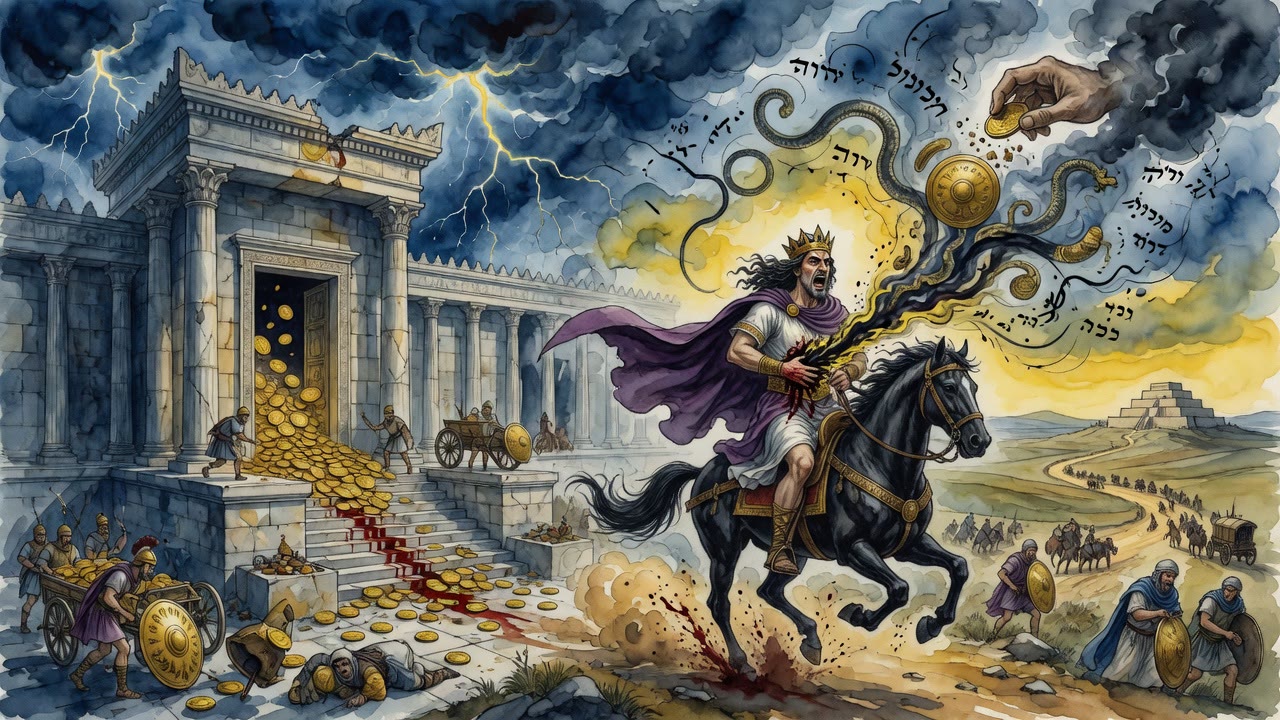
Nicanor came later with forty thousand on foot and seven thousand horsemen, and he brought merchants with him. He intended to sell them the young men and the young women he would capture from Judah. Judah numbered his people after a fast in sackcloth and dust, then issued an order in the camp: whoever has planted a vineyard or built a house, whoever is betrothed or faint-hearted, let him return home. Many returned. Seven thousand valiant men remained, chosen warriors, of whom one would not have run away before a hundred enemies.
Judah called upon the Lord. The priests blew their holy trumpets. The people raised a shout. Then Judah leapt into battle and smote Nicanor's camp so that they fled, and he pursued them, slaying as they ran. Nine thousand fell. The gold the merchants had brought to purchase Israelite youths was taken and given to the poor. The battle was fought on the sixth day, and they rested.
That was the pattern. Outnumbered. Charging anyway. A sword taken from a dead captain, a night march, a leap at dawn. The lion had nowhere in him that knew how to wait for better numbers.
Eight Hundred Against the Right Wing
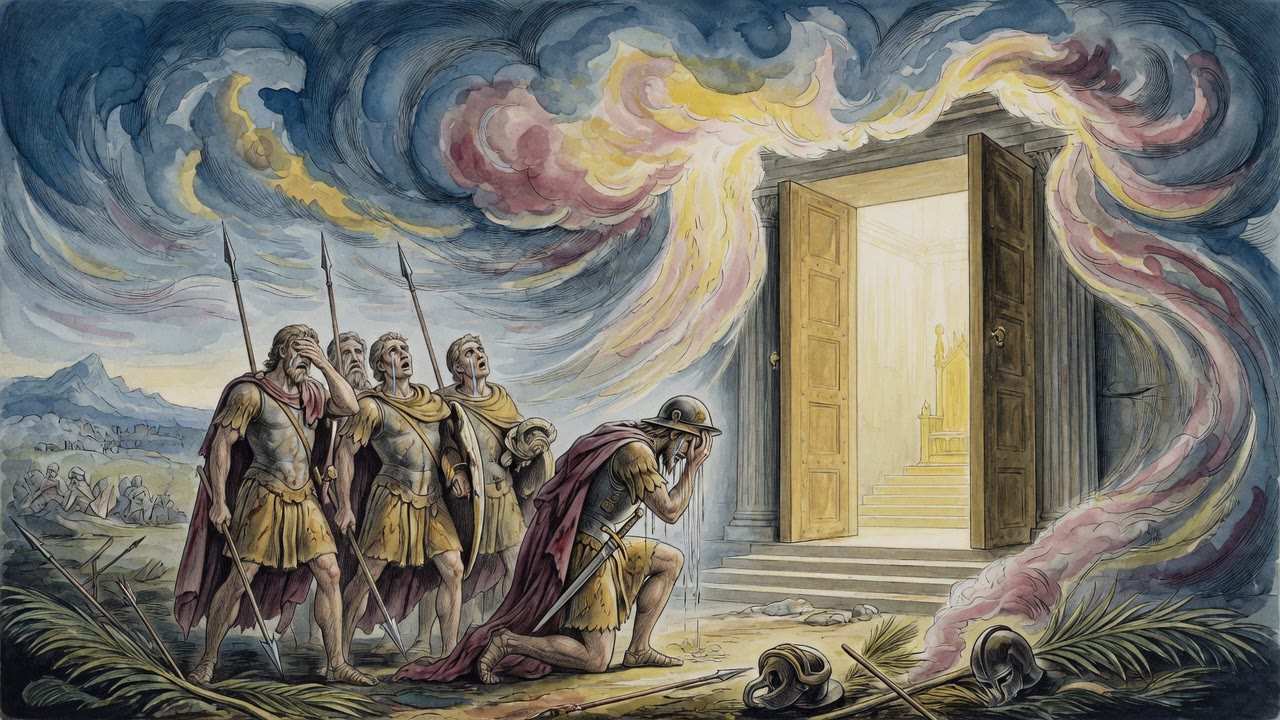
Bacchides came suddenly, with a host the size of a country. Judah's army, which had once numbered in the thousands, had shrunk to a remnant. When the soldiers counted the enemy and counted themselves, most of them left. Not in disgrace. Simply in arithmetic. Eight hundred men do not stop tens of thousands. They walked away.
Eight hundred stayed.
Judah looked at what remained and said, "Let us rise and go against our adversaries, and perhaps we will be able to fight them." He knew what perhaps meant. He said it anyway. Some among the eight hundred wanted to save their lives now. Judah would not flee. God forbid that he should do this thing, to run from them. The men who had stayed had already made their calculation and reached the same answer he had. They were not there because the odds were good. They were there because leaving was no longer a choice they could make and remain who they were.
The Seleucid force divided into two wings. Cavalry on the right and the left, infantry in the middle. Judah attacked the right wing first. He hit it hard enough to drive it back, hard enough that Bacchides, commanding on the right, began to retreat. For a moment, against all calculation, it was working.
Then the left wing closed behind them.
Judah's men were encircled. The soldiers who had held the right wing now turned and pressed from that side. The left closed in from the other. What had been a charge became a fight on every front at once. The eight hundred held as long as men can hold when they are surrounded by forces that simply outnumber them at every point of contact.
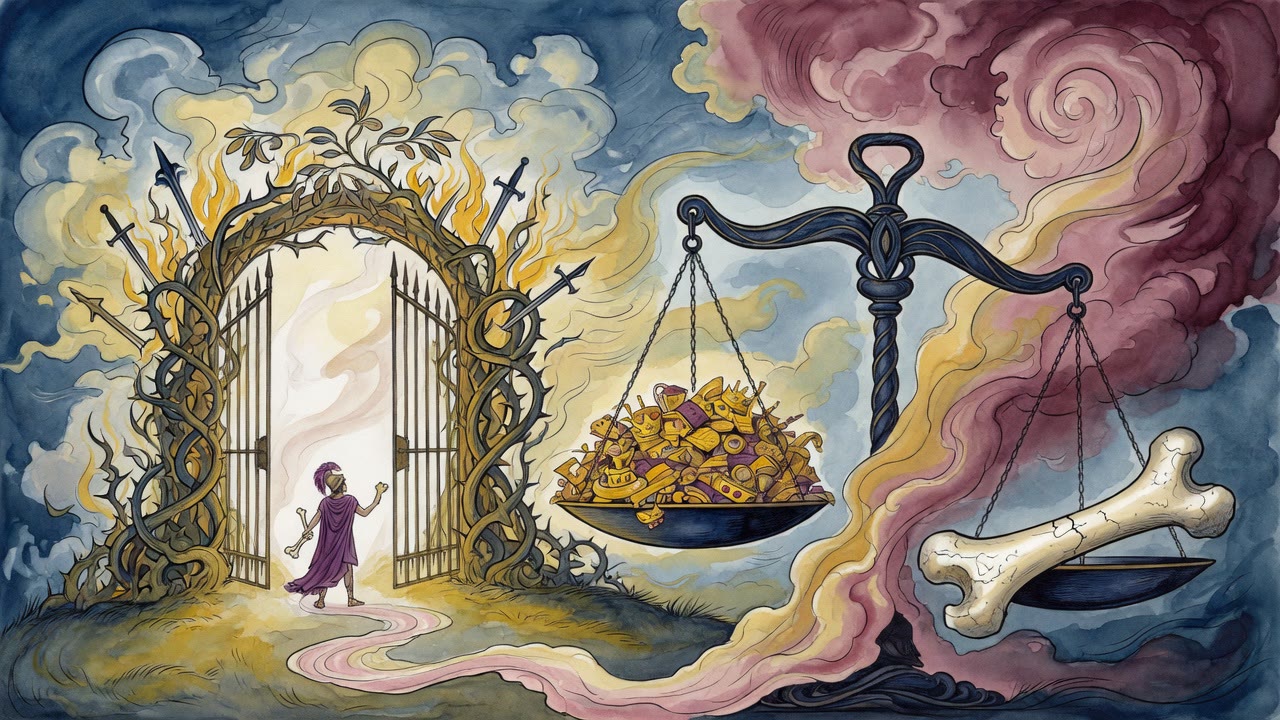
Judah fell. His brothers Jonathan and Simon recovered his body and buried him in the tomb of their fathers at Modin. They mourned him many days, and all Israel held great mourning for him. The prince and savior of Israel, is he fallen. The text that records his death is the same text that called him a lion. It does not soften the ending. He died in the field with eight hundred men around him, outnumbered past sense, and none of it contradicted what the chronicle believed about him. The man who fought God's battles could fall in God's time. Jonathan took command after him. The resistance continued. The breastplate of a giant went into the tomb at Modin, and the mountain became quiet.
← All myths