Abraham Died at 175 Having Never Once Broken His Word to God
Abraham's final words in Jubilees are quiet and total. No miracles listed. Just a man at 175 saying he remembered God every single day and never broke his word.
Table of Contents
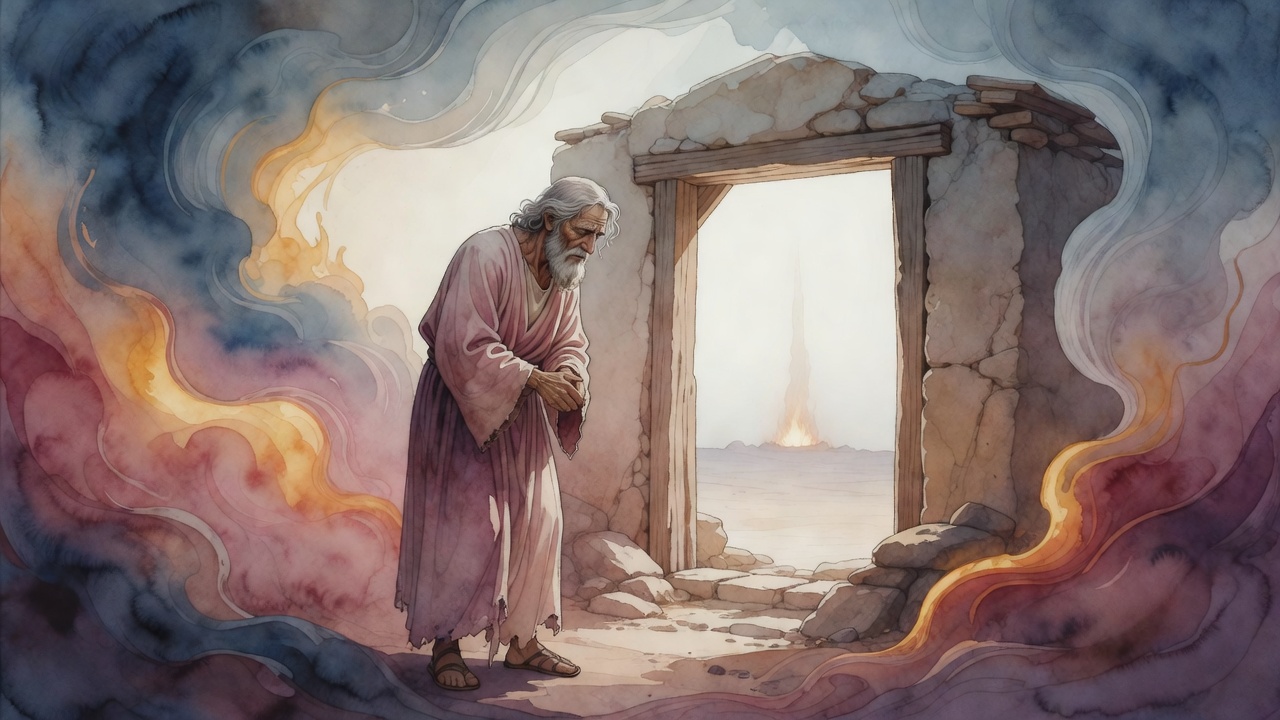
At one hundred and seventy-five years old, Abraham did not say he had run out of life. He said he was full of days.
 Click for full size
The phrase is precise and carries weight. A man who is full of days has not been depleted by them. He has received everything that was promised to him and has lived long enough to hold it. When Abraham said he was full of days, he was making a claim about completion, not exhaustion.
The Speech Abraham Gave Before He Died
The Book of Jubilees, the second-century BCE retelling of the patriarchal narratives, preserves what Abraham said in his final days. It is not a list of accomplishments. There is no inventory of battles won or nations defeated or land secured. What Abraham said about himself reads like the terms of a covenant being recited at its closing.
"Throughout all the days of my life," he said, "I have remembered the Lord and sought with all my heart to do His will and to walk uprightly in all His ways. My soul has hated idols. I despised those who served them. I gave my heart and spirit to observe the will of the One who created me. For He is the living God, holy and faithful, righteous beyond all, without favoritism, without accepting of gifts."
There is no false modesty in this speech, and no boasting either. It reads like a man reciting the terms of a covenant he kept, not because he expects a reward for naming it but because fidelity deserves to be named on the way out.
Isaac and Ishmael at the Last Feast
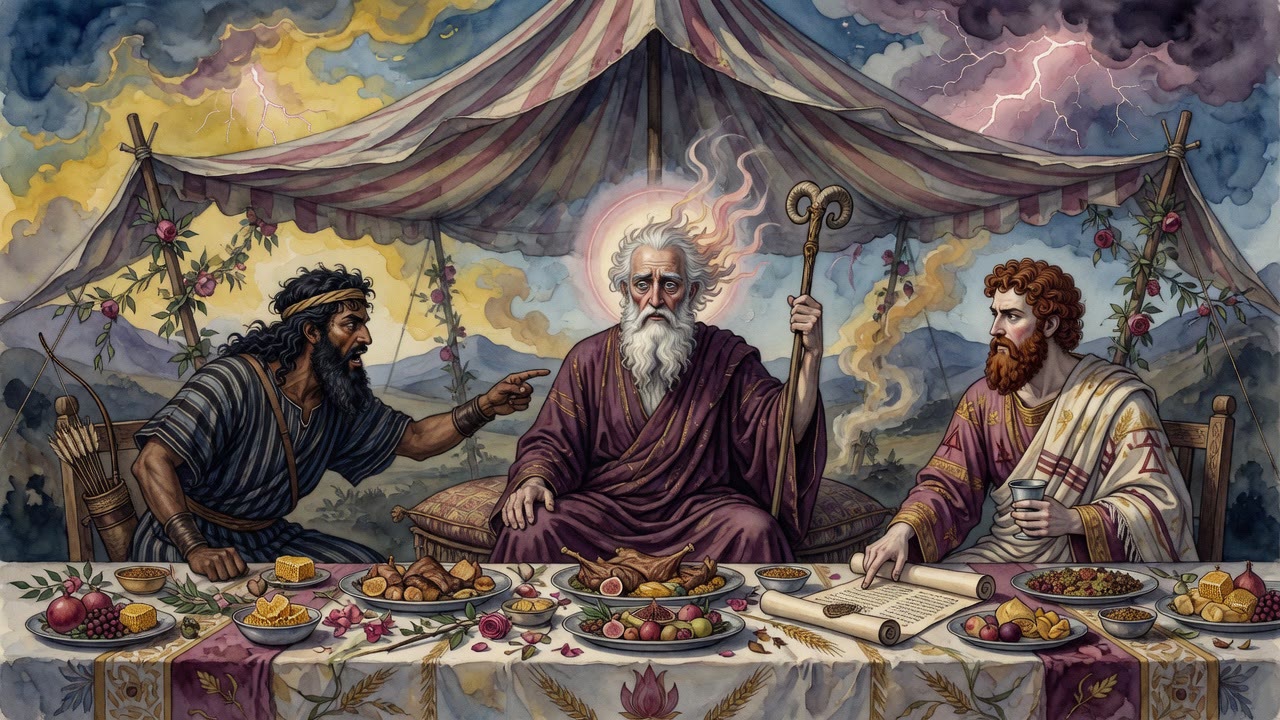
The Jubilees tradition records who came. In the year that Abraham was to die, Isaac and Ishmael made the road to Beersheba together. Both sons. The one who had been nearly offered on Moriah and the one who had been cast out into the wilderness. Both came. They ate with their father, and Abraham blessed his God, and there was a feast, and it lasted until the end of the day.
The two sons in the same tent, eating at the same table, the one who inherited the covenant and the one who was promised a nation of his own, sitting together in the last year of the man who had been father to both of them, this is the image Jubilees leaves. Not a deathbed of legal arrangements. A feast.
The Vision Before the End
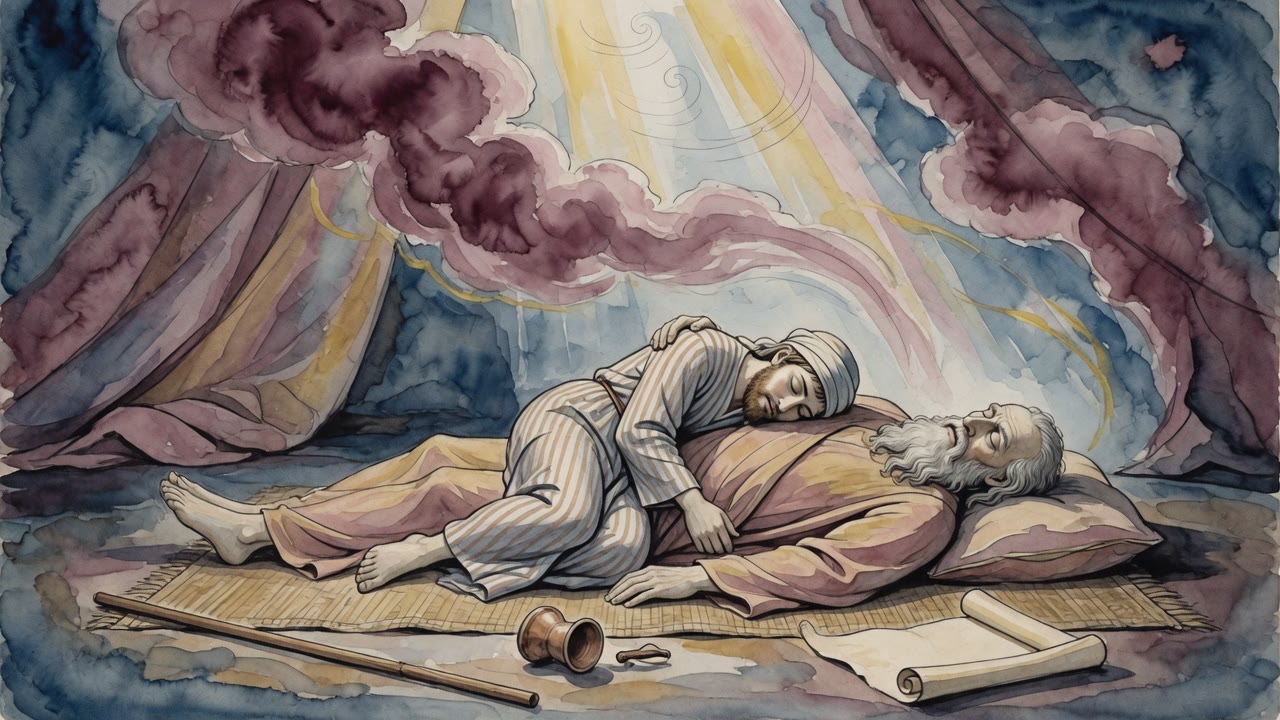
The Ginzberg tradition, drawing on midrashic sources from the first through fifth centuries CE, adds the dying vision. On the day Abraham was to die, God came to him directly. "Open your eyes," the voice said, "and see your reward." And Abraham was lifted by the wind, carried higher and higher, until he could see the whole world from end to end. Every land where his descendants would dwell. Every generation that would call on the name of the God he had served.
The tradition does not report that Abraham was frightened. He had been given the covenant at night with the stars overhead. He had lain in the darkness between the cut animals while the furnace and the flame passed over him. He had walked up Moriah with his son and a knife. By the time the dying vision arrived, there was nothing left to be afraid of.
What He Left Behind
He left behind two sons and a charge: do not let your children see the face of Gehenna (the realm of judgment after death). Do not let them inherit what comes from walking the road Sodom walked. Do not let them make the idols that their grandfather Terah had made in Ur before Abraham smashed them. The charge was the same one he had been living since he left Haran. He handed it forward one more time before he lay down to die.
He died in a good old age, old and full of days. His sons Isaac and Ishmael buried him in the cave of Machpelah, beside Sarah his wife, in the field he had purchased from the sons of Heth. The account closes the way it opened: precise, unadorned, and final.
← All myths