6 min read

Jacob Mistook Samson for the Messiah on His Deathbed

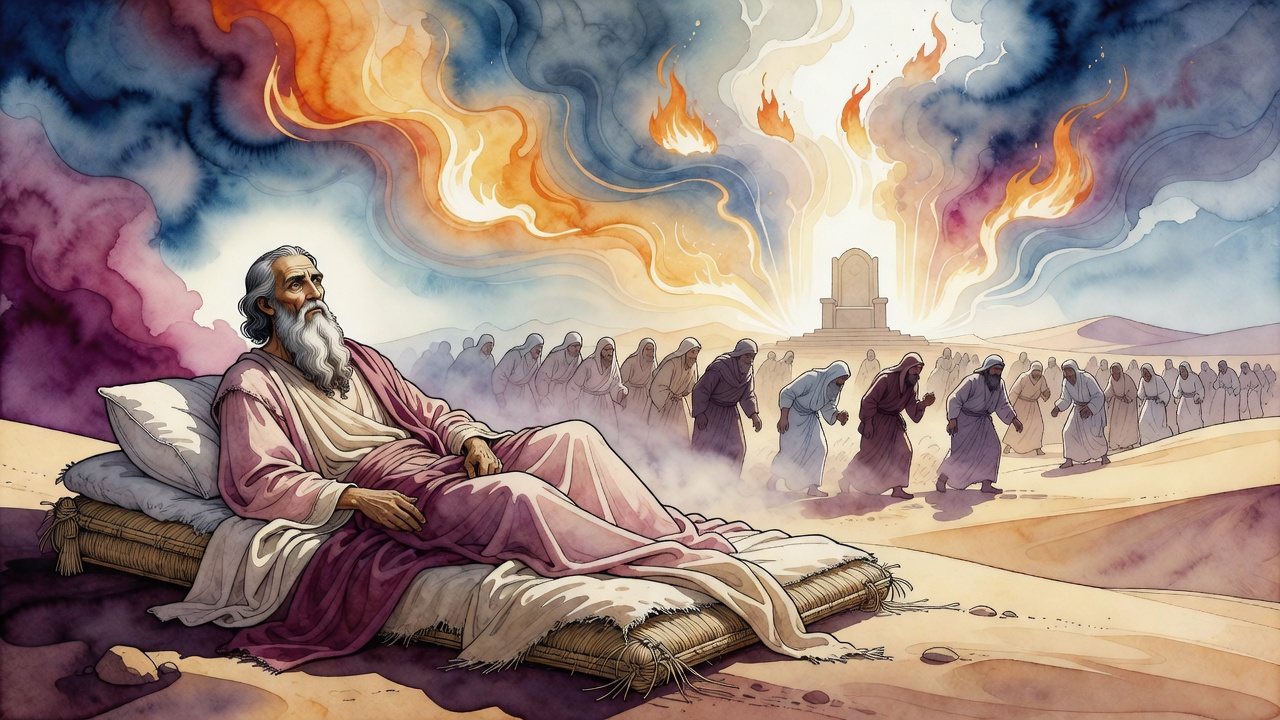
On his deathbed Jacob blessed Dan and saw Samson fighting alone, and for one breath he believed the Messiah had finally come to Israel.

Curated by Arthur · Told by Maggid ·
Table of Contents
  1. A Strong Man Rises Out of the Years to Come
  2. Jacob Whispers the Name He Has Waited For
  3. The Vision Will Not Stop at the Victory
  4. The Strong Man Goes Down Blind and Chained
  5. He Lets the Messiah Go and Keeps the Hope

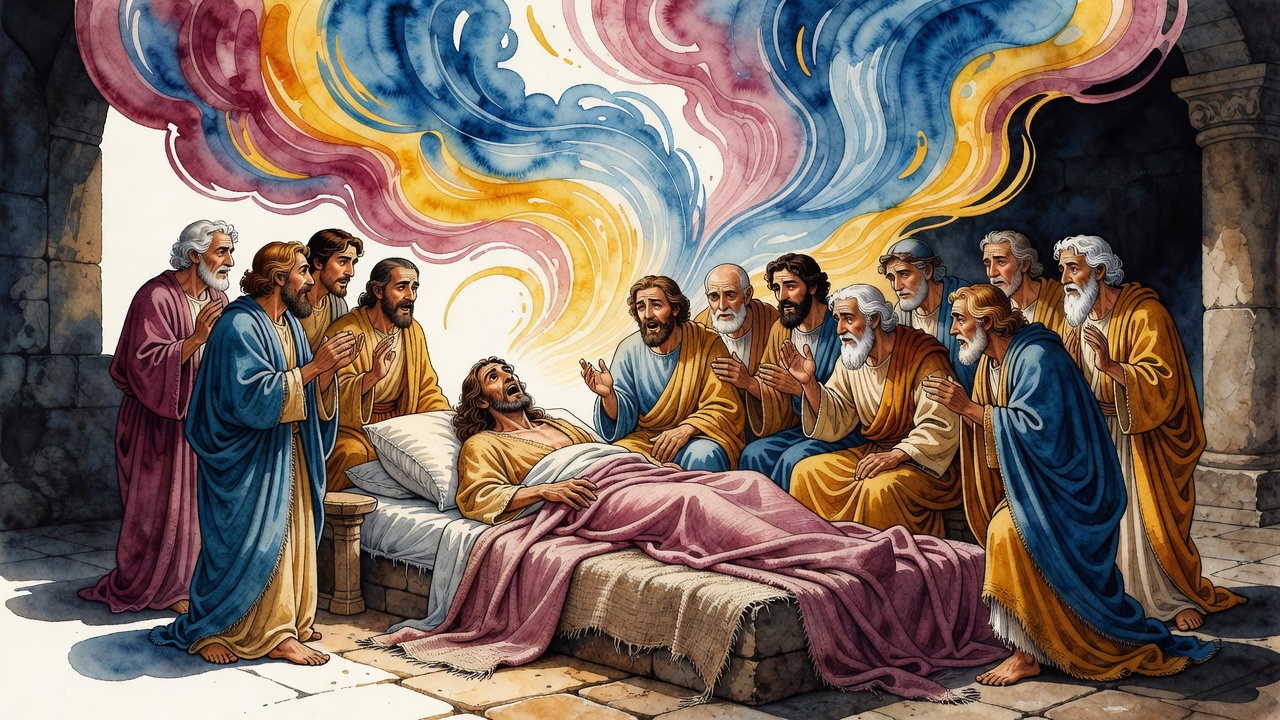
The old man's breath came shallow now, and his sons leaned in close around the bed. Jacob had called them by name, one after another, and to each one he gave words that were not blessings so much as windows. He looked at a son and saw forward, past the son, into the long file of his children's children. His eyes were clouded with age, but what he saw was not in the room.
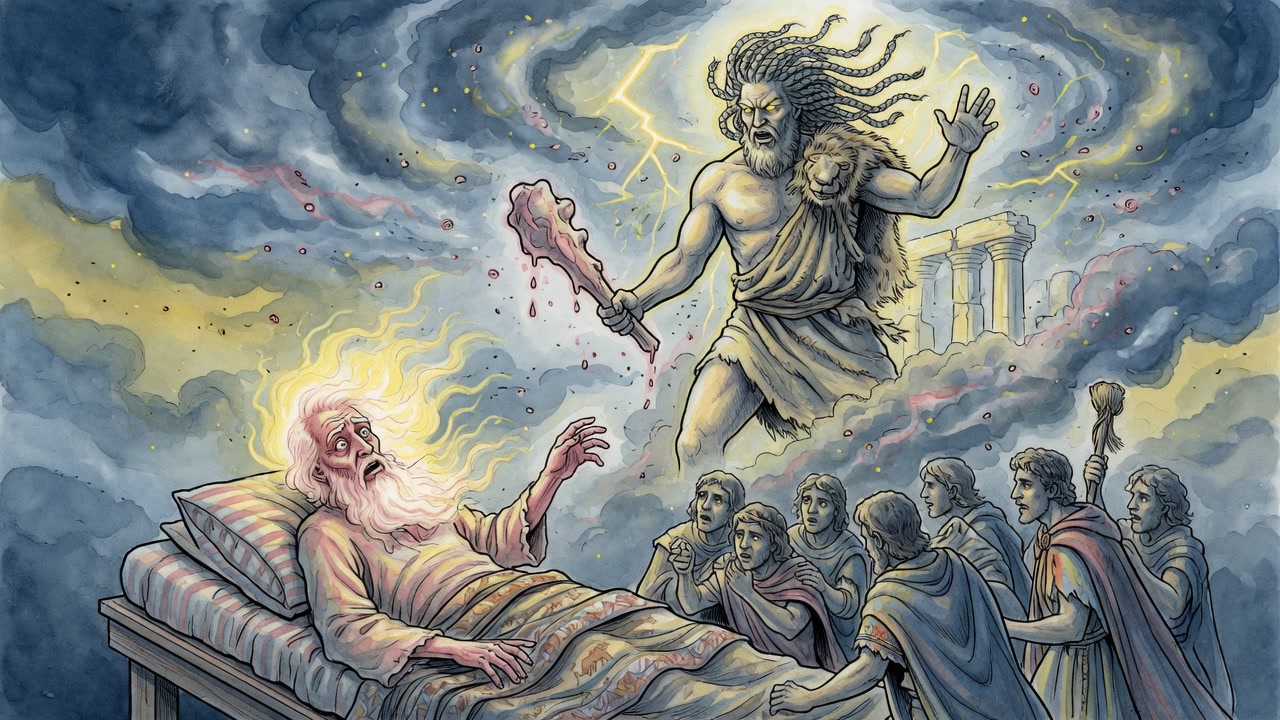
He came to Dan, the son born of Bilhah, and stopped. Something opened in front of him. A face he had never seen pulled itself into focus out of the years to come, and Jacob's slack hand tightened on the blanket.

A Strong Man Rises Out of the Years to Come

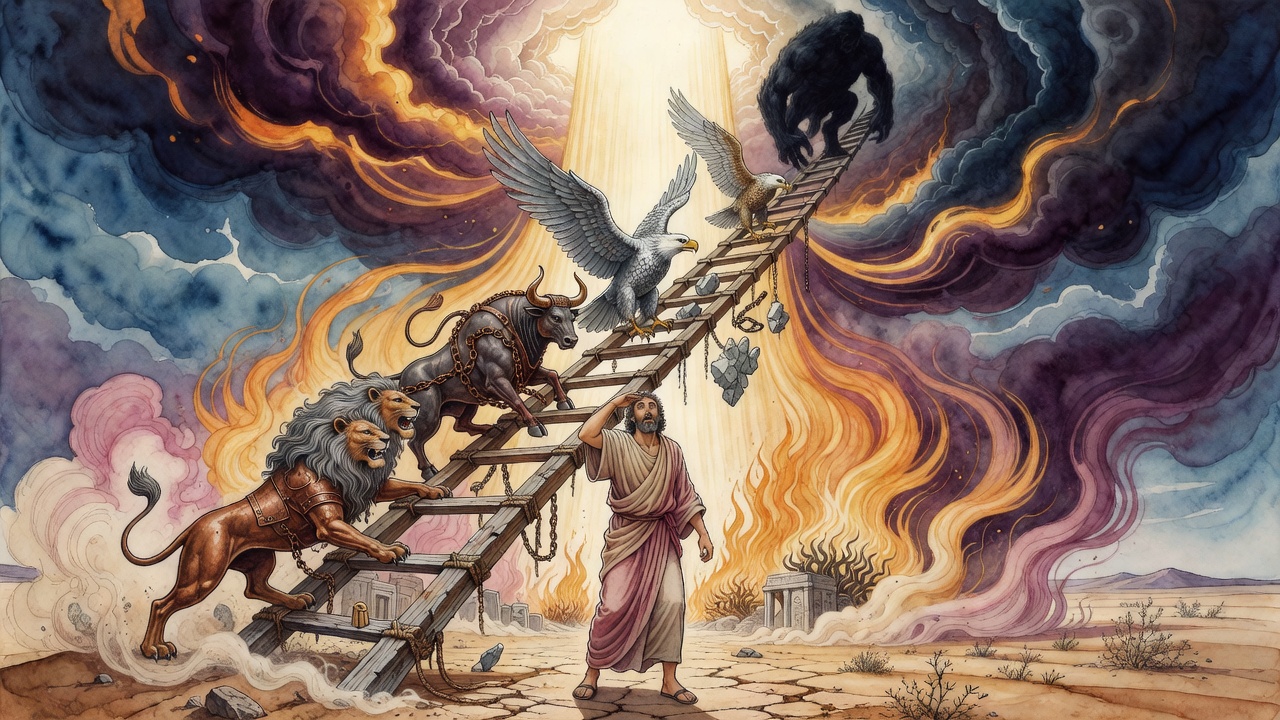
He saw a man standing alone on a hillside, and around him the dead. No army behind him. No banner, no captains, no spears lifted in rank. One man, with shoulders like a doorframe and hands that closed and did not open again until the work was done. Jacob watched him wade into the enemies of Israel the way a man wades into tall grass, and they fell, and there was no one beside him doing any of it.

Jacob had seen strength before. He had wrestled until dawn with a stranger by the Jabbok and walked away limping (Genesis 32:25). This was different. This man fought as though something larger moved his arm, and won the way only one Power wins, without help, without asking, without an ally to thank when it was over. The strongman looked, in that vision, like unto the One who delivers His people with no manner of assistance at all.

Jacob Whispers the Name He Has Waited For

The old man's heart climbed into his throat. He had been waiting his whole life. So had his father, and his father before him, the three of them passing the waiting down like an inheritance, the promise that one would come and set Israel free and not have to do it again. And here, at the very end, with the breath thin in his chest, Jacob thought he saw the face of that one.

He said it, or nearly said it. This is the Mashiach, the anointed deliverer. This is the one we have been waiting for. His lips moved on the word. The deliverer had come out of Dan, out of this very son with his hand under Jacob's, and Jacob had lived just long enough to see him.

The Vision Will Not Stop at the Victory

But the vision did not close on the triumph. It ran on, the way a road runs past the place a traveler wanted to stop, and Jacob could not look away. The hillside emptied. The years turned. And the strong man he had taken for the redeemer began to slide toward an ending Jacob did not want to watch.

He saw a woman, and a secret given away in the dark. He saw the great head shorn while the man slept, the hair that had held everything falling away in a stranger's hands. He saw the strength go out of those shoulders all at once, like water out of a cracked jar. Then he saw them take the man's eyes.

The Strong Man Goes Down Blind and Chained

The deliverer Jacob had crowned in his heart stood blind in an enemy house, chained between two pillars, turning a millstone like a beast. The hands that had broken armies pushed a grinding stone in circles, around and around, grinding grain for the people who had blinded him. There was no army behind him now. There never had been one. There was only one man, and the man was finished.

Jacob saw him set those ruined hands against the pillars one last time and pull the roof down on his own head, killing more in his dying than in all his living, and dying with them. The vision had carried Jacob all the way to the rubble. The strongman was not the redeemer. He was a single life, brilliant and brief, that ended under a collapsed roof. Whatever help he had given Israel had ended when he did.

He Lets the Messiah Go and Keeps the Hope

The old man lay still. He had reached, with the last sight he had, for the end of the long waiting, and the waiting had not ended. The deliverer he thought he had found was only a man who would die hard and young. A lesser soul would have turned his face to the wall.

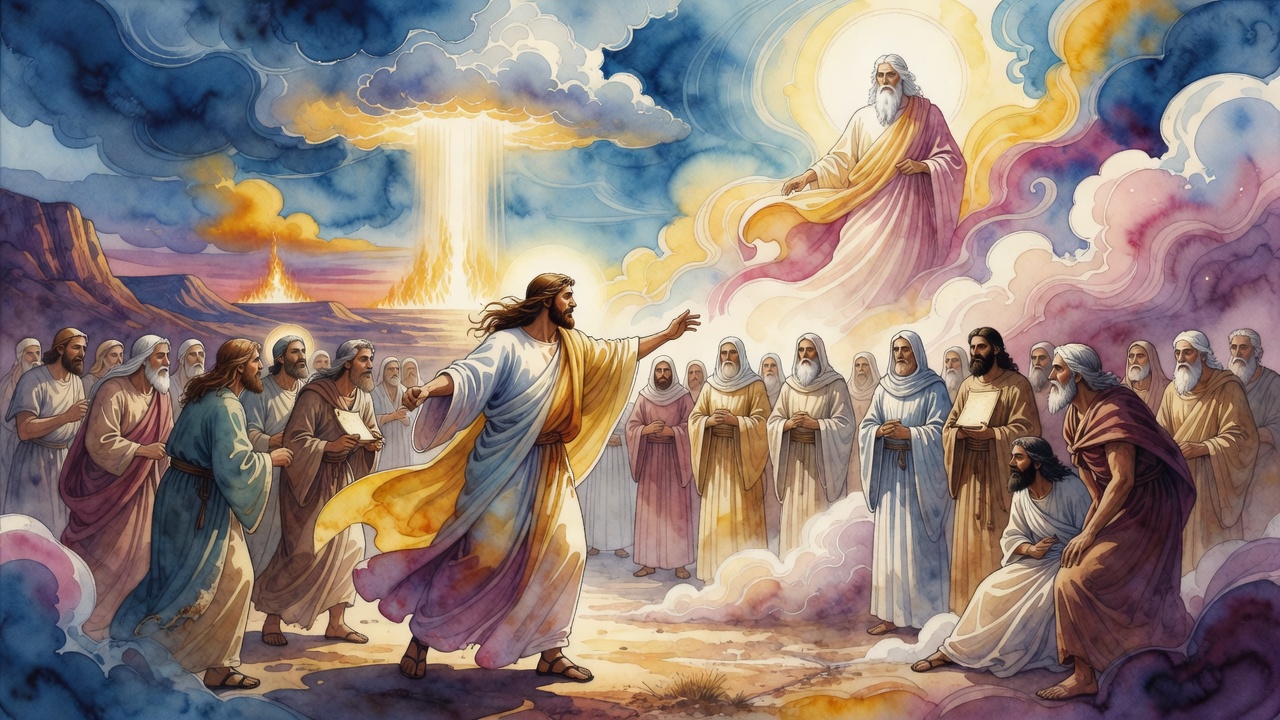
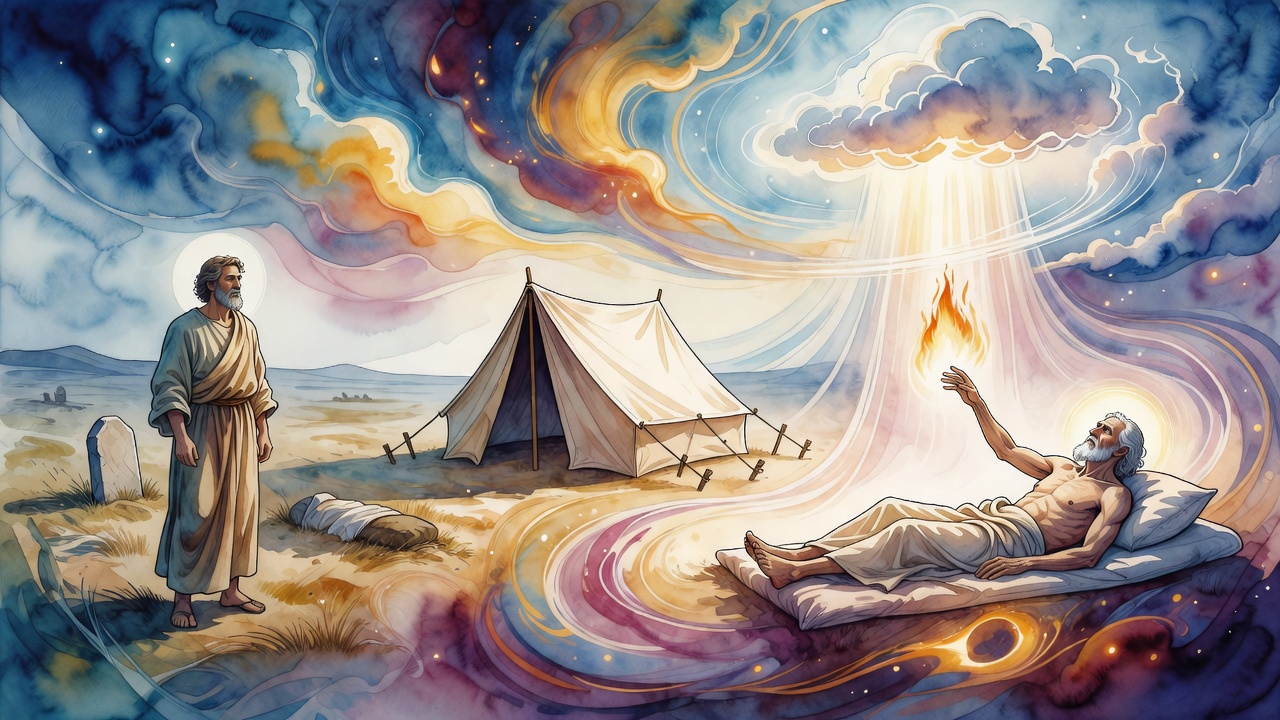
Jacob did not. He gathered what breath remained and said it out loud, into the room full of his sons who could not see what he had seen. I wait for Thy salvation, O Lord (Genesis 49:18). Samson's help lasted as long as one strong life. The help he still waited for would last to all eternity. He had been wrong about the face. He was right about the promise. He let the strong man go, kept the hope, and gave the rest of his blessings, and then he drew his feet up into the bed and was gathered to his people.


← All myths
From the tradition

Sources

3 sources

The texts this telling draws on, in full. Open a card to read inline, or expand it for a wider, quieter read.

Legends of the Jews 1:400Legends of the Jews

Take Jacob, for example, blessing his sons on his deathbed. We read in Legends of the Jews, a treasure trove of rabbinic lore compiled by Louis Ginzberg, that when Jacob blessed Dan, his mind was fixed on one of Dan’s most famous descendants: Samson. Samson, the strongman, the hero who single-handedly brought victory to the Israelites. Ginzberg tells us that Jacob saw in Samson a reflection of God's own power, a man who, "like unto God, without any manner of assistance, conferred victory upon his people." In fact, Jacob even dared to hope that Samson might be the Messiah!

Can you imagine? The sheer strength, the miraculous feats..A reader can see why Jacob might have jumped to that conclusion.

Then, a shadow fell. The knowledge of Samson’s tragic death came to Jacob, and his hopes were dashed. It’s a poignant moment. Instead of despair, though, Jacob turned to faith. He cried out, "I wait for Thy salvation, O Lord, for Thy help is unto all eternity, while Samson's help is only for a time."

In that moment, Jacob understood something profound about the nature of true redemption. Samson's strength was finite, his help temporary. True salvation, the kind that lasts forever, could only come from God.

And it gets even more interesting. Jacob continued, "The redemption will not be accomplished by Samson the Danite, but by Elijah the Gadite, who will appear at the end of time.” This is a fascinating glimpse into messianic expectations. Instead of a warrior, Jacob envisions a prophet, Elijah, heralding the end of days. It speaks to a shift in focus, from physical strength to spiritual guidance.

So, what does this all mean? It tells us that the idea of the Messiah, the Mashiach, wasn't always a fixed concept. It was something our ancestors wrestled with, debated, and re-imagined. Jacob's story reminds us that even in moments of disappointment, hope can endure. And that sometimes, the greatest strength lies not in physical power, but in unwavering faith and expectation for a future, truly everlasting redemption.

Full source
Legends of the Jews 3:101Legends of the Jews

In the Book of Genesis, Jacob, nearing the end of his life, bestows blessings upon his sons, the founders of the twelve tribes of Israel. When he blesses Dan, he likens him to Judah. What does this mean? Well, it elevated Dan's status; according to Legends of the Jews, this is why the tribe of Dan held such a prominent position in the encampment of Israel, leading the fourth division. Their prince even presented gifts before the tribes of Asher and Naphtali.

Jacob's blessing for Dan goes even deeper. According to Ginzberg's retelling in Legends of the Jews, Jacob was thinking specifically of Samson, the mighty hero who hailed from the tribe of Dan. And it's here that things get really interesting, because the gifts offered by the tribe of Dan are interpreted as allusions to Samson's dramatic life.

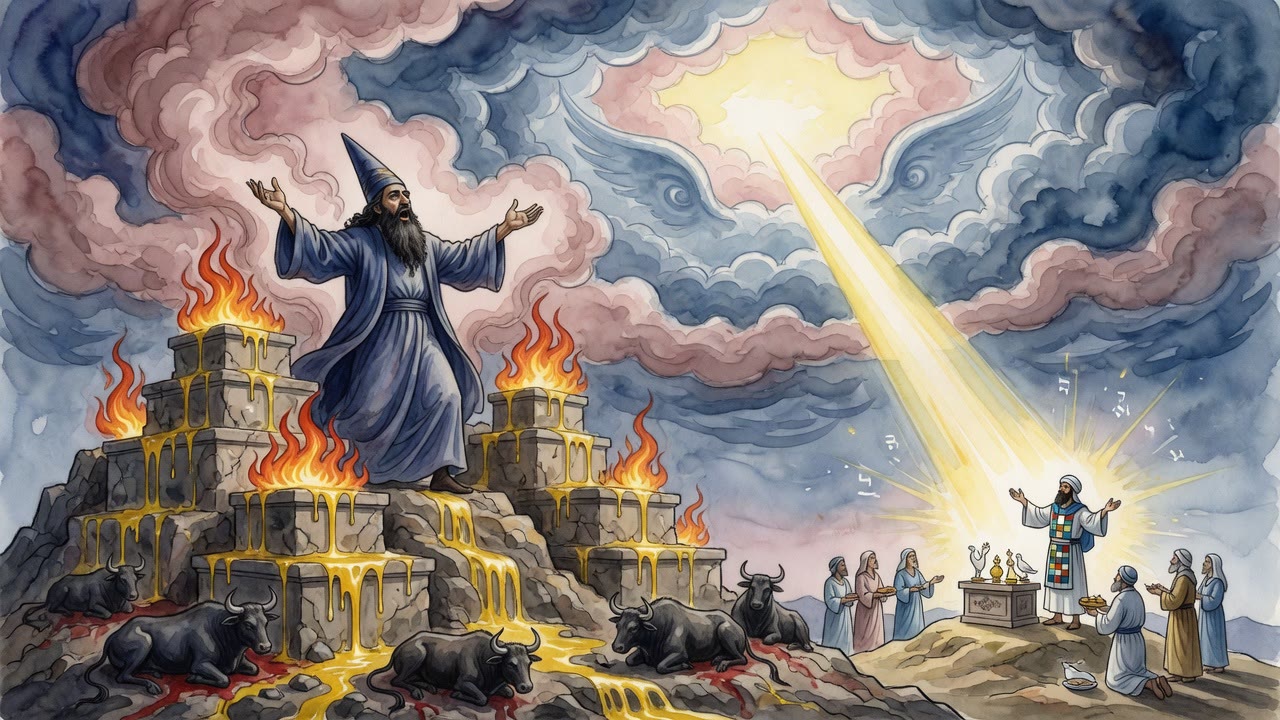
Consider the silver charger, used for storing bread. Legends of the Jews connects this to Samson's status as a Nazirite, someone consecrated to God. One of the obligations of a Nazirite upon completing their vow was to offer bread. So, in this offering, we see a reflection of Samson's sacred commitment.

Then there's the bowl, called mizrak in Hebrew. The text points out that mizrak also means "creeping." This is a bit of wordplay, and according to Legends of the Jews, it alludes to the fact that Samson was lame in both feet, so he could only "creep" or crawl.

The spoon of ten shekels of gold? That represents the ten laws imposed on Nazirites, rules that Samson, in theory, had to follow. The three burnt offerings also carry significance. Remember Samson's mother? The angel gave her three specific instructions: she was not to eat anything that came from the vine, drink wine or strong drink, or eat anything unclean.

And the sin offering, a kid (sa'ir in Hebrew), is linked to the admonition given to Samson's mother not to shave his hair (se'ar in Hebrew). See the connection? It's a subtle but powerful link.

But it doesn't stop there! The two oxen offered by the tribe symbolize the two pillars that Samson grasped to bring down the house of the Philistines, a moment of ultimate sacrifice and strength. And finally, the three kinds of small cattle presented as offerings represent the three major battles that Samson fought against the Philistines.

So, what does all of this tell us? It reveals the depth and complexity of biblical interpretation. It shows us how stories can be layered with meaning, how seemingly simple offerings can become powerful symbols of a hero's life and destiny. It reminds us that even in the smallest details, we can find echoes of larger narratives. It makes you wonder, what other secrets are hidden in plain sight in the sacred texts?

Full source
Targum Pseudo-Jonathan on Genesis 49:18Targum Pseudo-Jonathan on Genesis

After prophesying Samson's rise, Jacob pauses. The next verse in Genesis 49 is almost a sigh. "For Thy salvation have I waited, O Lord." Targum Pseudo-Jonathan unpacks the grief and the hope inside that line.

"When Jakob saw Gideon bar Joash and Shimshon bar Manovach, who were established to be deliverers, he said, I expect not the salvation of Gideon, nor look I for the salvation of Shimshon; for their salvation will be the salvation of an hour; but for Thy salvation have I waited, and will look for, O Lord; for Thy salvation is the salvation of eternity" (Genesis 49:18).

Jacob sees the whole conveyor belt of Jewish heroes. Gideon will defeat Midian with three hundred men (Judges 7). Samson will break the Philistines. Each victory will be real. Each victory will be temporary. Jacob names the pattern without bitterness, "the salvation of an hour". And then turns his eyes past every judge, every king, every partial deliverance, and asks for something more.

Purqanaq. Your salvation, the redemption from the Holy One directly, which the tradition identifies with the days of the Meshiha and the world to come. Jacob dies looking past the hills of history to the horizon where redemption never rolls back.

Full source