Abraham Sees the Ten Plagues and the Elect One at the End of Days
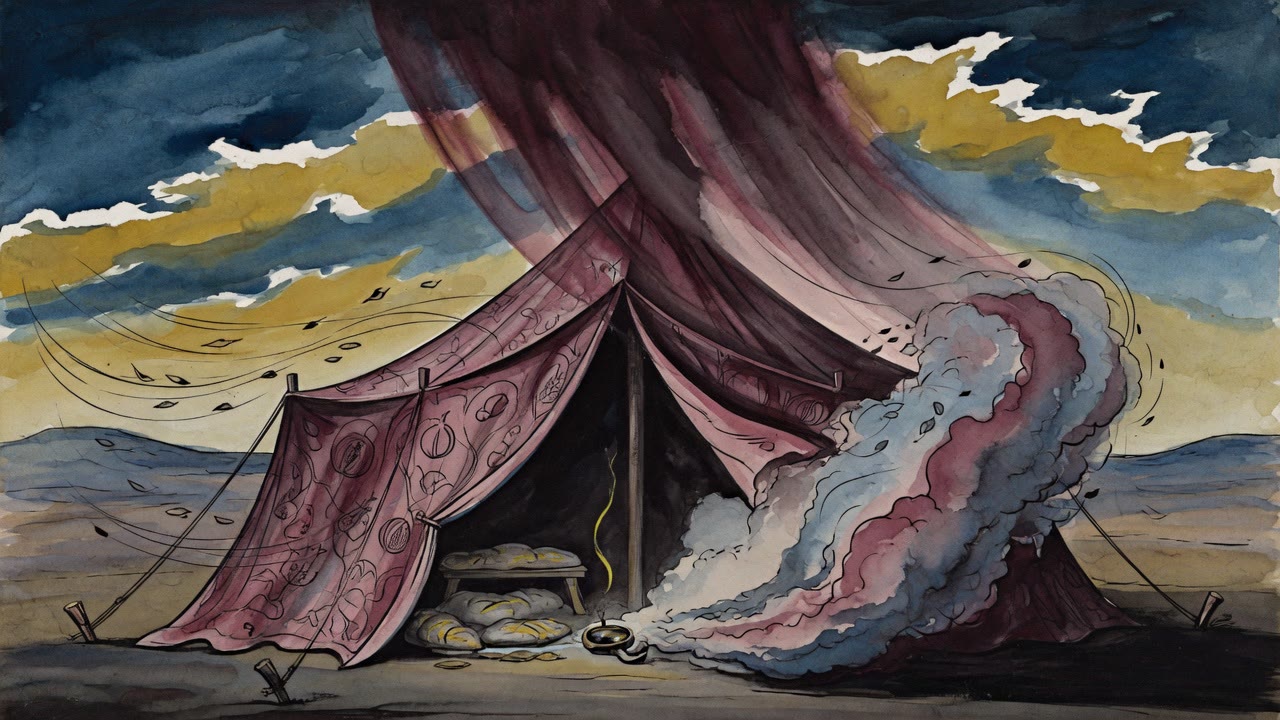
An unclean bird landed on the split carcasses and told Abraham to run before the fire took him. He stayed, and learned how long the age had left.
Table of Contents
 Click for full size
The Bird That Came Down on the Carcasses
Abraham had done all of it exactly as the angel said. The animals cut down the middle, the halves laid out facing each other on the high ground, the birds kept back and handed over. Now there was nothing to do but stand there until evening and wait for whatever was coming.
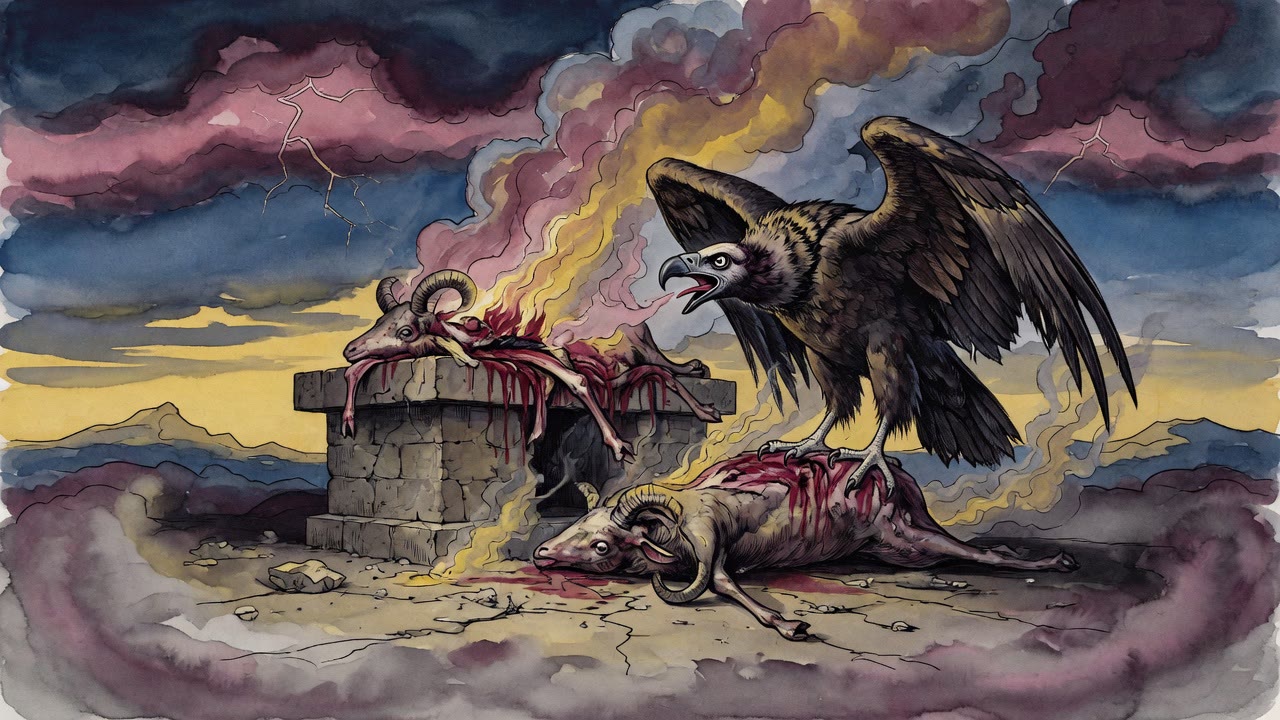
An unclean bird dropped out of the air onto the meat. He waved it off. It came back, and it spoke to him.
"What are you doing up here, Abraham, on the holy heights? Nobody eats here. Nobody drinks here. There is no food on this mountain for a man. The ones standing next to you burn everything with fire, and they will burn you up along with it. Leave the man you came with. Run. If you go any higher they will finish you."
Abraham turned to the angel beside him and asked what he was hearing.
"That is ungodliness," Iaoel said. "That is Azazel."
The Angel Took the Robe Off Him
Then the angel turned on the bird.
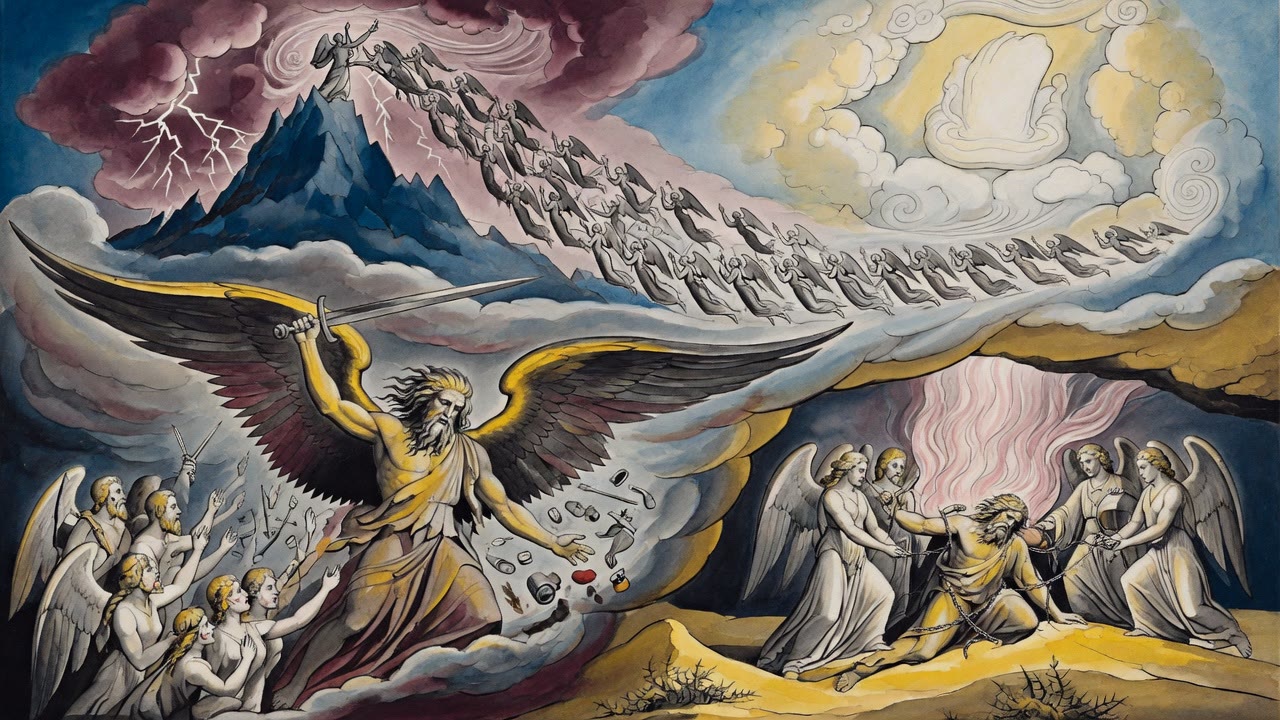
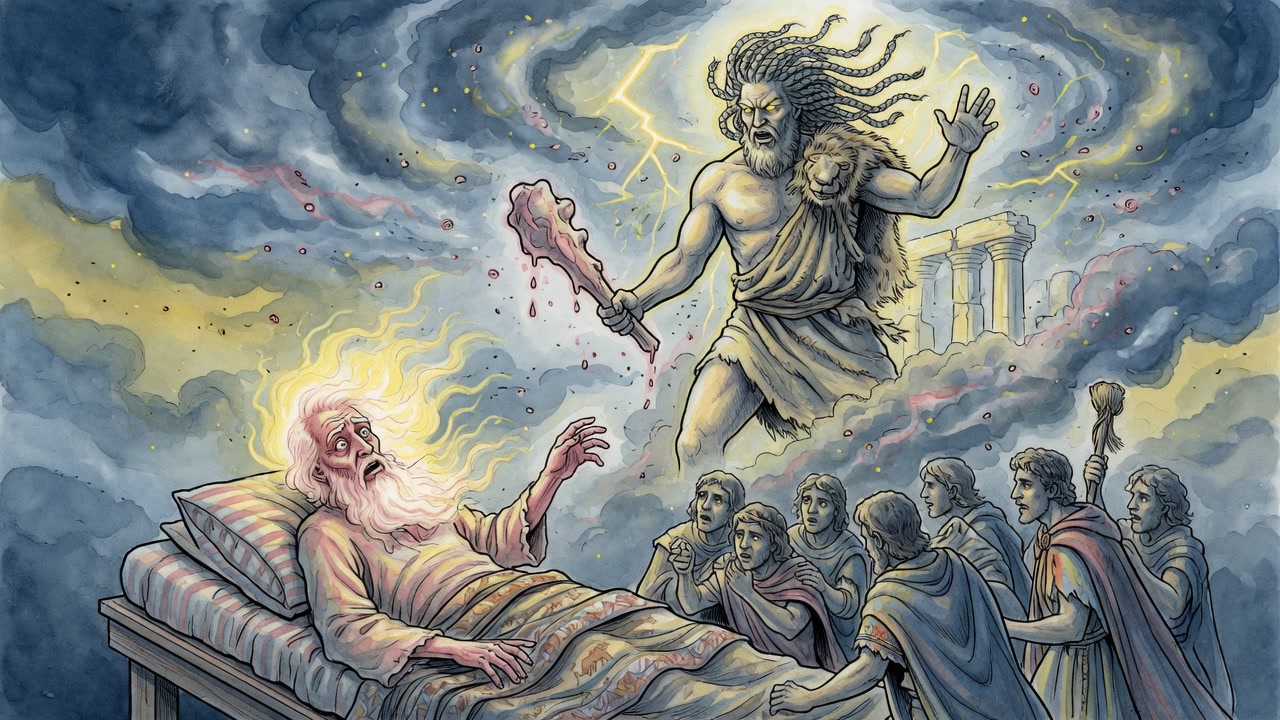
"Disgrace on you, Azazel. Abraham's portion is in heaven. Yours is on the earth. You picked the earth to keep your uncleanness in, so the Eternal made you live in it, and every lying spirit comes through you, and every rage and every trial that lands on the ungodly generations comes through you. The bodies of the righteous were never put in your hands. Get away from this man. You cannot turn him, because he is your enemy. And the robe that used to be yours up here has been set aside for him. The dying that was his has been handed over to you."
The bird went. Abraham stayed on the mountain, and the evening came, and the vision started.
The Picture Spread Out Under Him
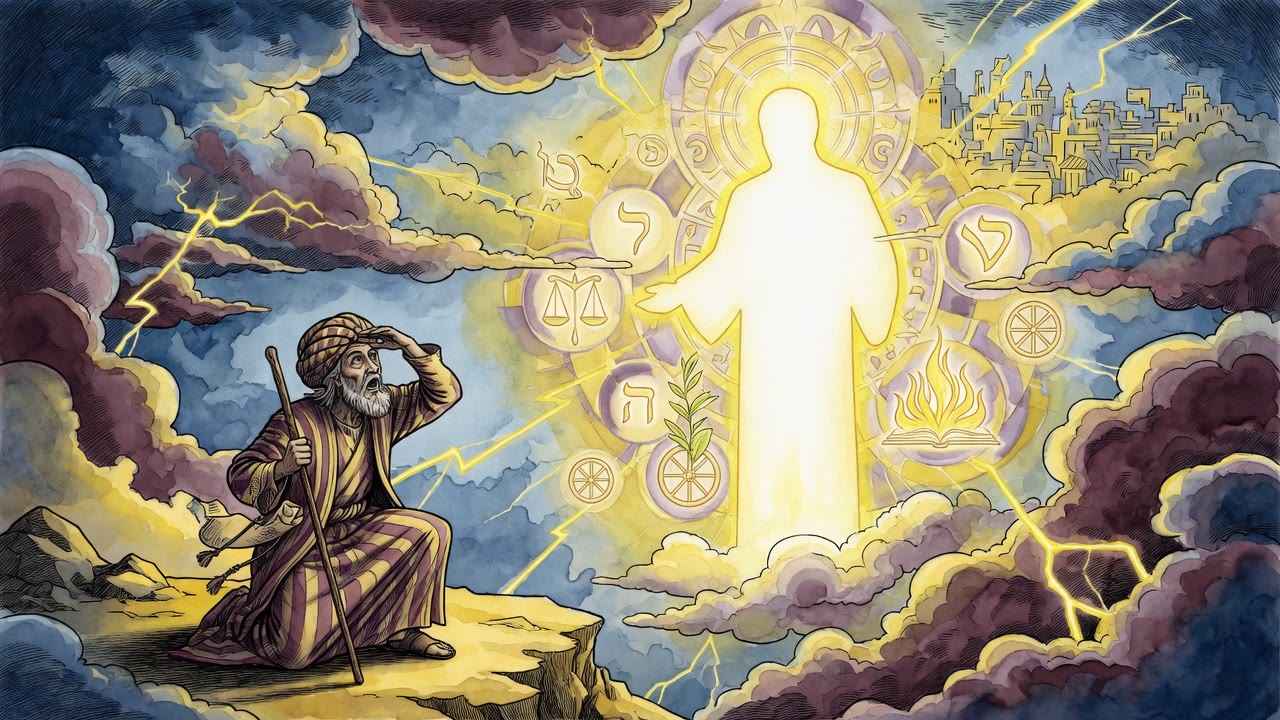
He went up on the wings of a dove, past the firmament, and stopped where he could see everything at once.
What lay under him was not a landscape. It was a picture, and his own descendants were in it, and so was the ground where they would stand to worship, and that ground was burned and empty. God told him to count it up and look closer.
"How long is an hour of this age?" Abraham asked.
"Twelve. Twelve hours I have set for this ungodly age to run among the nations and in your seed. Until the end of the times it stays as you saw it."
Ten Blows at the Twelfth Hour
He watched the twelfth hour arrive.
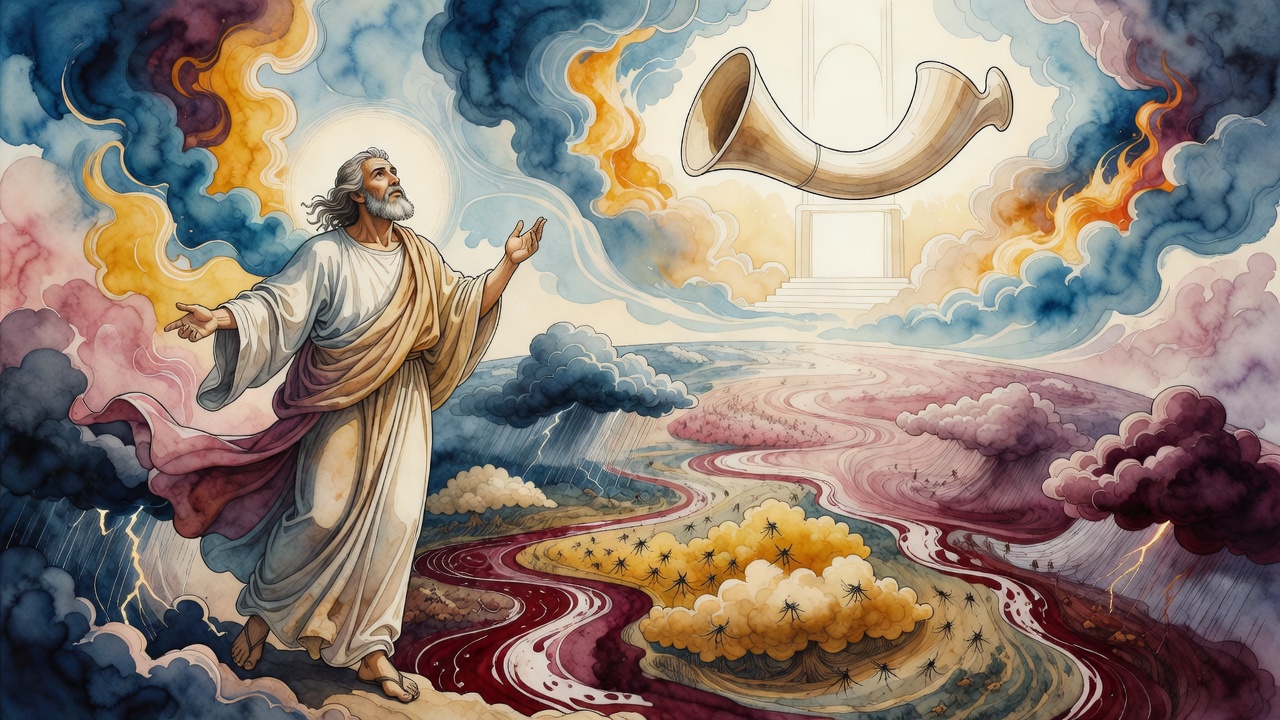
"Before the age of the righteous begins to grow," God said, "my judgment comes down on the lawless nations, and it comes through the people of your seed, the ones I set apart for myself. In those days I bring ten plagues onto every creature on the earth. Misfortune. Disease. The groaning of the soul in its own grief. All of that, because of how they provoke me and what they do to what I made."
Some of Abraham's line came through it. Their number was kept secret, held back with God and told to nobody, and they were moving fast toward a place prepared for them beforehand, which was the same burned ground he had just been looking at in the picture.
The Trumpet and the One With One Measure
"Then I sound the trumpet out of the air," God said, "and I send my Elect One. All my power is in him, one measure of it. He calls my despised people back in from the nations."
The rest of what Abraham heard was fire. Fire for the ones who insulted that people and ruled over them for the length of this age. The men who covered God with mockery handed over to the mockery of the age coming, dropped into the fire below the ground, sent flying back and forth through the dark under the earth with no place to stop.
And underneath the sentence, something that was not a sentence.
"I was hoping they would come to me. That they would not love a strange god and praise him. That they would not hold onto someone they were never allotted to. They walked out on the mighty Lord instead."
Then the voice turned back to the man standing in it.
"See, Abraham, what you have seen. Hear what you have heard. Know what you have come to know. Go to your inheritance. I am with you forever."
He went back down to the plain, into the same body the bird had told him to save, and said nothing to anyone. Everything he had been shown was still in front of him and would take generations to arrive. Up above, folded away where he could not reach it yet, a robe was waiting that used to belong to something else.
← All myths