Joseph Prayed in the Storm and Trusted a Butler Over God
The butler tied a knot in his sash so he would remember the prisoner. An angel came and undid it, and two more years went by.
Table of Contents
 Click for full size
He Prayed and the Storm Broke
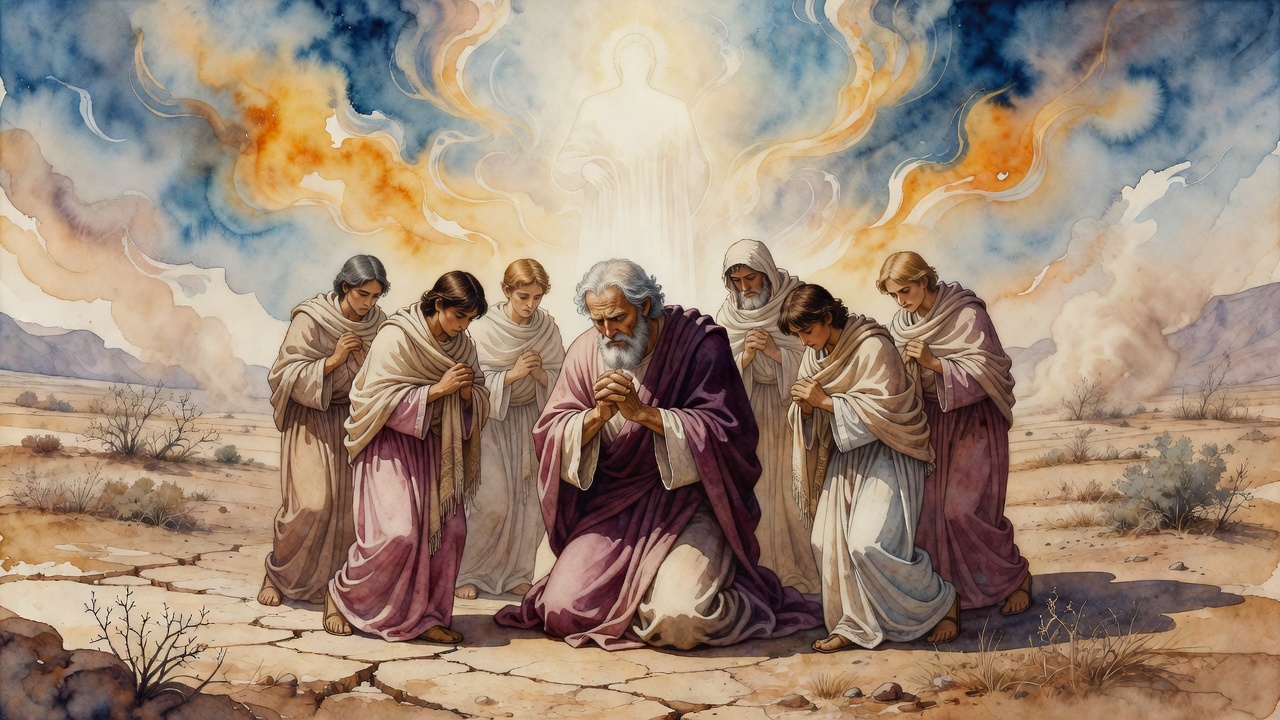
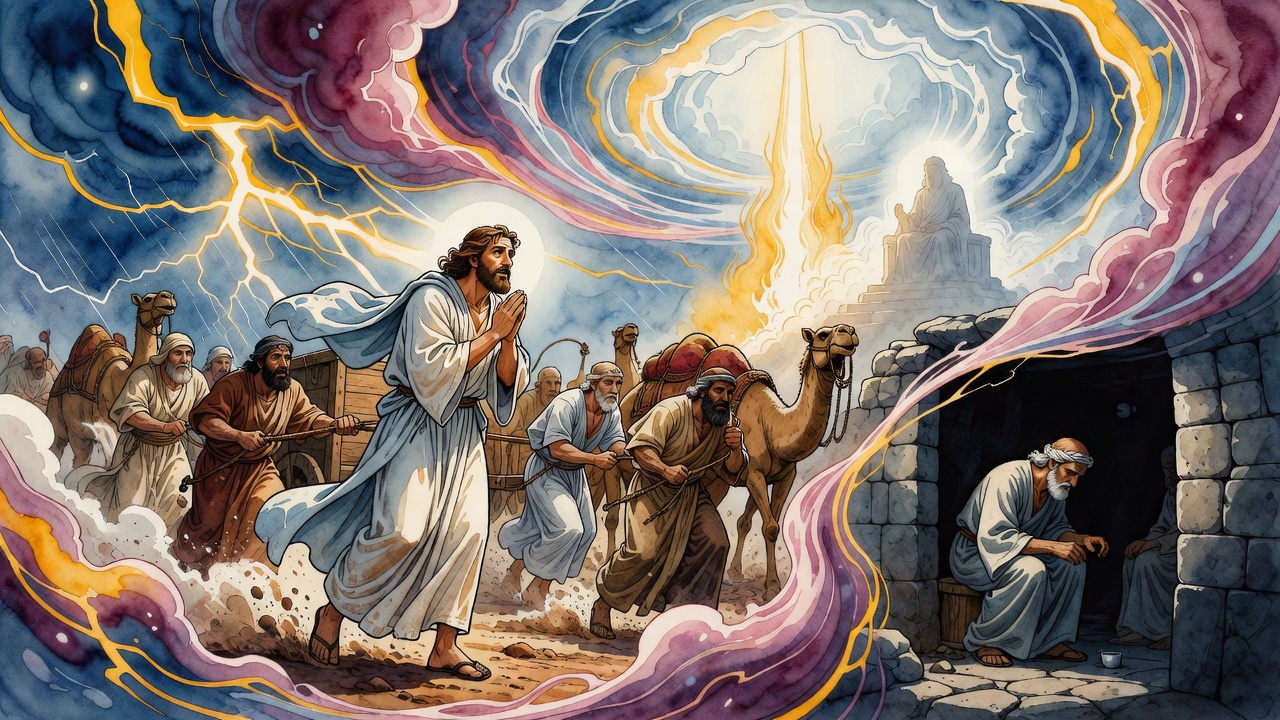
The camels went down without warning. Loads pitched sideways. The Ishmaelite traders who had pulled a boy from a cistern two days ago now stood in chaos on the open road, animals on their sides, the sky split over them.
They came to Joseph.
Not to return him. Not to apologize. To ask him to pray.
"We have sinned against God and against thee," they said. "Entreat Him to take this death plague from us, for we acknowledge that we have sinned against Him." The boy they had purchased stood among their fallen animals and heard this. He prayed. The storm broke. The beasts found their feet. The caravan moved on.
The men who had just confessed did not let him go. Within the hour they were arguing whether to turn back and take him to his father. One voice said yes. Pride settled it. They had already come too far. They sold him faster instead.
Joseph arrived in Egypt as property.
The Harp She Wanted Him to Play
In Potiphar's house his reputation arrived before his face. Zuleika had heard the prayers. When he entered the courtyard she said, "How lovely and pleasant are thy words. Take thy harp, play and sing, that I may hear thy words."
Joseph understood the request. "Lovely and pleasant are my words," he said, "when I proclaim the praise of my God." He did not raise his eyes. She offered him a golden comb for his hair. He told her to care for her household. She offered garments for morning, noon, and night. He declined them. She threatened to have him thrown in prison. He answered that God frees the imprisoned. She threatened to blind him. He answered that God opens the eyes of the blind.
She had him thrown in prison anyway.
In the dungeon he was useful again.
The Ask at the Cell Door
The royal butler and the royal baker arrived carrying dreams they could not read. The butler dreamed of a vine with three branches that blossomed and ripened while he pressed grapes into Pharaoh's cup. The baker dreamed of three baskets on his head, birds eating from the topmost one.
Joseph read both in a single morning. The butler would be restored in three days. The baker would be hanged. Both readings proved exactly right.
Before the butler left, Joseph asked one thing of him. "When it is well with thee, show kindness to me, I pray thee, and make mention of me unto Pharaoh, and bring me out of this house" (Genesis 40:14). He named the case plainly. Stolen from his father's land. Innocent of any crime. Confined without cause.
He did not ask God. He asked a man with access to Pharaoh's ear.
The butler walked out into the sun. Joseph watched the door close.
The Knot the Angel Undid
He had already served ten years in that prison by the time the butler left. Joseph had gone to his father with an ill report about his ten brothers, and the years in the dungeon were understood as the measure of that lashon hara (לשון הרע), the careless speech. The ten years were nearly satisfied. He should have gone free the day the butler walked out.
Instead, two more years passed.
The butler had not meant to forget. He tied a knot in his sash so the prisoner would stay in his mind. If thus and so happens, he told himself, I will remember Joseph. The conditions he imagined were sure to reverse. If he made another knot as a reminder, an angel came and undid it, and Joseph did not enter his mind. "The chief butler did not remember Joseph, but forgot him" (Genesis 40:23).
Two years. Not an empty delay. A proportioned answer to where Joseph had placed his trust. He had prayed in the storm. He had turned Zuleika's mouth back toward heaven. At the cell door he trusted a butler over God, and the extra years were the cost of that turn.
Pharaoh Dreamed and the Butler Remembered
Pharaoh dreamed, and this time the butler remembered. He confessed the forgotten promise and named the prisoner who had read his dream correctly. Joseph washed, changed his clothes, and stood before the most powerful man in Egypt.
He read the seven fat cows and the seven gaunt cows, the seven full stalks and the seven blasted ones, as seven years of plenty followed by seven years of famine. Then, without being asked, he told Pharaoh what to do. Appoint a man of discernment. Take a fifth of each harvest in the good years. Store it against the hunger.
Pharaoh looked at his court. "Can we find such a man as this, in whom the spirit of God is?" (Genesis 41:38). He put a ring on Joseph's hand that day. Fine linen. A gold chain. A chariot. A new name. Joseph was thirty years old.
When the famine spread and people from every nation arrived at the granaries, Joseph spoke to each nation in its own tongue. They called him Turgeman (תורגמן), the interpreter (Genesis 42:23). The boy who had prayed in the dark was now selling grain in the light, and the butler's knot was long since undone.
← All myths