Metatron Was the Unnamed Man Who Sent Joseph to His Brothers
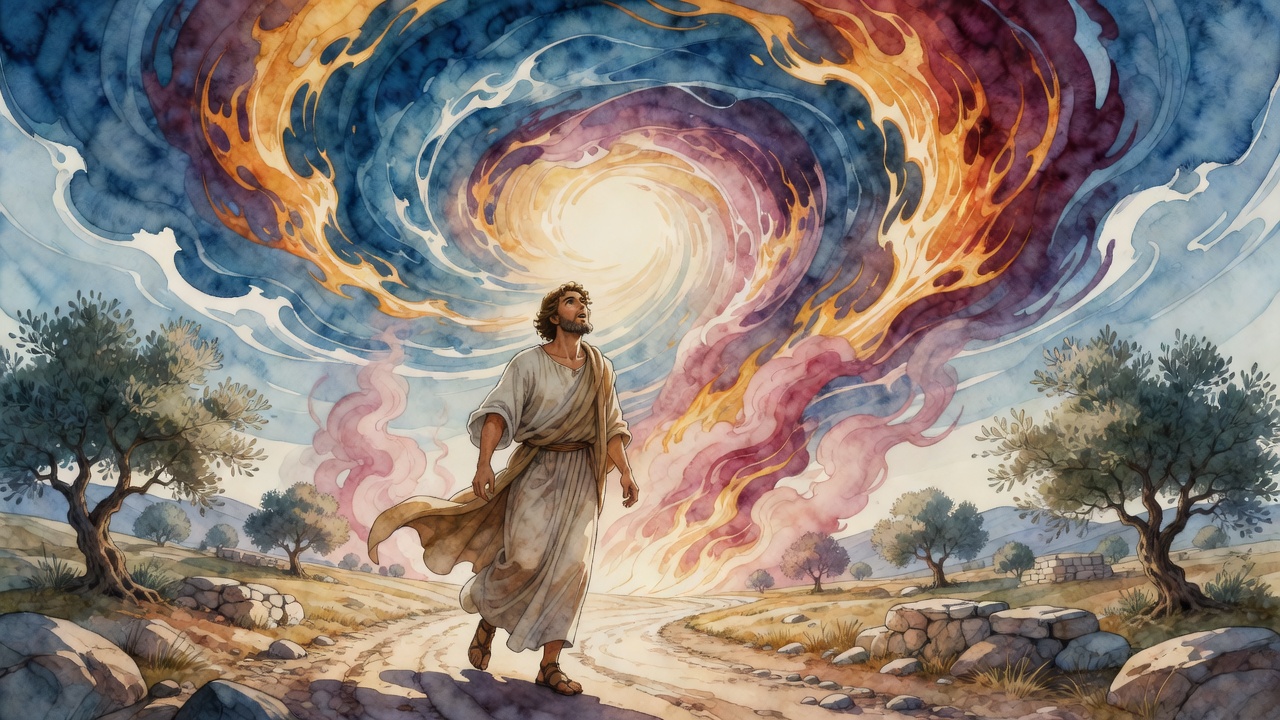
Joseph walked the empty field near Shechem calling for his brothers. A stranger pointed him to Dothan. The coat came off that day.
Table of Contents
The coat was still stiff on Joseph's shoulders when the field went empty. Jacob had sent him to Shechem for news of the brothers. He called their names. Wind came back. The flocks were gone.
 Click for full size
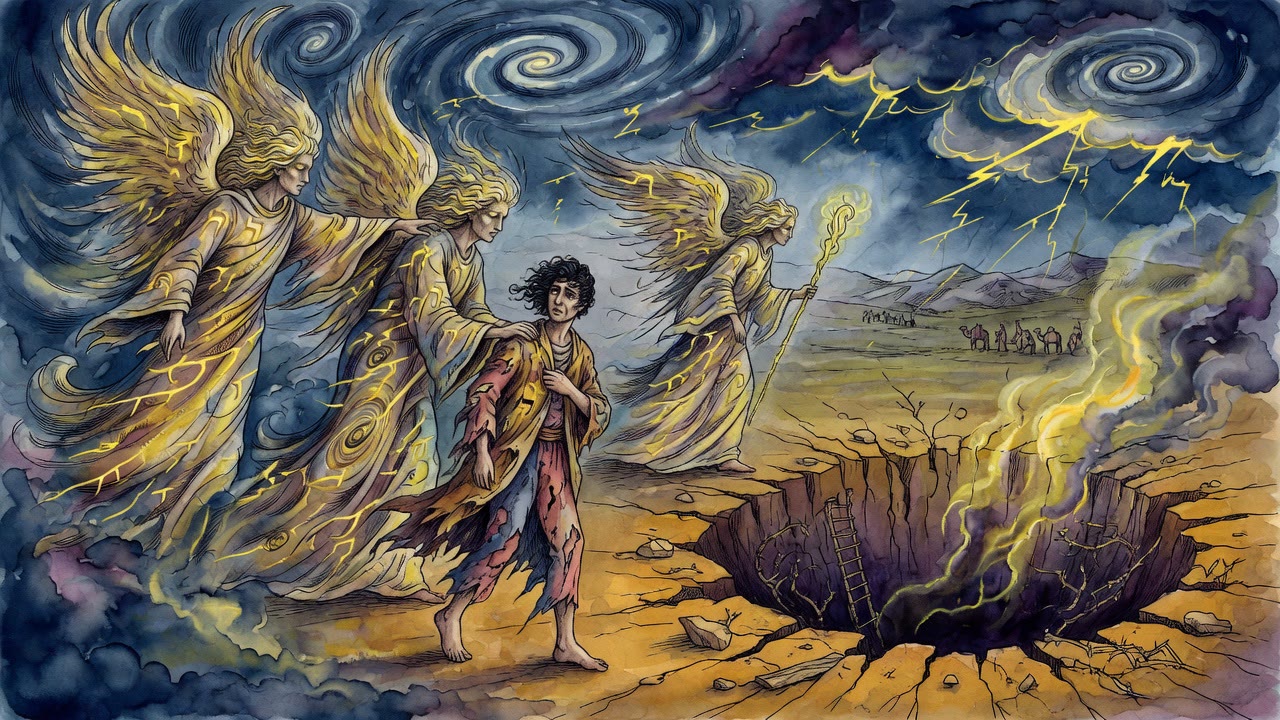
A man found him wandering. Joseph had not found the man. The man found Joseph (Genesis 37:15).
The Man Asked What He Sought
"What do you seek?" the man asked.
"I seek my brothers," Joseph said. "Tell me where they are herding."
The face that had found him was already changing. A second mouth asked the same question. A third pointed north toward Dothan. "They have gone from here. I heard them say, Let us go to Dothan."
From here. The brothers had left more than a pasture. They had walked out of the mercy that belongs to the Place. Joseph took the road they had named. He did not know a dry cistern waited at the end of it.
Gabriel Spoke from Behind the Veil
The stranger wore a man's walk and a man's dust. His name was Gabriel. He had come in the likeness of a man because a boy in a field would take a road from a man, not from a wing.
Gabriel did not only give directions. He told Joseph, as if the words had been heard beyond the Veil, that from this day the servitude in Egypt would begin. Dothan was not a kindness. It was an appointment.
Simeon and Levi were already in counsel. They had been brothers in the killing at Shechem. They would be brothers in the pit. Reuben sat in the hills fasting for the couch of his father, so he was not there when the sale was made. Joseph walked toward men who had already decided what to do with a dreamer.
Metatron Waited in the Lower Nest
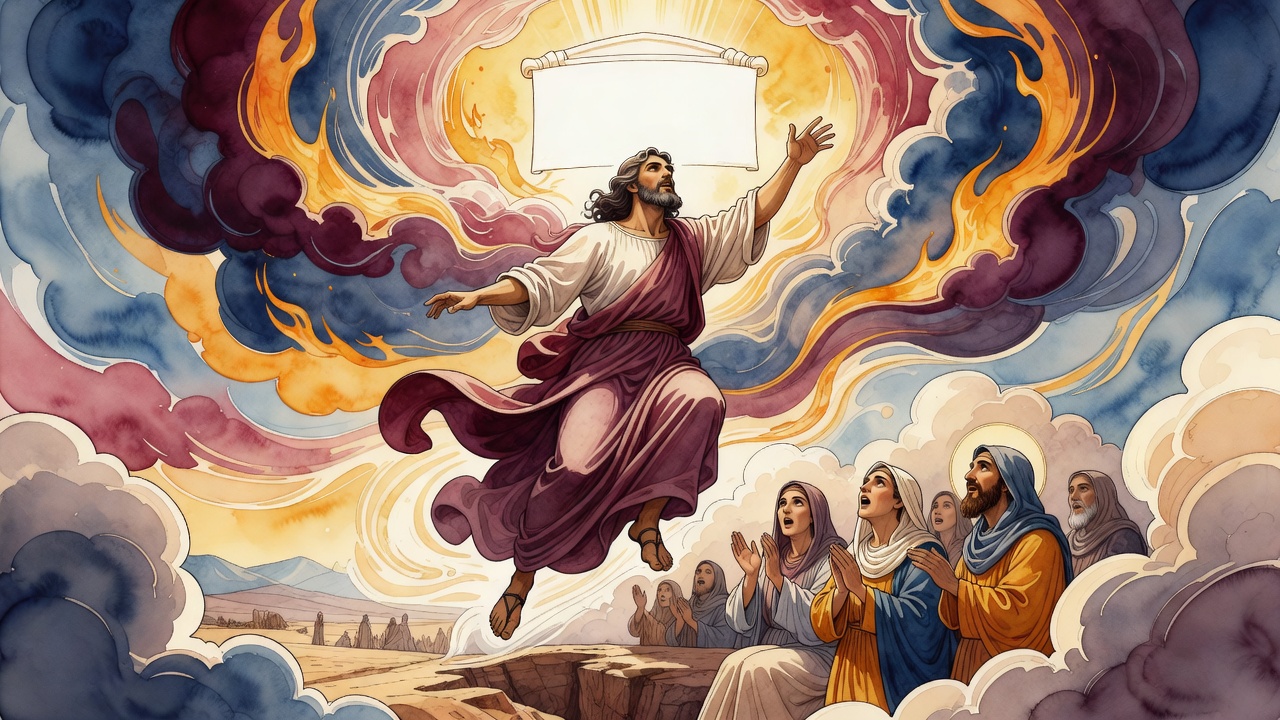
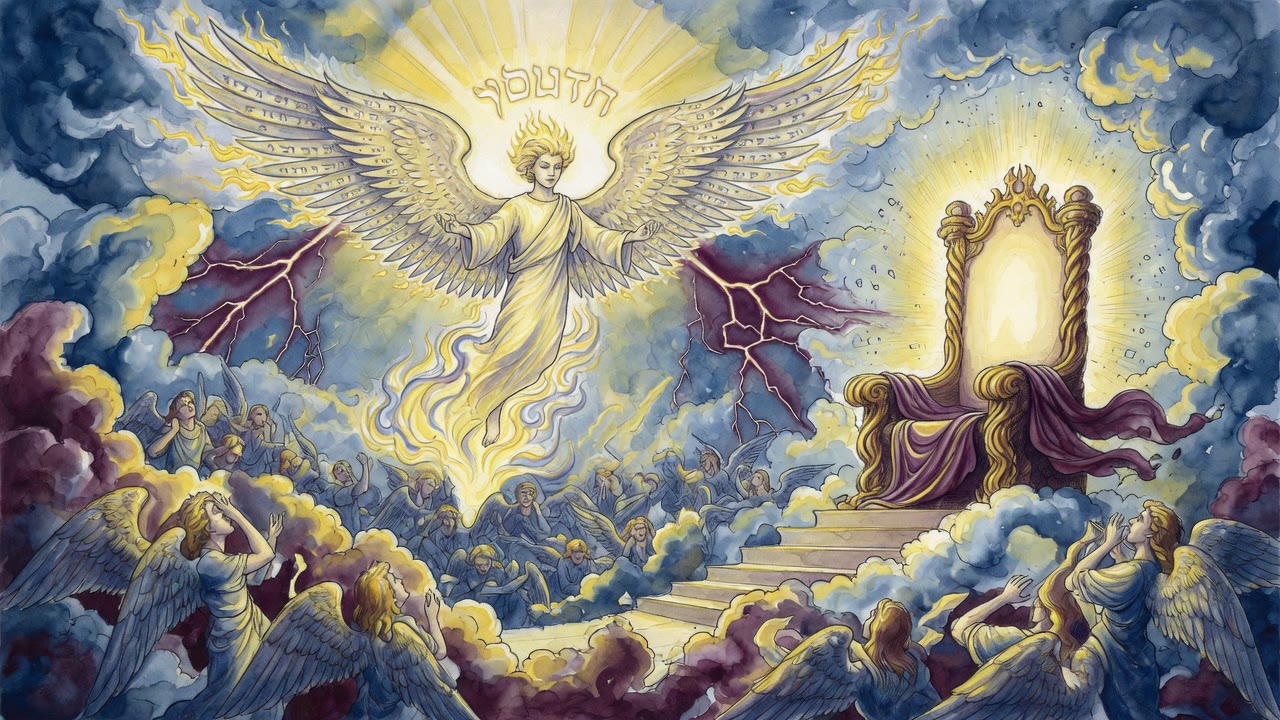
The figure in the stubble was also Metatron, prince of the world, the man who had once been Enoch and now kept the record. Above him a nest: the Divine Throne. Below him a nest: his own station, where upper plan touches lower dust.
He was not guessing where the brothers had gone. He had read the line already. The coat. The empty cistern. The caravan. The years in Egypt. The ring on Pharaoh's right hand. The unnamed man in the field was the scribe of that line, standing in the lower nest so a lost boy would take a road that looked like help.
Joseph went to Dothan. The brothers saw him from afar and said, "Come, let us set the dogs on him." They stripped the coat. They threw him into a pit with no water. "Behold, that master of dreams is coming." God answered the plot in His own mouth. You say we will see, and I say we will see whose word will stand (Jeremiah 44:28).
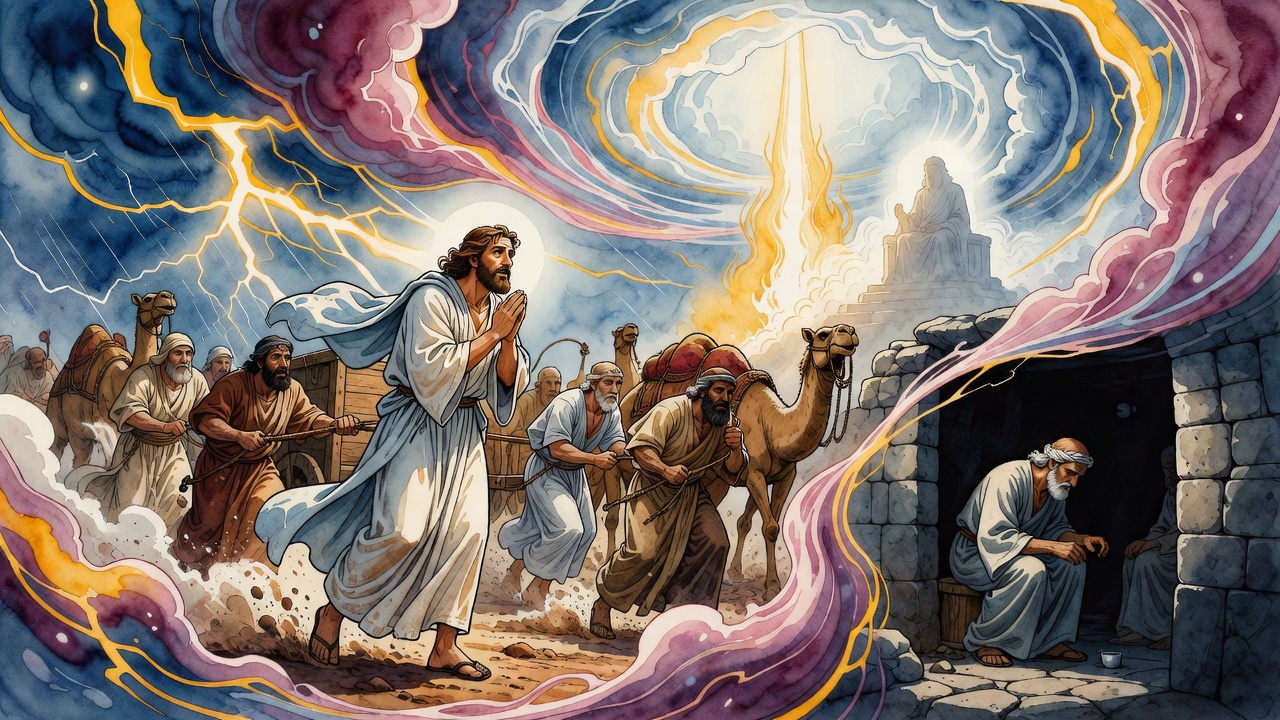
A caravan bought him. The man from the field did not come down into the cistern. The appointment had been kept.
An Angel Untied the Butler's Knots
Years later Joseph sat in Potiphar's prison and did the one thing the field had taught him not to do. He asked a man for the exit. "Mention me to Pharaoh," he told the royal butler (Genesis 40:14). The butler went free. Joseph stayed.
He had already served ten years for the evil speech he had brought his father about the brothers. The extra two years were for the sentence he put in a human mouth. Whenever the butler tied a knot in his garment to remember Joseph, an angel came and untied it. The reminder would not hold. Flesh and blood forgot on schedule.
Jacob had taken the bloodied coat and refused the story of a wild beast. "A beast of the wilderness has not eaten him," he said. "An evil woman stands against him." The Holy Spirit had already shown Potiphar's house. The field had already spent its stranger.
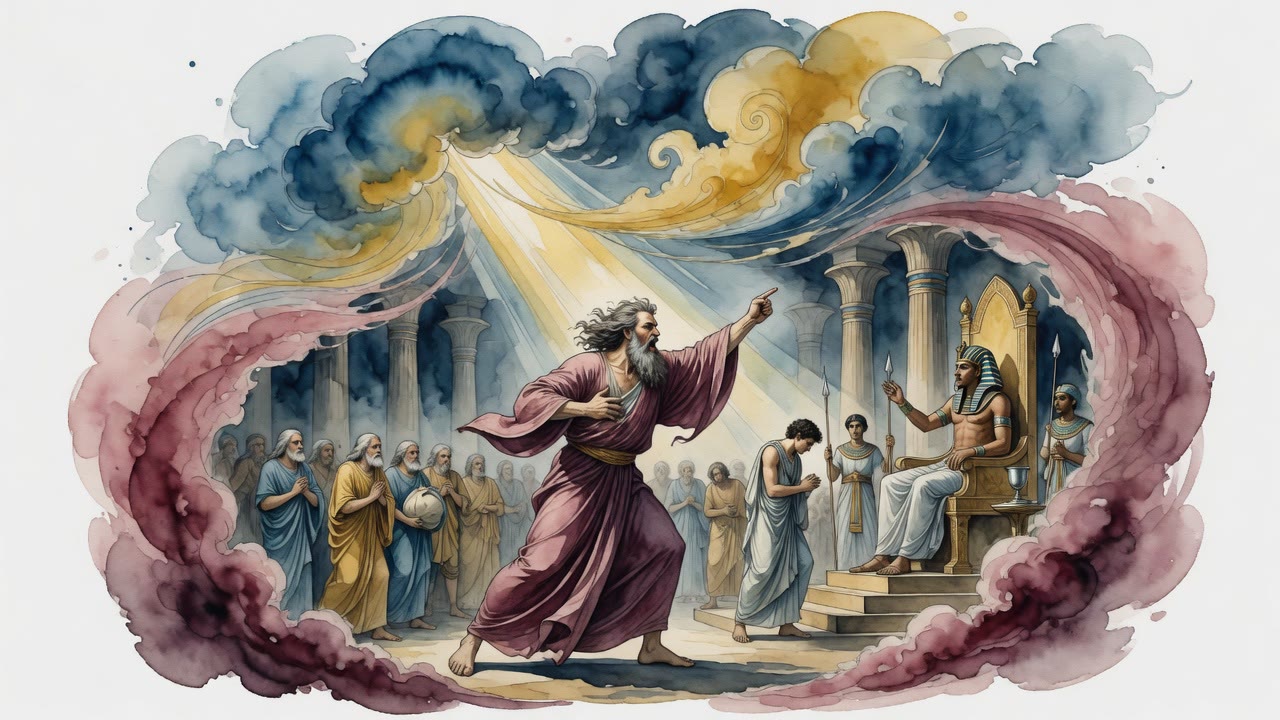
At the end of two full years Pharaoh dreamed. The butler's mouth opened. Joseph was shaved and brought up. The same order of force that had found him in the field delivered him from the pit. He had not needed the butler. He had needed to learn that.
The unnamed man never gave his name. Joseph kept the scar of the road anyway. Dothan first. Then Egypt. Then a ring on his hand. The field still sat empty behind him.
← All myths