5 min read

The Tear in Jacob's Robe Reached Esther and Joshua

Joseph's brothers sold him, ate, and sealed their secret. The debt returned through Esther's danger and Joshua's torn clothes.

Curated by Arthur · Told by Maggid ·
Table of Contents
  1. The Shoes on Their Feet
  2. A Robe Dipped in Blood
  3. The Banquet in Shushan
  4. Joseph Stops the Debt From Growing
  5. Joshua Tears His Clothes

The sandals were new.

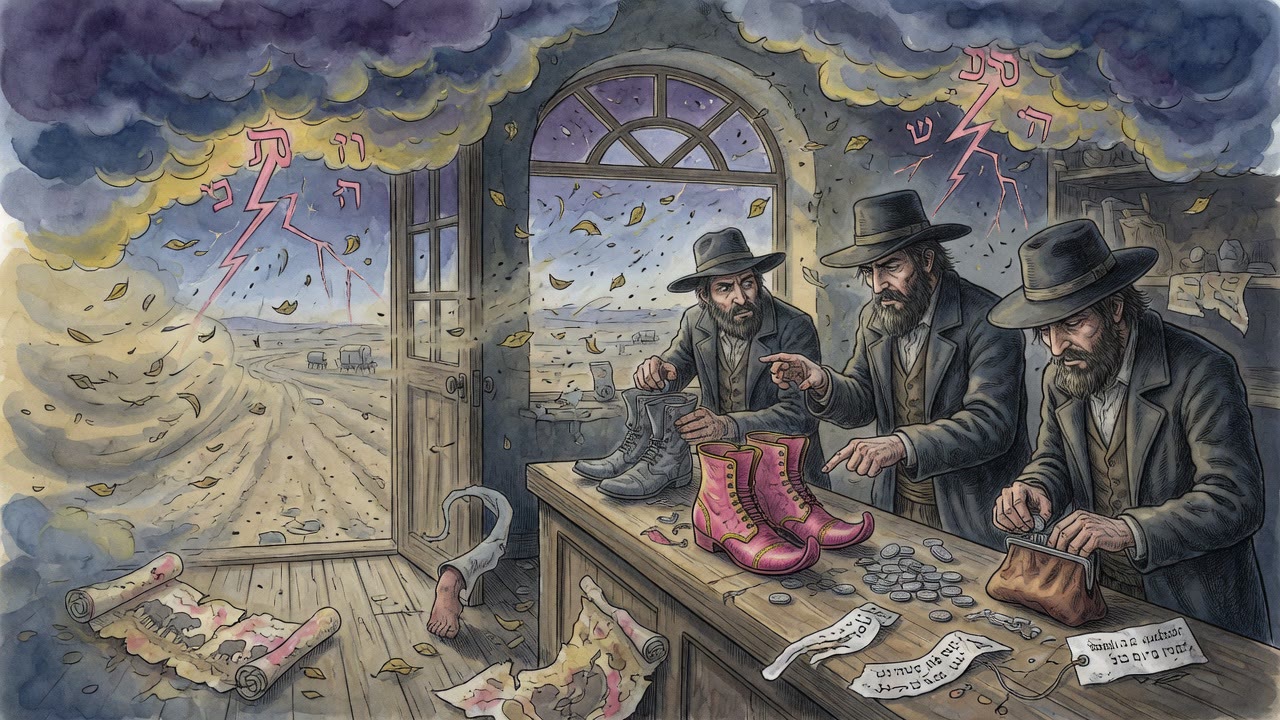
That is the hard little detail the brothers carried away from the pit. Joseph had vanished down the road with strangers. His cries had thinned into dust. In their hands lay twenty pieces of silver, the price of their brother's body, and before the day was finished each man had taken his share and put it under his feet.

They could walk now. That was the horror of it. A boy was being dragged toward Egypt, and the men who had stripped his robe could feel fresh leather between themselves and the ground.

The Shoes on Their Feet

They had already learned how to make a crime look orderly. First came the pit. Then the sale. Then the meal, bread broken while Joseph was still within reach of their ears. They sat and ate as if hunger had the right to continue after betrayal, as if chewing could make the sound of a brother's pleading disappear.

When Reuben was gone, the secret needed a wall around it. Judah counted the men. A ban required ten, and there were not ten brothers present who could seal it. So they did the most frightening thing possible. They drew the Holy One into the silence. Heaven itself was made the tenth witness, not to justice, but to concealment.

A Robe Dipped in Blood

Then they staged grief for their father.

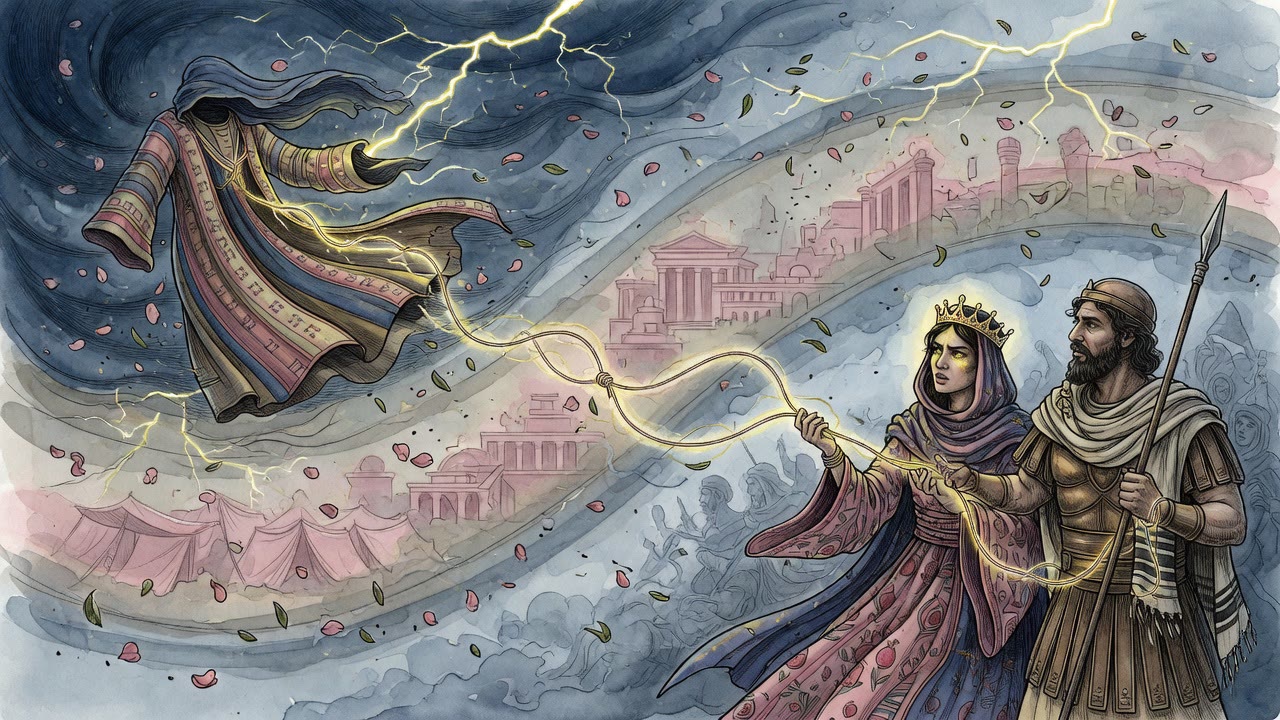
The robe came back without Joseph inside it. The bright garment was ruined with blood, and Jacob recognized it before anyone had to speak. His hands took hold of the cloth. His house waited. The old man tore his clothes, and the sound of the tearing became part of the family's inheritance.

No one in that room could see how far torn fabric can travel. The brothers thought the robe had done its work. Jacob would mourn. Joseph would disappear. Their secret would harden into family history. But grief has a longer memory than fear. The cloth had opened, and it would keep opening.

The Banquet in Shushan

Many generations later, in a palace heavy with gold cups and royal wine, another sale was written down.

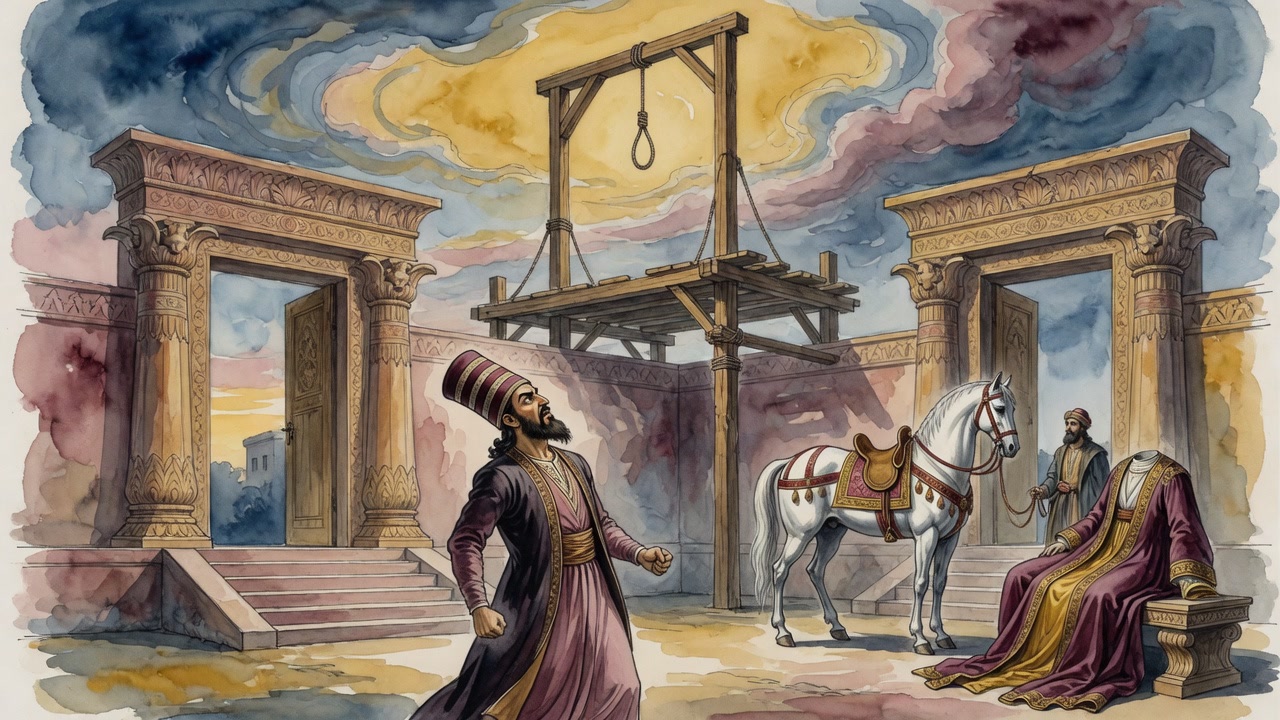
Haman wanted one Jew bent before him. Mordecai would not bend. One man's refusal was too small for Haman's rage, so he widened the sentence until it covered every Jewish man, woman, and child in the king's 127 provinces. The king handed over his ring. Scribes wrote the letters. Riders prepared to carry death across the empire.

Then Haman and Ahasuerus sat down to drink.

Outside the palace, Shushan was bewildered. Mordecai tore his garments and put on sackcloth. Esther, hidden behind silk and perfume, received the news like a blade under the door. The old meal had returned. The brothers had eaten over Joseph's sale. Now their children stood under a decree while powerful men drank over theirs.

Joseph Stops the Debt From Growing

The debt could have become worse.

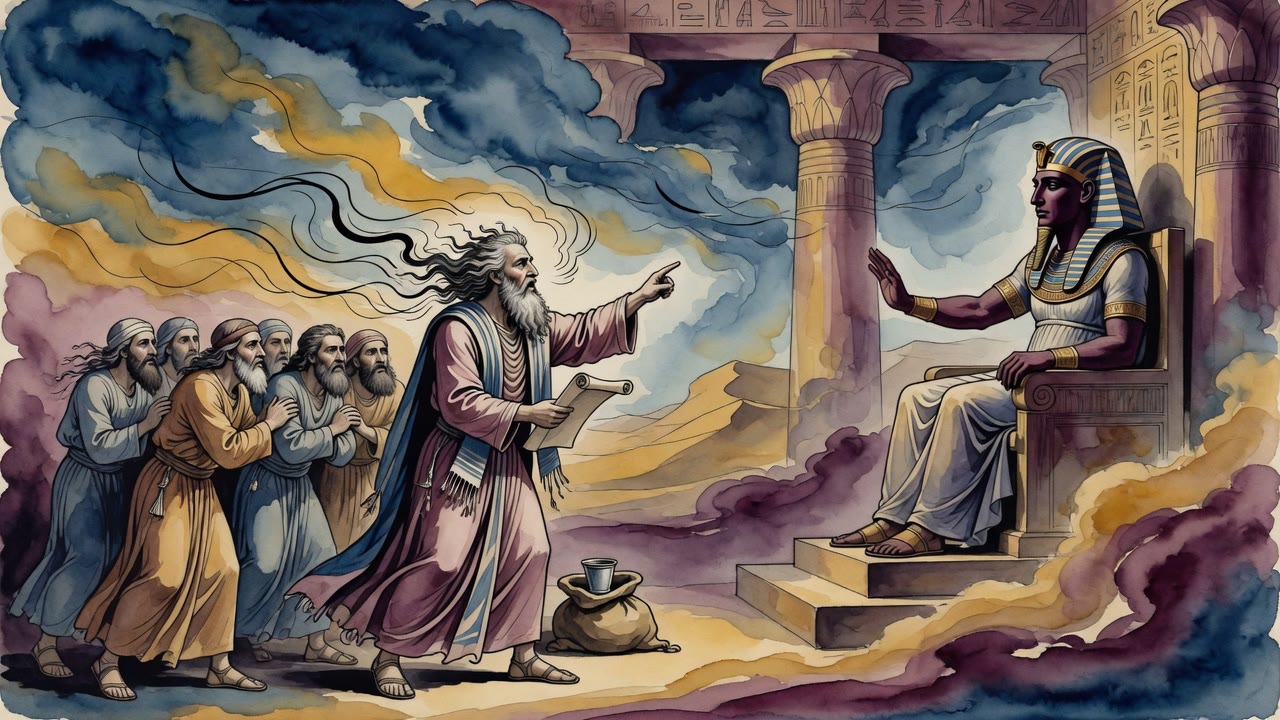
Joseph had once held his brothers exactly where wounded people dream of holding their enemies. They stood before him hungry, afraid, and ignorant of his name. He could have tightened the trap. He could have made Benjamin the price. He could have watched them taste the pit from the other side.

He did make them tremble. The cup was found. The brothers tore their clothes in panic, and for a moment Jacob's grief came back on their own bodies. But Joseph did not let vengeance become the final word. He wept. He revealed his face. He told them that God had sent him ahead to preserve life.

Forgiveness did not erase the sale. It narrowed the wound. Joseph could not make the sandals unbought or the robe whole again, but he stopped the family from building another prison out of the first one.

Joshua Tears His Clothes

The last tear came on a battlefield.

Joshua, son of Joseph's line, led Israel into the land and watched victory fail at Ai. Thirty-six men fell because Achan had taken what was banned from Jericho. The camp shook. The commander fell on his face before the Ark, and his hands went to his garments.

He tore them.

Not because he had sold Joseph. Not because he had eaten at the brothers' meal. Joshua stood on the other side of the family wound, a descendant of the brother who had been sold. Still the tearing reached him. A stolen object, a hidden crime, a public defeat, dead Israelites carried back from the slope. The pattern had found another body to wear it.

The sandals were long gone. The first robe was dust. But the sound Jacob heard in his house had not finished moving through Israel.


← All myths

From the tradition

Sources

3 sources

The texts this telling draws on, in full. Open a card to read inline, or expand it for a wider, quieter read.

Midrash Tehillim 10:3Midrash Tehillim

It’s like a spiritual echo chamber, where actions reverberate through generations.

The Midrash (rabbinic interpretive commentary) opens with a stark statement: "The arrogance of the wicked kindles the poor." It uses the story of Lot, caught up in the wickedness of Sodom, as an example. He thought he was clever, but ultimately, his arrogance led to his downfall, didn't it? It’s a reminder that pride often precedes a fall.

Then, we shift to a really fascinating teaching about forgiveness. Rabbi Yudan says something incredibly profound: “The one who says 'the merciful One will forgive' is not forgiven until he appeases his friend.” Can we truly expect divine forgiveness if we haven’t even bothered to make amends with those we've wronged? It’s a powerful call to take responsibility for our actions and actively seek reconciliation.

The text then turns to the story of Joseph and his brothers. Remember how they sold him into slavery? The Midrash connects this act to the story of Purim, where Haman plots to annihilate the Jewish people in Shushan (ancient Persia) while he and the king are "sat down to drink" ((Esther 3:1)5). God essentially says to the tribes: you sold your brother for food and drink, so your children will be sold into danger during a feast.

Rabbi Yissachar adds an intriguing layer. What if Joseph hadn’t forgiven his brothers when he had the chance? The Midrash suggests that Joseph's act of forgiveness corrected a wrong. It highlights just how important forgiveness is. Because, the text argues, "He who does not forgive his friend, even for a minor offense, is guilty of many sins."

Rabbi Chanin then brings another perspective. The Holy One, blessed be He, says to the tribes: You sold Joseph as a slave, so you will be called slaves every year. This isn’t just about historical events; it’s about enduring consequences. The label of "slave," the experience of oppression, becomes a recurring theme in Jewish history, a direct result of their actions.

Finally, Rabbi Pinchas, quoting Rabbi Hosea, points out that the tribes caused their father Jacob’s coat to be torn when they told him Joseph had been killed. And what was their punishment? "They tore their clothes" in Egypt (Genesis 44:13). But the echo doesn't stop there. Joseph, in turn, caused the tribes to tear their clothes, and his descendant, Joshua, was punished in the Book of Joshua, where we read, "And Joshua tore his clothes" (Joshua 7:6).

The Midrash here isn't just telling us stories; it's revealing a profound pattern. Actions have consequences, not just for the individual, but for generations to come. It’s a complex web of cause and effect, sin and punishment, and ultimately, the potential for redemption through forgiveness. It asks us: What kind of legacy are we creating with our actions today? What echoes will our choices send into the future?

Full source
Pirkei DeRabbi Eliezer 38:11Pirkei DeRabbi Eliezer

The Torah itself doesn't dwell on it. But the ancient rabbis, they loved to fill in the gaps, to imagine the "what ifs" and the "how comes" of our sacred stories. And in Pirkei DeRabbi Eliezer, a fascinating early medieval text, we get a startling answer.

They sold him to the Ishmaelites for twenty pieces of silver. Okay, we know that part. But then, this text tells us, each brother took two pieces of silver and bought… shoes.

Shoes?

It sounds almost absurd, doesn't it? Here they are, committing this terrible act, betraying their brother, shattering their father's heart… and they spend the blood money on footwear? The text immediately connects this to the prophet Amos (2:6): "Thus saith the Lord… Because they have sold the righteous for silver, and the needy for a pair of shoes." It’s a stark image. The prophet is condemning Israel for social injustice, for exploiting the poor. And here, the brothers’ actions are directly linked to that very sin. Joseph, the righteous one, sold for the price of… shoes.

What are we to make of this? Is it simply a literal explanation of what happened to the money? Or is there something deeper at play?

Perhaps the rabbis are trying to highlight the brothers' callousness. Maybe it's about showing us how easily they justified their actions, how quickly they moved on, literally walking away from their guilt. Shoes, after all, are about moving forward.

Then there's the question of their oath. They were terrified that Reuben, the eldest, would reveal their secret. But he wasn’t present when they sold Joseph. Judah pointed out a cherem – a ban or oath – requires ten adult males to be valid. So, what did they do?

Here’s where it gets really interesting. The text says they "associated the Omnipresent with them and proclaimed the ban." Wow. They brought God into their conspiracy. They used the divine name to seal their lips, to ensure that their terrible secret would be kept. It’s a chilling detail, isn’t it? It emphasizes the depth of their depravity, their willingness to manipulate even the most sacred things to protect themselves.

It’s a disturbing picture. They exploit their brother, profit from his suffering, and then invoke God to cover their tracks. The story of Joseph is, on the surface, a story of redemption and reconciliation. But texts like this remind us of the darkness that lurks beneath the surface, the moral compromises that people make, and the way we sometimes try to drag the divine into our own messy, flawed humanity.

It makes you wonder, doesn't it? How often do we try to justify our own actions, to rationalize our choices, even when we know, deep down, that they're wrong? And how often do we, perhaps unconsciously, try to enlist God in our own self-deception? The story of Joseph's brothers, it turns out, is not just a story about them. It's a story about us too.

Full source
Antiquities XI.6Antiquities of the Jews (Josephus)

The story of Esther begins with a drunken king and a queen who said no. King Artaxerxes of Persia hosted a lavish feast, 180 days of celebration for his court, then seven more days for the public. Golden cups, purple curtains, pillars of silver. At the climax, he summoned Queen Vashti to display her beauty before his guests. She refused. Persian law forbade wives from appearing before strangers, but the king's advisors told him this defiance would inspire every woman in the empire to disobey her husband. Vashti was banished.

The king's servants searched the empire for the most beautiful virgins. They found Esther, a Jewish orphan raised by her uncle Mordecai of the tribe of Benjamin. She was, Josephus writes, "the most beautiful of all the rest." She told no one she was Jewish. The king fell in love immediately and crowned her queen.

Meanwhile, Mordecai uncovered an assassination plot against the king and reported it through Esther. The conspirators were executed, and the incident was recorded in the royal chronicles, then forgotten.

Enter Haman, an Amalekite nobleman whom the king elevated above all other officials. Every courtier bowed to Haman. Mordecai alone refused, not out of pride, but because as a Jew he would bow to no human. Haman was furious. But punishing one man was beneath him. He decided to destroy every Jew in the Persian Empire. He told the king that a dangerous people scattered throughout his provinces kept their own laws and refused to obey the king's commands. Artaxerxes, trusting his chief minister, signed the decree: on the thirteenth of the month of Adar, every Jewish man, woman, and child would be killed, and their property confiscated. Letters went out to all 127 provinces. Mordecai put on sackcloth and wailed at the palace gate.

Full source