5 min read

The Brothers Bought Shoes With Joseph's Blood Money

Joseph is sold for twenty silver pieces, his brothers divide the money and buy shoes, and the transaction echoes across a thousand years.

Curated by Arthur · Told by Maggid ·
Table of Contents
  1. Twenty Silver Pieces and a Pair of Shoes Each
  2. The Prophet Who Remembered
  3. What Yom Kippur Was Actually Atoning For
  4. The Ten Martyrs and the Debt Called in Centuries Later
  5. Joseph Wept at the Reunion for a Different Reason

Twenty Silver Pieces and a Pair of Shoes Each

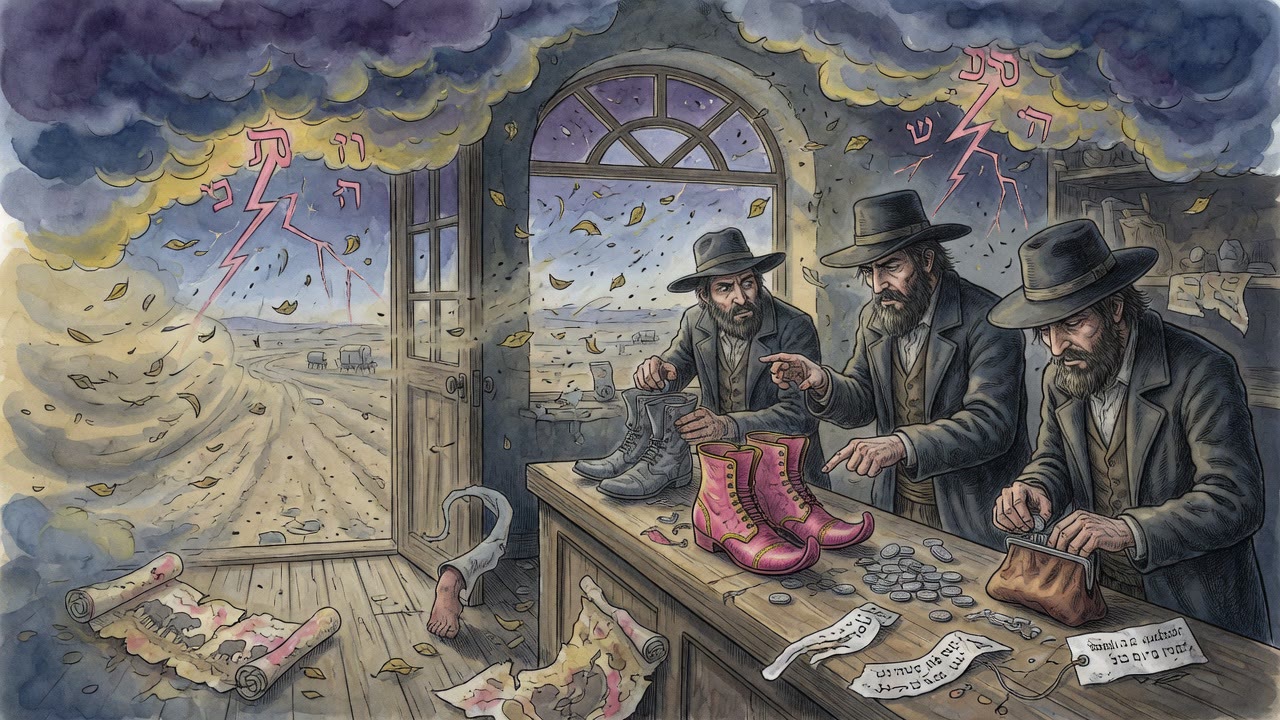
The Ishmaelite traders rode south with Joseph in their caravan, and the ten brothers of Joseph sat down in the field and ate. The Torah says simply they sat to eat after throwing him into the pit. It does not say what they did with the twenty silver pieces.

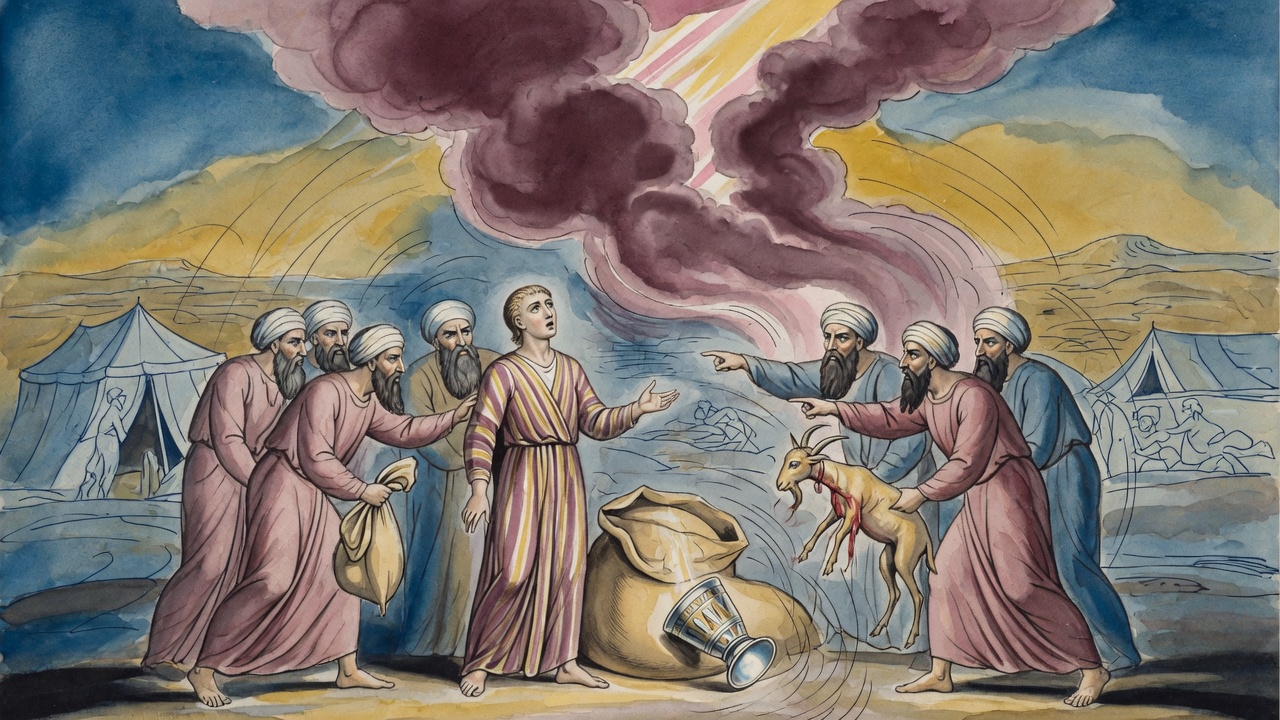
The ancient rabbis could not let it go. Pirkei DeRabbi Eliezer, the 8th-century Palestinian compilation of rabbinic lore, fills in what the Torah left blank: each of the ten brothers took two silver pieces from the sale and bought himself a pair of shoes. Two silver pieces per brother, two silver pieces per pair, twenty silver pieces for the boy. Joseph was gone, delivered to strangers heading for Egypt, and his brothers covered their feet with the proceeds.

Shoes. The ordinary object makes the transaction more obscene than any extravagant purchase would have. They did not even want his life badly enough to profit from ending it. They wanted shoes.

The Prophet Who Remembered

Amos saw it. Centuries after Joseph had died in Egypt and his bones had been carried back to Canaan, the prophet Amos stood in the northern kingdom and accused Israel of its sins in language that made direct reference to the sale. You sell the righteous for silver, Amos said, and the poor for a pair of shoes.

This was not a generalized critique of economic injustice. The rabbis who read this verse read it as a direct accusation aimed backward through time at the brothers who had sold Joseph. Amos was not only describing a pattern of contemporary corruption. He was naming the original transaction, the founding act of betrayal that the later sins of Israel were repeating.

The prophet stood in the present and accused the past at the same time.

What Yom Kippur Was Actually Atoning For

Legends of the Jews, drawing on the full range of rabbinic reflection on the sale, traces the consequence of the transaction forward to a specific yearly ritual. The atonement service on Yom Kippur, including the two goats, one for God and one sent into the wilderness carrying the communal sins, was understood by some traditions as a perpetual address of what the brothers had done. Two goats, two pieces of silver per brother, the arithmetic of the original sale playing out symbolically every year in the Temple.

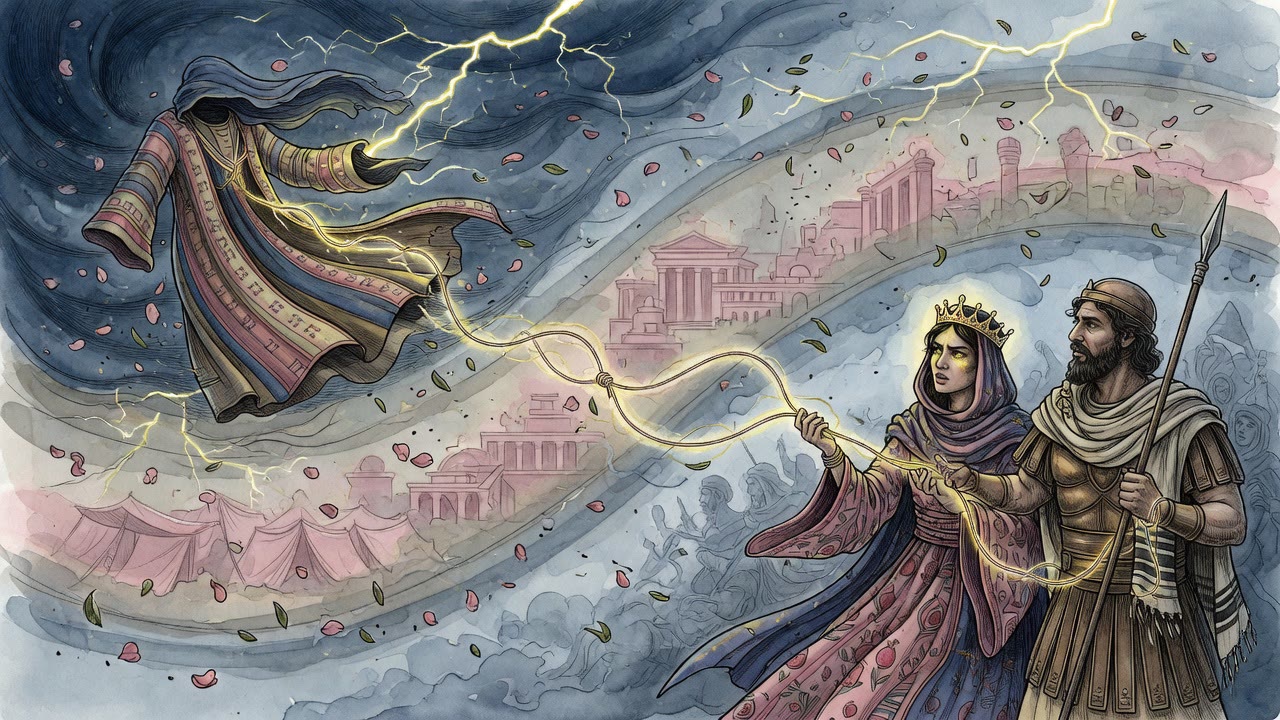
The Book of Jubilees, a Second Temple text that places Joseph's sale with precise calendar notation, records that the brothers brought his coat to their father on the tenth of the seventh month, the day that would become Yom Kippur. They had stained the coat with the blood of a goat. On the day the atonement rite was later established, the founding act of the atonement had been performed in the field.

The Ten Martyrs and the Debt Called in Centuries Later

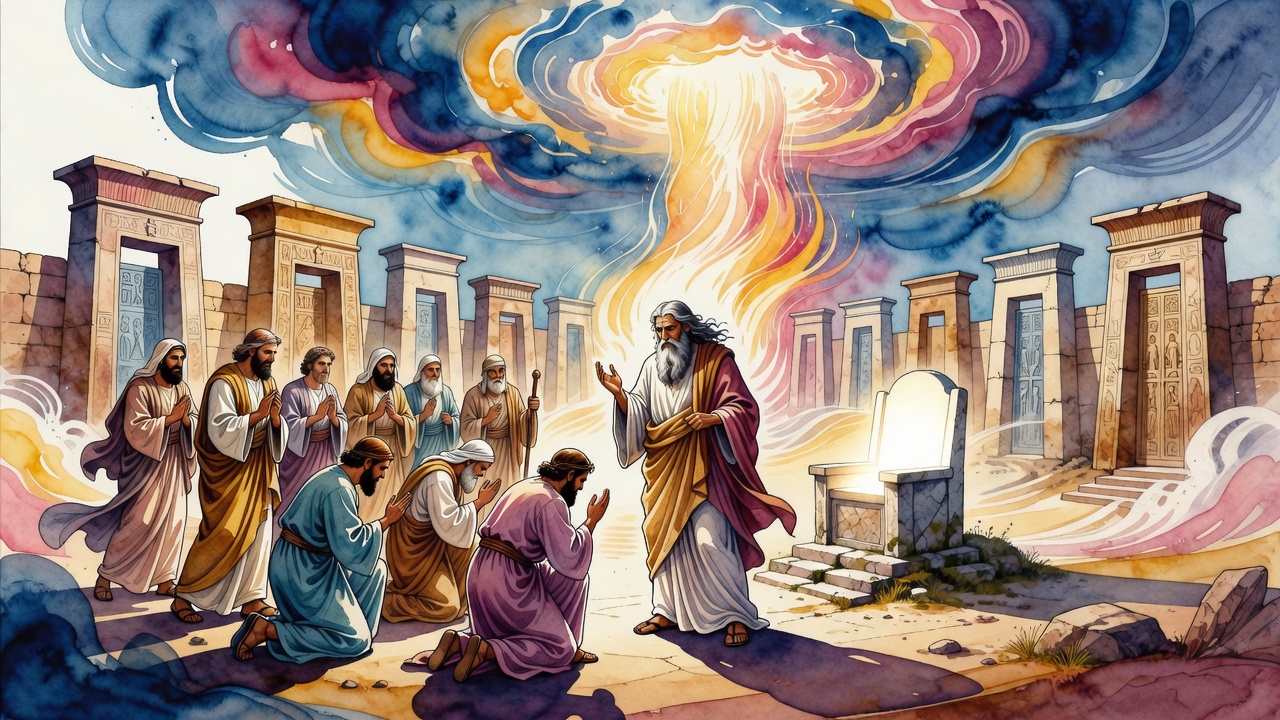
A tradition preserved in Legends of the Jews, and elaborated in liturgy, claims that the Roman execution of ten great rabbinic sages was the cosmic accounting for the sin of the ten brothers. The ten who sold Joseph, the ten who took two silver pieces each and covered their feet: their debt was not erased by time or by the success of the Exodus or by the centuries of Temple service. It accumulated. It accrued. When the Romans captured the ten great sages and tortured them to death, the heavenly court was settling a transaction that had been open for more than a millennium.

This reading is harsh in a way that cuts against any simple theodicy. It says that there are debts of injustice that cannot be forgiven by time or repentance alone, that the casual cruelty of ten men eating bread while their brother was sold down the road can carry forward through generations until someone pays what was not paid then. The ten rabbis who died were not personally guilty of Joseph's sale. They died in the place of those who were.

Joseph Wept at the Reunion for a Different Reason

When Jacob finally came to Egypt and fell on Joseph's neck, Joseph wept. And when the brothers were revealed and stood before Joseph in the palace, he wept again, so loudly that the Egyptians in the outer rooms heard him. The text gives a simple reason: he saw his brothers.

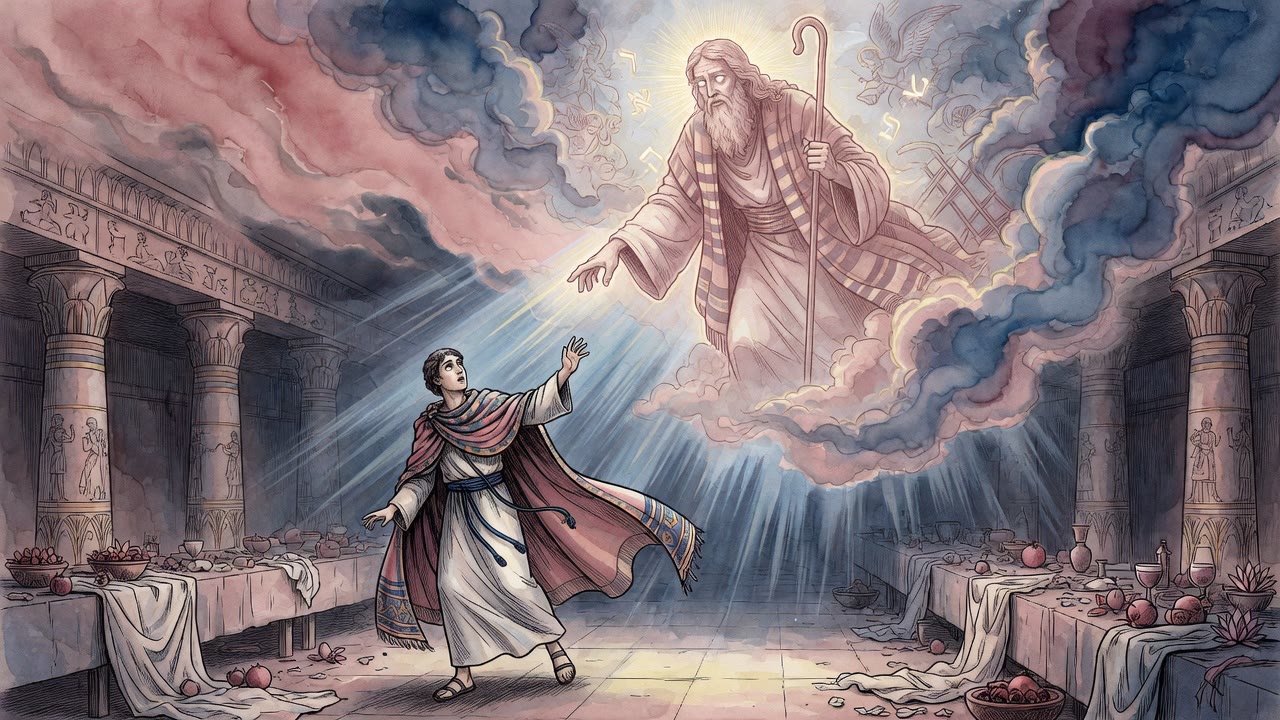
But the tradition in Legends of the Jews reaches for a more specific reason. When Jacob had bowed to Joseph in Egypt, Joseph remembered a bow his father had made long ago in Canaan. Jacob had bowed in front of Joseph's mother Rachel. He had bowed toward the womb that would produce the son who was now being bowed to. The circle of the bow, the gesture that had started in love and passed through betrayal and ended in the reunion hall of an Egyptian palace, came back to Joseph all at once.

He wept because he understood how far the thread had run from its beginning.


← All myths
From the tradition

Sources

5 sources

The texts this telling draws on, in full. Open a card to read inline, or expand it for a wider, quieter read.

Pirkei DeRabbi Eliezer 38:11Pirkei DeRabbi Eliezer

The Torah itself doesn't dwell on it. But the ancient rabbis, they loved to fill in the gaps, to imagine the "what ifs" and the "how comes" of our sacred stories. And in Pirkei DeRabbi Eliezer, a fascinating early medieval text, we get a startling answer.

They sold him to the Ishmaelites for twenty pieces of silver. Okay, we know that part. But then, this text tells us, each brother took two pieces of silver and bought… shoes.

Shoes?

It sounds almost absurd, doesn't it? Here they are, committing this terrible act, betraying their brother, shattering their father's heart… and they spend the blood money on footwear? The text immediately connects this to the prophet Amos (2:6): "Thus saith the Lord… Because they have sold the righteous for silver, and the needy for a pair of shoes." It’s a stark image. The prophet is condemning Israel for social injustice, for exploiting the poor. And here, the brothers’ actions are directly linked to that very sin. Joseph, the righteous one, sold for the price of… shoes.

What are we to make of this? Is it simply a literal explanation of what happened to the money? Or is there something deeper at play?

Perhaps the rabbis are trying to highlight the brothers' callousness. Maybe it's about showing us how easily they justified their actions, how quickly they moved on, literally walking away from their guilt. Shoes, after all, are about moving forward.

Then there's the question of their oath. They were terrified that Reuben, the eldest, would reveal their secret. But he wasn’t present when they sold Joseph. Judah pointed out a cherem – a ban or oath – requires ten adult males to be valid. So, what did they do?

Here’s where it gets really interesting. The text says they "associated the Omnipresent with them and proclaimed the ban." Wow. They brought God into their conspiracy. They used the divine name to seal their lips, to ensure that their terrible secret would be kept. It’s a chilling detail, isn’t it? It emphasizes the depth of their depravity, their willingness to manipulate even the most sacred things to protect themselves.

It’s a disturbing picture. They exploit their brother, profit from his suffering, and then invoke God to cover their tracks. The story of Joseph is, on the surface, a story of redemption and reconciliation. But texts like this remind us of the darkness that lurks beneath the surface, the moral compromises that people make, and the way we sometimes try to drag the divine into our own messy, flawed humanity.

It makes you wonder, doesn't it? How often do we try to justify our own actions, to rationalize our choices, even when we know, deep down, that they're wrong? And how often do we, perhaps unconsciously, try to enlist God in our own self-deception? The story of Joseph's brothers, it turns out, is not just a story about them. It's a story about us too.

Full source
Legends of the Jews 1:33Legends of the Jews

Sometimes, the answers are hidden in stories… stories that stretch back millennia.

Consider the story of Joseph, sold into slavery by his own brothers. A heartbreaking betrayal. But have you ever considered the ripples that betrayal sent through Jewish tradition?

In Legends of the Jews, specifically Ginzberg's retelling, that act of selling Joseph for twenty pieces of silver had profound consequences, consequences that echo even today. As atonement for this terrible deed, God commanded that every first-born son be redeemed by the priest with an equal amount of silver. This is the origin of the ritual of pidyon (redemption) haben (פִּדְיוֹן הַבֵּן), the redemption of the firstborn son. And furthermore, every Israelite was required to pay an annual contribution to the sanctuary, matching the share each brother received from that blood money.

That's not all. The story gets even more… symbolic.

The brothers, didn't use the money for just anything. According to the legend, they bought shoes with it. Why shoes? Because, they reasoned, "We will not eat it, because it is the price for the blood of our brother, but we will tread upon him, for that he spake, he would have dominion over us, and we will see what will become of his dreams." They wanted to literally walk all over Joseph’s dreams of leadership.

And that's where the rather strange custom of halizah (חליצה) comes in. Halizah is the ceremony where a widow releases her brother-in-law from the obligation to marry her if her husband dies childless. It involves the brother-in-law removing his shoe. Why the shoe?

The legend connects it directly to the brothers' actions. Because they refused to do anything to preserve Joseph’s life, because they symbolically "trod" upon him, the Lord, in turn, "loosed their shoes from off their feet."

How so? Well, when they went down to Egypt, Joseph, now a powerful figure, orchestrated a little… humiliation. As they entered the gates, Joseph’s slaves took off their shoes. They were forced to prostrate themselves before Joseph, as if he were a Pharaoh. And as they lay there, humbled and exposed, they were spat upon and put to shame before the Egyptians. A stark reversal of their earlier arrogance.

So, the next time you hear about the halizah ceremony, or the redemption of the firstborn son, remember this story. Remember the weight of those twenty pieces of silver, the significance of the shoes, and the long, winding path of atonement and redemption that connects us to our past. It makes you think, doesn't it, about the lasting consequences of our actions, and the power of stories to shape our traditions?

Full source
Book of Jubilees 34:24Book of Jubilees

Sometimes, the answers are tucked away in unexpected corners of our history, like in the Book of Jubilees.

The Book of Jubilees isn't part of the standard Hebrew Bible we read in synagogue. It's considered an apocryphal text, meaning it's outside the accepted biblical canon. But it's still a fascinating window into the beliefs and practices of some Jewish communities a couple of thousand years ago. It retells the stories of Genesis and Exodus, but with some… extra details and interpretations.

That's where we find a really interesting take on the story of Joseph, his brothers, and his grieving father, Jacob.

The familiar story is this: Joseph's brothers sell him into slavery in Egypt. They then take his coat, dip it in animal blood, and bring it back to Jacob, their father, leading him to believe that Joseph has been killed by a wild animal. It’s a heartbreaking scene.

The Book of Jubilees tells us that Jacob mourned for Joseph for a year. A whole year of unrelenting grief! Imagine that. The text says, "And he mourned for Joseph one year, and did not cease, for he said 'Let me go down to the grave mourning for my son.'" The depth of his despair is palpable.

But here's where it gets really interesting. The Book of Jubilees connects Jacob's mourning to Yom Kippur, the Day of Atonement. It says, "For this reason it is ordained for the children of Israel that they should afflict themselves on the tenth of the seventh month--on the day that the news which made him weep for Joseph came to Jacob his father." for a second. Could the somber nature of Yom Kippur, the self-affliction, the fasting, the intense focus on repentance… could it be connected, in some way, to the pain that Jacob felt over the loss of his son?

The text continues, "...that they should make atonement for themselves thereon with a young goat on the tenth of the seventh month, once a year, for their sins; for they had grieved the affection of their father regarding Joseph his son."

According to Jubilees, Yom Kippur isn't just about atoning for our sins against God, but also about atoning for the sins that cause pain and grief to our parents, to our elders, to those we love. Specifically, the text frames it as atonement for what the brothers did to Jacob. Wow.

It's a powerful idea, isn't it? That our collective day of atonement is tied, in some way, to this ancient story of familial betrayal and profound sorrow. It adds another layer of meaning to Yom Kippur, reminding us to consider the impact of our actions on those closest to us.

It also makes you think about the ripple effects of our actions. The brothers' deception didn't just affect Joseph; it devastated their father. And, according to the Book of Jubilees, it even shaped one of our most sacred holidays.

So, the next time Yom Kippur rolls around, maybe we can take a moment to remember Jacob’s grief, and to think about how we can be more mindful of the pain we might cause others, especially those we love. It's a reminder that atonement isn't just about seeking forgiveness from God, but also about repairing the relationships we've damaged along the way. And perhaps, in doing so, we can bring a little bit of healing to the world, and to ourselves.

Full source
Book of Jubilees 39:3Book of Jubilees

Our story picks up with Joseph, a mere seventeen years old, ripped from his family and sold into slavery in Egypt. The Book of Jubilees, a fascinating text that expands on the biblical narrative, tells us that he was bought by Potiphar, described as “an eunuch of Pharaoh, the chief cook.”

Potiphar’s title is interesting. Some traditions, drawing on the Hebrew term saris, interpret "eunuch" more broadly, perhaps meaning an officer or courtier, rather than strictly someone who is castrated. Either way, Potiphar isn't just anyone. He's got connections.

Immediately, things start looking up for Joseph. Why? Because, according to Jubilees, "he set Joseph over all his house." Joseph, a slave, now managing the entire household of a high-ranking Egyptian official. How did that happen?

Well plainly: "the blessing of the Lord came upon the house of the Egyptian on account of Joseph." Everything Potiphar touched turned to gold, all because Joseph was there. "The Lord prospered him in all that he did," Jubilees emphasizes.

It's a evidence of Joseph's character. His integrity, his work ethic – whatever it was, it was obvious. Potiphar saw it. He "saw that the Lord was with him, and that the Lord prospered him in all that he did." He entrusted everything to Joseph. Talk about trust!

And then there’s this little detail slipped in almost casually: "And Joseph's appearance was comely and very beautiful was his appearance." It's a reminder that Joseph possessed not only inner qualities but striking outward beauty. This detail becomes rather important later in the story, as you might recall.

So, what are we left with? A young man in a foreign land, facing impossible odds, yet blessed with success and favor. It makes you wonder, doesn't it? What qualities did Joseph possess that allowed him to rise above his circumstances? Was it solely divine favor, or was there something more? And how can we cultivate those qualities in our own lives, even when the odds seem stacked against us?

Full source
Legends of the Jews 1:338Legends of the Jews

That’s where we find Joseph in this story.

The scene: Joseph, after years of separation and hardship, is finally reunited with his father, Jacob. It’s a moment of profound joy, a culmination of years of longing. Joseph rushes to greet Jacob, bowing low to the earth in respect. And everyone with him follows suit.

Here’s the rub: Joseph is overcome with grief in the midst of this joyful reunion. Why? Because, as Legends of the Jews tells us, he remembers a previous, similar moment when Jacob bowed before him. And in that moment, Joseph hadn’t stopped it. Now, embracing his father, he weeps bitterly, regretting his inaction.

It's a powerful image, isn't it? This mingling of joy and regret. This very human struggle to reconcile our past actions with our present understanding.

As they embrace, Jacob, ever the devout patriarch, is in the middle of reciting the Shema ("Hear, O Israel: The Lord our God, the Lord is one"), Judaism's central prayer. He doesn't even interrupt his sacred moment. Talk about dedication! But afterwards, he speaks, revealing the depth of his own past fears.

He explains that when he heard of Joseph’s supposed death, he believed he was facing a "double death." What does that even mean? Well, Jacob thought he was doomed to lose not only this world, but also the world to come – Olam Ha-Ba (the World to Come).

Why such a dire thought? Because, as the Lord promised, he was to be the ancestor of twelve tribes of Israel. Joseph's death seemed to shatter that promise, making it impossible to realize. Jacob feared he had brought this on himself through his own sins. And as a sinner, he believed he would forfeit his place in the future world.

Can you imagine the weight of that fear? The despair of believing you’ve not only lost a beloved child but also jeopardized your eternal destiny?

But then, hope! “Now that I have beheld thee alive,” Jacob exclaims, “I know that my death will be only for the world here below.” Seeing Joseph alive restores his faith, assures him that the divine promise remains intact, and eases his fear of eternal loss.

This little snippet from Legends of the Jews is so much more than just a feel-good reunion story. It's a meditation on regret, on faith, and on the enduring power of hope, even in the face of profound loss. And it reminds us that even our greatest moments of joy can be tinged with the bittersweet awareness of our own imperfections.

Full source