Abraham Spent a Night Reading the Stars and Quit Astronomy Forever
Abraham was a trained Chaldean astrologer. One night he sat watching the sky to predict the rain and talked himself out of the entire profession.
Table of Contents
 Click for full size
A Civilization That Read the Sky
Abraham was raised in Chaldea, which meant he was raised inside a civilization that treated the sky as a book. The Chaldeans mapped the movements of planets, watched stars rise and set in specific windows of the horizon, tracked the seasonal shifts that governed when to plant and when to harvest and when to expect the rains that determined whether the harvest would come at all. In that world, astronomy and divination were not hobbies. They were the technology of prediction, the most sophisticated knowledge system the ancient world possessed.
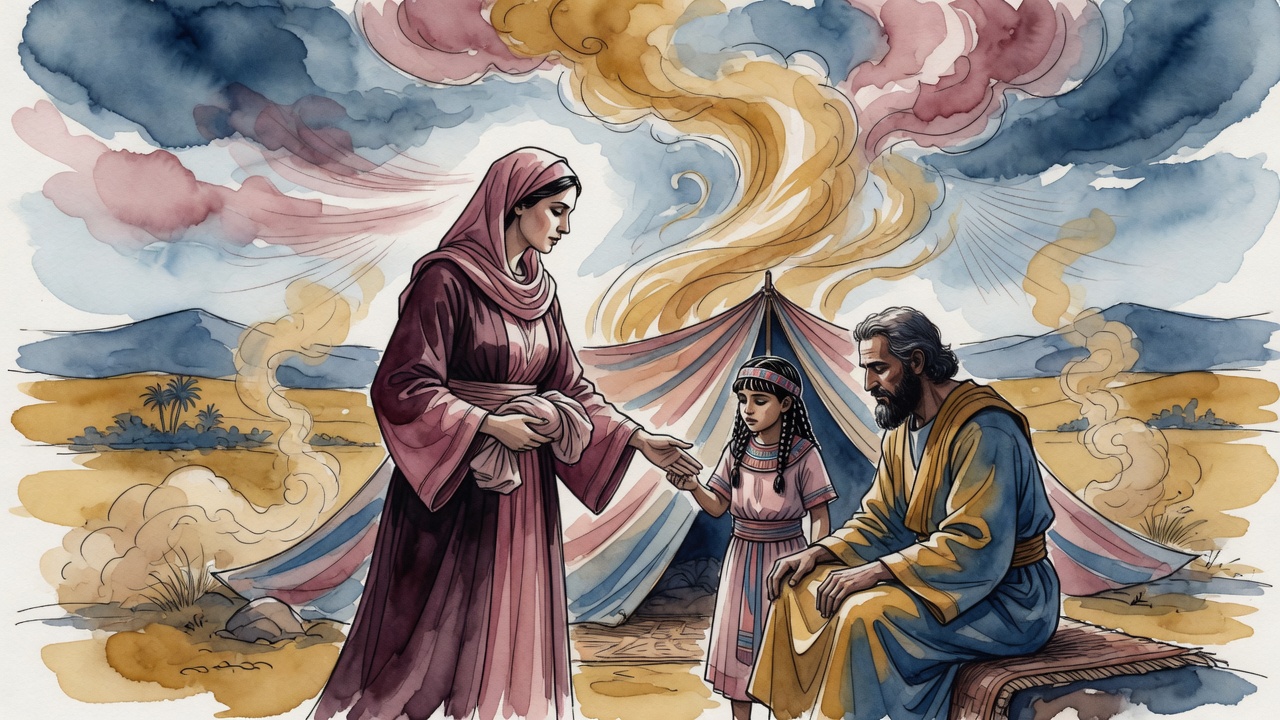
Abraham's family had the skill. The researches of the Chaldeans, the art of divining and auguring by the signs of heaven, ran in his father's line. Terah's household had studied the signs and read them and passed the knowledge down. Abram inherited the system. He knew how to use it.
The New Moon of the Seventh Month
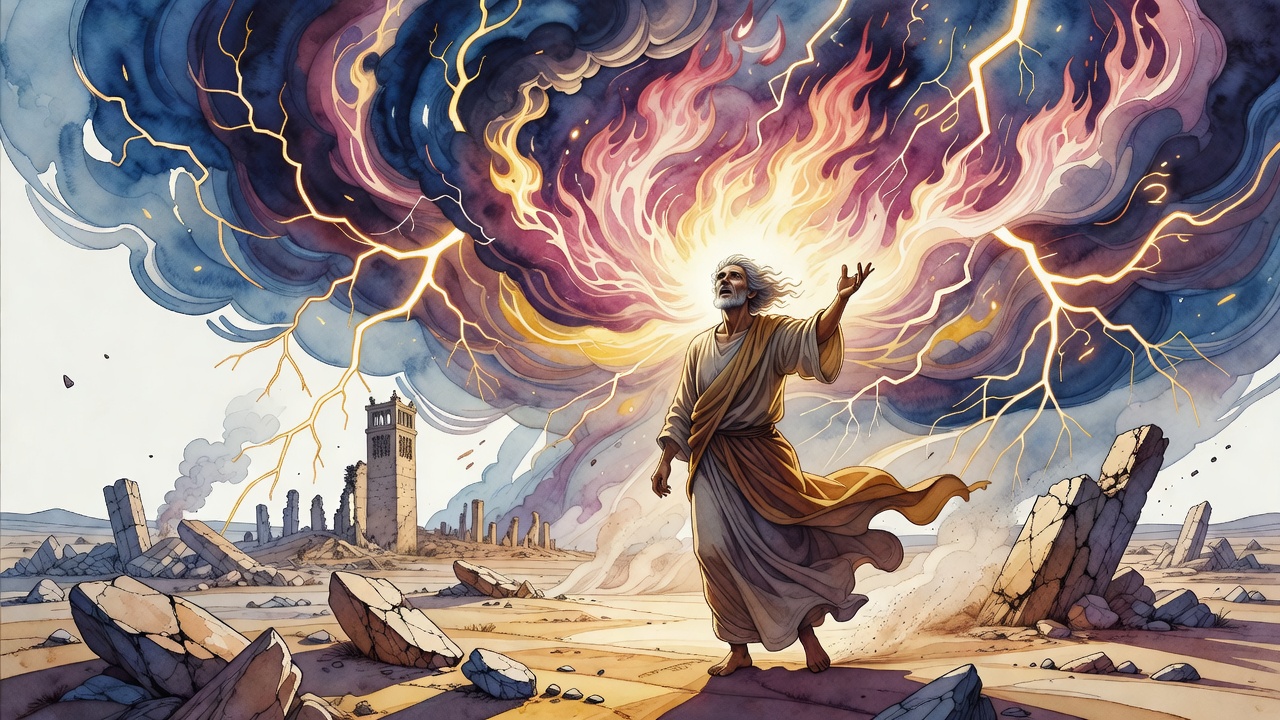
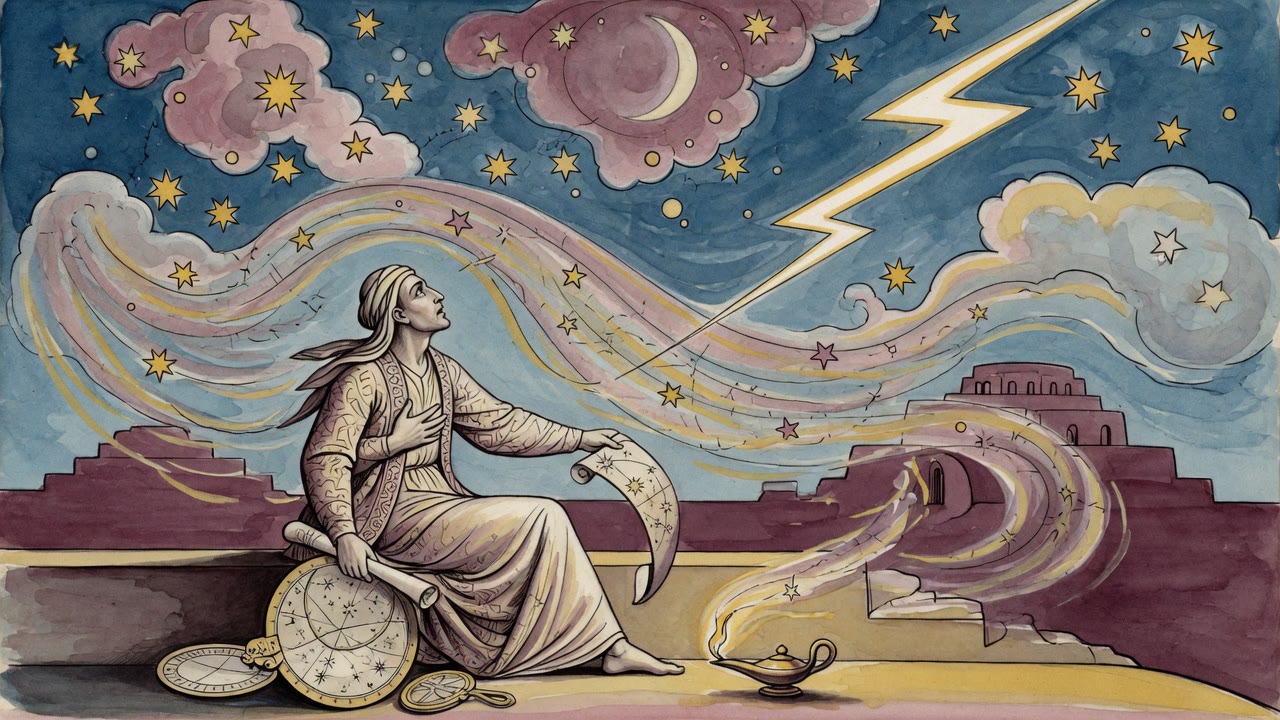
Then comes one specific night. The new moon of the seventh month. Abram sat alone from evening until morning, watching the stars to learn what the year would bring with regard to rain. This was practical, not mystical. A household needed grain. A clan needed to know in advance whether the coming year would feed children or empty storehouses. If the stars could tell you, you consulted the stars. That was what the Chaldean system was for.
The sky moved with its usual indifference. Stars rose and crossed the dark and set. The patterns were there. The predictability of the heavens was the entire promise of Chaldean knowledge, if the sky repeated, the earth could be planned around it. Abram watched and measured and calculated and somewhere in those hours, sitting alone in the dark while the stars moved over him, he began to argue with himself.
The Argument He Made to the Night
The reasoning Jubilees preserves is the reasoning of a man who has followed a thought to where it leads. All the omens of the stars and the signs of the moon and the sun, these are all in the hand of the Lord. Why am I searching them out? If He wishes, He will cause it to rain, morning and evening. And if He wishes, He will not send it down. Everything depends on His will. Nothing depends on what I can read in the sky.
This is not a mystical insight. It is a logical one. If God controls the rain, and God's will is not predictable by stellar observation, then stellar observation is useless for the one thing it was supposed to do. The Chaldean system assumed that the sky was the mechanism through which cosmic will operated, that reading the sky accurately meant knowing what was coming. But if the mechanism itself answered to a will that was not subject to the mechanism, then the mechanism told you nothing about the will.
Abram sat with this for the rest of the night. The stars continued moving. The calculation he had been running was still in his hands. He put it down.
The Prayer That Came After
When the night ended and the morning star rose, Abram prayed. Not to the stars. To the God whose hand held all of it, the stars, the rain, the harvest, the pattern the Chaldeans had spent generations learning to read. He prayed to be delivered from the error of his own trained expertise, from the system that his inheritance had given him and that he had just reasoned out of by watching it for one night.
The prayer became the moment of contact. The angel arrived. The language of heaven was restored to his mouth. The covenant that had been waiting since the lots fell on the mountain of Ararat began to move toward its next step. All of this followed from a night of watching the sky and concluding that the sky was not the point.
← All myths