Two Brothers Walked Into the Fire and One Did Not Come Out
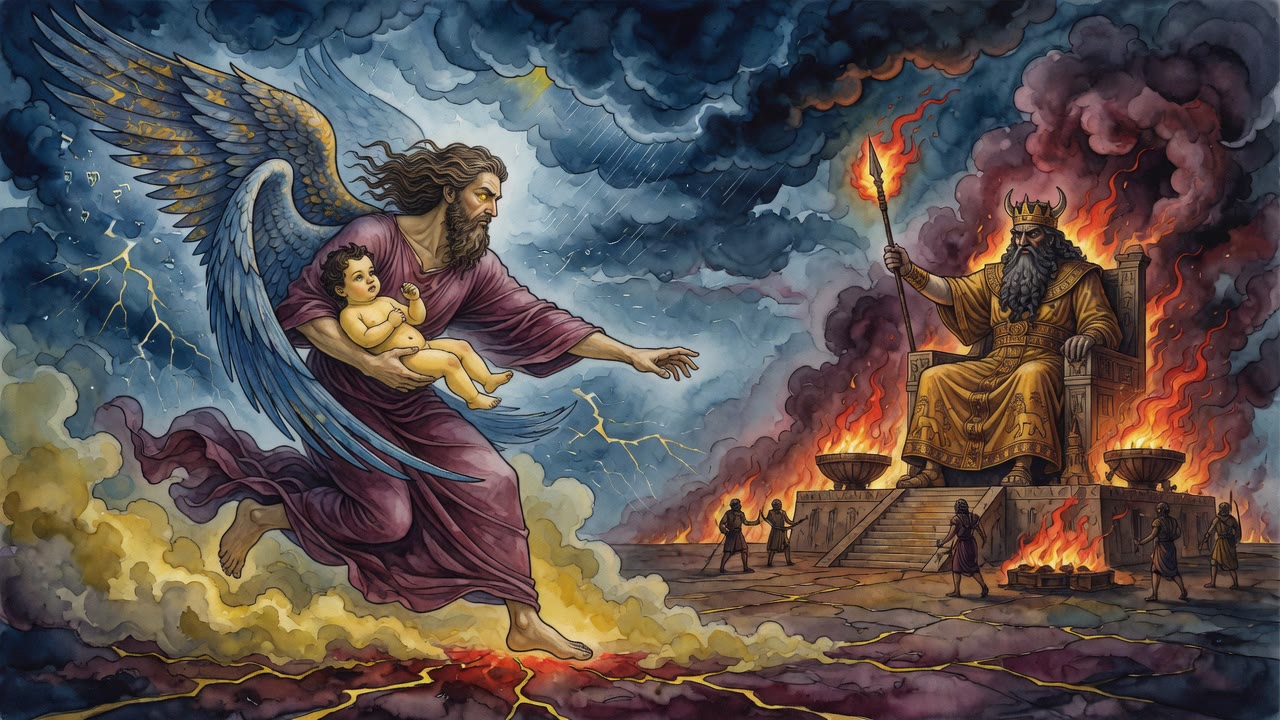
Gabriel offered to go down and cool the furnace himself. God turned him down, gave a reason, and promised him three men in Babylon instead.
Table of Contents
 Click for full size
The Dipping at Ur
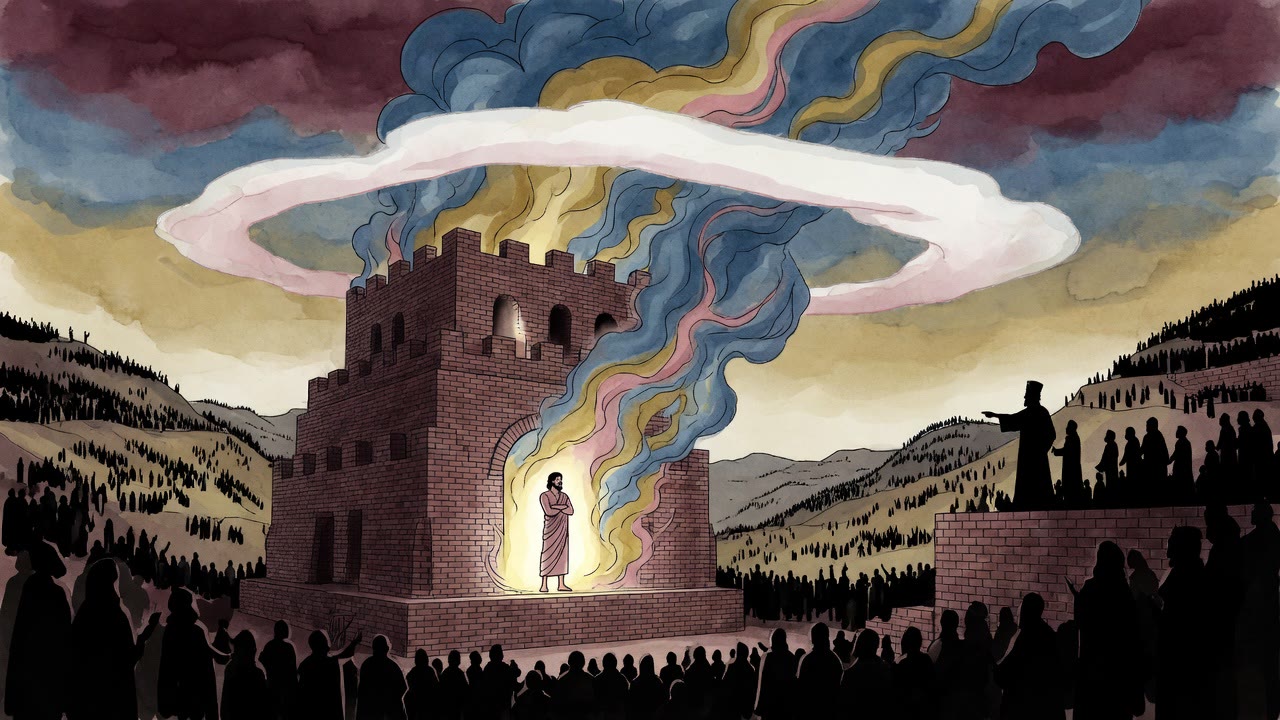
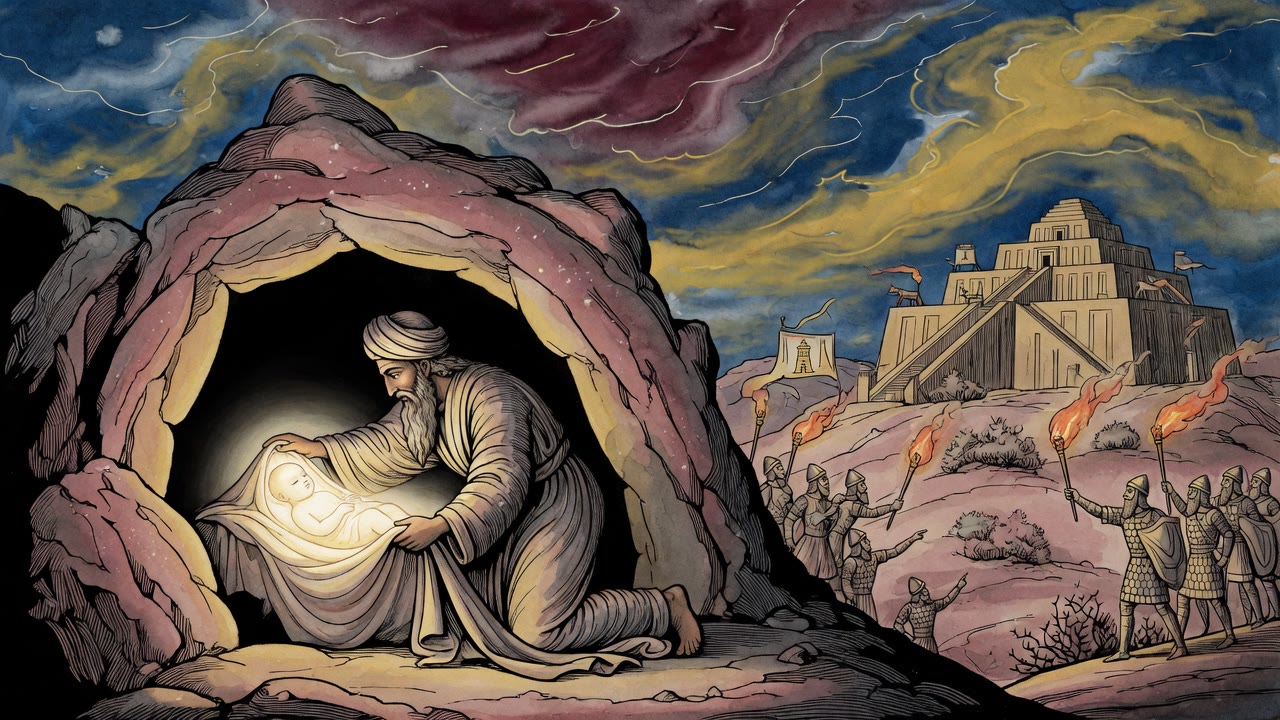
In Ur the fire was the god, and the men who tended it had a way of settling questions. They dipped people in it. Other nations dipped their sons in water. The Chaldeans used the flame, and whoever came out was clean.
Terah carved the idols in that city and his eldest son Haran stood in the market and sold them. The younger son would not bow to any of them. So the Chaldeans came for both brothers, and Terah watched his sons walk toward the fire in front of a crowd.
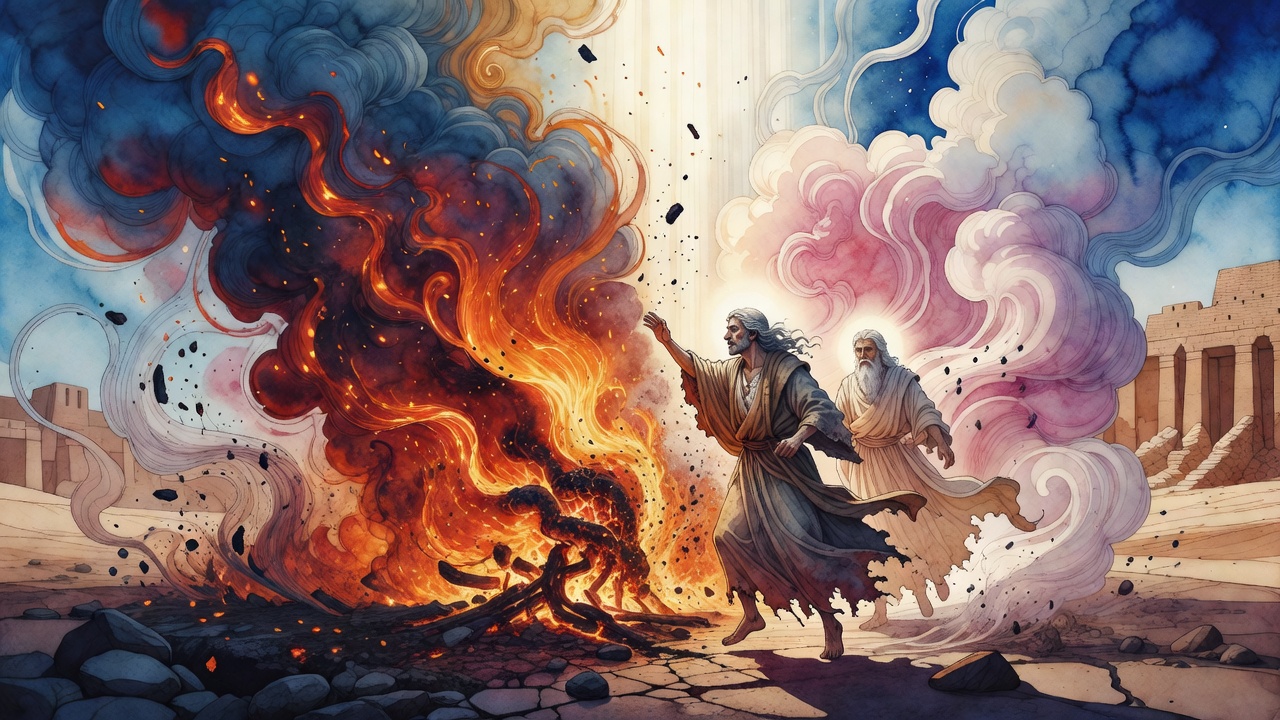
Abram came out of it. Not scorched, not smoke-blackened. He walked out of the furnace of the Chaldeans and stood there in the light of it.
Haran, who had feared the idols and honored them and taken money for them, burned. He died in front of his father.
Gabriel Asked to Go Down
While the wood was still being stacked, there had been an argument in heaven about who would handle it.
Gabriel volunteered. "Let me go down and cool the furnace and get the righteous man out."
God refused him. "I am one in My world," He said, "and he is one in his. It is fitting that the One deliver the one."
Nobody went down. The fire simply did not take him, and afterward God named Himself to Abram by that hour: I am the Lord who brought you out of the fire of the Chaldeans. But heaven does not leave a willing servant unpaid, and Gabriel was handed a promise on the spot. You will not save this man. You will save three of his descendants.
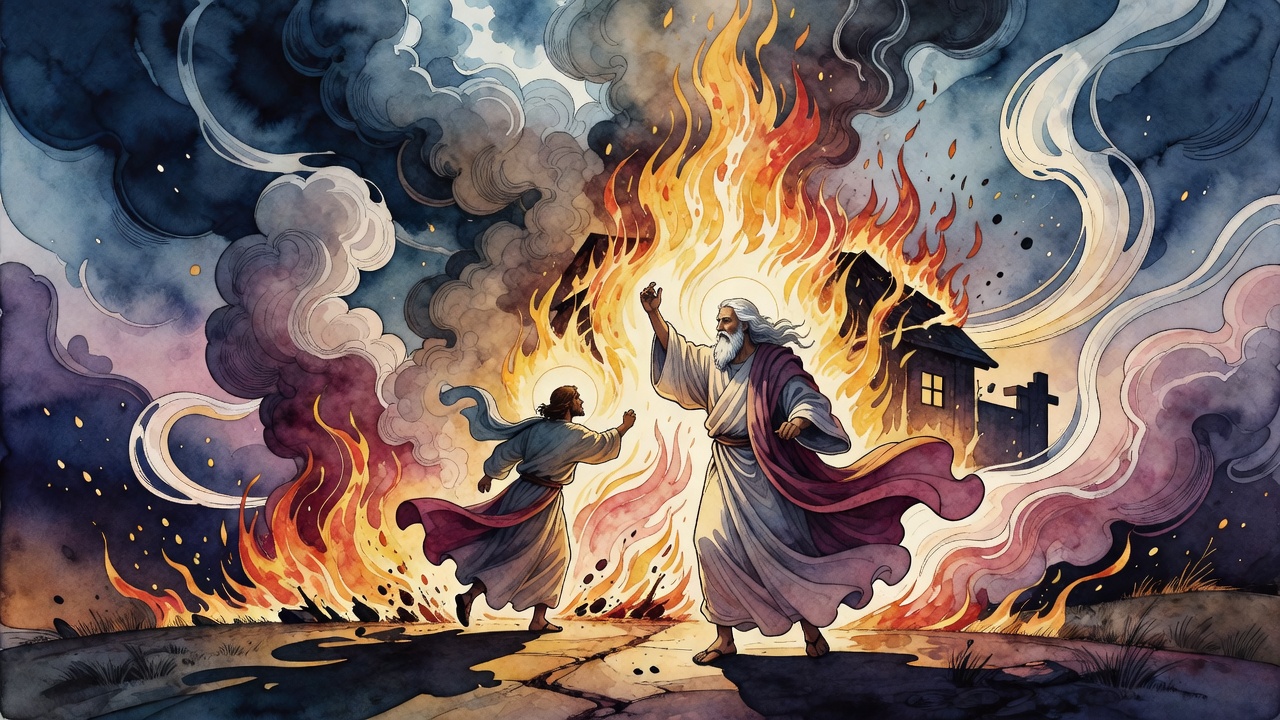
That note came due about fourteen centuries later in Babylon, when Nebuchadnezzar heated a furnace for three young men from Judah who would not bow to his statue. The angel set over hail spoke first. Let me go down, he said, and cool it, and bring them out.
Gabriel cut in. "There is no glory for God in that. You rule hail. Every child alive knows water puts out fire. Let me go, because I rule fire, and I will chill the inside of that furnace while I drive the heat of it outward. One miracle inside, one miracle out. Two."
"Go down," God said.
Gabriel went, calling out as he fell that the truth of God stands forever.
The account ran the other way too. When God called his name at the start of the last and hardest test, Abraham answered with one word, hineni (הנני), here I am, and he was told that the word would be handed back to his descendants. Generations later a crowd of them stood starving in a desert and shouted at Moses that they had been dragged out of Egypt to die, and the answer came in the same word. Here I am, raining bread on you out of the sky. Abraham had run to fetch bread for three strangers resting under his tree. He had told Sarah to knead cakes for them, and the bread from heaven began falling at a wilderness camp called Alush.
What Terah Did Next
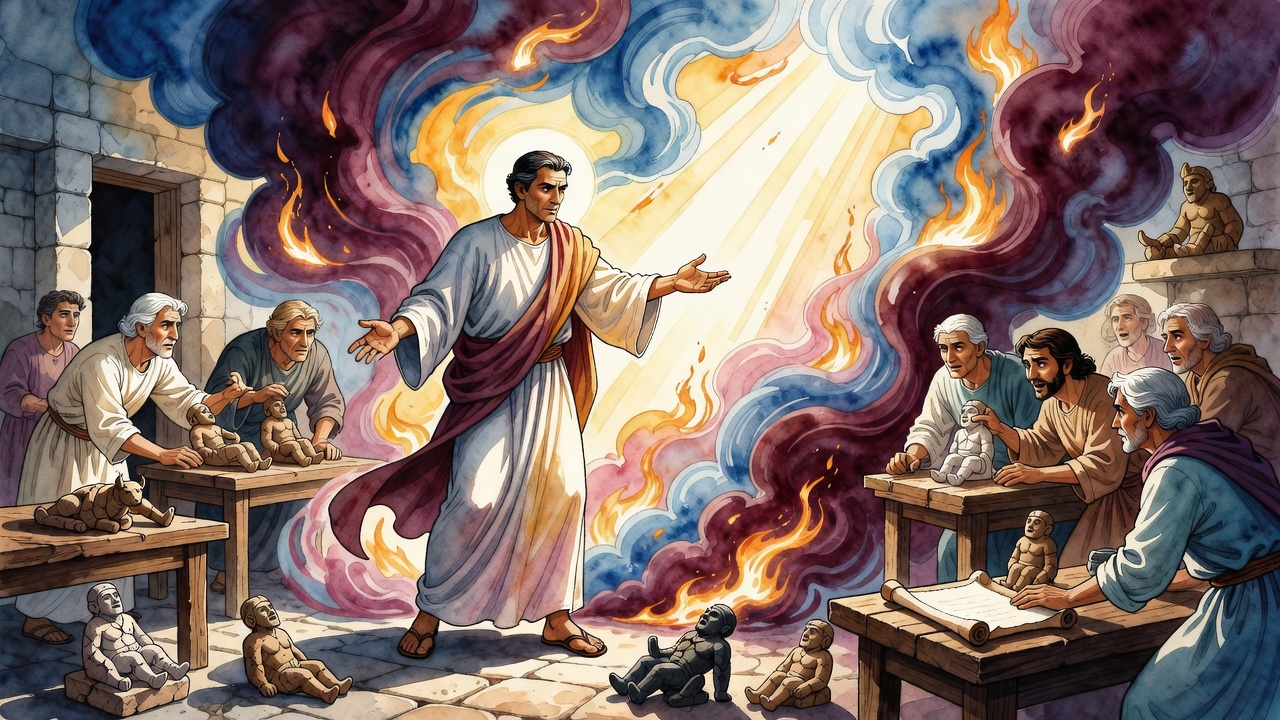
Back in Ur, the idol-maker had buried one son and gotten the other one back out of the flames, and something in him gave way. Terah walked out on the faith he had made his living from.
Then he settled his dead son's household. He gave Milcah, Haran's daughter, to his son Nahor. He gave Haran's other daughter, the one called Yiskah, to Abram, after weaning her himself and raising her in his own house since the day her father died. Her name in the tents became Sarai. And because Sarai would bear no children, he handed Abram Lot, Haran's orphaned son, to raise as his own.
Then the old man packed the household and started for Canaan.
The Chariot Over the Earth
Years on, the archangel Michael came for Abraham with a chariot of the cherubim and sixty angels for escort, and lifted him up above the clouds to show him the whole world at once.
The trouble started immediately. Abraham looked down and saw a man in bed with another man's wife. "Send fire from heaven," he said, "and burn them." Fire came down and burned them, because the order had gone out that Michael was to do whatever Abraham asked. He looked again and saw thieves tunneling through a wall. "Let wild animals come out of the desert and tear them apart." The animals came. He looked a third time and saw men arranging a murder. "Let the ground open." The ground opened and swallowed them alive.
God stopped the tour. "Turn him around and take him home," He told Michael. "Do not let him go over the rest of the earth. He has no pity on sinners. I have pity on sinners, so that they can turn back and live."
Abraham understood what he had done. He asked to pray for the ones he had cursed off the face of the world, the burned and the torn and the swallowed, and he prayed, and a voice came back: the ones you think I destroyed, I have called up and given their lives again.
Michael set the chariot down at the tent. Sarah was dead inside it. She had not known where her husband had gone or whether he was coming back, and the not knowing had finished her.
He Stood Up From His Dead
The angel of death stood over him while he sat with her body, crowding him, pushing him to hurry and get it over with. Abraham got up off the ground and went to find the men who owned the land.
He put it to the children of Heth carefully. I am a stranger and a settler among you, he said, and both halves of that were a bargaining position. If you would rather, I am a tenant asking a favor. If not, I am the landlord, because the God who took me out of the fire has already deeded this ground to my children.
They fell over themselves. You are a prince of God among us, they said, you are a king to us, you are like a god to us. Take the best grave we have, for nothing.
He paid. Then he bent all the way to the ground in front of the whole assembly of them, and the thanks in it went past every man standing there. Let the world not fail to accept its true King, he said.
← All myths