Three Silent Objects That Saved Lives in Scripture
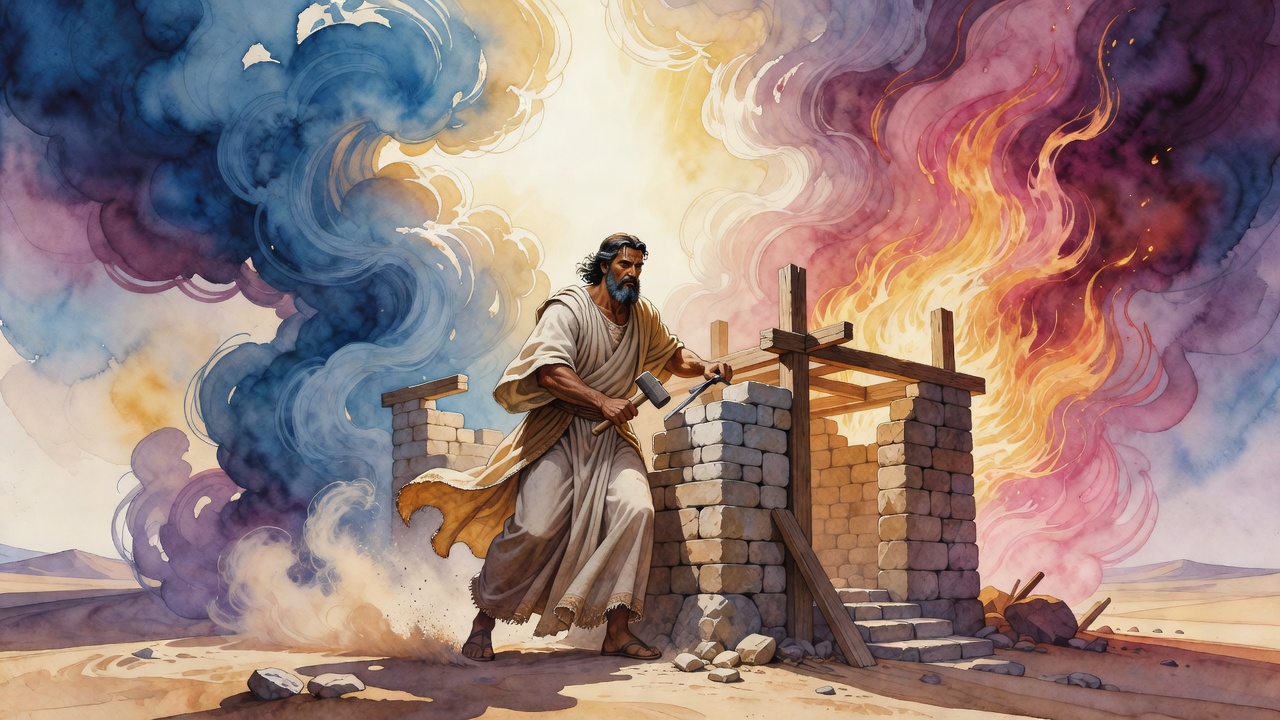
They had already stacked the wood. Tamar sent Judah his ring, his cord, and his staff, and did not speak his name.
Table of Contents
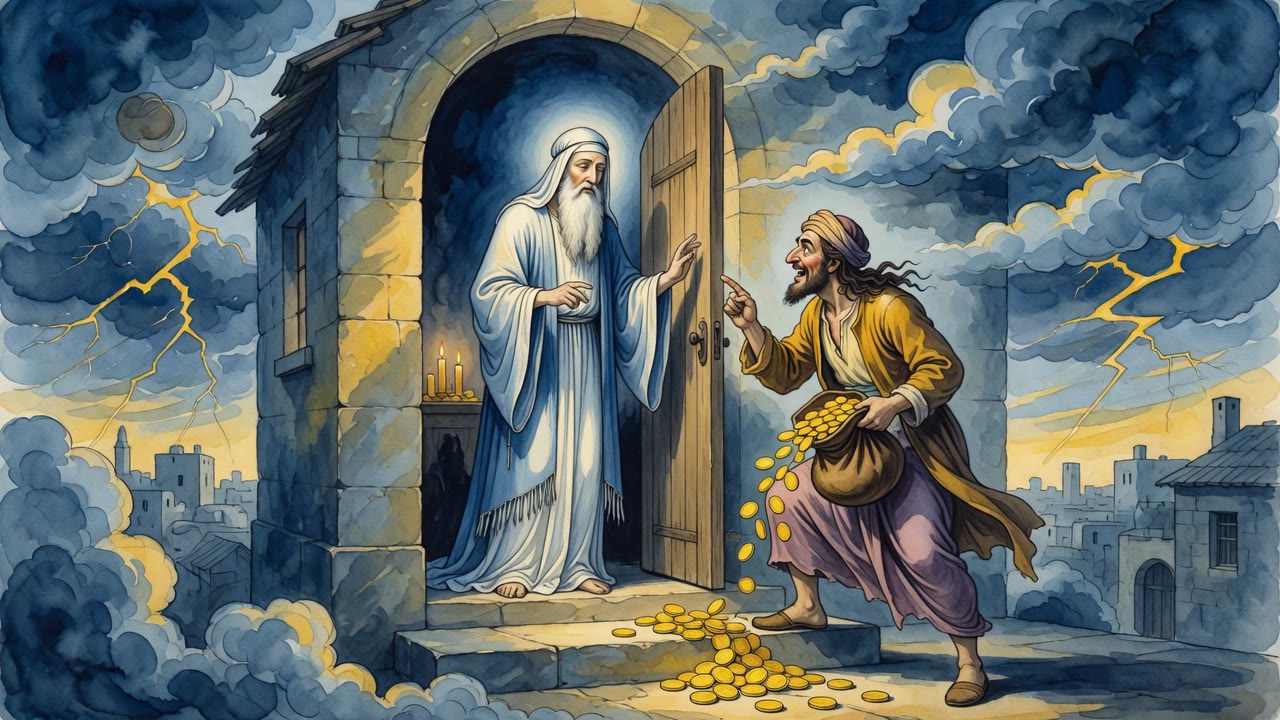
They had already stacked the wood. Tamar stood in front of the court with a bag in her hand and did not say Judah's name.
 Click for full size
The sentence was burning. The crowd had gathered. She had one move left, and it was not a speech.
The Pledge on the Road
Months earlier Judah had turned aside to a woman he took for a roadside prostitute. She asked for a pledge. He gave her his signet, his cord, and his staff, the three things that said who he was when his mouth was not in the room. He went on his way. He sent a kid from the flock later to recover the pledge, and the woman could not be found.
Tamar had kept the objects. She had sat in widowhood after Er and Onan, sent back to her father's house, promised a third son who was not given. She had put on a veil at the crossroads because Judah would not keep a promise, and she had taken from him the only proof that would matter when men started stacking wood.
The signet was cold. The cord had been around a man's neck. The staff had held his weight on the road. None of them ate. None of them drank. None of them had bread put into them.
Three Things Without Mouths
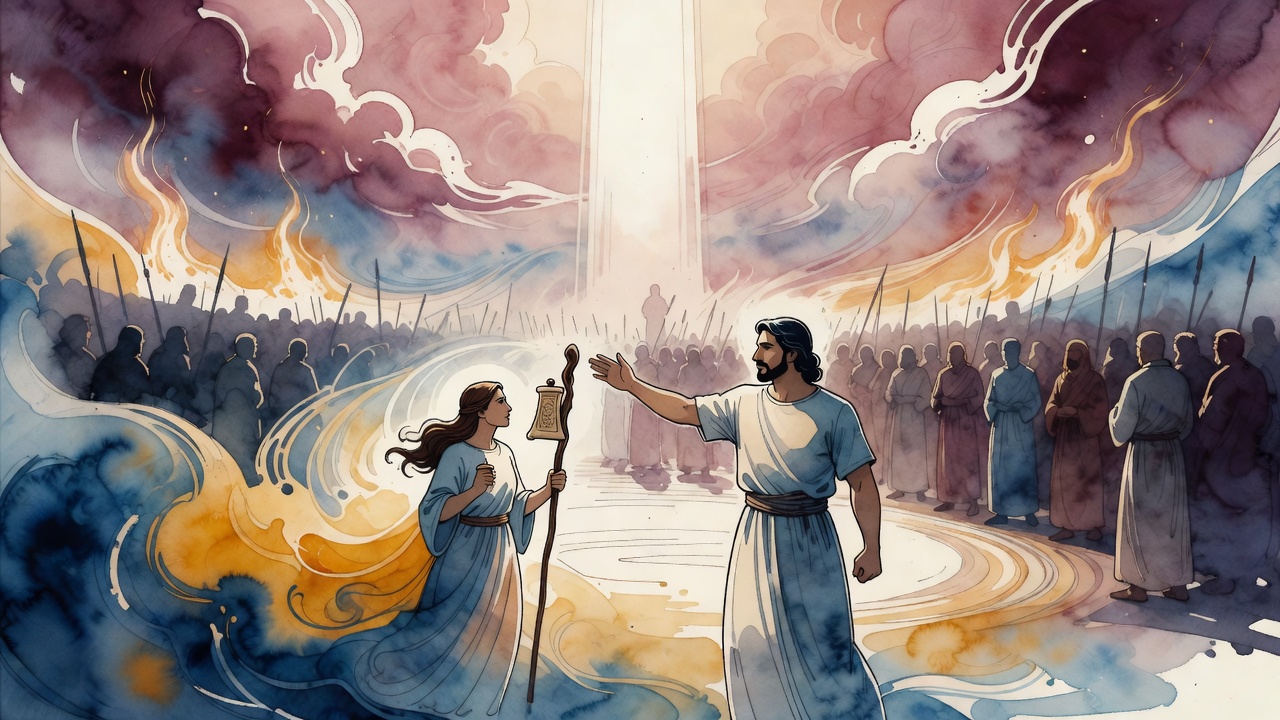
She did not stand up in court and accuse him. She sent the objects and said only this: the man who owns these is the father. Identify them.
Judah looked. He recognized his own seal. He recognized the cord. He recognized the staff that had been in his hand on the road. The room waited for him to finish her.
He said, in front of everyone, that she was more righteous than he was. He had withheld Shelah. She had taken a risk to keep a name inside the house. The sentence was cancelled. The wood did not get its body.
The objects had no power of their own. They could not testify. They could not run. They overturned a death because she had kept them, and because he, looking at them, could not pretend they belonged to someone else.
The Roar That Reached Hushim
Years later Judah stood in Egypt with another life in his mouth. Joseph, unrecognized, had accused Benjamin of stealing a goblet and declared that Benjamin would remain as a slave. The others could go home in peace. Judah had guaranteed Benjamin's return to Jacob. He refused the bargain.
He roared. The roar traveled four hundred parsangs and reached Hushim son of Dan. Hushim came running. Both of them roared, and the land of Egypt was on the verge of being upended. The other brothers kicked the ground until it furrowed, like lions kept from prey.
Judah was willing to stay in Benjamin's place. He also feared, under the roar, that this was payment for an old deception, the coat and the lie that had taken Joseph from Jacob. He would not let another son of that house be kept. The man who had left Tamar to the wood until three mute things spoke would not leave Benjamin to a goblet.
Wisdom fortifies the wise more than ten rulers in a city (Ecclesiastes 7:19). Judah's wisdom that day was a throat and a refusal. Joseph heard it. The test bent.
What Moved and What Did Not
People later asked riddles around these hours. Which three things neither ate nor drank, yet saved lives from death? The signet, the cord, and the staff. What is a moving grave? Jonah in the fish, three days in a belly that swam, praying from a death that had not finished. What crosses the Jordan twice and is not noticed? Jacob's staff, in his hand when he fled Esau with nothing, in his hand when he came back with two camps, a piece of wood that also passed, in some tellings, into the rod of Moses.
A ship at anchor does not move. Cut off its head, the anchor, and it sails. What looks like life can be a chain. What looks like death can be a release. Tamar's three objects looked like a merchant's ordinary pledge. They were the only mouths she could send into a court that would not have believed a widow's word against a patriarch's.
Judah held the staff once as collateral on a road. He held a brother's life later as collateral in a palace. The wood for Tamar went unused. Benjamin walked out of Egypt. The silent things had already done their work. Judah still had to do his with a voice.
← All myths