God Found Samuel Standing Between Two Good Paths
Samuel poured water at Mizpah while the Philistines came up the road. Later God named the place he had stood, between two goods.
Table of Contents
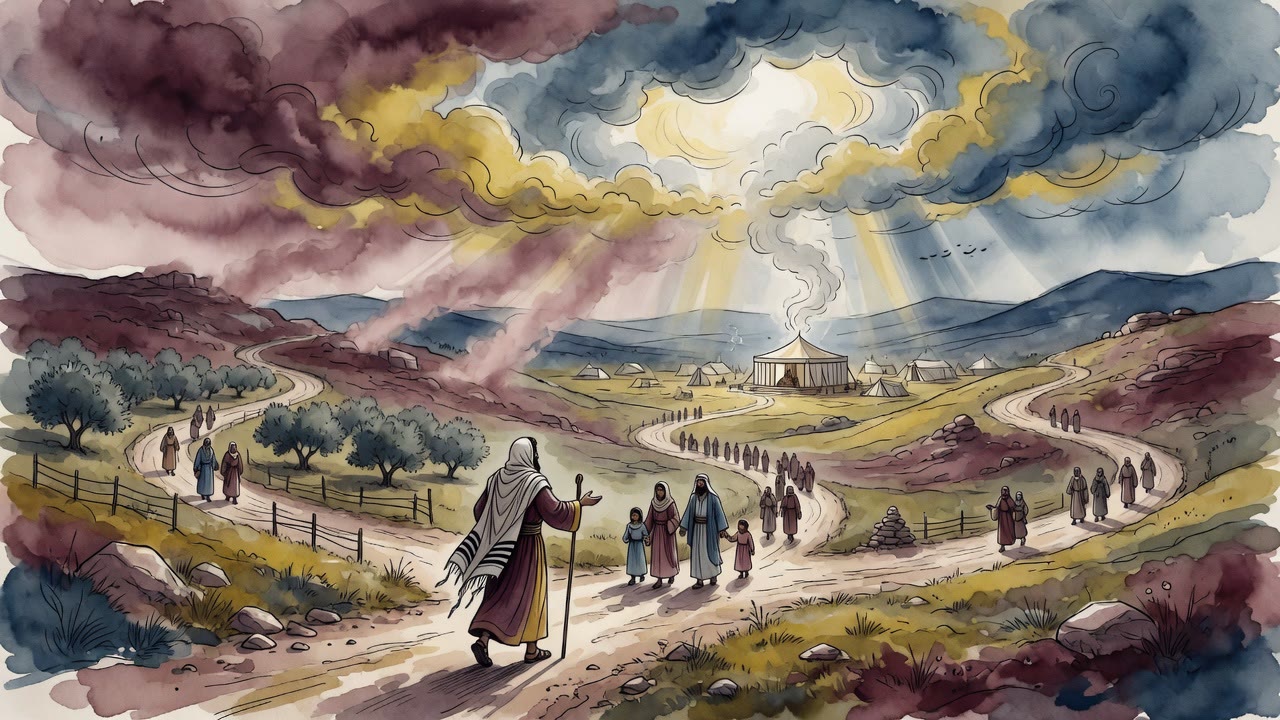
Samuel poured water on the ground at Mizpah until the dust went dark, and Israel fasted while the Philistines came up the road.
 Click for full size
The ark had already been captured and sent back. It sat at Kiriath-Jearim for twenty years. In those decades Samuel gathered the people, and on this day he gathered them to fast and to pour, which is a way of saying they had nothing left in their hands but the asking.
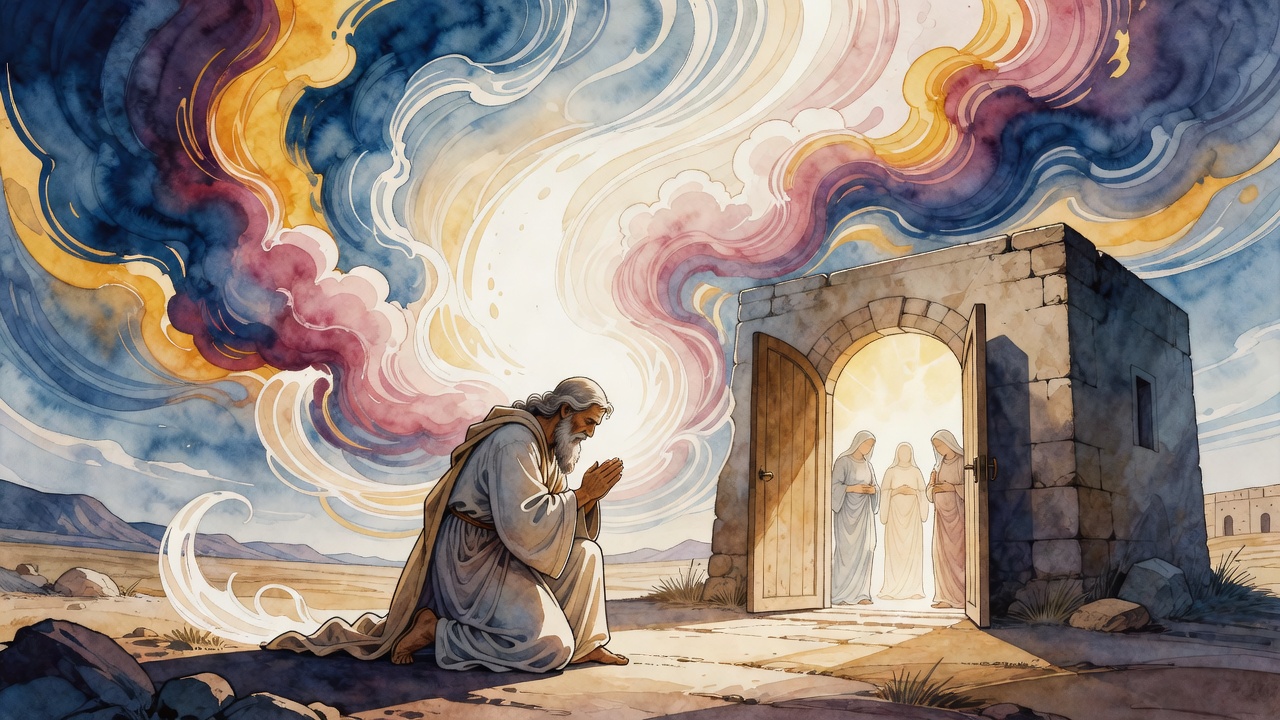
The Philistines heard of the assembly and attacked it. Samuel took a lamb, sacrificed it, and prayed. He did not put the knife down and pick up a spear. He stayed with the lamb.
The Stone He Named
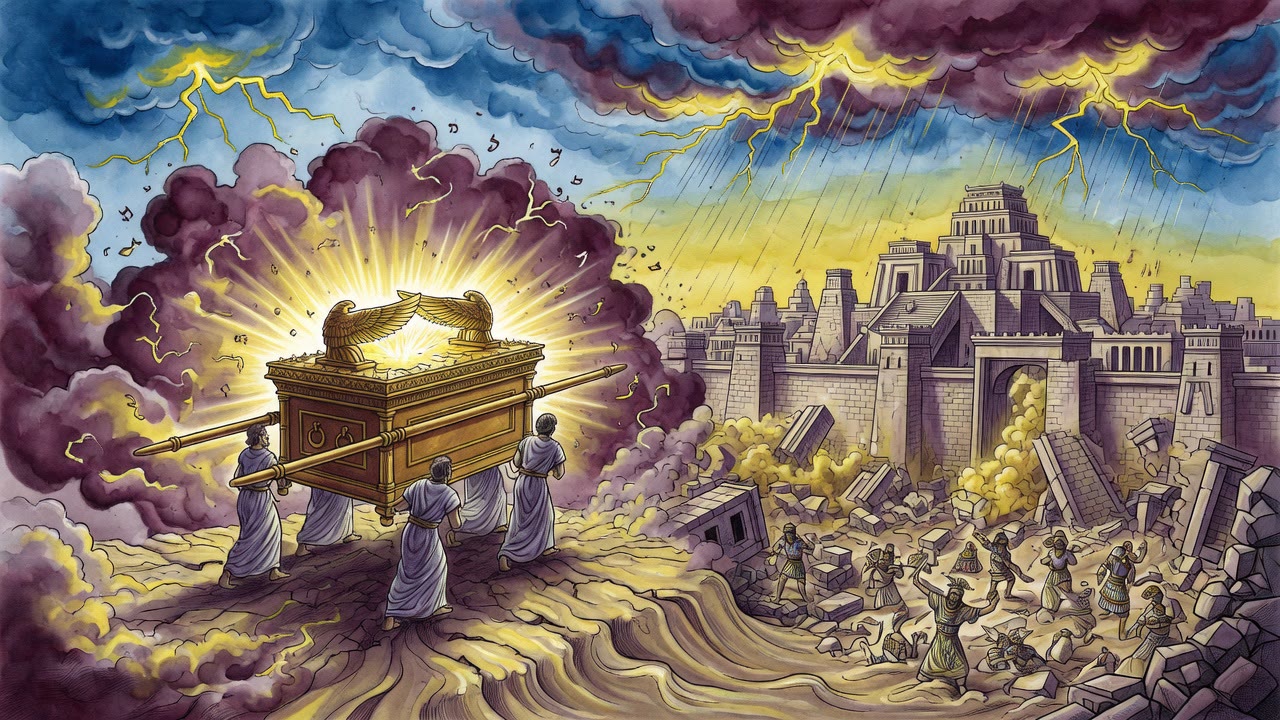
God answered with an earthquake that split the ground under the Philistine army. Thunder shattered their lines. Lightning burned their faces. Weapons flew from their hands. Israel pursued them as far as Beth Car.
Samuel set up a stone and named it Even Ha-Ezer, the Stone of Help, because help had come from the place he had refused to leave: the prayer, in public, with the enemy already on the road.
He could have been only that man, the one who prays while other men fight. He was not. After the stone, he went back to the circuit. Ramah. Bethel. Gilgal. Mizpah. He judged Israel at every stop, then returned to Ramah, where his house was, and built an altar. The loop was the work. He did not drop the altar for the court, or the court for the altar.
The House That Walked to Shiloh
He came from a house that already knew how to walk toward a sanctuary when a town would rather stay home.
Elkanah, his father, made the three pilgrimages to Shiloh each year with his whole household. He was not rich. He equipped the retinue as if he were, and he chose a new road every year so that more towns would have to look up and ask what the procession was. "We are going to the house of the Lord at Shiloh, for from there the law comes forth. Why should you not join us?"
The first year five households followed. The next year ten. Then a whole town. When God was provoked by the idolatry of Micah and ready to wreck the generation, Elkanah's merit held the blow. The old tellings call him a second Abraham for that hour, the one pious man the age could still produce.
Hannah had prayed Samuel into the world and given him to the sanctuary before he was weaned. The child of that prayer grew up between an altar and a docket. Other people wanted him for one thing at a time. Saul wanted prayer. The people wanted a king. David needed oil on his head. God, later, would name what Samuel had actually been doing while they pulled.
Between Two Good Byways
God found him there, after the stone, after the circuit, after the oil.
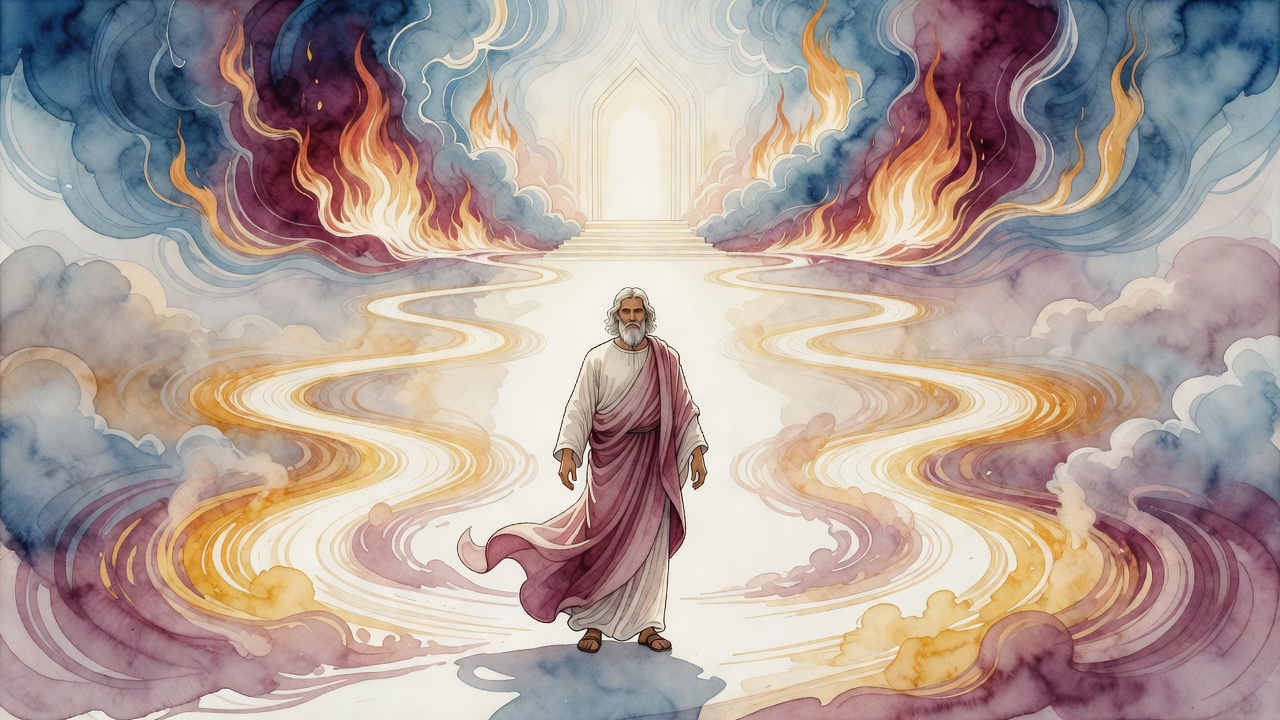
"Samuel," God said. "You have placed yourself between these two good paths."
Not between good and evil. Between two goods. Prayer that does not dry up into a private comfort, and righteousness that does not dry up into a man who trusts only his own clean hands. Chesed (חסד), the service of love, walking a town toward Shiloh. Mishpat, the judging, walking the circuit until the altar at Ramah received him home.
"By your life, I will give you three good gifts." Life. Righteousness. Glory. Not prizes stacked on a table after a test. The yield of the place he had stood. "He that follows after righteousness and love finds life, righteousness, and glory" (Proverbs 21:21). The verse does not say the finder stumbles on them. It says he finds what the walking produces.
Samuel had already stood in that place when the Philistines came up the Mizpah road. He had already stood in it when he anointed men who would disappoint him. The gifts did not make the standing easier. They named it.
The People Still Pulled
They still wanted a king they could see. He still prayed, and he still judged, and he still poured oil when God told him to pour it. The two byways did not merge into one wide road. He kept taking both, even when the nation tried to hire him for a single errand.
At Mizpah the water had gone into dust and become mud under fasting feet. At Ramah the altar waited at the end of the loop. Between them, a man who could have chosen the cleaner of two goods, and did not.
God did not praise him for refusing evil. Evil had not been the test. The test was whether prayer would make him absent from the court, and whether the court would make him absent from the altar. He stayed in the seam until the seam had a name.
← All myths