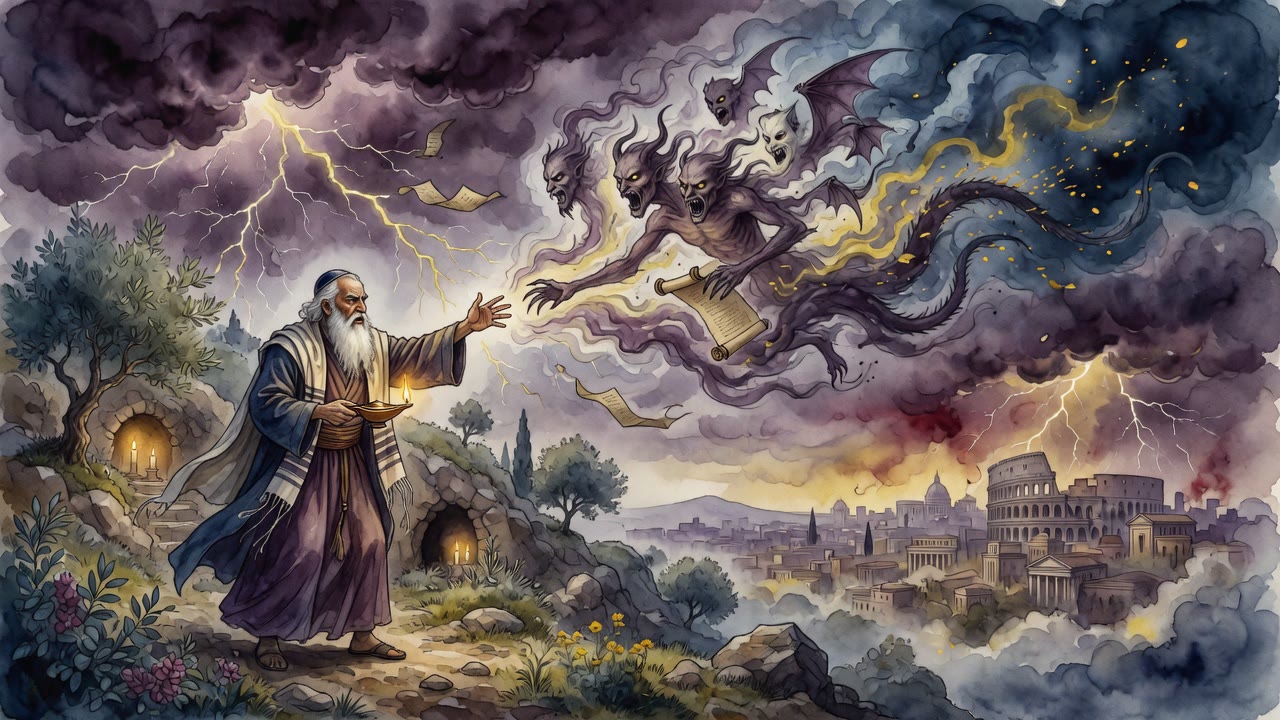
Rabbi Joseph della Reyna Tried to Force the Redemption
A kabbalist conjured Elijah and asked how to chain the Prince of Evil. He came within one act of forcing the Messiah's arrival. One mistake ended everything.
Table of Contents
The formula worked, which was the first bad sign, though nobody in the room read it that way.
 Click for full size
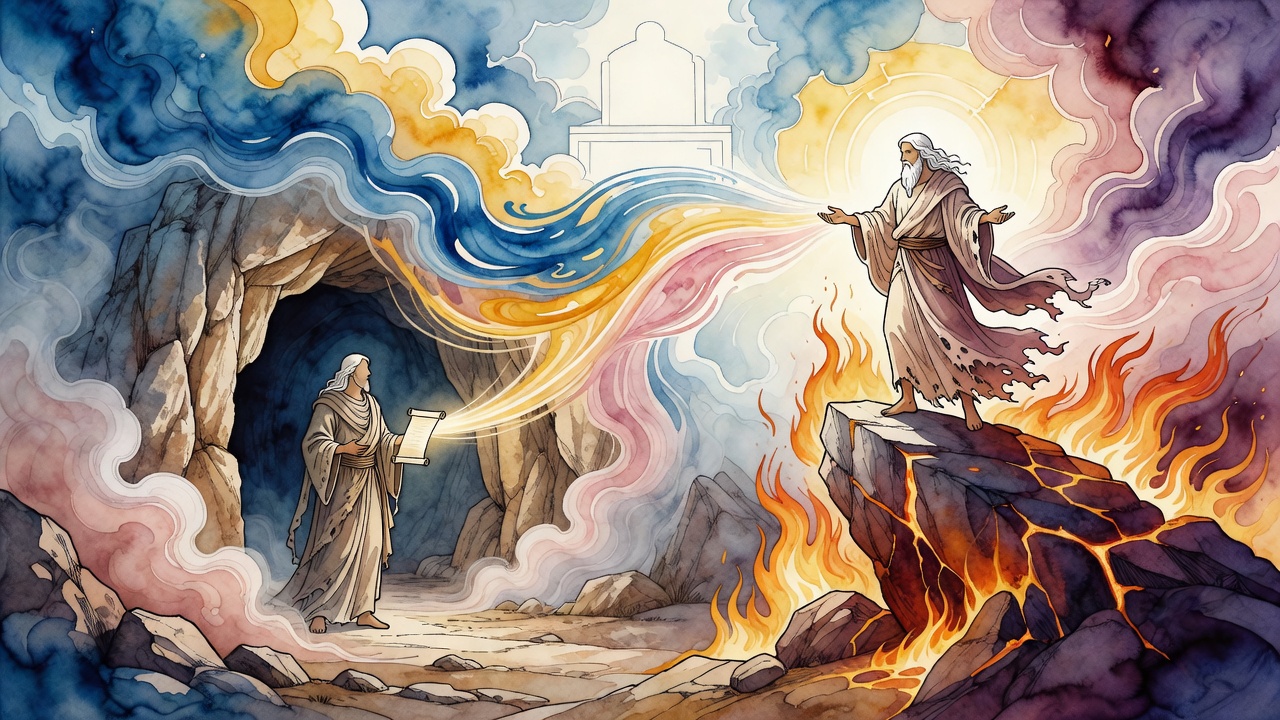
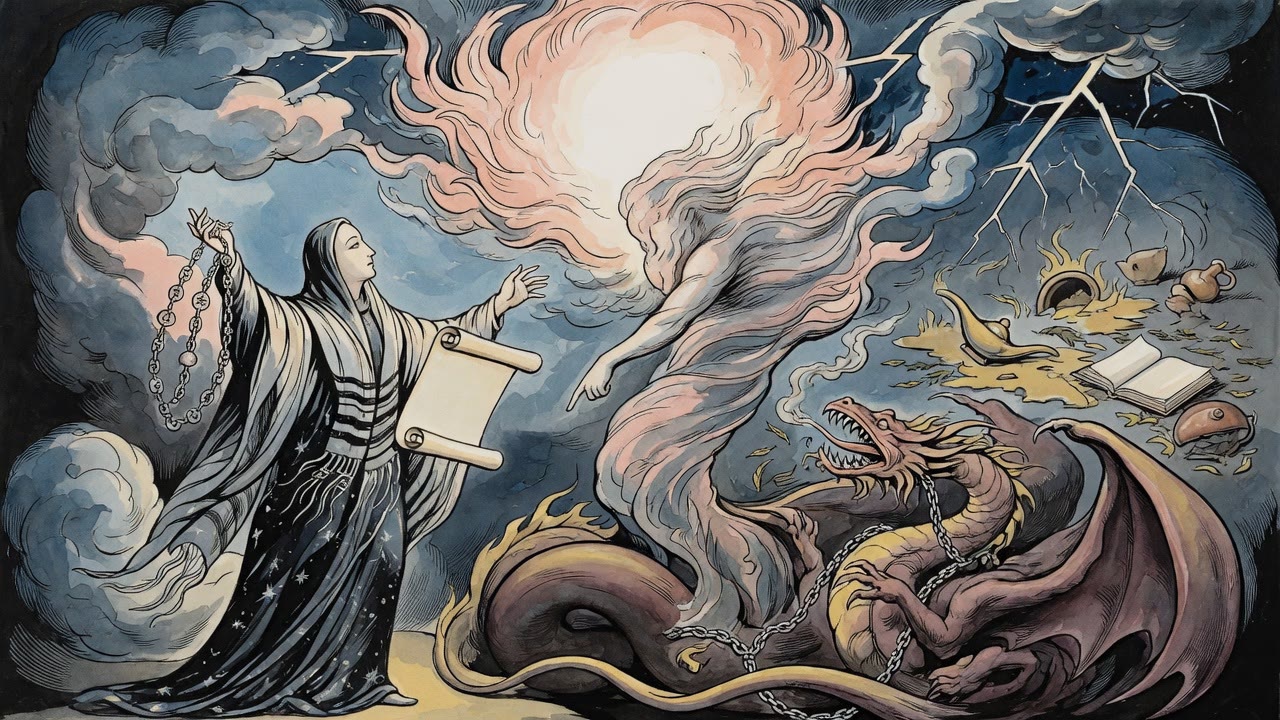
Rabbi Joseph della Reyna had five disciples with him and months of fasting behind all six of them. They had prayed through nights that had no reason to end well. They had kept the vigils and the abstinences that the books said would clear a man's mouth enough to say certain words without being destroyed by them. Then the words were said, and Elijah was standing there.
Joseph spoke first, and he spoke carefully, the way a man speaks when he has rehearsed. "Peace be with you, our master. True prophet, bearer of salvation, do not be displeased that I have troubled you to come here. God knows I have not done it for myself, and not for my own honor. I am zealous for the name and the honor of God, and I know your desire is the same as mine. Tell me by what means I can conquer Samael."
The Prophet Who Kept Turning Up
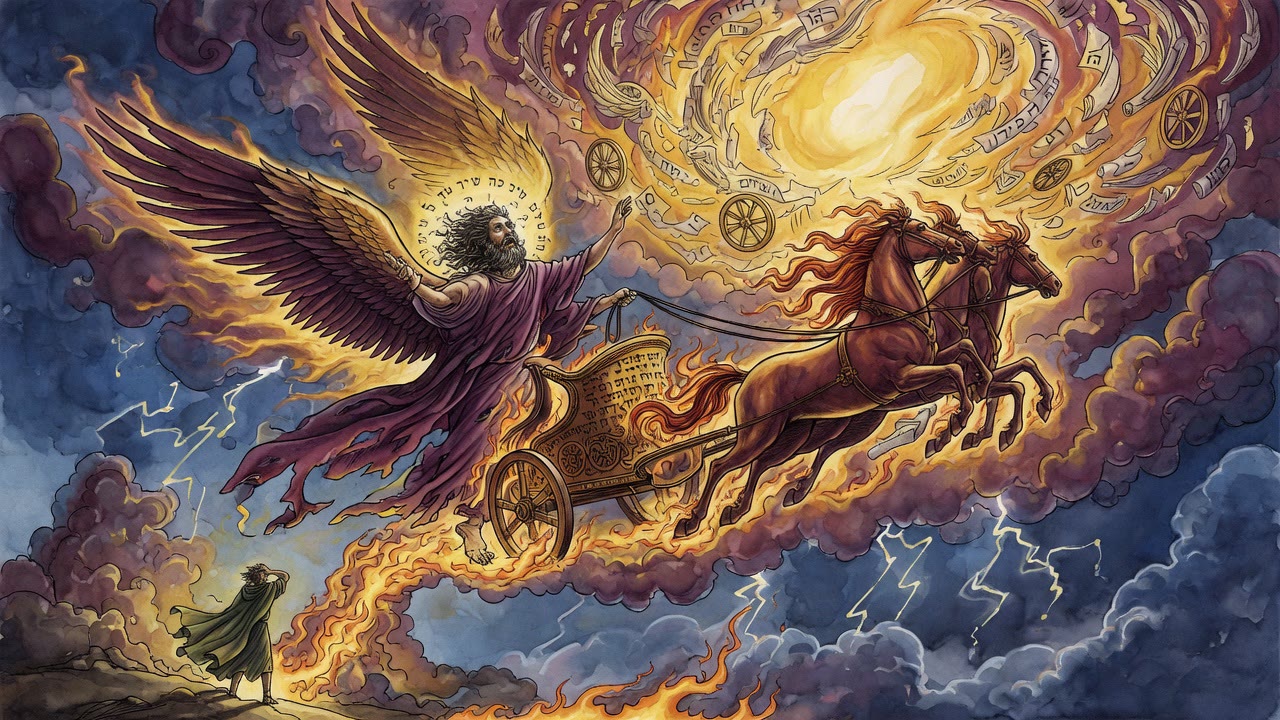
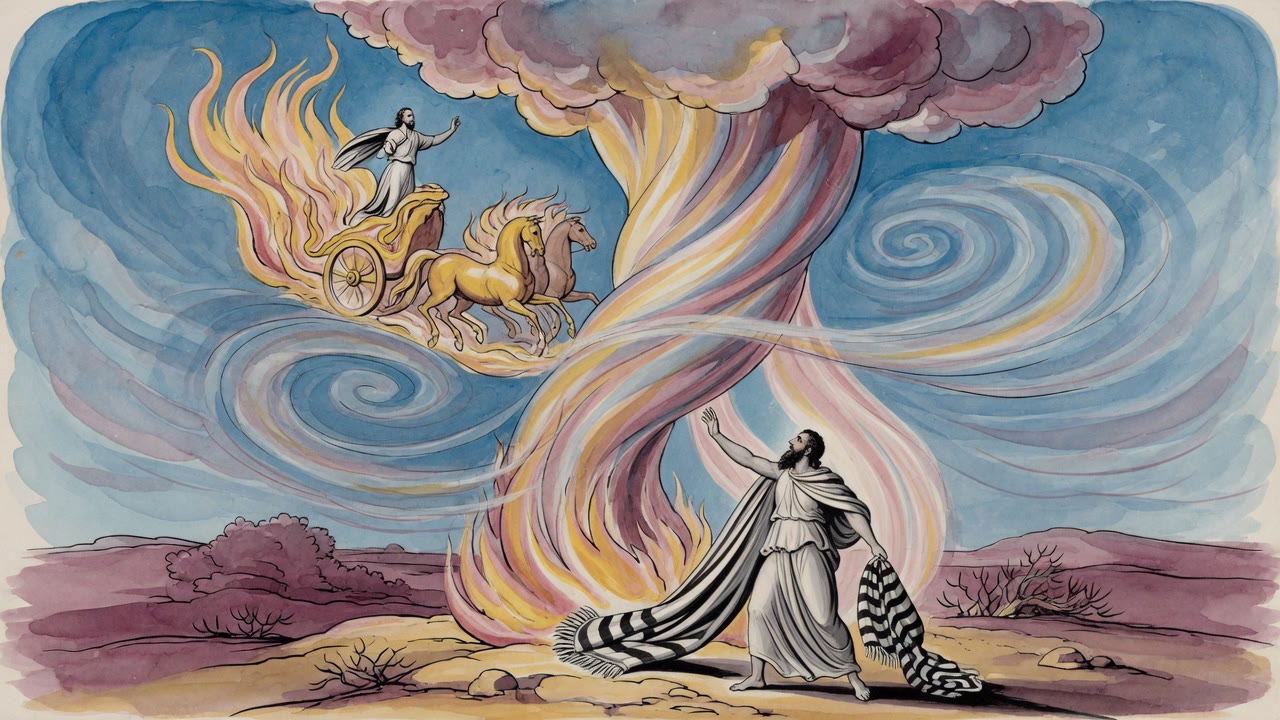
Elijah had been reachable for a long time by then. Going up in the whirlwind had not ended his dealings with people; if anything it started the part of his career that mattered, as a helper in bad hours and a teacher to men who needed one. Seven years after he left the earth he wrote a letter down to Jehoram of Judah, a wicked king, from wherever it is that he now lives. Later he put on the face of the courtier Harbonah and stood at Ahasuerus's table, and at the right moment he turned the king against Haman.
Kabbalists knew this, and some of them had the formulas that would bring him. He took disciples to the tomb of the patriarchs at Hebron and from there up to the academy in heaven, where it did not always go well. The angels were not pleased to have someone born of a woman walking among them, and one such student was so frightened by what they put into him that he begged Elijah to carry him back down to the ground. Elijah calmed him and went on teaching him anyway.
So Joseph knew what he was calling and knew the terror attached to it, and he called anyway.
Elijah Argued the Other Side
Elijah tried to talk him out of it. The prophet of the redemption stood in a room full of men who had starved themselves for months to reach him, and spent his first answer arguing against them.
He described Samael to him. Not as a rival power, since there is no rival power, but as an accuser whose strength is fed from a supply that never runs dry, because the supply is human sin. Every generation tops him up. A man who goes at that with fasting and holy names is not fighting a fixed opponent; he is fighting something that grows while he is preparing to fight it. Elijah laid this out and waited.
Joseph did not move. He had already decided, back before the vigils, that the exile had gone on long enough and that somebody had to do something, and the argument that Samael was too strong only proved to him how badly the work was needed. He asked again.
So Elijah gave him what he wanted. He named the measures and the tactics for the combat. He listed the pious deeds, one by one, that would draw the notice of the archangel Sandalphon, and he said that from Sandalphon, and not from himself, Joseph would learn the method of the war.
The Angel Who Ties the Crowns
Sandalphon is the one who stands on the earth with his head up among the living creatures, taller than his fellow by a walk of five hundred years. He waits behind the chariot. When the songs and prayers go up out of the synagogues and the study houses, they cut their way through the firmaments until they reach him, and he takes them in his hands and ties them into crowns. Then he says the Name over a crown and lets go, and it rises on its own and settles on the head of its Maker.
He has other work. The Temple was destroyed only in appearance, and it is standing where it always stood, out of sight of ordinary eyes, and Sandalphon offers the sacrifices in it.
Joseph did the deeds Elijah had listed. He did them exactly, and the archangel came.
One Indiscretion, Unnamed
He had it. The advantage was in his hands, and it was not a small one: if he had gone on obeying, if he had done everything Sandalphon told him and nothing beside it, he would have beaten Samael and pulled the redemption of the world forward into his own lifetime.
At one point he committed an indiscretion.
What it was, nobody will say. The letter to Jehoram survives, and the courtier's disguise at Ahasuerus's table, and the exact height of an angel measured in walking years, but not one word about the thing Joseph della Reyna did in the middle of his own victory. Whatever it was, it took a moment. It was enough to hand back everything the fasting had bought.
What It Cost the Five
Samael got his power back, and he used it on the man who had taken it from him.
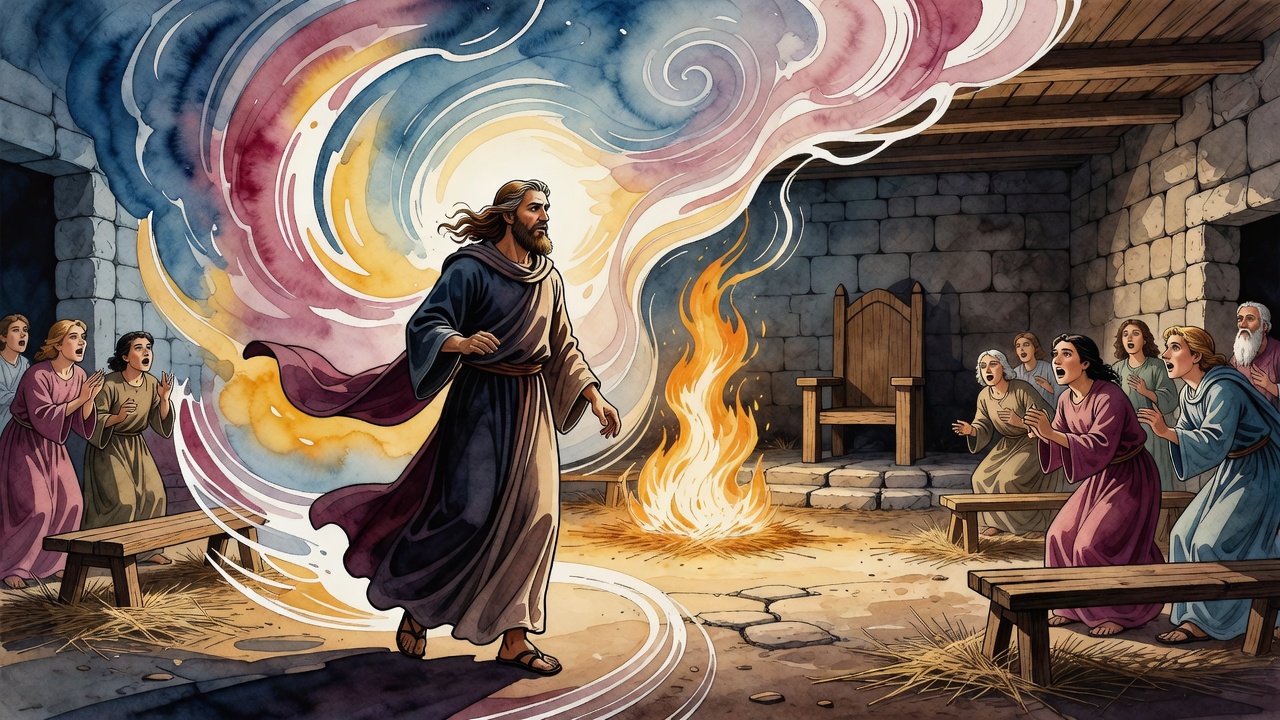
The ruin was not Joseph's alone. The five who had fasted beside him, who had held the vigils and said the formulas and stood in the room when the prophet appeared, went down with him, because they had put themselves inside his undertaking and there was no separate account for them. Six men had gone looking for the end of history. What arrived instead was the thing they had almost beaten, restored to its full strength and in no hurry at all.
Above all of it Sandalphon went on working. He stood where he stands, behind the chariot, level with the living creatures, tying the morning's prayers into a crown and sending it up under the Name, and the prayers that reached his hands that day came out of ordinary houses in ordinary towns, from people who had never once asked how long.
← All myths