Jonah's Sailors Threw Cargo Before They Threw Him
The sailors on Jonah's ship were not cruel men. They tried their idols, cast lots, jettisoned their cargo, and rowed for shore before they touched him.
Table of Contents
 Click for full size
One Day Out of Joppa
They were one day out of Joppa, bound for Tarshish, when the wind found them, and it found them and nothing else. Other ships were in sight that morning, close enough to count, and those ships went on through ordinary water while this one came apart at the seams under a sea that had picked it out. The sailors could watch them go. That was the first thing that was wrong.
Every God on Board
There were seventy nations on that ship, a man from each, and every man had brought his god along in his baggage. So they made a pact in the middle of the storm, shouting it across the deck: whichever god answered and brought them out of this would be the God, and the rest could be put away.
They unwrapped them and stood them up and prayed, all of them at once, in seventy languages, over the noise of the water. Nothing answered. The wind held, the sea went on climbing, and it availed them nothing at all.
The Man Asleep in the Hold
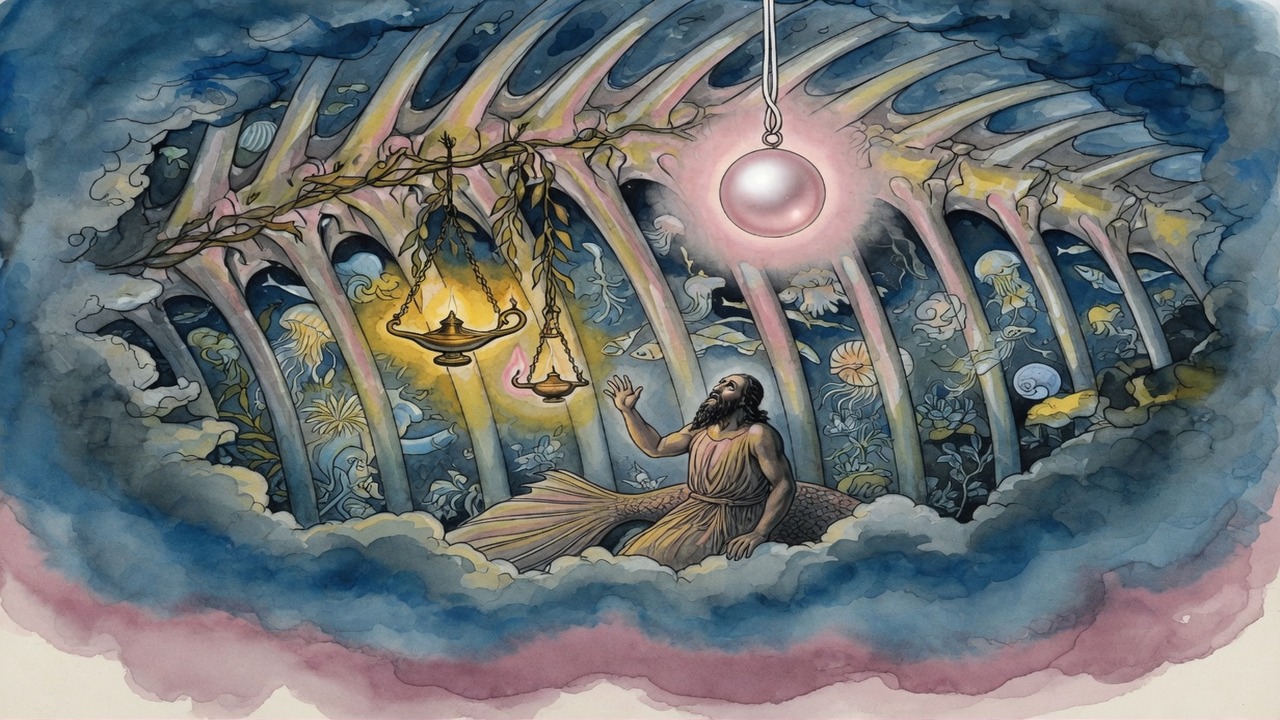
The captain went below to see who was down there and found one man asleep. Not lying awake in the dark. Asleep, all the way down, while the ship went over on her side above him.
He took him by the shoulder. "We are standing between death and life, and you are sleeping. Of what people are you?"
"I am a Hebrew," Jonah said.
The captain knew the name, because everyone who worked that coast knew it. "Have we not heard that the God of the Hebrews is great? Get up and call on your God. Perhaps He will do for us what He did for you at the Reed Sea."
But Jonah did not pray. He gave the captain the one thing nobody had asked him for. "It is on my account that this trouble has come on you. Take me up and throw me into the sea, and the sea will quiet down for you" (Jonah 1:12).
Knees, Navel, Neck
They would not do it, so they cast lots first, hoping the lot would fall somewhere else or on nobody at all, and it fell on Jonah. They still would not do it. They put their backs into the oars and rowed for the shore until the sea drove them off it (Jonah 1:13). They threw the cargo over the side to lighten her, and when that did nothing they threw their own belongings after it, and the storm did not ease by a breath.
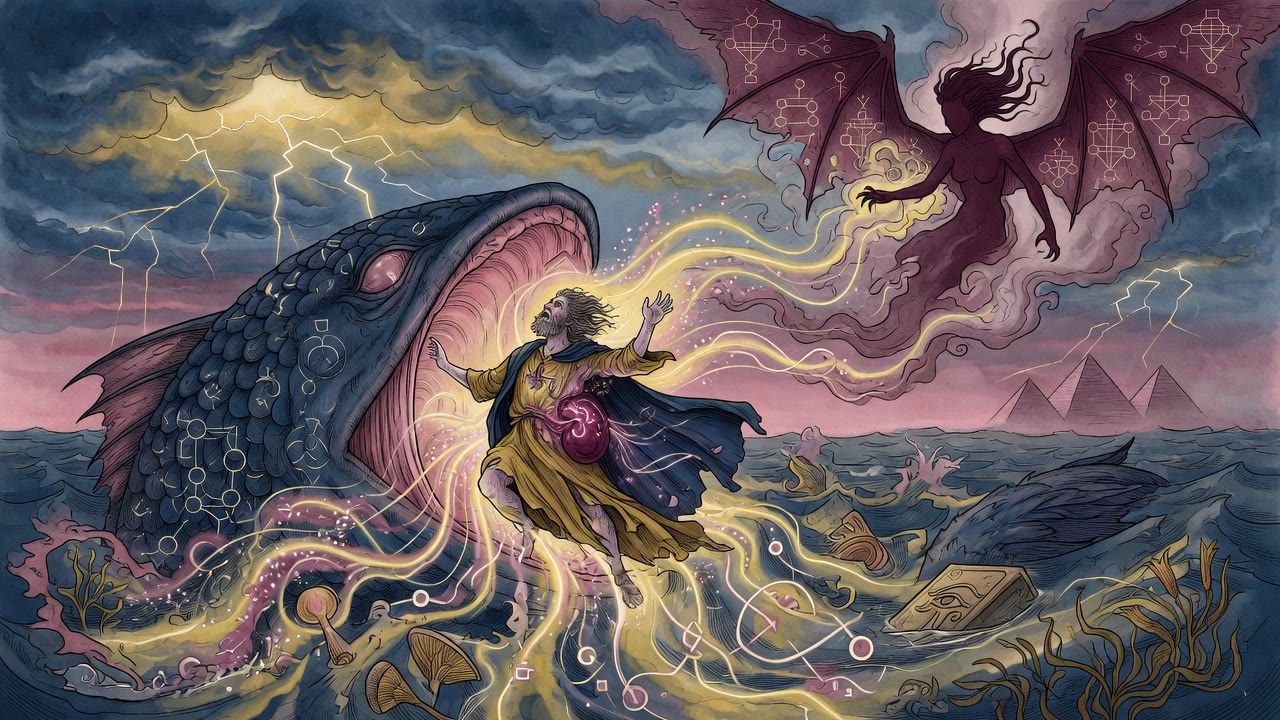
Then they tried the thing men try when the decent options have run out. They took him by the arms and lowered him over the rail to his knees, and the sea went quiet. They pulled him back in, and it came at them again. They put him down to his navel and it quieted, and they lifted him and it raged, so they put him in to his neck.
Three times they had their answer and three times they hauled him back onto the deck anyway, because pulling a man out of the water is what sailors do. His hair was still running when the sea took the ship on the beam again. After the third time nobody standing there could pretend not to know what the water wanted.
"Lord of the world, do not lay innocent blood on us," they said. "We do not know what sort of man this is, and he is the one telling us to do it." Then they took him up and cast him into the sea, and the sea ceased from her raging (Jonah 1:15).
What They Carried Up From the Coast
The quiet afterward was the loudest thing that had ever happened to them. Every man on that deck had prayed to something of his own that morning and watched it do nothing, and had then watched the water lie down flat the moment one man went under it.
They stood up and threw their gods over the side. Seventy of them went into the sea where Jonah had gone, because a man who has just seen what was done for Jonah does not go on carrying the thing that stayed silent.
Then they turned the ship around and sailed back into Joppa, and from there up to Jerusalem, and there they circumcised the flesh of their foreskins, and that was the offering meant when the verse says the men feared the Lord exceedingly and offered a sacrifice, since the blood of that covenant counts as the blood of a sacrifice. Every one of them took a vow to bring his children and everything belonging to him to the God of Jonah.
They kept the vows. The gods they had carried out of seventy countries stayed where they had thrown them, a day's sail off Joppa, under water that did not move for anybody now.
← All myths