Noah Prayed Too Late and Rabbi Akiva Laughed at Foxes
A fox walked out of the Holy of Holies. Three sages wept. Rabbi Akiva laughed, because a plow in Zion meant old men would sit there again.
Table of Contents
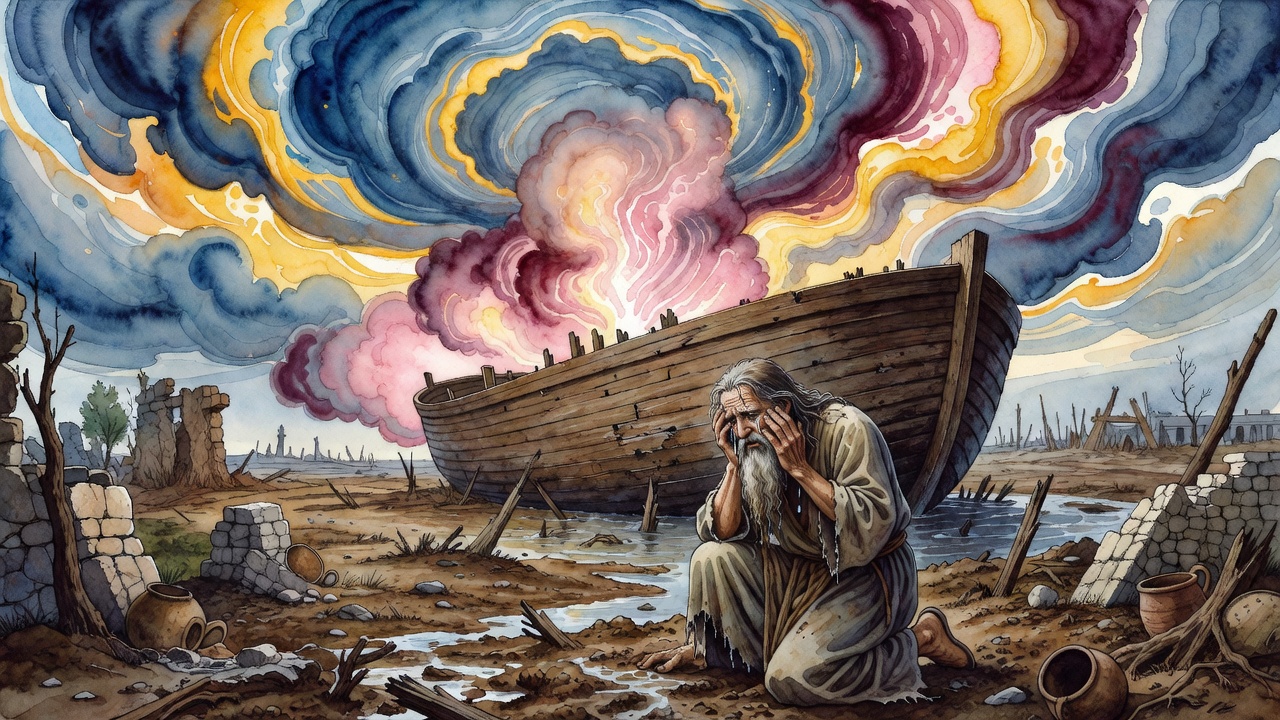
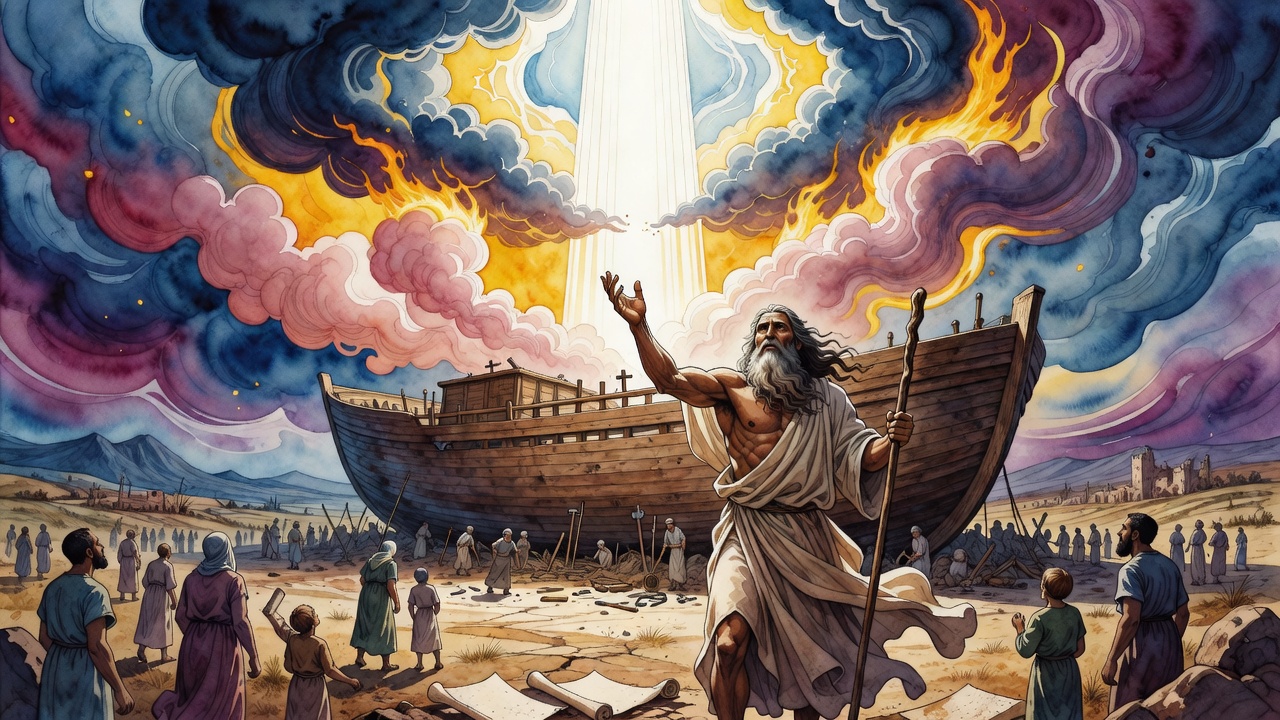
Noah stood on dry ground and wept. The ark had rested. The raven and the dove had done their work. The world he had not asked God to spare was gone, and now he opened his mouth.
 Click for full size
"You are called Merciful," he said. "You should have been merciful to Your creatures."
God called him a foolish shepherd.
Noah Built an Ark and Did Not Argue
The rebuke was not that Noah had complained. Complaint was not the crime. The crime was the hour.
God had spoken kind words first. He had named Noah righteous in his generation. He had told him the water was coming, and He had told him to make an ark of gopher wood. That speech was an opening. Abraham would later stand at the edge of Sodom and push the number down, fifty, then forty-five, then forty, then thirty, then twenty, then ten, because he understood that an announcement is not always a locked door (Genesis 18:23-32).
Noah picked up an adze. He built what he was told. He saved his house and the animals. He did not speak for the earth. As soon as he heard that he would be rescued, he stopped concerning himself with the ruin that would strike everyone else. He prayed when the ground was already dry, and prayer offered after the disaster is not the same as prayer offered while the door is still open.
"Now you speak to Me," God said. "You did not speak when I told you what was coming. You built an ark for yourself. Now that the earth is wasted, you open your mouth."
The Prayer That Bound Mastema
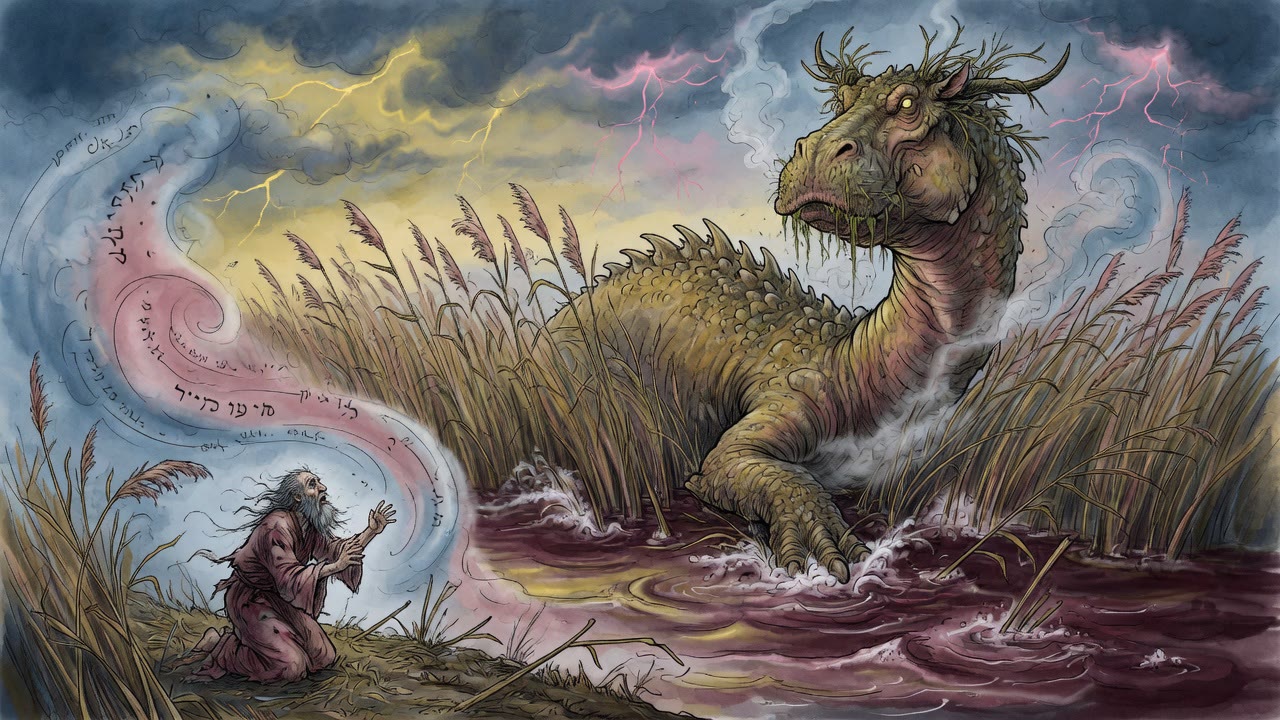
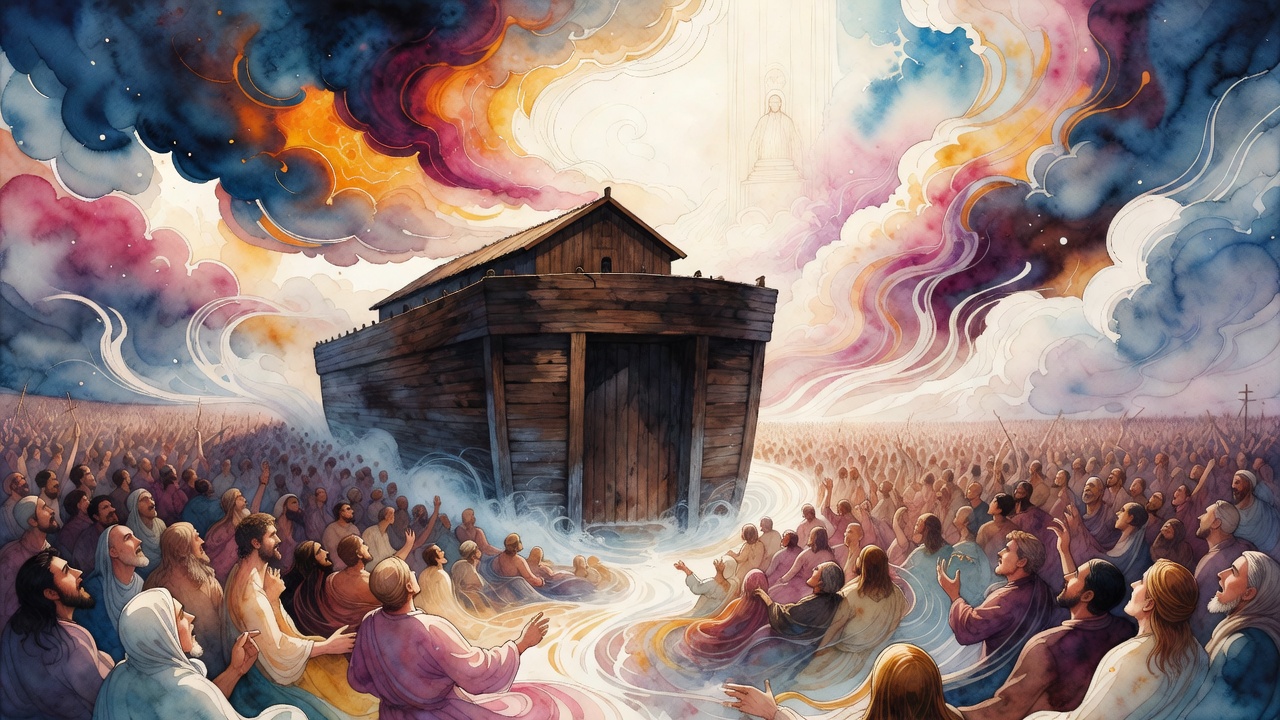
Years later the ground had people on it again, and a different wound arrived while it was still bleeding. Demons were leading Noah's grandchildren astray, blinding them, killing them. His sons came to him afraid. They told him what was walking through the new world.
This time Noah did not wait for the wreckage to finish. He prayed while his children's children were still being hurt. "God of the spirits of all flesh," he said, "You showed mercy to me. You saved me and my sons from the waters of the flood. Bless me and my sons, that we may increase and fill the earth." He asked for the spirits to be bound, not after the graves were closed, but while there were still graves that had not been dug.
The prayer was answered. Mastema, prince of the spirits, was bound. Only a tenth of the evil spirits were left free to work among human beings. Noah had learned something in the silence after the rain. He used it while there was still a child to save.
A Fox Walked Out of the Holy of Holies
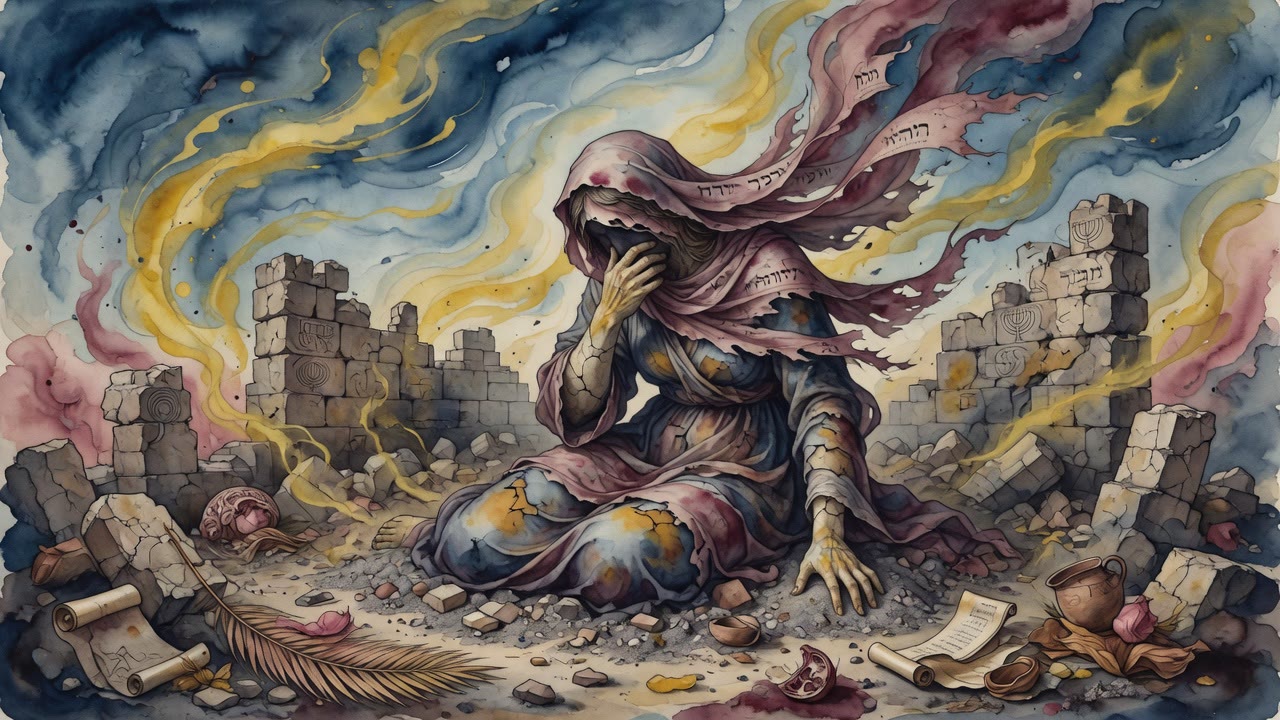
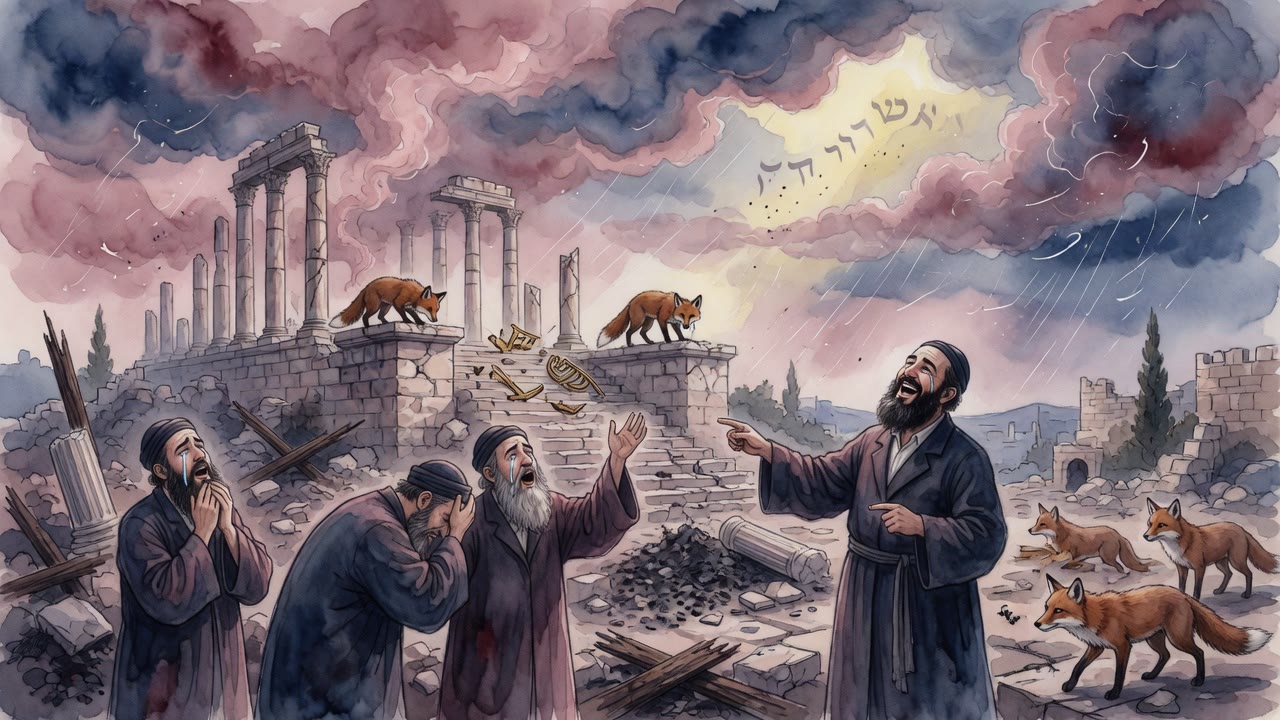
Centuries after that, four rabbis walked away from Jerusalem after Rome had burned the Temple. When they reached Mount Scopus and saw the ruins, they tore their garments. When they came to the Temple Mount itself, a fox walked out of the place where the Holy of Holies had stood.
Rabban Gamliel, Rabbi Elazar ben Azariah, and Rabbi Yehoshua wept. Rabbi Akiva laughed.
They turned on him. "Why are you laughing?" He turned it back. "Why are you weeping?"
"This is the place about which the Torah says the non-priest who approaches shall die (Numbers 1:51)," they said. "Now foxes walk through it. How can we not weep?"
"That is exactly why I am laughing," Rabbi Akiva said. Uriah had prophesied that Zion would be plowed as a field, and Jerusalem rubble, and the Temple Mount as the high places of a forest (Micah 3:12). Zechariah had prophesied that old men and old women would yet sit in the streets of Jerusalem, and children would play there (Zechariah 8:4). The two sayings were bound together. Until Uriah's plow came true, Akiva had been afraid Zechariah's old men might not. Now the fox had walked out of the Holy of Holies in front of him. The warning had been paid. So the promise was still on the books.
The Mouth That Knew the Hour
Noah's first prayer arrived when there was no one left to save. His second arrived while the demons were still in the houses, and a tenth of them were all that remained. Rabbi Akiva stood in the worst ruins his friends had seen and read the fox as a receipt, not as an ending.
The three who had wept said it twice. "Akiva, you have comforted us. Akiva, you have comforted us." They did not stop seeing the fox. They stopped thinking the fox was the last word. A plow in Zion is ugly. It is also, if the prophets are still linked, the first half of a street where old men will sit again.
Noah had learned to open his mouth before the thing finished dying. Akiva opened his while the thing looked dead, because a fulfilled warning was, for him, proof that a fulfilled comfort still had to come. The fox went on through the ruin. The four of them went down the mountain with their garments torn, and one of them still tasting laughter.
← All myths