Abraham Came Back From His Grave for a Minyan
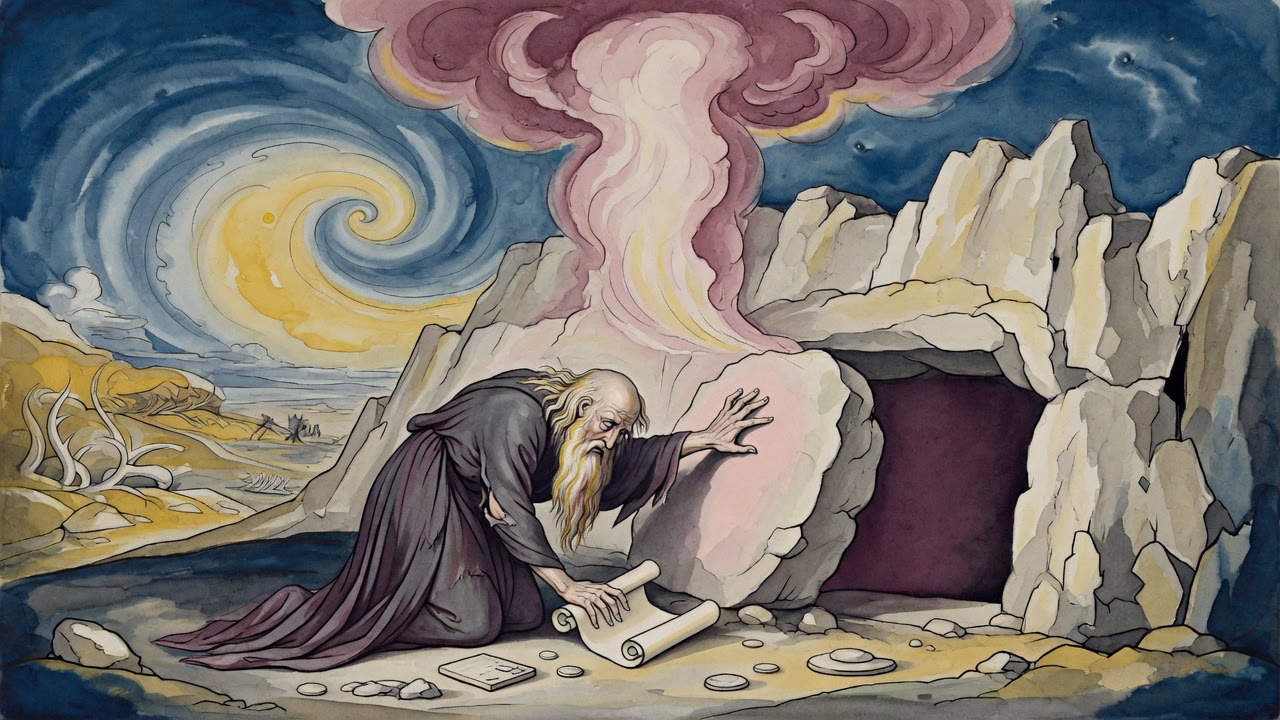
Nine men sat over the Cave of Machpelah and could not begin. A stranger prayed with them, then vanished on the road home.
Table of Contents
Nine men sat in the synagogue above the Cave of Machpelah in Hebron. They had come for a fast. They had prayed. They had sat. They had done everything a community does when it is calling on God to notice a need.
 Click for full size
They had nine.
A minyan (מנין), a prayer quorum, requires ten. Without ten, the Kaddish does not rise. The Torah stays in the ark. Nine men sitting over the graves of the patriarchs is not a congregation. It is almost a congregation, and almost is not enough.
A Stranger Offered Himself
A stranger appeared at the door.
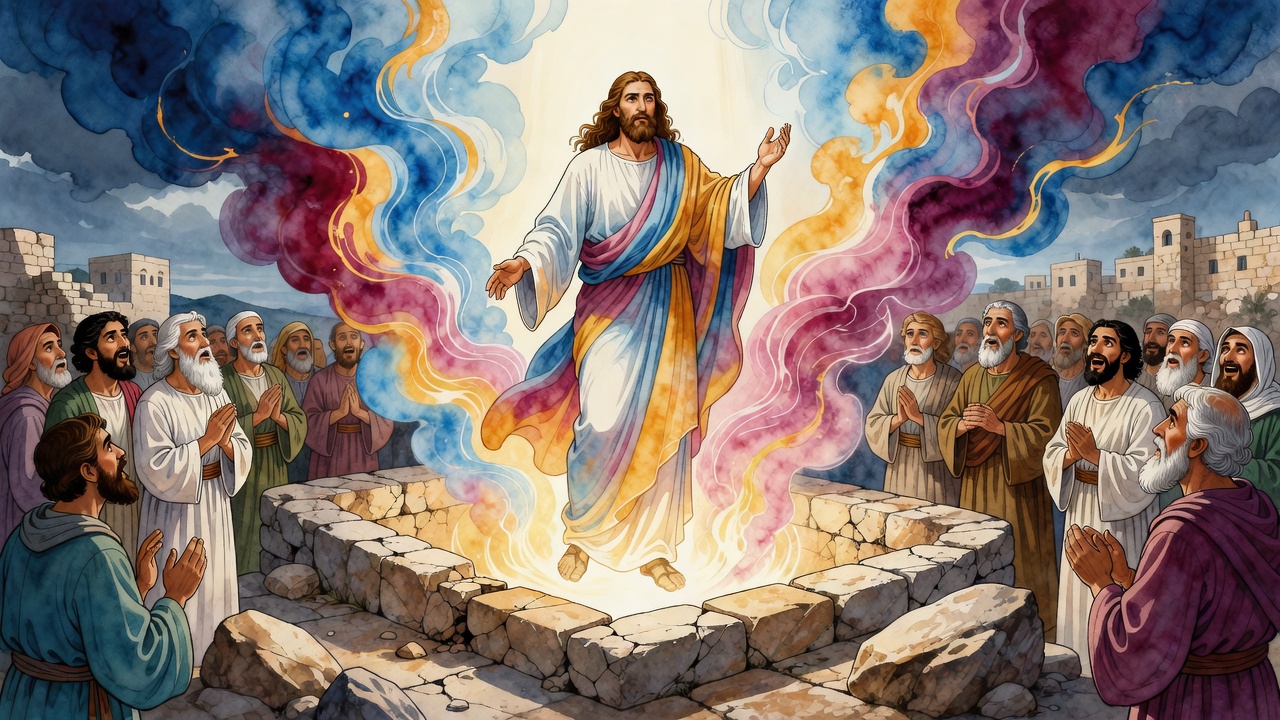
He was mild, pleasant, clearly not from the area. He offered himself as the tenth man. The community accepted him without much scrutiny. The fast was waiting. He joined. He prayed. His voice folded into theirs as if it had always belonged among them. He stood where the tenth man stands, and the service that had been stuck all morning finally moved.
At the end of the fast the residents of Hebron cast lots for the privilege of feeding the guest. The lot fell to the beadle. The others envied him. He led the stranger toward his house, already planning the bread, the salt, the bed.
The Road Lost a Man
Somewhere between the synagogue and the beadle's door, the stranger disappeared. Not running. Not crying out. Simply gone, between one step and the next. The beadle turned to speak to him and spoke to air.
He searched. The whole community searched. They walked the road again and again, calling, peering into doorways, finding nothing where a man had been a breath before. No cloak. No footprint worth following. They knocked on houses that had already been knocked on. A child said he had seen a traveler. The traveler was not there.
Exhausted, toward dawn, the beadle lay down. He had lost a guest on a short road in a small town, and he could not bear the thought of it.
A Face Like Lightning
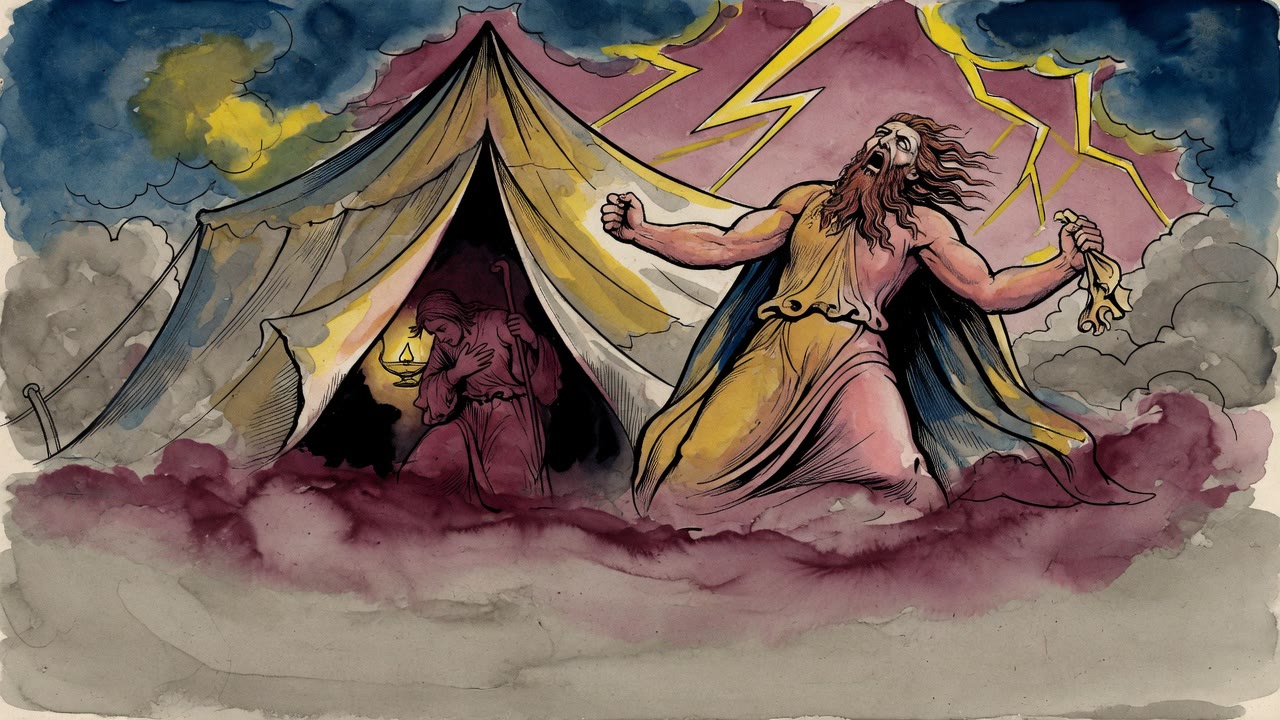
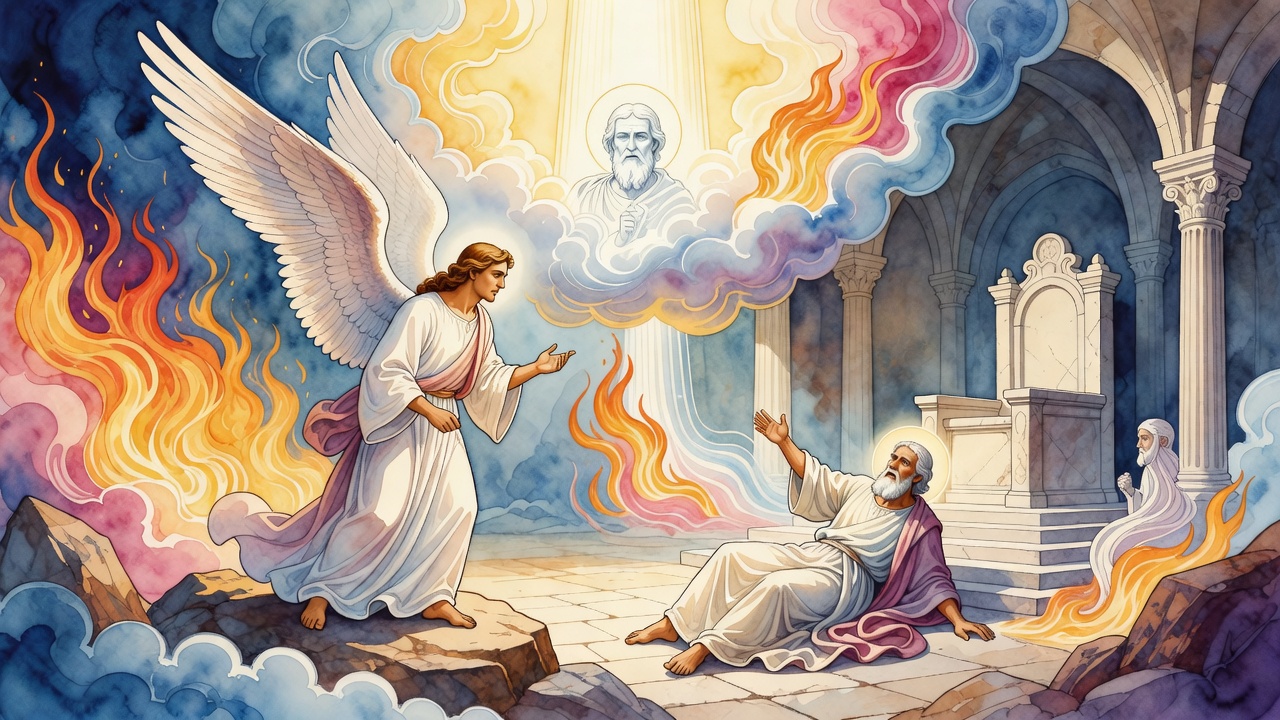
The stranger came to him in sleep with a face like lightning and garments studded with gems that burned like sun. His bearing was nothing like the mild man who had stood in the service and prayed with them.
Before the beadle could open his mouth, the stranger spoke.
"I am Abraham the Hebrew, your ancestor, who rests here in the Cave of Machpelah. When I saw how grieved you were at not having the number of men prescribed for a public service, I came forth to you. Have no fear. Rejoice and be merry of heart."
The beadle woke. The cave was still under the floor of the town. The tenth man was back in it. The fast was complete. The guest had never needed bread.
He Had Been Watching Since Hebron
Abraham had always watched which of his seed would carry his name. In his old age he saw the deeds of Esau, and he knew that in Jacob his name and seed should be called. He called Rebecca and gave her a commandment while he was still alive to give it.
"My daughter, watch over my son Jacob. He shall be in my stead on the earth, and for a blessing in the midst of the children of men, and for the glory of the whole seed of Shem. I know that the Lord will choose him to be a people for possession unto Himself, above all peoples that are upon the face of the earth."
He told her that in life. He kept the watch after death. Nine of Jacob's children sat above his grave without a tenth, and Abraham came up himself. He did not send an angel. He put on a plain face, stood among them until they were ten, and went back down into the cave he had bought with silver when it was only a burial place, and not yet a door.
← All myths